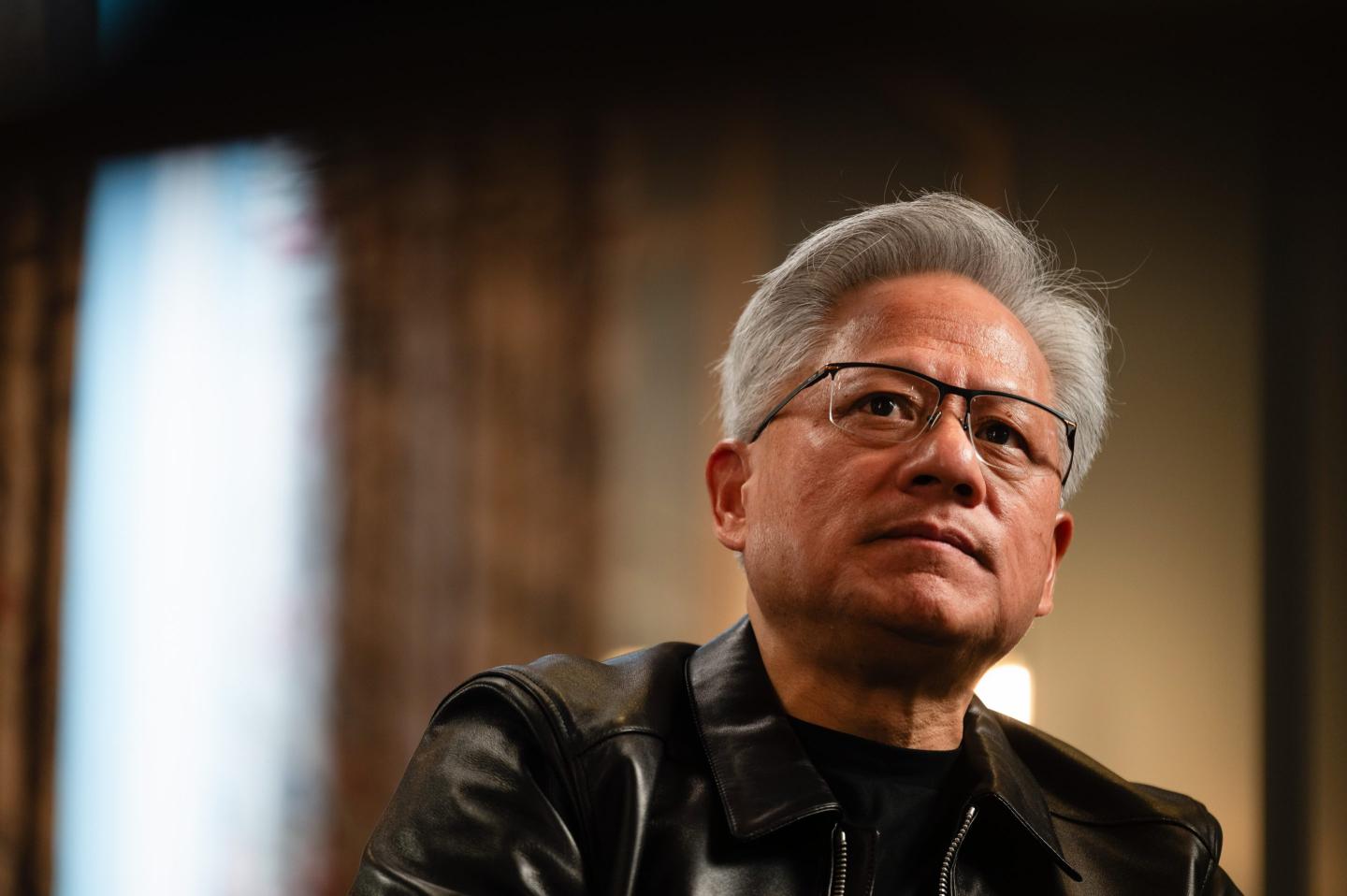
Prediction markets have proved prescient when it comes to forecasting elections and other events, but in the case of Jensen Huang’s abrupt return as Nvidia’s CEO, they appeared as much in the dark as everyone else. A look at contracts on Kalshi and Polymarket tied to the company’s next CEO reveals an abrupt swing from long shots to near certainties when the board reinstated him Monday morning.
One Kalshi contract on whether Nvidia’s next CEO would be an internal or external hire drew nearly $100,000 in trading volume. At 5 a.m., traders gave an external hire roughly 57% odds and an internal one roughly 33%. A third option, that Huang would return, was trading at about 16% before the news broke. Traders then piled in, and it jumped to nearly 100% within minutes.
Another contract, on whether President Donald Trump would publicly call for Huang’s reinstatement, drew more than $330,000 in volume. Bettors gave it a 38% chance of happening before January 2027 and a 20% chance before December 2026. They were wrong on both counts. Trump made such a post on Truth Social on Sunday night, and the contract was resolved. The odds for the January window jumped to 83% and those for the December window to 74%. Because the call came before December, both contracts paid out on “yes.”
Polymarket saw even heavier trading. A contract on who would be Nvidia’s next CEO topped $11 million in volume. As of Sunday evening, Nvidia insider Ian Buck led with roughly 13%, followed by Huang at roughly 11%, with finance chief Colette Kress and former Apple CEO Tim Cook trailing. By early Monday morning, Huang’s odds had risen to roughly 19%. They then jumped to 97% when Nvidia confirmed his reinstatement.
The misses come as prediction markets face growing attention over how well they forecast events, even as their popularity climbs. The platforms pitch themselves as a reference point for future events. Their case grew stronger after the 2024 election, when they called Trump’s return to the White House more accurately than traditional polls and surveys.
Their most recent redemption came in this month’s midterms, when Kalshi and Polymarket correctly forecasted that Democrats would take control of both chambers of Congress. The platforms also called most House and Senate races correctly.
But the Nvidia outcome, where the platforms’ odds diverged significantly from reality, has weakened that case. It wasn’t the first time they got an outcome wrong.
During the midterms, prediction markets failed to foresee surprise victories like Democrat Annie Andrews’s win over Republican incumbent Darline Graham in South Carolina’s Senate race, and Democrat Gina Hinojosa’s win over Republican incumbent Greg Abbott in the Texas governor’s race.
Before that, the markets also favored Flávio Bolsonaro over incumbent Lula da Silva in Brazil’s presidential runoff, where Lula eventually won.