Walk down the snack aisle of almost any grocery store and you’ll find a growing number of packages labeled seed-oil-free. Americans bought more than $1 billion worth of seed-oil-free food products over the past year, according to NielsenIQ data.
Sales of seed-oil-free foods rose 60.2% over that period, while products without the label grew just 2.6%. Yet many nutrition and food scientists say those products aren’t necessarily healthier, and that seed oils aren’t harmful to people.
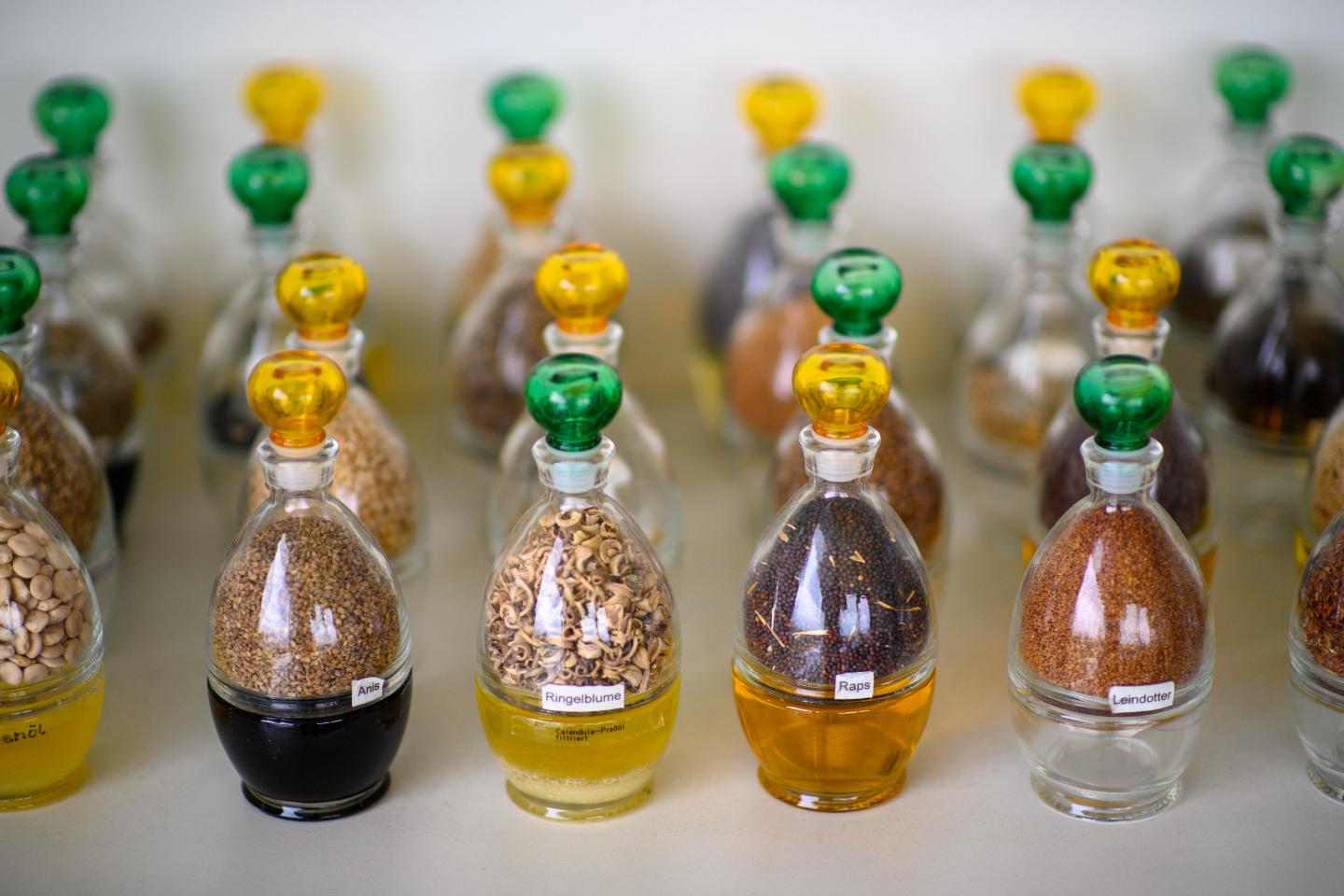
Seed oils are cooking oils extracted from crop seeds, including canola, corn, sunflower and safflower oil. Online influencers in the seed-oil-free movement, and the food companies serving this niche, push alternatives such as olive, avocado and coconut oil, along with animal fats like butter, lard and beef tallow, which has its own wave of celebrity backers.
Big food makers have taken notice. PepsiCo, the maker of Lay’s and Tostitos, said in 2025 that it would expand its use of avocado and olive oil in place of canola and soybean oil, one of several moves by food companies to rework products and keep up with Health Secretary Robert F. Kennedy Jr.’s vision of a healthy diet.
A seal for a growing niche
Many seed-oil-free packages carry a Seed Oil Free Certified seal. The Seed Oil Free Alliance, a Florida-based organization founded in 2023, issues it and audits products and lab-tests their oils. The alliance says products carrying its seal account for about $410 million in retail sales, citing NielsenIQ data.
“Our organization doesn’t fearmonger about seed oils,” Jonathan Rubin, the founder and CEO of the Seed Oil Free Alliance, told Fortune. “We exist to empower consumers who seek to avoid them because of how common they are in products. We want to empower consumers with choice and give companies a way to really highlight their commitment to meeting that consumer dietary preference.”
Rubin said his concerns center on what happens when high-linoleic oils are heated to high temperatures. That heat can produce byproducts called aldehydes, which he said can cause inflammation.
“When you heat a high linoleic seed oil like soybean or sunflower or something like that, those are going to produce those byproducts much quicker and much more of them,” Rubin said.
Abbey Thiel, a food scientist who created the YouTube channel “Abbey the Food Scientist,” said she understands Rubin’s concerns about heating, but noted that oils of all kinds can create byproducts when heated. She added that seed oils can produce aldehydes, but they don’t form in the body in quantities large enough to cause harm. She said many studies on aldehyde formation heat oils to temperatures far higher than cooking requires.
What the research shows
Research has largely found no connection between eating linoleic acid and markers of inflammation. A 2012 systematic review of 15 randomized controlled trials, published in the Journal of the Academy of Nutrition and Dietetics, found virtually no evidence that adding linoleic acid to the diet raises inflammatory markers in healthy people.
Some scientists also find the term “seed oil” misleading, since soybean oil and peanut oil, both of which the Seed Oil Free Alliance counts as seed oils, come from legumes.
“The terminology is not accurate, which adds to the confusion,” Alice Lichtenstein, a senior scientist at the Jean Mayer USDA Human Nutrition Research Center on Aging at Tufts University and a professor at Tufts’ Friedman School of Nutrition Science and Policy, told Fortune.
Christopher Gardner, a professor of medicine at Stanford University and a nutrition scientist, said that being a seed oil doesn’t make an oil lower quality.
Omega-6s and the heart
Another big concern for people avoiding seed oils is omega-6 fatty acids, which many claim are inflammatory. Seed oils contain both omega-6 and omega-3 fatty acids.
“If you look at controlled human studies, where they manipulate the level of omega-three and omega-six, it does look like omega-threes are slightly more anti-inflammatory,” Gardner told Fortune. “Where this got misinterpreted was that omega-sixes are therefore pro-inflammatory. That was never the case.”
Thiel said some of the confusion may come from the fact that, in certain circumstances, omega-6s can be converted into arachidonic acid, which can have inflammatory effects. The body, she noted, regulates those reactions and can keep arachidonic acid from forming.
Gardner is a former chair of the American Heart Association’s Nutrition Committee. In 2017, the AHA issued a presidential advisory on dietary fats concluding that replacing saturated fat with polyunsaturated vegetable oils, the main fats in seed oils, lowers LDL cholesterol. In randomized trials, that swap cut cardiovascular disease by about 30%. Butter, lard and beef tallow are all high in saturated fat.
Washington shifts, scientists don’t
The politics have moved faster than the science. In October 2024, before he became Health Secretary, Kennedy wrote on X that Americans are being “unknowingly poisoned” by seed oils, a claim nutrition experts told Fortune isn’t supported by the evidence.
The 2025–2030 Dietary Guidelines for Americans, released in January, tell people cooking with fat to prioritize oils such as olive oil and list butter and beef tallow as other options. The guidelines kept the longstanding cap on saturated fat at 10% of daily calories. Gardner served on the federal advisory committee whose scientific report preceded them.
Gardner said what people replace seed oils with also matters. Olive and avocado oil can be beneficial, he said, but many people can’t afford them.
Both Gardner and Thiel believe social media has fueled the seed-oil-free movement and led more people to question settled science.
“I’m not against consumers choosing their ingredients,” Thiel told Fortune. “I think that’s the power consumers have, and I think it’s great when people want to understand their food, but I get very concerned when it’s fear rather than scientific evidence that is driving those trends in the food industry.”
Gardner said his main concern is that people aren’t diversifying their diets enough and are relying more on affordable, shelf-stable packaged foods.
“If seed oil consumption in the U.S. was up because salad consumption is up, or stir-fried vegetables is up, I would be doing somersaults right now,” Gardner said.