
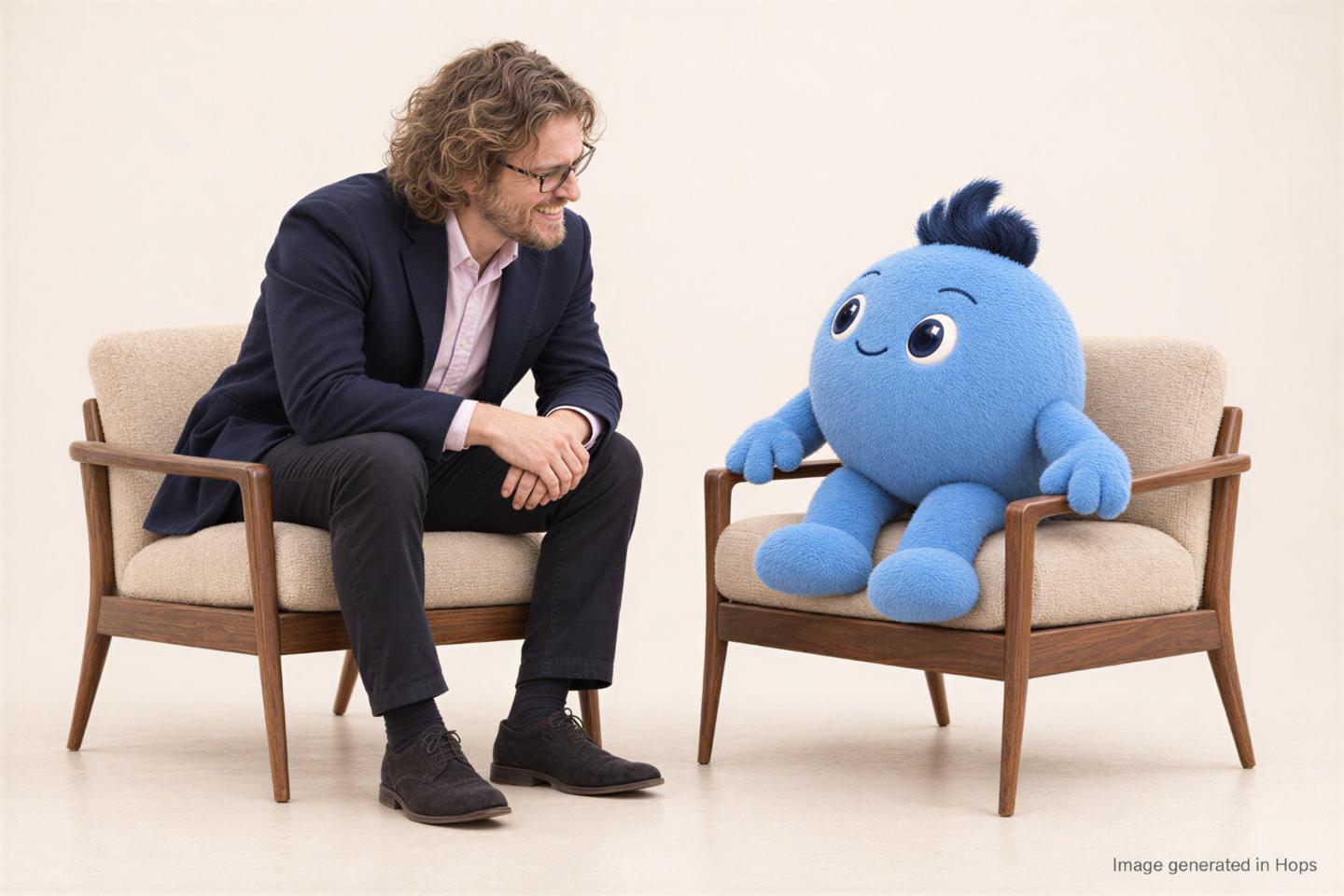
Andrew Filev wanted his engineers to move three times faster, so he built a machine they couldn’t keep up with.
He set up what he calls a “human-AI factory.” Agents churned out code changes—pull requests, or PRs, in engineering terms—far faster than his team had ever handled, with one rule attached: an engineer had to review every one of them the same day. The old way of working couldn’t clear that bar.
“Imagine I put them in a car, I gave myself a pedal and I floored it,” the Wrike founder told Fortune. “And I’m like, you either take the wheel, or we’re going to run into the wall. It’s your choice, but I was still flooring it.” He didn’t pretend it would be easy, either. “I was transparent about it,” he said. “I understand your way is not going to work. So don’t come to me and say it’s impossible.”
Filev has some standing to run this experiment. He built Wrike, one of the original collaborative work management platforms, which Citrix bought for $2.25 billion in 2021. After Wrike, he founded For Good AI and spent a couple of years building its AI coding agent, Zencoder. Now he’s taking those engineers into a new product, Hops, an AI workspace for whole teams that opened to the public on Nov. 10 after more than 2,500 teams tried it in early access. It has $35 million in funding, Fortune can exclusively reveal. About two-thirds of that is Filev’s own money; the rest came from a handful of angel investors.
The experiment Filev ran on his new company speaks to the problem Fortune 500 executives keep running into this year: Their people are getting faster with AI, and their companies aren’t. “We were kind of becoming individually a little bit more productive,” Filev said, describing how most companies use the tools now. “But at the company level, we’re not seeing that outcome.”
Filev brought the product to our Zoom call. He admitted a third participant to our video call: Hops, a fuzzy blue creature, clearly AI-generated, with a laptop open in front of it. He asked it what the weather was like in New York, and Hops thought about it. Hops kept twitching and seemingly listening throughout our call. Filev says the agent is close to building an app or navigating a slide deck in the middle of a meeting, but he wasn’t going to try that live.
Think of Hops as Slack crossed with a shop floor for AI. It has the usual pieces of team software—chat, shared docs, spreadsheet-style tables, file storage—and AI agents work inside all of it alongside the people. It connects to roughly 2,000 other systems, from Google and Meta ad accounts to Stripe.
The pitch is about where the AI work lives. Most people today use ChatGPT or Claude Code in private sessions, sometimes on their own laptops, so one employee’s breakthroughs never reach the next desk, and the CEO has no idea how well anyone is using it. In Hops, what one person teaches the system, everybody gets.
Filev’s data analyst wired up the company’s ad accounts and wrote the instructions once; now Filev just asks Hops for last week’s insights on paid campaigns. “I have no idea what happens behind that,” he said. Employees can also build their own apps inside it, such as a CRM or a dashboard, which Filev says has let his company cancel or cut seats in tools including Tableau, Jira, Notion, Slack and HubSpot—about $135,000 in subscription costs, by his team’s count. He calls it an “AI operating system for your business.”
The productivity that goes missing
MIT’s NANDA initiative found last year, finding that 95% of organizations it studied were getting zero return from their generative AI investments. Filev’s explanation is unglamorous. Work has always been fast, and waiting around for your colleagues to finish their work has always been slow.
He walked me through a landing page. A copywriter writes it and sends it to a designer, who’s busy. The designer does a pass and sends it to the campaign manager, who doesn’t like something, so it goes back to the designer, who is still busy. “If the designer, instead of two hours, it takes him 15 minutes to produce his work, the whole cycle is still going to take two weeks,” Filev said.
At his company, Jen Wan, the director of marketing, now uses AI to flesh out ideas herself. Creative director David Mekerishvili tweaks it in minutes, and small fixes never go back to him at all. He also wrote the brand’s rules into the workspace once, so when anyone in the company wants an image of the Hops mascot, it comes out on-model without his sign-off.
I put to him the fear that big companies are dissolving from the inside because they can’t remove their old bottlenecks, while AI-native startups move far faster. Filev didn’t hedge. “Absolutely,” he said. “It is actually faster to build this from scratch.”
He has a personal example. At Wrike, he wanted to change something in the product’s foundation and couldn’t for years. “When I left the company, that change still hasn’t happened,” he said. The problem wasn’t only technical: Millions of users were used to the product working one way. His conclusion: A small, dedicated team building something new beats retrofitting the old thing “in that large business garage.”
Rewriting the job
Filev’s numbers are his own, pulled from the GitHub history of his company’s two main products. Merged pull requests rose from 798 in January through March to 4,211 in August through October, or 5.3x. Adjusted for the PRs getting bigger, by net lines of code, it’s 6.3x. On business value, he says his gut tells him the team is at least 10x faster. That’s on top of the roughly 2x the team got last year from rolling out coding agents. The rest, he says, came from making each engineer own the whole job, from product decisions down to the code, instead of waiting on product managers for approval.
That forced a hiring change. Filev cut some interview steps, added others and now screens for what Silicon Valley calls “agency”: ownership, plus the nerve to try things. It stopped testing coding skills, since agents write the code now, and tests architecture much harder. He’s also recruiting engineering managers into a step back, managing AI agents instead of people. For middle managers who’ve spent a year hearing their layer is obsolete, he argues, it’s a new job to grow into.
“Everybody in the company is a manager right now,” he said he told his team, repeatedly. He grades managers on three skills: people management, project management and process management. With agents, people management skills “don’t matter,” and project management matters less. “You can yell at your agents all day long,” he said. You can also spin up as many as you want, so scheduling is moot. What’s left is process and actual management instincts: spotting failure modes and fixing the system so the agent makes fewer mistakes next time. That’s where he focuses his coaching for what he calls his “battlefield-promoted ‘agent managers.’”
Even his best people fought it. “They didn’t like the process at all, but it was deliberate,” Filev said. “I deliberately introduced shock into the system.” It still took months. “Even with the fact that I work with some of the best engineers, it still took me months, and I still have to re-explain certain concepts three, four times,” Filev said. “And I still have to force certain things on them.” That’s at a small, founder-run company, where he can do things a large company can’t. His marketing team is going through the same thing now.
The romantic capitalist
I pushed him on the backlash. A lot of Americans aren’t adopting AI so much as refusing it. Maybe this is a country too individualistic to hand itself over to a collective company brain.
Filev, who was born in Russia, didn’t buy it. “America is capitalistic in a good way,” he said, calling himself a “romantic capitalist.” The Jobses, Musks and Jensen Huangs get mythologized as lone geniuses, he argued, but “they never do it alone.” What America has that Europe lacks, by his account, is agency: “If I can dream it, I can do it.”
He’s also a self-described “stoic” about the rest. “I cannot change how that train is moving,” he said. Countries, companies and workers that ignore the technology will “get hit,” and the free market will sort it out, “either in a brutal way” or otherwise.
The economic historian Robert Allen calls the last stretch like that the Engels’ pause: the decades of the early Industrial Revolution when British output per worker climbed and real wages barely moved. The gains went to owners, and Friedrich Engels went to Manchester and wrote about it.
Filev’s answer is that the productivity has to go into growth—“what else could we be doing”—and not just cuts, so companies can keep their people and retrain them for the new work. He also says it’s a two-way street: “If the employees keep working the old way, your company is not going to achieve new results.”
He’s still got his foot on the pedal. The next shock is for his marketing team. He’s building them the machinery and setting bars, he said, “so high that there’s no way that they can do their work unless they use the new machinery.” After that, he wants the blue cartoon from our call doing real work in meetings, not just reading the weather. The meeting agent is already in beta with select customers, and Filev says it will be generally available in December.