Mercedes-Benz set up its first U.S. manufacturing plant more than a century ago for one reason, according to Jason Hoff, the automaker’s North America CEO: to avoid tariffs. Even then, he said, “tariffs played an interesting role.”
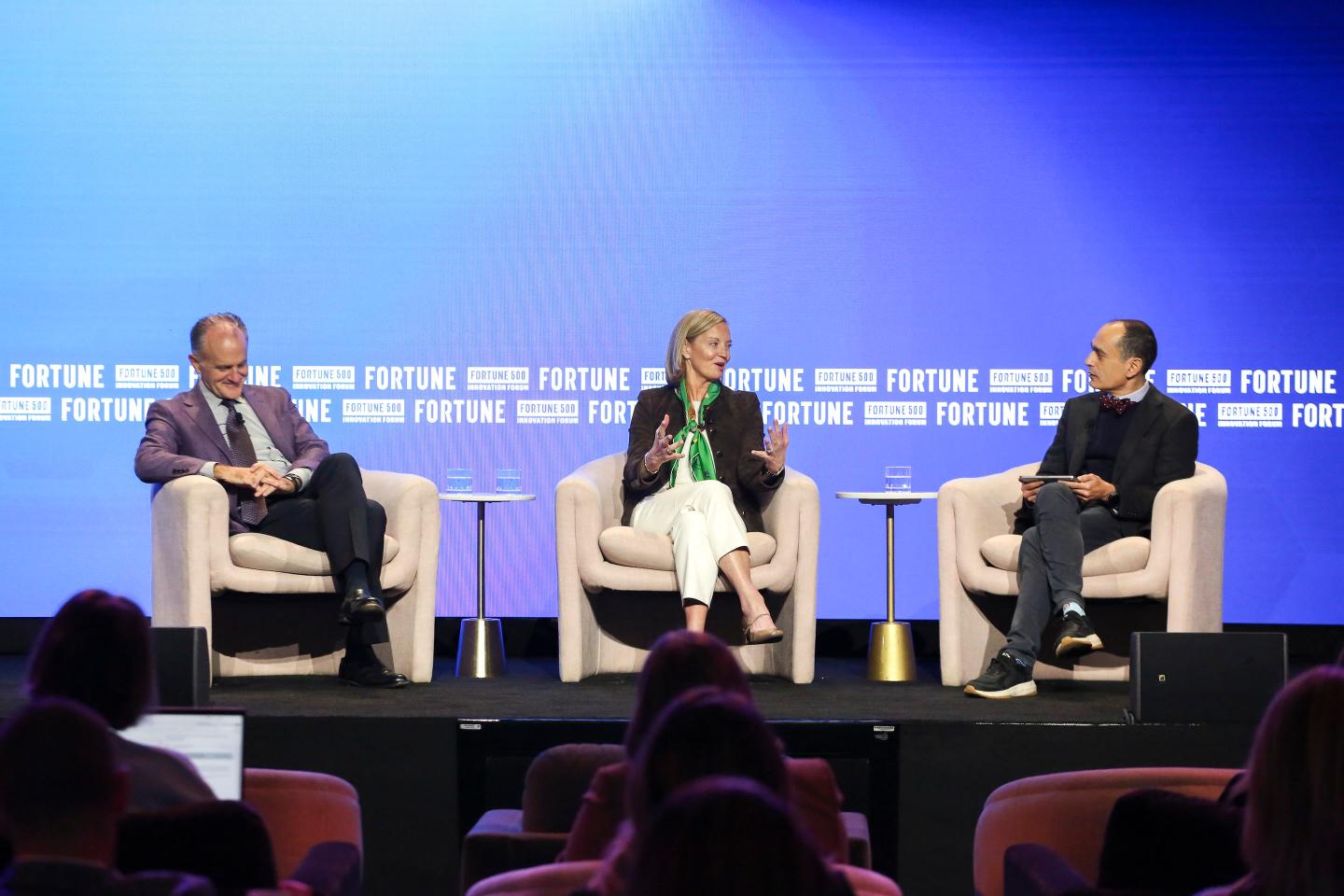
The German carmaker is once again expanding in the U.S. with tariffs in mind, and fellow German industrial giant Siemens is investing heavily too. Speaking on Monday at the Fortune 500 Innovation Forum in Detroit, the U.S. chiefs of both companies told me what they need most from federal, state, and local governments isn’t any single policy. It’s stability.
“Stability in the regulatory environment is, I think, imperative,” said Ann Fairchild, president and CEO of Siemens USA, because “it gives companies the confidence to be able to invest for the long term.”
The two companies have real money riding on that confidence. Siemens has more than 50,000 U.S. employees and has invested more than $1 billion in U.S. manufacturing over the past five years, with more than $200 million announced since for new factories in Georgia and Texas. Fairchild said Siemens also spent $15 billion last year acquiring U.S. software companies, including Dotmatics, to build out its industrial AI business.
Mercedes-Benz, which has said it directly employs more than 11,000 people in the U.S., said in March it would invest $4 billion in its Alabama plant through 2030, part of more than $7 billion it plans to put into U.S. operations. Hoff said the company invests more than $1 billion a year in its manufacturing facilities and other sites.
Both companies are part of a broader wave of European manufacturing investment in the U.S., even as tariffs, emissions rules, and visa policy have shifted sharply in recent years.
Rules that last
Hoff said the auto business’s capital intensity makes long-term predictability essential. “Long-term stability planning obviously is music to our ears because we make big investments,” he said. “Be it visas, be it what direction we are going to take in terms of CAFE rules or greenhouse gases and other things.”
That shapes how Mercedes-Benz lobbies in Washington. Rather than push a specific position, Hoff said, the company mostly asks for rules it can count on to be “in place for many years to come.”
Most executives have already concluded that some of the turbulence is permanent. In a PwC survey this spring, 86% of U.S. executives said they now treat tariffs as a lasting factor in their planning, with many expecting them to outlast the Trump administration.
Workforce, not visas, is the limiting factor
Asked about recent limits on visas for skilled foreign workers, neither executive said the changes had hurt hiring so far. Hoff said Mercedes-Benz monitors the rules and adjusts quickly, and Fairchild said Siemens has “been able to adapt.”
The bigger constraint, Fairchild said, is building a domestic workforce fast enough. Siemens estimates roughly 16,000 new factories and data centers will come online in the U.S. over the next five years, representing about $7 trillion in investment. The workforce “can be our limiting factor if we’re not intentional about developing the workforce,” she said, pointing to Siemens’ partnerships with universities, community colleges, trade schools, and labor groups.
Hoff made a similar point about where Mercedes-Benz chooses to build. Its new tech center in Atlanta is “basically a five-minute walk from Georgia Tech,” he said. “The access to talent plays a key role in where we decide to go.”
The only market with the full value chain
For all the policy noise, both executives said the U.S. remains central to how their companies innovate. The U.S. is Mercedes-Benz’s biggest market outside China, Hoff said, and “the only market where we have the entire value chain represented, so we do research … we produce, we sell, we service, we finance. Everything’s here.”
That has earned the U.S. business more autonomy from headquarters in Stuttgart, he said, because the parent company understands “we need the ability to make decisions quickly and be able to move fast.”
Fairchild described a similar shift at Siemens, where U.S. business-unit leaders are getting “increasing trust and autonomy” to decide how to grow locally. “And the numbers support that,” she said.
Both executives said close ties with government at every level help them weather political swings. Fairchild said Siemens is finding “so much appetite for that investment and collaboration regardless of the political party” in the communities where it builds. Hoff credited close work with local governments for the success of Mercedes-Benz’s two big U.S. plants, near Charleston, S.C., and Tuscaloosa, Ala.
“We’re politically agnostic. We need to be,” Fairchild said. Creating secure jobs for Siemens’ U.S. employees, she added, “needs to survive any one particular election cycle.”