In April 2007, two months before the first iPhone went on sale, Microsoft CEO Steve Ballmer gave Apple’s new phone little hope. “There’s no chance that the iPhone is going to get any significant market share. No chance,” he told USA Today.
He had company. Critics mocked the device’s features, from its touchscreen keyboard to its built-in apps. It cost $499 to $599, lacked 3G and corporate email support, and had no third-party app store at launch.
PC Magazine columnist John C. Dvorak went further, writing in March 2007 that Apple “should pull the plug on the iPhone” and calling the handset business a “buzz saw waiting to chop up newbies.” Fortune later collected the worst of those calls. Apple now ranks No. 4 on the 2026 Fortune 500.
The objections to the iPhone sound familiar in 2026: early technical flaws, high costs, doubts about usefulness for serious work, and the disruption of established industry norms. Generative AI draws the same charges, and Amazon founder Jeff Bezos is betting the skeptics are wrong again.
Bezos makes the case for one paycheck
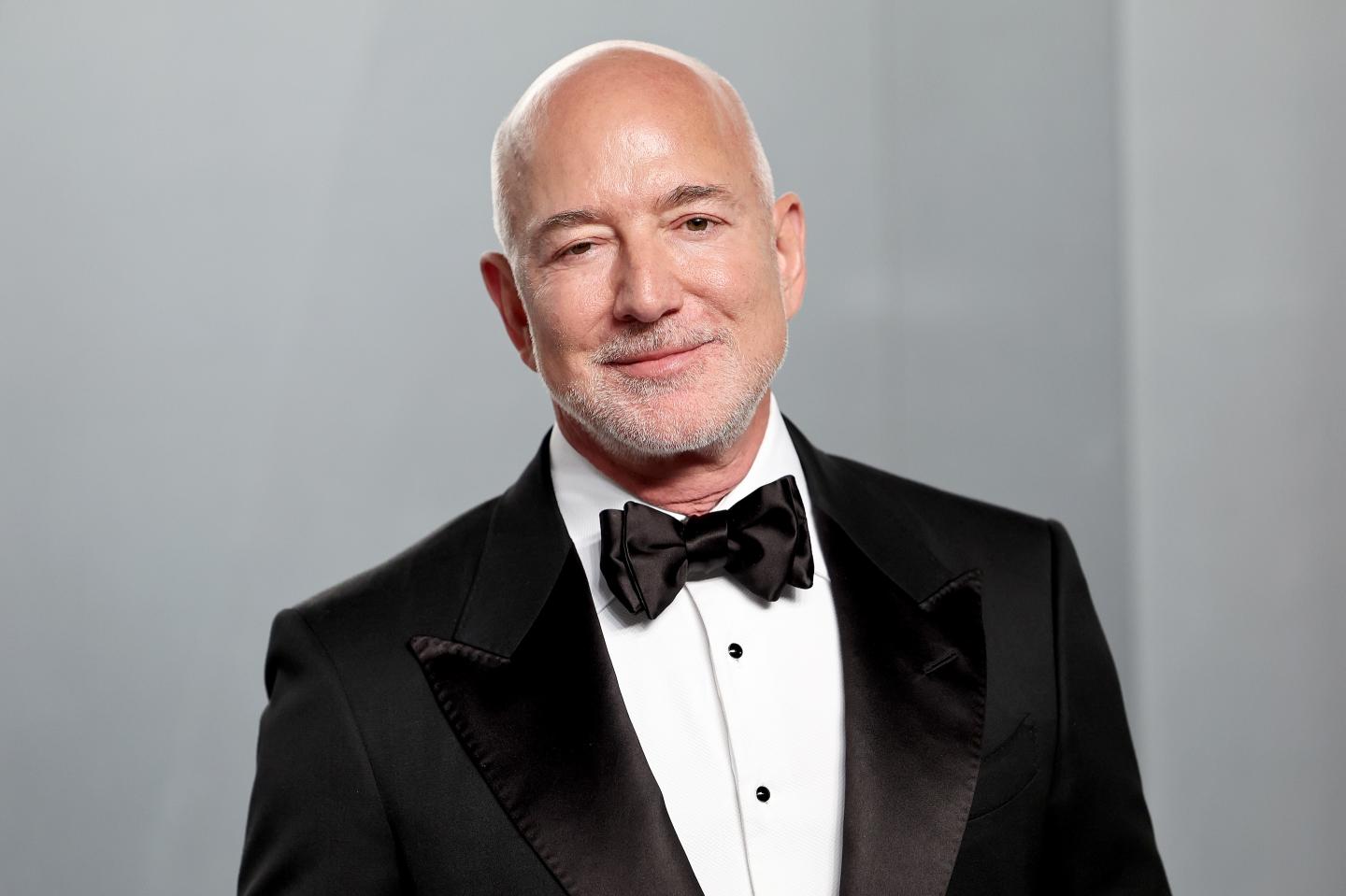
Speaking with Fox News’ Bret Baier on Blue Origin’s factory floor in Cape Canaveral, Fla., for the network’s 30th anniversary, Bezos predicted that AI-driven productivity gains could let two-income households live on one paycheck, or let workers support a family on a three-day week.
“You’re not going to need to have a two-earner household. If you want it, fine. If you don’t want to have it, one of the people might drop out,” Bezos said, as Fortune reported.
Instead of mass unemployment, he expects a labor shortage, with employers competing for people who can afford to work less. “It’s going to actually be difficult to hire people,” he said. He made a similar argument in June at VivaTech in Paris, where he said AI will create more jobs, not fewer.
The stakes are large. In 2025, both parents worked full-time in 52% of U.S. different-sex couples with children under 18, up from 31% in 1975, according to Pew Research Center. A one-paycheck norm would reverse a half-century shift in how American families earn and spend.
Bezos has money behind the prediction. He is co-founder and co-CEO of Project Prometheus, an AI startup that launched with $6.2 billion in funding to apply AI to engineering and manufacturing in computing, aerospace, and automobiles. “We’re going to make the tools so easy to use that anyone will be able to be an engineer,” he told Baier.
Other AI leaders see a rougher transition
Anthropic CEO Dario Amodei has offered a far darker forecast. In May 2025, he told Axios that AI could eliminate roughly half of all entry-level white-collar jobs within five years and push unemployment to 10% to 20%.
Microsoft co-founder Bill Gates has floated a two-day workweek. But in an August essay on Gates Notes, he warned that the shift to AI will be “one of the most turbulent times in human history” and that world leaders are unprepared for its risks.
AI is already changing how tasks are performed, who gets hired, and which skills employers value, according to MIT Sloan research.
Who keeps the gains
Skeptics point to a basic condition in Bezos’ forecast. Productivity gains become shorter hours or a single-income lifestyle only if the savings reach employees. If companies keep the gains as profit or cut headcount, families risk losing a second income without gaining the promised free time.
Bezos’ own company shows the tension. Amazon, No. 1 on the 2026 Fortune 500 with more than $700 billion in revenue, has cut about 30,000 corporate roles since late 2025 while planning more than $200 billion in capital spending this year, mostly on data centers.
The iPhone’s early critics misjudged the product. With AI, the open question is less about the technology than about whether its gains show up in paychecks or in profits.