
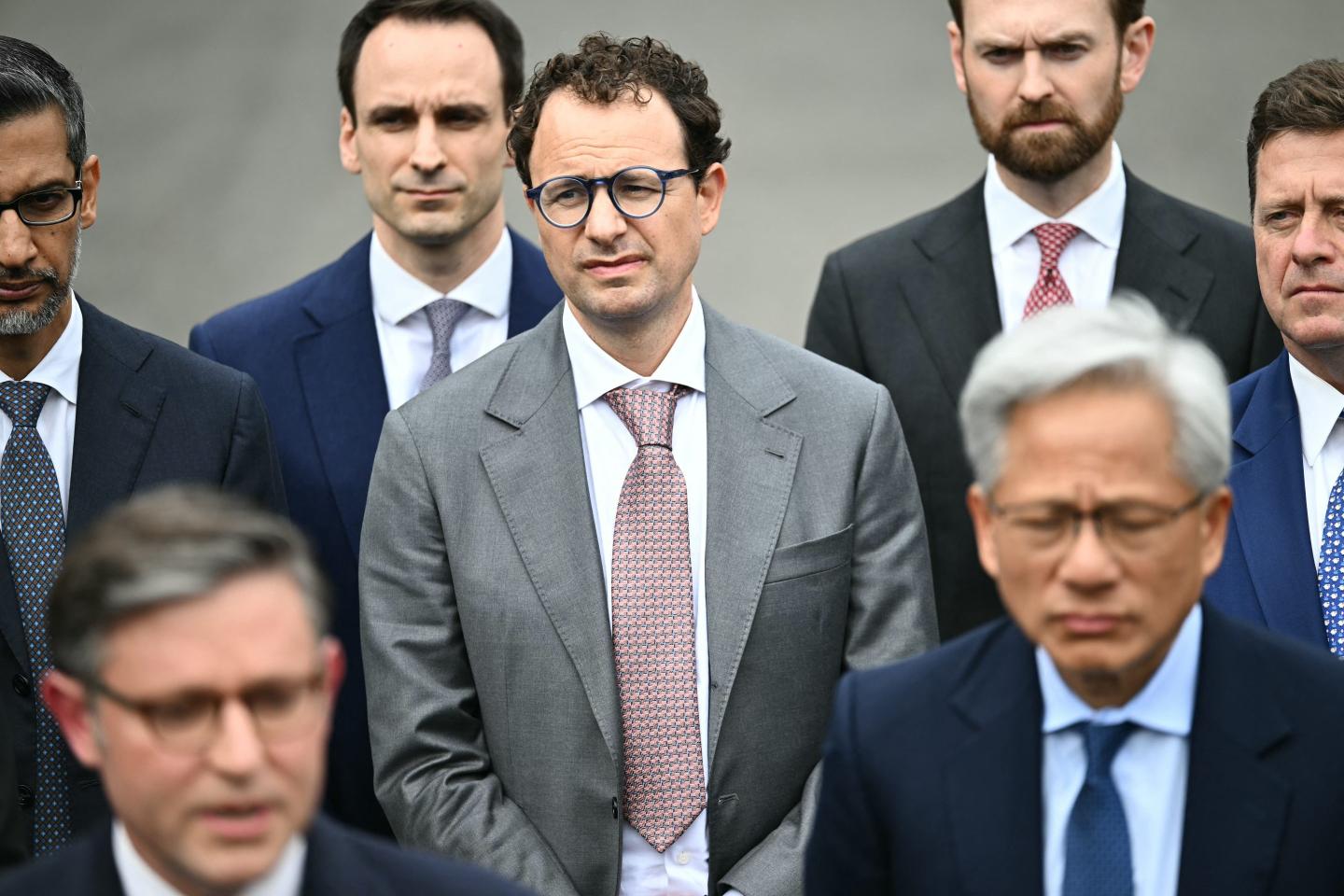
Good morning. My Fortune colleagues have written several sharp stories in light of the deepening Nvidia (alleged) spy scandal. I’d like to briefly highlight a handful for you.
Tech correspondent Sebastian Herrera evaluates the dangers of Nvidia building itself around one man: “The linchpin of the AI industry will test the limits of its corporate governance and succession planning,” he writes.
Reporter Emma Burleigh looks at the historic hit to Jensen Huang’s net worth: After his publicized dalliance, “the billionaire CEO is no longer one of the 10 richest people in the world,” she writes.
West Coast editor Amanda Gerut reminds us that the real focus of this scandal is American chips in China: “Both routes involved selling to a neighboring country to keep the real buyer hidden,” she writes of Supermicro’s recent case involving Nvidia GPUs.
Finally, AI editor Jeremy Kahn assesses the impact on Nvidia’s role in the U.S. bid for AI supremacy: “His influence on U.S. policy is likely to be greatly diminished,” he writes.
In the meantime, Nvidia has hired former acting U.S. attorney Joon H. Kim and law firm Wachtell Lipton to investigate the situation, and it’s looking like Congress may enact new chip export limits this year. We’ll see what happens.
More news follows. —Andrew Nusca
Thoughts? Suggestions? Hot tip? Drop me a line.
THE BIG STORY
Anthropic IPO range values it at up to $1.4 trillion
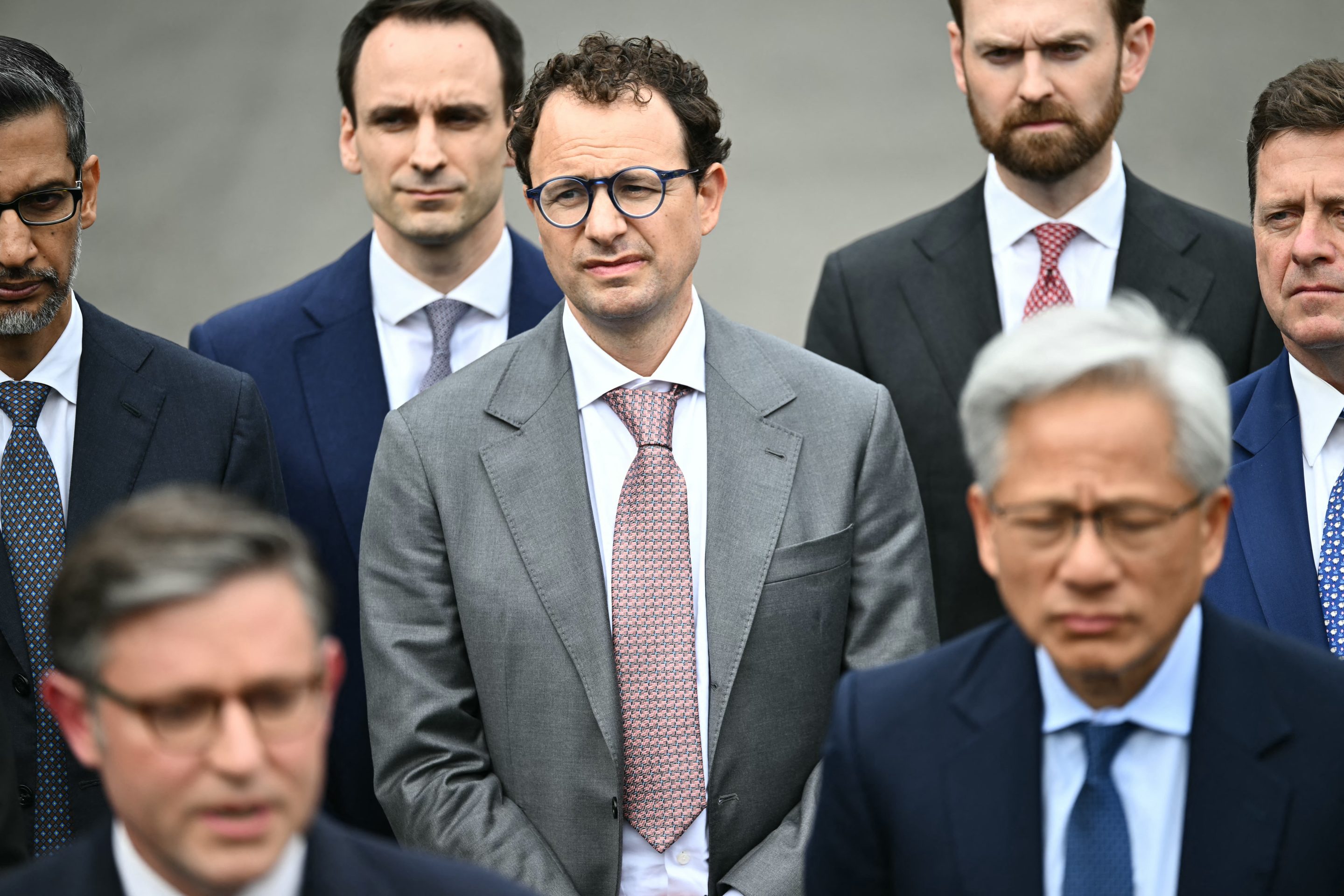
AI lab Anthropic has launched the roadshow for its long-awaited initial public offering.
The company announced a price range of $70 to $78 a share, a range that would value the AI lab at up to $1.4 trillion on a fully diluted basis, but is well short of the $2 trillion that some news outlets had reported just weeks ago.
Anthropic filed confidentially in June and made its prospectus public on Oct. 26. SpaceX, which listed in June, had sought a valuation of about $1.75 trillion.
Trading in Anthropic shares could start as early as Wednesday or Thursday next week. Anthropic is selling 825 million shares on the Nasdaq under the ticker “ANT,” which would raise up to $64.4 billion at the top of the range. Seven strategic partners, including Google and Nvidia, have also agreed to buy $26 billion of non-voting stock at the IPO price.
Tuesday’s amended filing adds that Anthropic’s annualized revenue run rate reached about $81 billion as of the end of October, up from roughly $71 billion in late September.
The IPO lands at a difficult time for the broader AI industry. Following the Democrats’ major gains in the midterms, the AI sector has faced a sharp sell-off as fears over stricter regulation and tougher scrutiny, especially around the data center buildout, have spooked investors. Instability at Nvidia, one of Anthropic’s key strategic partners, has added to the market jitters.
All of that comes in addition to earlier fears—often voiced by Anthropic—about the safety, and potential existential risk, of the AI systems the labs are building.
Indeed, Anthropic’s prospectus also carries a fresh warning about the company’s progress toward recursive self-improvement (RSI)—the point at which AI systems become capable enough to substantially build their own successors, with each generation speeding up development of the next.
RSI has been a long-held safety concern because that feedback loop could, in theory, push AI capabilities forward faster than humans can test, understand, or control them. Anthropic’s filing acknowledges the risk, warning that using AI to build more capable AI “could also pose a considerable safety risk, particularly if it sharply accelerates the pace of progress.”
In a new amendment, Anthropic said internal estimates about future models indicate it “may imminently meet” its Responsible Scaling Policy’s definition of “dramatically accelerated progress attributable to AI.” The policy pegs that threshold at roughly a doubling in the pace of AI progress, driven substantially by AI automating research. Anthropic said no current model has crossed it and that it is considering policy changes “to keep humans in control of frontier model development.” —Beatrice Nolan
THE BLIND BOX
“The [AI] models don’t know when not to do something for a patient.”
THE RUNDOWN
—OpenAI reportedly told investors that its Q3 revenue was $10 billion, a 50% jump.
—CoreWeave shares rise 5% after Q3 revenue beats expectations and full-year guidance improves.
—Oura will acquire Counsel Health. The bill for the on-demand doctor tool? $625 million cash.
—The global memory chip shortage will be awful in the first half of 2027, predicts one Taiwanese hardware CEO.
—AI agents for errands? Not really a thing yet, according to Airbnb, DoorDash, and Uber.
—Google launches Gemini for Healthcare. Hospitals hope its work between records, billing, and insurance systems leads to reduced medical bills.
—Anthropic’s Claude can now join video calls as an active, visible teammate. (You’re still on mute, pal.)
—Alta raises $48 million to further develop a blockchain that allows transactions to obey rules and regulations anywhere in the world.
THE PARTING SHOT

Here’s a fun one: How much revenue will Anthropic have in 2030?
According to Goldman Sachs, more than $600 billion.
That is…
—130 times what Anthropic sales were last year
—The combined amount that Alphabet, Amazon, and Microsoft will invest in capital expenditures this year
—The amount Apple has committed to U.S. manufacturing efforts over the next four years
—The estimated annual cost to the U.S. of Chinese intellectual property theft
—The rough estimate of how much it will cost to rebuild Ukraine after its war with Russia
—The nominal GDP of Thailand