OpenAI has a new name for the loud, dull, gray buildings Americans don’t really want as their next-door neighbors, and it’s calling them “compute campuses.”
Along with the rebrand comes a list of promises. On Thursday, the company published a National Community Compact, pledging to pay its own energy costs, disclose what its facilities do to the places around them, and give residents a say in how future sites it owns and operates are built.
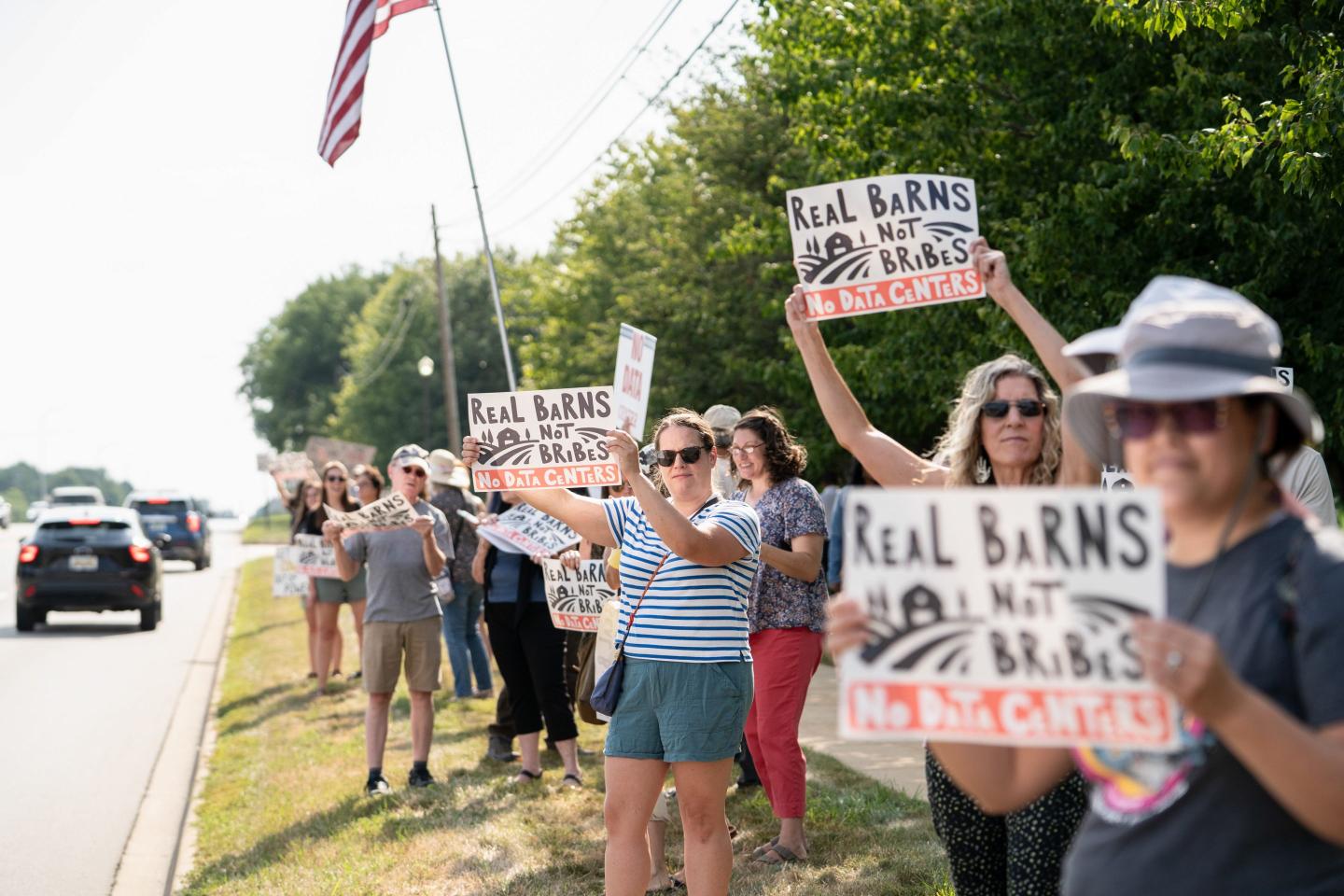
The announcement came just two days after voters backed restrictions or rejected pro-development proposals in all but one of the 41 local data-center ballot measures across 10 states, according to Ballotpedia.
“Voters made their concerns about data centers clear in this week’s elections, and we need to listen and respond with concrete action,” OpenAI Chief Global Affairs Officer Chris Lehane wrote on LinkedIn Thursday, while also acknowledging that data centers had become a proxy for concerns about affordability, corporate power, and communities losing control over their futures.
OpenAI is banking on this pitch working because, for the company, it’s about more than image. Its very growth depends on putting up enormous facilities in towns where people are asking, with growing suspicion, what’s in it for them and what they could lose.
The ChatGPT maker argues that “compute campuses” captures an economic role extending beyond the buildings themselves. In a policy blueprint released alongside the compact, it says specialized equipment and recurring hardware upgrades can generate sustained demand for skilled workers and local suppliers.
“The goal is for these campuses to support lasting local jobs and economic development beyond our facilities, with communities having a say in how they’re built,” an OpenAI spokesperson told Fortune in an email statement.
Allen Adamson, a veteran brand strategist, is skeptical that the data center rebrand will help. “You can’t rename your way out of a problem,” he told Fortune.
He pointed to Facebook’s change to Meta, which he saw partly as an attempt to escape the backlash against social media. But a new name didn’t change the fact that it was still a social media company, he said—just as calling a data center a “compute campus” doesn’t change what’s next door.
Rebranding works best when it follows improvements to the product, he said, giving consumers a reason to reconsider the company along with its name. He also questioned what the term “campus” will evoke for residents when the facilities merely house servers and power equipment, rather than an actual OpenAI campus where people research AI and think about how to build it.
“A campus implies a university, not a warehouse,” Adamson said. “If you pick a name, you don’t want to overpromise. You want to try to realistically reflect what it is.”
Brendan Steinhauser, a Republican strategist and CEO of the Alliance for Secure AI who is working to get his party on board the AI safeguards train, suggested the terminology might initially confuse residents without changing how they feel once they understand what’s being built.
They would still see, in his words, “a big ugly thing in my neighborhood that uses a bunch of water and drives up my energy costs.”
What’s on offer
OpenAI’s compact outlines changes to how it develops and operates its facilities, including publishing construction plans, commissioning independent noise studies, and reporting water and electricity use. It says it will not require public officials to sign nondisclosure agreements as a condition of discussions or negotiations, while allowing narrow protections for security, trade secrets, and other sensitive information.
The company also pledges to pay for the electricity and additional infrastructure needed to serve its sites, with financial assurances to protect other customers if a project is delayed, reduced, or canceled.
Other commitments reach beyond the facilities’ immediate impacts. OpenAI says it has committed $80 million beyond tax payments in Effingham County, Georgia, including a $4.8 million grant to provide free school meals for all 14,000 county students. In Pike County, Ohio, it says families identified childcare as a priority, leading to a joint $6 million commitment from OpenAI and SB Energy.
OpenAI says that it’s building on commitments announced in January, and its latest blueprint was in development before the election, according to CNBC.
Other companies are also making similar offers. Amazon last month announced a $1 billion investment in data-center communities, including community college access and home energy upgrades, with the program spanning five years. Microsoft’s Datacenter Academy works with local colleges to train people for data-center jobs, offering scholarships that can cover tuition, fees, and certification costs.
Steinhauser said sustained investment could help companies build goodwill over time, pointing to youth centers, libraries, infrastructure, and jobs that last beyond construction. He cited Andrew Carnegie and Andrew Mellon, whose spending on museums and libraries helped soften their reputations as robber barons.
But broader distrust of technology companies, he expects, remains an obstacle. “I think it’s just that sort of skepticism of big tech is just going to outweigh any rebranding effort,” he said.
Who protects ratepayers
OpenAI is also asking policymakers to establish industry-wide rules. While its compact covers future facilities it owns and operates, its blueprint proposes broader requirements for large electricity users to cover the costs they add to the grid, alongside public reporting on facilities’ local impacts.
Mark MacCarthy, a technology policy expert and nonresident senior fellow at the Brookings Institution, said that it’s up to state lawmakers and regulators to ensure households aren’t left paying for data centers’ energy needs.
“I don’t think there’s anything tech companies can do to reassure the public. There’s no trust left,” he told Fortune. “Certainly, changing the terminology won’t do any good.”