If you have learned even a little bit about the history of economics, you will likely know the names of its founding fathers: Adam Smith, David Ricardo, Thomas Malthus. But you almost certainly have not come across the women who founded the field alongside them, helping it to gain widespread popularity while advancing and altering its earliest theories.
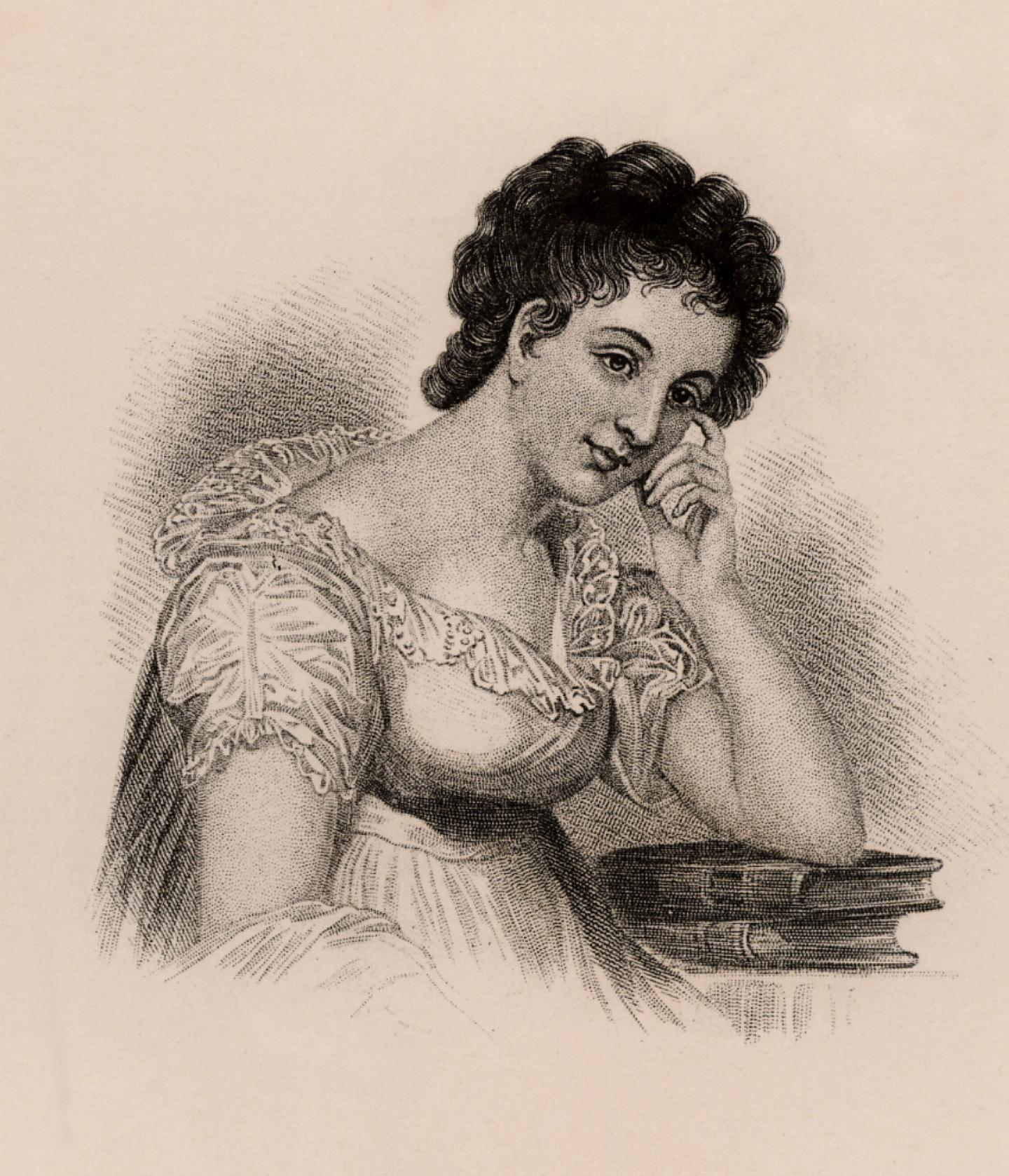
Born in January 1768, Maria was the eldest daughter of the Anglo-Irish landowner Richard Lovell Edgeworth and his first wife, Anna Maria Elers. Maria’s mother died when she was five, leaving her under the care of her eccentric father—a law student turned philosopher turned gentleman farmer who would go on to have four wives, twenty-two children, and a lifelong interest in seemingly every idea the Scottish and English Enlightenments had to offer.
Maria spent much of her childhood in English boarding schools, learning how to be a high-society lady. But when she was fourteen, in 1782, her father moved her back to Edgeworthstown and made his eldest daughter his apprentice. Suddenly, instead of spending her days learning needlepoint and French in hushed drawing rooms, she dedicated them to accompanying Richard Lovell as he rode across muddy fields to meet tenants and to reading the likes of Adam Smith, Mary Wollstonecraft, and Jean-Jacques Rousseau under his tutelage. It was this unconventional upbringing that shaped Maria into a most unusual woman—and an early economist.
In the decades that followed, as the original economists interpreted and reinterpreted Smith, wrestling with the relationships between renters and their landlords, the free market and the state, Maria grappled right along with them. Classical economics came largely from a small circle of English, Scottish, French, and Genevan elites who knew each other and frequently swapped ideas as they invented a new field of thought from scratch. Yet even as her friends and acquaintances came up with abstract theories and set them down in academic treatises, Maria hid her version of economics in storybooks.
She was, after all, a woman.

Ladies had enjoyed a period of relative intellectual freedom during the enlightened years of the late eighteenth century, but that window was closing by the time Maria was beginning to publish. Her father still took a liberal view toward what the female brain was capable of achieving, but society did not. Academic women were viewed as subversive, even dangerous. Maria was a society woman and a scientist, and to maintain both identities, she needed to conceal and downplay what she was doing or risk ruining her reputation. Hiding economics in fiction was a way to make her academic interests socially acceptable. While her sex was a limitation, it was also an opportunity. In storytelling, Maria found a way to spread ideas to a much broader audience than her male colleagues ever reached.
Maria published more than two dozen novels and short story collections between 1795 and 1848, many of them full of economic ideas and lessons. She almost certainly never wrote down an equation to describe the relationships she tested and observed. She would not have called herself an economist. But as her books struck a chord and sold thousands of copies, they helped to spread formerly inscrutable ideas far and wide. Readers across the English-speaking world were exposed to whatever lessons she chose to tuck into her fictional pages: social commentary, ruminations on rent, ideas for improving the lot of the poor.
Maria’s lessons reached every corner of the empire. King George III reportedly said, “I know something now of my Irish subjects,” after reading Castle Rackrent. Generations of children, including Queen Victoria, would be reared on the educational texts Maria and her father co-wrote. (A young Victoria would, in fact, write a story mimicking Maria Edgeworth at the age of ten, called “Sophia and Adolphus: In the Style of Miss Edgeworth’s Harry and Lucy.”) Novels were among the most important mass media of the day, and Maria was among the most famous novelists of her moment. The boost she was giving to the brand-new field of political economy was enormous.
As Maria’s fame and status matured, she began advising politicians and policymakers on economic matters. Poor relief and education policies of her era were designed with her input, at times prescient and at other times shockingly misguided. Speeches for Parliament were written under her critical eye. Perhaps most interesting, she was close friends with Malthus, Ricardo, and the English economist Richard Jones, and her conversation and letters informed their thinking; Jones explicitly sought her counsel. Her nephew Francis Ysidro Edgeworth would go on to invent some of the basic concepts taught in Economics 101 classes to this day. From her letters, we know that it was Maria who had first placed Adam Smith into his father’s hands.
Yet at the very heart of this story sits a mystery. How did Maria—the most famous literary celebrity of an era, and a woman who helped to develop and popularize a set of philosophies that would soon go on to reshape society as we know it—fade from our collective memory? If she was as influential as I’m about to argue, why do we hardly know her name? We’ll get to the bottom of it. Because we did not forget Maria by accident, and when she disappeared from our collective awareness, so did her hopes and dreams for the field she helped to found.
Maria Edgeworth believed that economics provided a set of useful tools and guidelines, not a series of absolute rules. More important, she believed that economics could and should be for everyone. When we lost sight of her, we lost sight of why that mattered.
Economics belonged to the great men of Maria Edgeworth’s era. But some 250 years after her birth, it is time to recognize that it also belonged to the women—and to one in particular.
Adapted from: The Invisible Hand of Maria Edgeworth by Jeanna Smialek, Copyright © 2026 by Jeanna Smialek. Published by arrangement with Alfred A. Knopf, an imprint of The Knopf Doubleday Group, a division of Penguin Random House LLC.