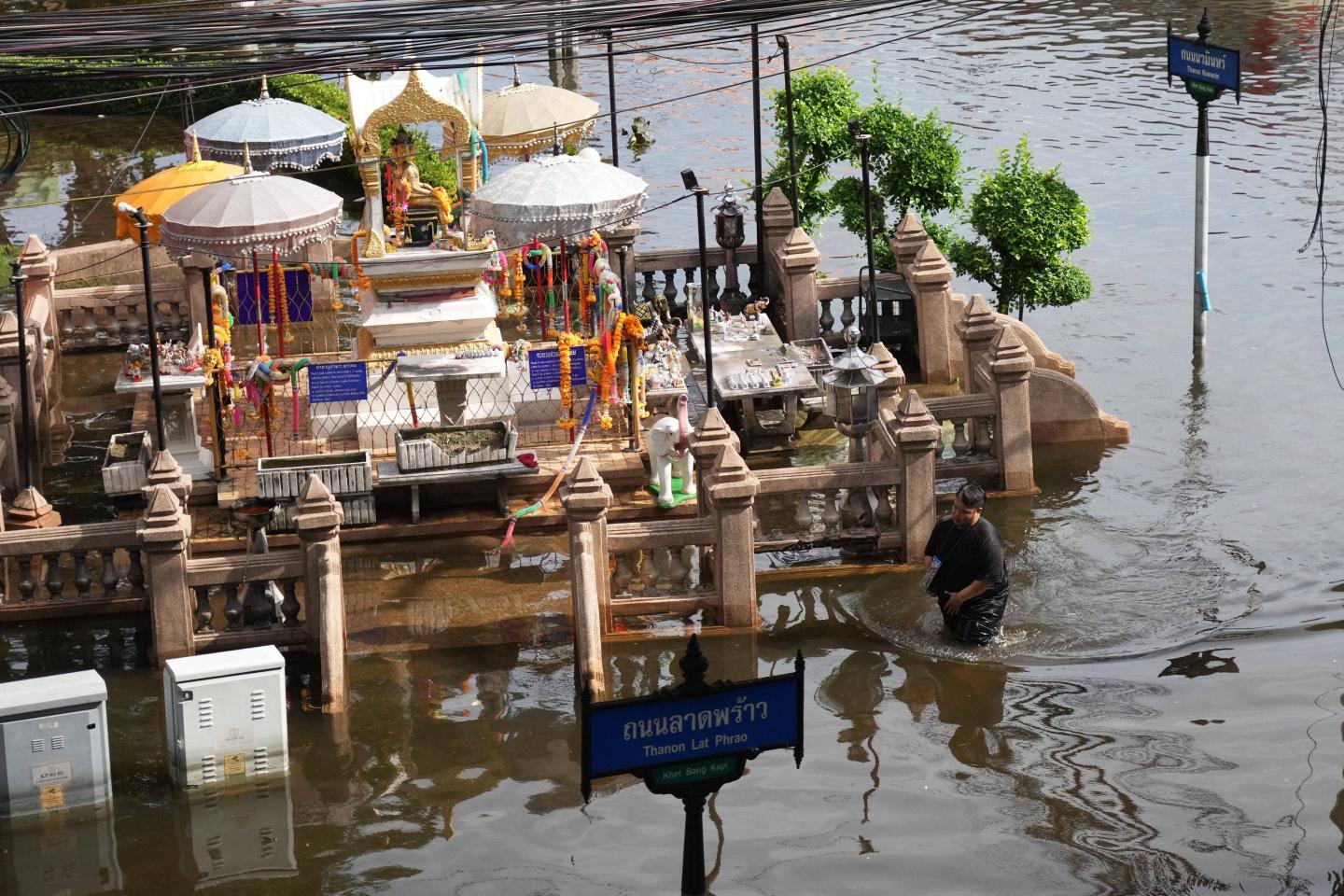
After a sweltering summer on both sides of the Atlantic and a fall marked by storms in the Pacific, climate adaptation will be top of mind for many attending this year’s COP. Yet new research from the McKinsey Global Institute suggests that by 2050, the world could be leaving $690 billion in potential annual adaptation spending on the table.
The problem is neither a lack of solutions nor economic value. Cooling systems can protect people from heat, irrigation can safeguard crops, and flood defenses can protect homes and businesses. On average, adaptation measures deliver benefits in avoided losses worth three times their cost.
The question is how to turn that economic value into protection for those who need it. For adaptation to be “deployment ready,” someone must want and be able to implement it, and someone must be willing to finance it. Yet what makes economic sense for society does not always make financial sense for those expected to act.
At 2°C of warming, which current emissions trajectories suggest could be reached by 2050, protecting people and places to developed-economy standards could cost $1.2 trillion annually.
The good news: About $460 billion, or 40%, is likely to be deployment ready. Much of it would fund cooling, stormwater management, and irrigation in high-income places with greater ability to pay and access to financing.
That leaves 60% of adaptation needs facing barriers to deployment. We identified three challenges—affordability, willingness and ability to act, and bankability. Different barriers call for different responses. Lower costs cannot solve a coordination problem, just as more financing cannot create demand where incentives are missing.
The biggest barrier is affordability, affecting measures costing about $440 billion annually. In lower-income regions exposed to heat and drought, adaptation competes with food, housing, and other essentials, and lenders may doubt a borrower’s ability to repay. Protecting people to developed-economy standards at 2°C would cost about $130 per person annually on average—roughly half of an average household’s monthly income in Bangladesh.
In India and Sub-Saharan Africa, adaptation could cost 2% to 3% of GDP, with less than 20% of needed investment expected to be deployment ready. In higher-income regions, costs would be just 0.3% to 0.5% of GDP, with more than half deployment ready.
Making adaptation affordable requires lower-cost solutions and financing that can reach underserved households. In Ahmedabad, India, reflective cool roofs offered a relatively inexpensive way to protect low-income households from extreme heat. But individual installations were too small to attract conventional financing, while upfront costs remained out of reach for many residents. By bringing thousands of households together and combining subsidies with credit, the city and the Mahila Housing Trust helped overcome both obstacles.
A second set of barriers affects measures costing about $210 billion annually, where willingness or ability to act is missing, even when financing may not be constrained. Some landowners or institutions may bear disproportionate costs for measures that benefit entire communities, weakening incentives to cooperate. Wildfire protection can prevent catastrophic losses, but its value may be invisible until disaster strikes. Large-scale projects often require years of coordination across governments, businesses, and communities.
Singapore’s Marina Bay district cooling network illustrates how execution challenges can be overcome. A shared district cooling system promised substantial efficiency gains over separate building-level cooling, but required developers to connect to common infrastructure and rely on a dedicated operator. Singapore integrated cooling pipes into the district’s infrastructure, established connection requirements, and licensed an operator to run the network.
The remaining $40 billion faces financing barriers, even where demand exists. Projects that prevent losses instead of generating income may struggle to attract financing. In England’s Wyre catchment, insurers, utilities, and public agencies agreed to pay for flood protection they expected to receive. Those payments created a revenue stream to support private lending.
For businesses, financiers, insurers, and governments, the implication is clear: adaptation is not one market, but a collection of opportunities at different stages of readiness. Some can be pursued today; others require new technologies, partnerships, or financing models. Understanding the barriers to deployment is the first step toward turning adaptation needs into viable investments—and protecting lives and livelihoods.
The opinions expressed in Fortune.com commentary pieces are solely the views of their authors and do not necessarily reflect the opinions and beliefs of Fortune.