Laika, the Oregon studio behind Coraline and ParaNorman, has something close to a hit on its hands, at least by its own standards. Wildwood, the company’s sixth feature and, like all of its films, made entirely in stop-motion animation, opened in third place on Oct. 23 with roughly $12.3 million at the domestic box office. Directed by Laika president and CEO Travis Knight, the film held up over Halloween weekend, slipping just 39% to an estimated $7.5 million and lifting its domestic total to $25.9 million, according to the Associated Press. It again finished third, behind A24’s Elizabeth Holmes documentary You Can See Everything and DC Studios’ Clayface.
In an animated landscape dominated by billion-dollar sequels like Toy Story 5 and The Super Mario Galaxy Movie, those are modest numbers. For Laika, they’re a meaningful rebound. Its previous film, 2019’s Missing Link, opened to just $5.9 million and finished with $16.6 million domestically. Wildwood has already passed that film’s entire global run, reaching nearly $36 million worldwide as it rolls out across dozens of international markets, per Deadline.
Still, the film is a long way from profitable. Laika hasn’t disclosed Wildwood’s budget, but it has been widely reported at about $100 million, more than Illumination spent on Minions & Monsters ($85 million) or DreamWorks spent on Forgotten Island ($80 million), an acclaimed original that opened to a similar $13 million last month.
Laika’s track record makes the math harder. Its domestic grosses have shrunk with nearly every release since Coraline took in $75 million in 2009: ParaNorman earned $56 million in 2012, The Boxtrolls $50.8 million in 2014, and Kubo and the Two Strings $48 million in 2016, according to Cartoon Brew, before Missing Link bottomed out at $16.6 million. International ticket sales and home entertainment help, but theaters typically keep around half of every ticket sold, and production budgets don’t include marketing costs. By the common industry rule of thumb that a film needs to gross about 2.5 times its production budget to break even in theaters, it’s quite possible that only Coraline, buoyed by a blockbuster 2024 rerelease, has cleared that bar. Laika is privately held and doesn’t report its finances.
How Nike money built a stop-motion studio
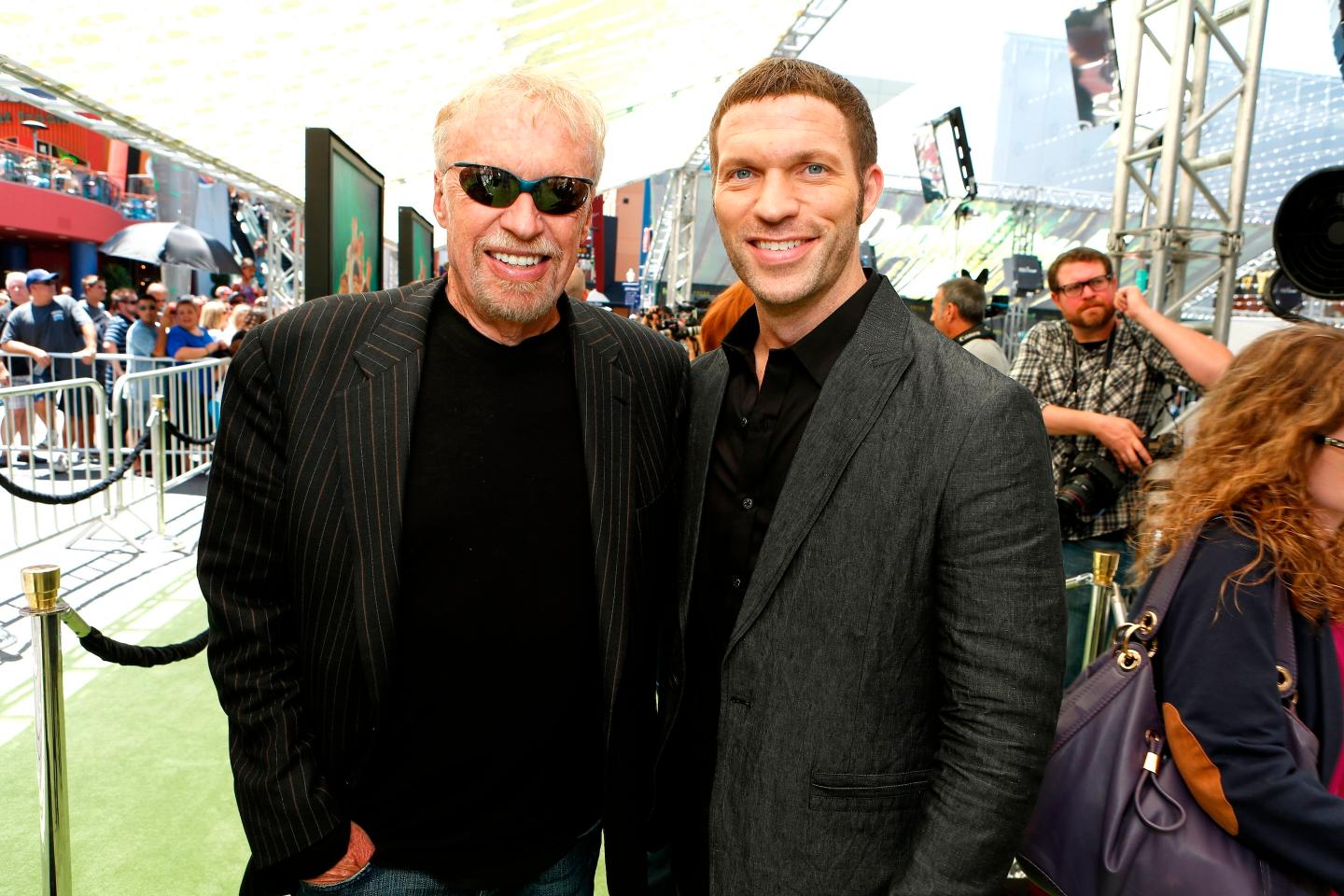
So how does Laika keep going? Not through side work: The studio spun off its commercial division in 2014 to focus exclusively on features, unlike peers such as Aardman Animations that still take on advertising work. Travis Knight has also directed outside the studio, including 2018’s Bumblebee and this year’s Masters of the Universe, which struggled at the box office. The real fuel keeping Laika’s puppets moving, one frame at a time, is his father: Nike co-founder Phil Knight.
Phil Knight took a stake in Laika’s predecessor, Will Vinton Studios, in 1998, around the time Travis joined the company as an animator. Knight became majority owner in 2002, and founder Will Vinton was ousted the following year, a bitter episode revisited in the documentary Claydream. The studio was renamed Laika in 2005. It brought on The Nightmare Before Christmas director Henry Selick, who directed Coraline, based on Neil Gaiman’s novella.
Laika’s first four films were distributed by Focus Features before United Artists Releasing put out Missing Link. Fathom Entertainment, a smaller distributor best known for event cinema and rereleases, is releasing Wildwood domestically, including Laika’s 2024 Coraline anniversary run, which became Fathom’s highest-grossing release in the U.S.
A small distributor and big creative leeway
That arrangement may serve the film creatively. Rated PG-13, a first for Laika, Wildwood is no breezy family outing; the MPA cites strong fantasy violence, bloody images, and suicide-related material, among other content. By contrast, Netflix and Skydance Animation’s Ray Gunn and DreamWorks’ Forgotten Island had to make trims this year to land PG ratings.
The Knight family’s wealth, roughly $26 billion by Forbes’ real-time estimate, is what lets Laika take creative and business risks like these. It’s probably also why Laika remains in Hillsboro, Oregon, in the same Portland suburbs as Nike’s Beaverton-area headquarters and more than 800 miles from Hollywood. Travis Knight, for his part, has also served on Nike’s board since 2015.
The anti-Skydance
By definition, Phil Knight bankrolling his son’s studio could fall under the heading of nepotism, a loaded word but a common practice in Hollywood. The most prominent current example is Oracle co-founder Larry Ellison, one of the world’s richest people, who personally guaranteed $40.4 billion to back his son David Ellison’s pursuit of Warner Bros. Discovery. That deal closed Oct. 6, folding Paramount and Warner Bros. into a single company now called Skydance.
Arrangements like that usually draw skepticism, but Laika tends to get a pass, perhaps because the Nike money is funding something that might not otherwise exist. Stop-motion is a painstaking and increasingly rare art form. Travis Knight began developing Wildwood, an adaptation of Colin Meloy and Carson Ellis’ novel, shortly after Coraline, and has described its road to the screen as a 16-year journey, with everything onscreen built and moved by hand. Economically, the medium rarely makes sense. Stable backing gives Laika the rare privilege of creating with less financial pressure.
By comparison, Skydance is now a media colossus whose future rests on franchise blockbusters and technology. Laika is telling original stories while keeping a distinctly human form of filmmaking alive. As studios race to adopt generative AI, Wildwood’s handmade tactility plays like a statement in defense of human artistry.
What’s next for Laika
The company is branching out. It hired former Netflix executive Matt Levin in 2023 to run a live-action division, and it is developing its first series, an adaptation of Emily St. John Mandel’s novel Exit Party, with Emma Stone and Dave McCary’s Fruit Tree. Its animation slate includes an adaptation of Susanna Clarke’s Piranesi, which Travis Knight is set to direct, and The Night Gardener, based on an original idea from Ozark creator Bill Dubuque.
Box office aside, all five of Laika’s previous features earned Oscar nominations for Best Animated Feature. With some of the year’s best reviews, Wildwood could finally win the studio its first.