The Labor Department has until Dec. 30 to rewrite the formula that sets pay for nearly 400,000 seasonal farm jobs, after a federal judge ruled that the Trump administration illegally cut wages for foreign guest workers. If it misses the deadline, wages automatically snap back to rates set under the Biden administration. Growers who have been paying the lower rates may also owe back pay.
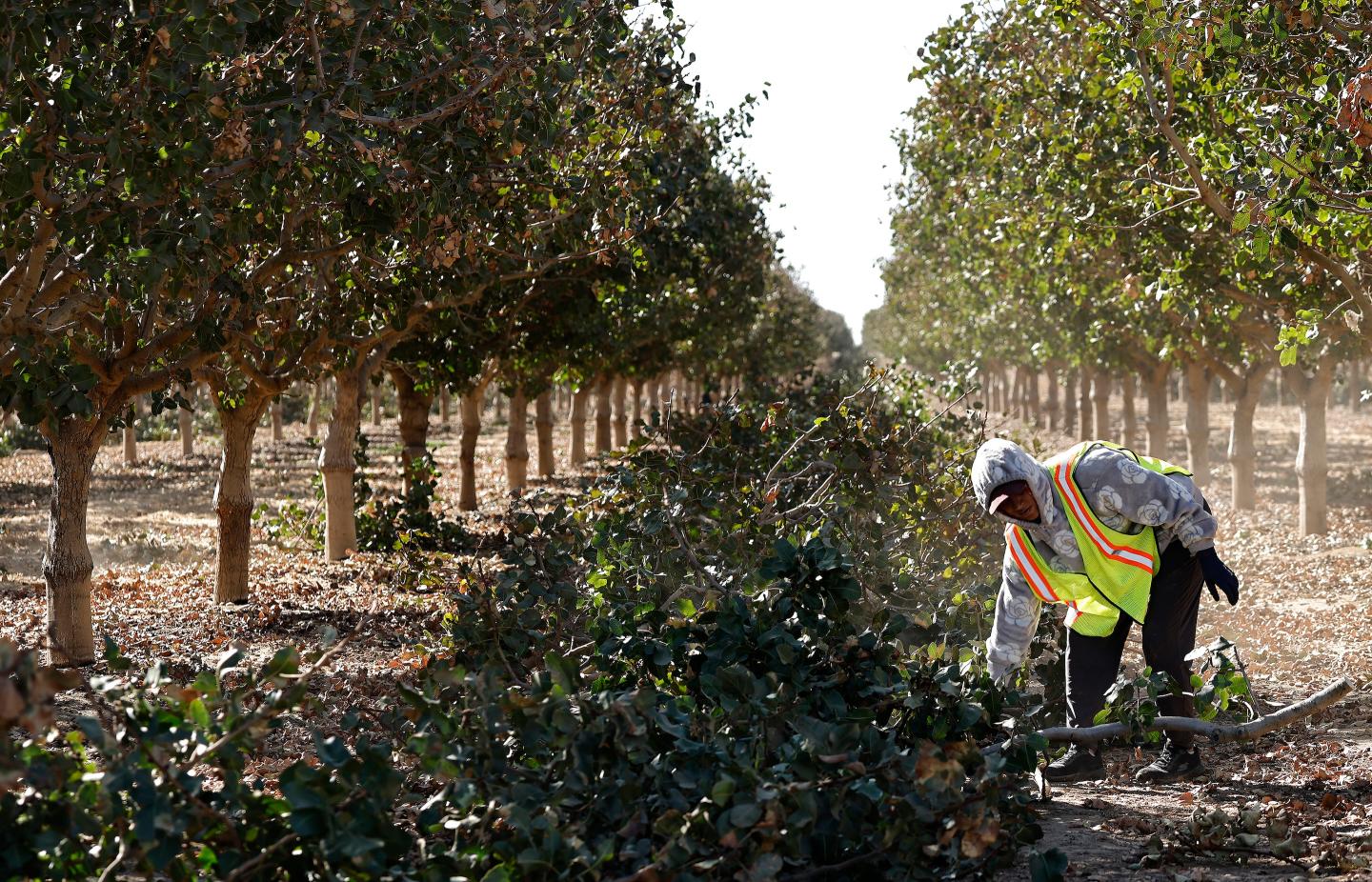
Roughly a sixth of the U.S. agricultural workforce comes to the country temporarily to do jobs their employers say they otherwise can’t fill. Most harvest labor-intensive crops, such as melons, apples, and tomatoes, that machines can’t easily pick. They arrive on H-2A visas, which allow U.S. employers to hire foreign nationals for seasonal work if they can demonstrate that U.S. workers are unable or unwilling to fill the roles.
Growers have leaned harder on the program as the domestic farm labor pool shrinks and immigration enforcement tightens. H-2A certifications have climbed every year since 2012, reaching a record 398,258 positions in fiscal 2025.
That growth has come with persistent problems. Between fiscal 2018 and 2023, the Labor Department found violations in 84% of its investigations of H-2A employers, most commonly involving pay, according to a 2024 Government Accountability Office report. In an extreme case, federal prosecutors in Georgia in 2021 charged 24 people with running a trafficking operation that exploited dozens of H-2A workers in conditions they described as “modern-day slavery.” At least two workers died as a result of the conditions.
How the wage floor fell
Historically, guest workers’ pay has been tightly controlled to ensure that domestic workers’ wages aren’t undercut. Based on its own findings that a lower floor could depress U.S. farmworkers’ pay, the Labor Department set the H-2A minimum at the average farmworker wage in each state or region, using the U.S. Department of Agriculture’s Farm Labor Survey.
That changed last year. In August 2025, the USDA discontinued the Farm Labor Survey. Then, on Oct. 2, the Labor Department issued an interim final rule that relies instead on a Bureau of Labor Statistics survey of mostly nonfarm employers. The rule split H-2A jobs into two pay tiers, with entry-level wages set at roughly the 17th percentile of pay, a tier the department expected 92% of jobs to fall into. It also cut wages further to offset the housing employers must provide to H-2A workers.
In California, the minimum H-2A wage fell from $19.97 an hour to the state minimum wage of $16.90. The Labor Department estimated the new calculation would shift about $2.46 billion a year from workers to employers.
Among the employers that applied to hire workers under the new rates was the Trump Organization. About two months after the rule took effect, it sought 36 H-2A workers for its Virginia winery at a pay rate nearly $2 an hour below what it had previously offered, Forbes reported.
The ruling
The United Farm Workers union, the UFW Foundation, and 18 farmworkers sued over the rule last November. On Aug. 26, U.S. District Judge Kirk Sherriff of the Eastern District of California sided with the plaintiffs. Sherriff found that by setting pay for most H-2A workers “well below the relevant market wages,” the department had failed to reasonably consider whether the rule met its legal duty to protect U.S. workers. He also found the department had improperly skipped public comment.
Rather than throwing out the rule immediately, which could have left the program without wage rates, Sherriff left it in place and told the department to promptly develop a replacement. The Labor Department then sent employers a notice on Sept. 2 warning that they may owe workers the difference between the current rates and the new ones, once a revised formula is in place.
When the department asked for up to six months to write a new rule, Sherriff balked. In an Oct. 2 order, he set a Dec. 30 deadline and ruled that the current rule will expire that day either way.
“For over a year, farm workers have been working for illegal wages that are so drastic that workers cannot afford the rising costs of rent, groceries, gas, medications, and other basic needs for survival,” Erica Lomeli Corcoran, CEO of the UFW Foundation, said in a statement after the deadline was set.
The National Council of Agricultural Employers, a trade group that backed the rule, criticized the ruling.
“The Department’s IFR [interim final rule] provided long-overdue stability against runaway wage mandates,” John Hollay, the group’s president and CEO, said in an announcement for a webinar about the decision. “Striking down the IFR has reopened that wound and throws American agriculture and our rural communities back into financial and existential instability.”
What comes next
The Labor Department must report its progress to the court every three weeks until it issues a new rule. In its first report, filed Oct. 22, the department said it was consulting with the USDA and the Department of Homeland Security, and that while it still objects to the deadline, it would try to meet it, Capital Press reported. [VERIFY: The department has said it opposes requiring back pay.]
Whether growers will owe back pay, and how much, won’t be decided until the new rates are set. The UFW has said it will push for higher wages to apply retroactively.
California isn’t waiting. Gov. Gavin Newsom signed a law last month, AB 2646, that sets a $19.75 hourly minimum for H-2A workers and the local employees working alongside them, starting Jan. 1.
Meanwhile, demand for guest workers keeps climbing. H-2A certifications in the first half of fiscal 2026 ran nearly 17% ahead of the year before, putting the program on track for a record. Whatever the Labor Department settles on by Dec. 30 will set pay for hundreds of thousands of workers heading into 2027.