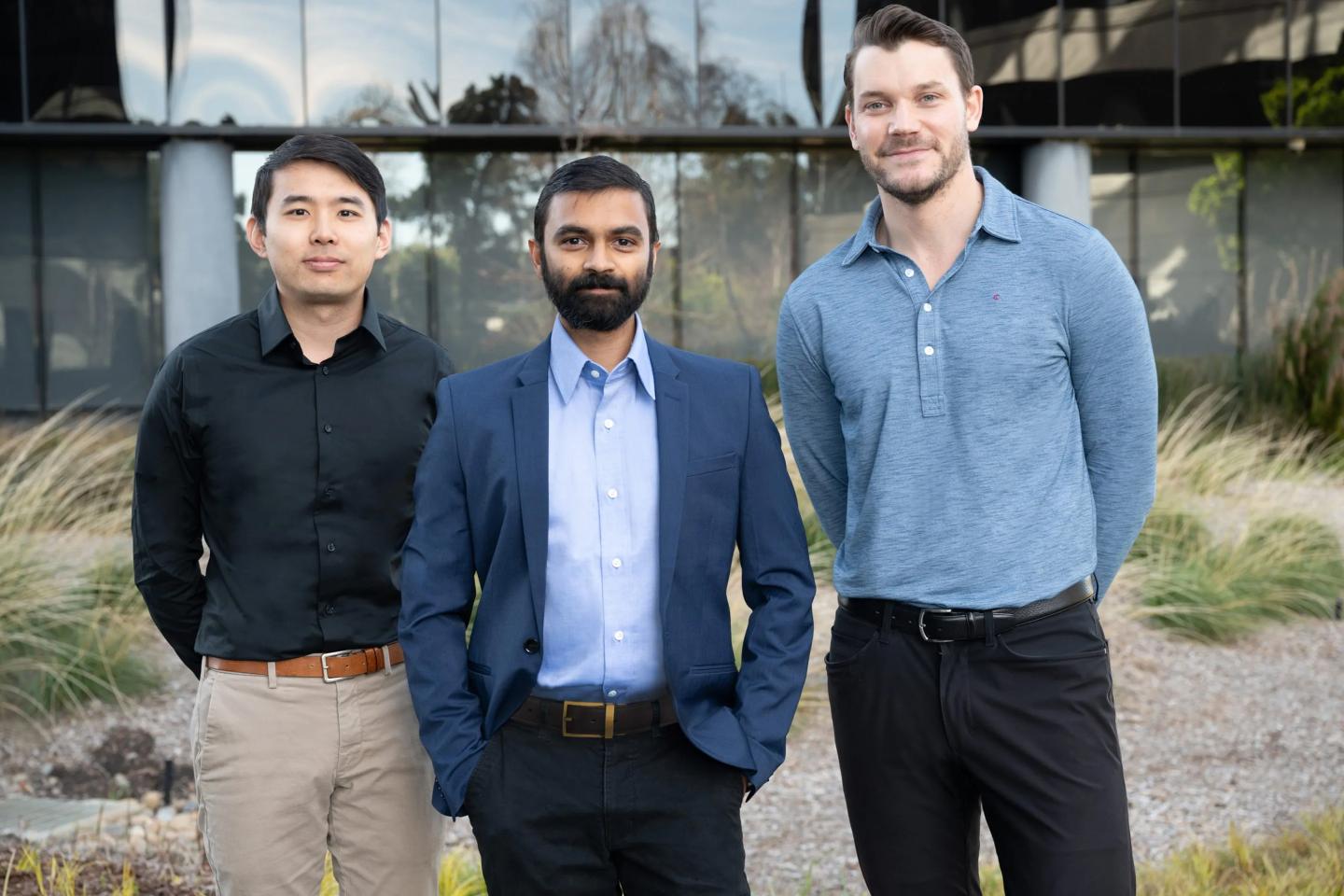
Morgan Chittum here. The biblical story of David and Goliath is the most famous underdog yarn in history. Unsurprisingly, it is often invoked in the world of startups, where founders wielding little more than an idea and big dreams try to take on much larger and wealthier incumbents. San Mateo, California-based legal startup Eve is the latest example.
As co-founder and CEO Jay Madheswaran explains, Eve builds case management tools designed for small plaintiff-side law firms that represent everyday people looking to sue deeper-pocketed companies. For such firms, every new case can stretch those firms’ already-limited resources, but Madheswaran says his startup is leveling the playing field.
“This side of the market has been historically [and] drastically underserved,” Madheswaran told me. “Most of these firms are tiny.”
That imbalance starts with how lawyers get paid. Corporate firms have historically had the budgets to buy software and bill clients by the hour, Madheswaran said. Plaintiff firms, meanwhile, often represent people who cannot afford stiff legal fees that typically begin at hundreds of dollars per hour. Instead, those lawyers typically work on contingency: They get paid when their clients win. That means a small firm has to make each case economically viable, limiting which clients they can and can’t take on.
Eve’s answer is an end-to-end AI platform for plaintiff firms, rather than a tool focused on one step of a case. The idea is to free lawyers’ time across the legal process, allowing them to handle more cases with the resources they already have.
“We’re finally giving David a slingshot,” Madheswaran said.
The number of cases managed on Eve’s platform has increased roughly 75% since June, surpassing 350,000 across nearly 2,000 plaintiff law firms at the end of September. More than 50,000 of those cases have already closed, resulting in more than $3.5 billion in settlements and judgments. All of this has helped Eve post a sixfold growth in revenue year over year.
The company is part of the increasingly crowded field of legal AI startups. Heavyweights like Harvey—valued at north of $15 billion—cater more to Big Law and corporate in-house counsel. But Eve’s focus on plaintiff firms puts it in a different lane—albeit not an empty one. EvenUp and Supio also target plaintiff-side practices.
Eve has also gotten the stamp of approval from Silicon Valley’s top investors. The company announced a $103 million Series B in 2025 at a valuation exceeding $1 billion. Spark Capital led the round, with participation from Andreessen Horowitz, Lightspeed Venture Partners, and Menlo Ventures.
“The business is just like really, really inflecting,” David Haber, a general partner at Andreessen Horowitz, told me. Eve has grown to 275 employees, up nearly 40% since June and has plans to double its headcount in the Bay Area by spring 2026.
The mission resonated with Haber, too. Those lawyers may represent someone wrongfully terminated or injured at work, forcing them to take on a corporation or insurer with far greater resources.
“What happens when David gets AI?” he said. “It evens the freaking playing field.”
The 2026-2027 Cyber 60… The fourth annual Cyber 60 list is out! Fortune, Lightspeed, and AWS have teamed up to recognize the top cybersecurity startups, in a historic year for the sector. On this year’s list: Armadin, Chainguard, Cyera, Doppel, Vanta, and so many more. We’re having an event today at the New York Stock Exchange (hosted by yours truly) and you’ll get a full Cyber 60 newsletter tomorrow! In the meantime, check out the whole list here. –Allie Garfinkle
VENTURE DEALS
- General Compute, a San Francisco-based provider of cloud infrastructure for AI inference, raised $100 million in Series A funding. Blackbird and Abstract Ventures led the round and was joined by Fuse Venture Partners, Village Global, Bold b, QED Fund, 645 Ventures, and others.
- Hex, a San Francisco-based provider of AI-powered data analytics software, raised $100 million in Series D funding. Peak XV and 137 Ventures led the round and was joined by Amplify, Avra, Andreessen Horowitz, and others.
- Infisical, a San Francisco-based provider of secrets management and security infrastructure for enterprises and AI agents, raised $40 million in Series B funding. Elad Gil led the round and was joined by Gradient Ventures, Y Combinator, Gallery Ventures, Pace Capital, Dynamic Capital, and others.
- Machenta, a London-based developer of AI foundation models that enable robots to learn physical tasks, raised $40 million in seed funding. Creandum and Union Square Ventures led the round.
- Northstar Security, a San Francisco-based provider of AI-powered cybersecurity risk analysis and remediation software, raised $7 million in seed funding. Wing Venture Capital led the round and was joined by MVP, Outliers, and others.
- Manicule, a San Francisco-based provider of AI visibility and agent-discovery services for software companies, raised $1.3 million in seed funding. Y Combinator and Broom Ventures led the round.
PRIVATE EQUITY
- Adventure Ready Brands acquired CleanLife No Rinse, a Sprinboro, Ohio-based manufacturer of waterless personal hygiene products serving healthcare, outdoor, and consumer markets. Financial terms weren’t disclosed.
- Shrieve Chemical Company, backed by Gemspring Capital, acquired Clear Solutions International, a Wem, U.K.-based developer and manufacturer of water-based drilling fluid systems under the Pure-Bore brand. Financial terms weren’t disclosed.
EXITS
- Leonard Green & Partners acquired Radon Medical Imaging, a Charleston, W.Va.-based provider of medical imaging equipment sales, maintenance, and repair services, from 5th Century Partners. Financial terms weren’t disclosed.