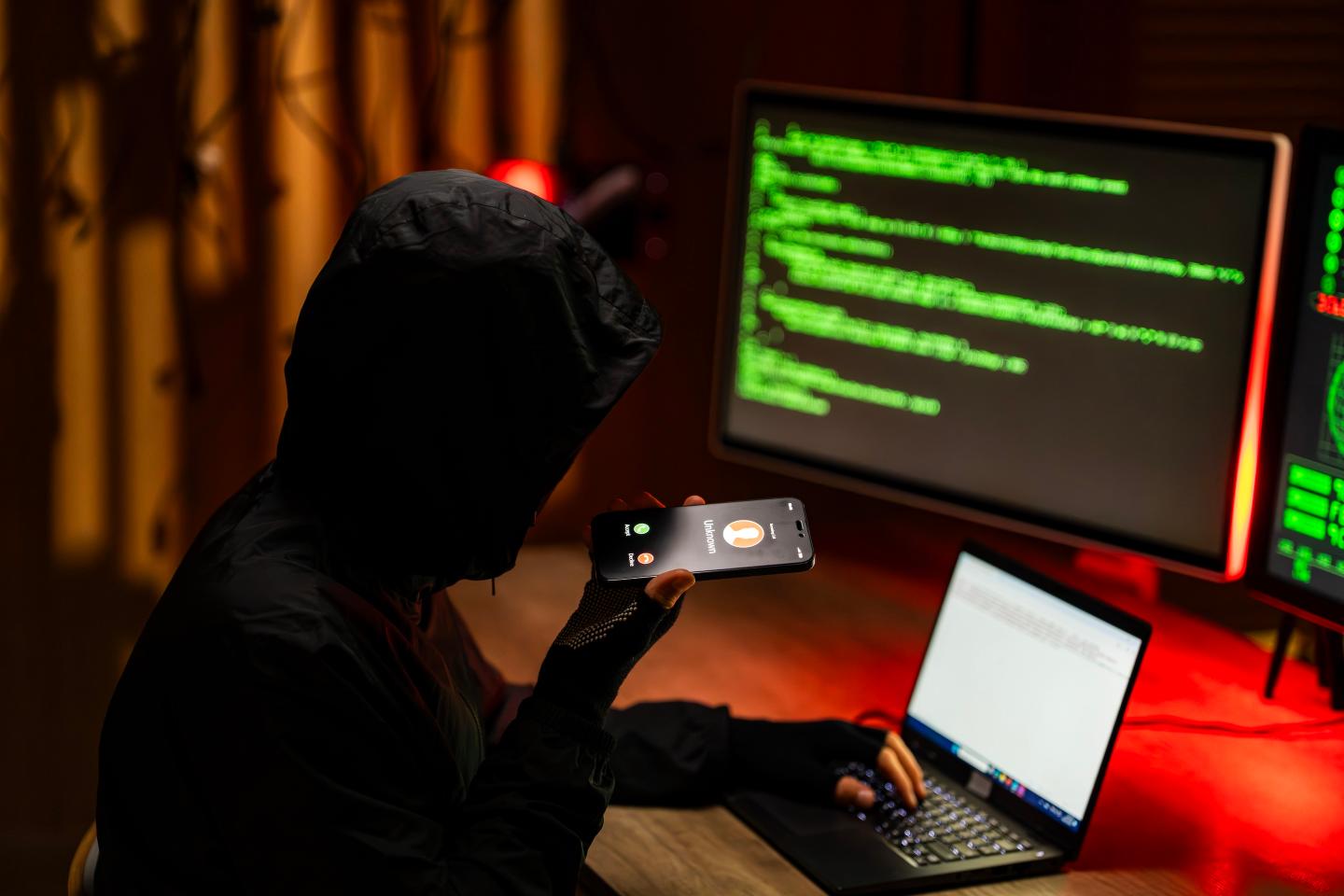
Artificial intelligence needs as little as three seconds of you speaking to produce a convincing clone of your voice. In tests by cybersecurity firm McAfee, a three-second clip was enough to generate a clone with an 85% match to the original speaker.
That technology is increasingly showing up in scams. An estimated 15 million American adults were scammed out of money in 2025, losing roughly $68 billion, according to a survey by Gallup and the Stop Scams Alliance. The full report says 12% of the scams reported in the survey involved AI or a deepfake. That figure may undercount the problem, since victims don’t always realize AI was used.
Scammers can lift voice samples from videos people casually post on platforms like Instagram and TikTok. They then use the clones to convince family members that a loved one is in danger, and talk them out of thousands of dollars in the process.
And it’s easy to fall for it.
Five hours on the phone
Deborah Del Mastro, a mother in Martinez, Calif., received a call from an unknown number one morning in May. The man on the line claimed a Mexican drug cartel had kidnapped her 37-year-old daughter. Then he played what sounded like her daughter crying for help.
“It was my daughter’s voice having an absolute panic attack, scared, telling me ‘I love you, mom, I’m so sorry, I’m so scared’ and then they just cut it off,” Del Mastro told ABC7 News.
“The guy is barking orders, ‘don’t speak,’ ‘is there someone there with you?’ ‘Don’t speak,’ ‘go and get dressed and get out’ ‘do this now, it has to happen now,’” she said.
Believing her daughter’s life was on the line, Del Mastro followed the caller’s instructions for five hours. She wired $5,400 to Mexico from multiple locations and was eventually told her daughter would be released at a grocery store. When she got there and couldn’t find her, she called her daughter directly. Her daughter had been at work the entire time.
Martinez police are investigating, but Del Mastro told ABC7 she doesn’t expect to get the money back.
Why a familiar voice lowers your guard
Kimberly Hyun is an assistant professor of marketing at the University of Cincinnati’s Carl H. Lindner College of Business who studies how a person’s voice shapes persuasion and consumer choice. She tells Fortune these scams work because of how the brain processes sound.
Her research finds that when a voice’s timbre resembles someone we know, we tend to drop our defenses and become more inclined to believe what we’re hearing.
A family member’s voice “can actually trick you through trust,” Hyun explains.
Professionals get fooled, too
It’s not just older people falling for these scams. Gallup found no difference in scam victimization rates by age, and experienced professionals have been duped as well.
In 2024, a finance worker at a multinational firm in Hong Kong was tricked into paying out HK$200 million, or about $25.6 million, according to Hong Kong police. The fraudsters used deepfakes to pose as the company’s chief financial officer on a video call. The worker had initially suspected a phishing attempt, but put his doubts aside because the other people on the call looked and sounded like colleagues he recognized. All of them were fakes. The company was later identified as British engineering firm Arup.
Cloning tools are often just a checkbox away
The tools behind these scams aren’t hard to find. In March 2025, Consumer Reports published an assessment of six popular AI voice cloning products. It found that four of them, ElevenLabs, Speechify, PlayHT and Lovo, let researchers easily clone a voice from publicly available audio.
Those four companies used no technical mechanism to confirm the speaker’s consent. Users only had to check a box attesting they had the legal right to clone the voice. The other two, Descript and Resemble AI, had taken steps to make nonconsensual cloning harder.
“Our assessment shows that there are basic steps companies can take to make it harder to clone someone’s voice without their knowledge—but some companies aren’t taking them,” said Grace Gedye, a policy analyst at Consumer Reports.
Fortune has reported on scammers using voice-cloning tools to impersonate relatives since 2023. Researchers warn the fakes are only getting harder to spot: one deepfake researcher wrote that voice cloning has now crossed the “indistinguishable threshold.”
How to protect yourself and your family
Because a familiar voice is no longer proof of identity, you need a second way to confirm it’s really your loved one. Hyun’s solution is to agree on a code word that only the two of you know.
“You really need to create a safe code with your loved ones. Make sure that they’re real,” Hyun said.
Otherwise, stick to the usual rules. Be wary of calls from unknown numbers. If someone calls claiming a family member is in trouble, don’t stay on the line. “You just need to hang up and just call your family member again,” Hyun advises.
If you’re targeted, report it to the Federal Trade Commission at ReportFraud.ftc.gov and to the FBI’s Internet Crime Complaint Center. Only 13% of scams in the Gallup survey were reported to the FTC or federal law enforcement.