• Home
  • Latest
  • Fortune 500
  • Finance
  • Tech
  • Leadership
  • Lifestyle
  • Rankings
  • Multimedia

Trendingnow

1

The data scientist who called Trump's 2024 win now gives Democrats a 78% shot at the Senate

2

Google told to halt work on Finnish data centers after clearing an estimated 250,000 trees before environmental review was done

3

Saudi Arabia wants to send 10 million barrels of oil a day around Hormuz. A former Treasury official says it may barely move prices
AIChina

Treasury proposes rule to crack down on AI, biotech investments greater than $50,000 in China, Russia and other ‘countries of concern’

By
The Associated Press
,
Paul Wiseman
Paul Wiseman
, and
Didi Tang
Didi Tang
Down Arrow Button Icon
By
The Associated Press
,
Paul Wiseman
Paul Wiseman
, and
Didi Tang
Didi Tang
Down Arrow Button Icon
October 23, 2026, 10:47 AM ET
The rule would expand the restrictions to cover investments in hypersonic systems capable of traveling at five times the speed of sound, supercomputing, biotechnology, and AI, though Treasury used Trump's favored term for AI, “superintelligence" or SI
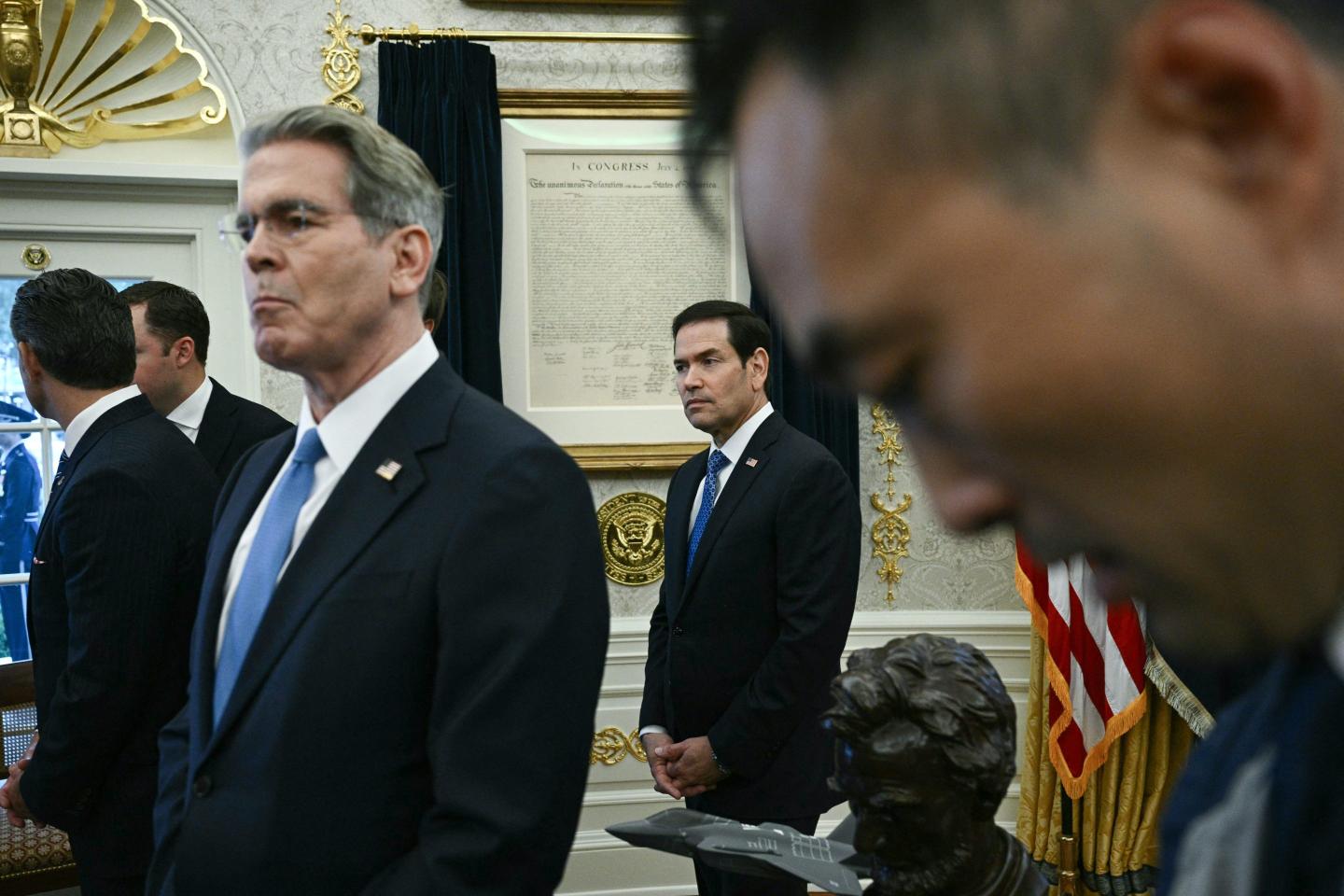
The rule would expand the restrictions to cover investments in hypersonic systems capable of traveling at five times the speed of sound, supercomputing, biotechnology, and AI, though Treasury used Trump's favored term for AI, “superintelligence" or SIBrendan SMIALOWSKI–AFP/Getty Images
Google source logo
Add Fortune on Google for similar content.

The U.S. Treasury Department proposed a rule Thursday to crack down on American high-tech investments such as supercomputing and artificial intelligence in China, Russia, North Korea and other “countries of concern.”

Recommended Video

The U.S. government has been working for years to deny China and other adversaries investments that could help them boost their military power.

That program began in 2023 when then-President Joe Biden signed an executive order putting restrictions on outbound U.S. investments in sectors such as semiconductors, quantum computing and artificial intelligence going into China. Treasury later established the Outbound Investment Security Program.

In December 2025, Congress passed a law that codified and expanded the program to target more technologies and more foreign countries, including Cuba, Iran, North Korea and Russia.

The inclusion of Russia in the proposed rule has come days after President Donald Trump waived sanctions on Russia following a diesel deal with President Vladimir Putin.

The rule announced Thursday would expand the restrictions to cover investments in hypersonic systems capable of traveling at five times the speed of sound, supercomputing, biotechnology and artificial intelligence, though Treasury used Trump’s favored term for AI, “superintelligence” or SI.

The proposed rule “sends an important signal to markets that Washington is tracking where U.S. capital is flowing and what capabilities it is helping build,” said Craig Singleton, a senior fellow at the think tank Foundation for Defense of Democracies.

The screening of outbound investments “recognizes that capital can accelerate military-relevant capabilities just as surely as technology transfer can,” Singleton said.

Jason Chipman, a former Justice Department lawyer who specializes in cybersecurity, investment rules and export controls as a partner at the law firm WilmerHale, said the new rule “will require more substantial compliance programs to manage risk.”

Treasury’s rule to implement the 2025 law — the Comprehensive Outbound Investment National Security Act — would only apply to investments that exceed $50,000 and would exclude many financial investments, including stock purchases.

Treasury will hear public comments on the proposal before issuing a final rule.

“It’s just the first step in a fairly long process to get to changes which presumably will be more enforcement-minded, to put more teeth behind the outbound investment program,” said former U.S. trade official Ryan Majerus, now a partner at King & Spalding law firm.

In Beijing, the Chinese Foreign Ministry said the U.S. should abide by the principles of a market economy and stop interfering in normal economic and trade cooperation between businesses.

Asked about Washington’s proposal to add biotechnology to the list, ministry spokesperson Mao Ning said that “Overstretching the concept of national security, taking discriminatory measures against specific countries, and artificially restricting trade, economic and investment activities serve no one’s interests.”

She added that China will closely monitor relevant developments and take necessary measures to safeguard its interests.

Since Trump’s first term, the United States and China — the world’s two biggest economies — have been locked in an economic and tech rivalry. They’ve restricted the export of sensitive technology and critical products — such as China’s rare earth minerals and America’s advanced computer chips — to each other and slapped tariffs on each other’s products. Trump and Chinese President Xi Jinping agreed last year to ease tensions while they engaged in talks, a temporary truce they last month extended into January.

But the sparring continues. In July, the Treasury Department issued a $200,000 fine against a U.S.-based company for failing to report to the department a $92,500 investment in a Chinese artificial intelligence and robotics company by one of its subsidiaries.

Fortune Daily breaks the traditional barrier between audience and newsroom. The show transforms Fortune’s trusted reporting into actionable, conversational, and entertaining insights for an emerging class of business leaders. Watch here.
About the Authors
By The Associated Press
See full bioRight Arrow Button Icon
By Paul Wiseman
See full bioRight Arrow Button Icon
By Didi Tang
See full bioRight Arrow Button Icon
Google source logo
Add Fortune on Google for similar content.

Latest in AI


Most Popular

Fortune Secondary Logo
Rankings
  • 100 Best Companies
  • Fortune 500
  • Global 500
  • Fortune 500 Europe
  • Most Powerful Women
  • World's Most Admired Companies
  • See All Rankings
  • Lists Calendar
Sections
  • Finance
  • Fortune Crypto
  • Features
  • Leadership
  • Health
  • Commentary
  • Success
  • Retail
  • Mpw
  • Tech
  • Lifestyle
  • CEO Initiative
  • Asia
  • Politics
  • Conferences
  • Europe
  • Newsletters
  • Personal Finance
  • Environment
  • Magazine
  • Education
Customer Support
  • Frequently Asked Questions
  • Customer Service Portal
  • Privacy Policy
  • Terms Of Use
  • Single Issues For Purchase
  • International Print
Commercial Services
  • Advertising
  • Fortune Brand Studio
  • Fortune Analytics
  • Fortune Conferences
  • Business Development
  • Group Subscriptions
About Us
  • About Us
  • Press Center
  • Work At Fortune
  • Terms And Conditions
  • Site Map
  • About Us
  • Press Center
  • Work At Fortune
  • Terms And Conditions
  • Site Map
  • Facebook icon
  • Twitter icon
  • LinkedIn icon
  • Instagram icon
  • TikTok icon
  • YouTube icon

    Recommended For You

    © 2026 Fortune Media IP Limited. All Rights Reserved. Use of this site constitutes acceptance of our Terms of Use and Privacy Policy | CA Notice at Collection and Privacy Notice | Do Not Sell/Share My Personal Information
    FORTUNE is a trademark of Fortune Media IP Limited, registered in the U.S. and other countries. FORTUNE may receive compensation for some links to products and services on this website. Offers may be subject to change without notice.