
Good morning. Lean and mean today, like Mr. Milchick’s face when the innies displease him.
Today’s tech news follows. Have a productive day. —Andrew Nusca
Thoughts? Suggestions? Hot tip? Drop me a line.
THE BIG STORY
Tesla and SpaceX weigh a $3.5 trillion merger
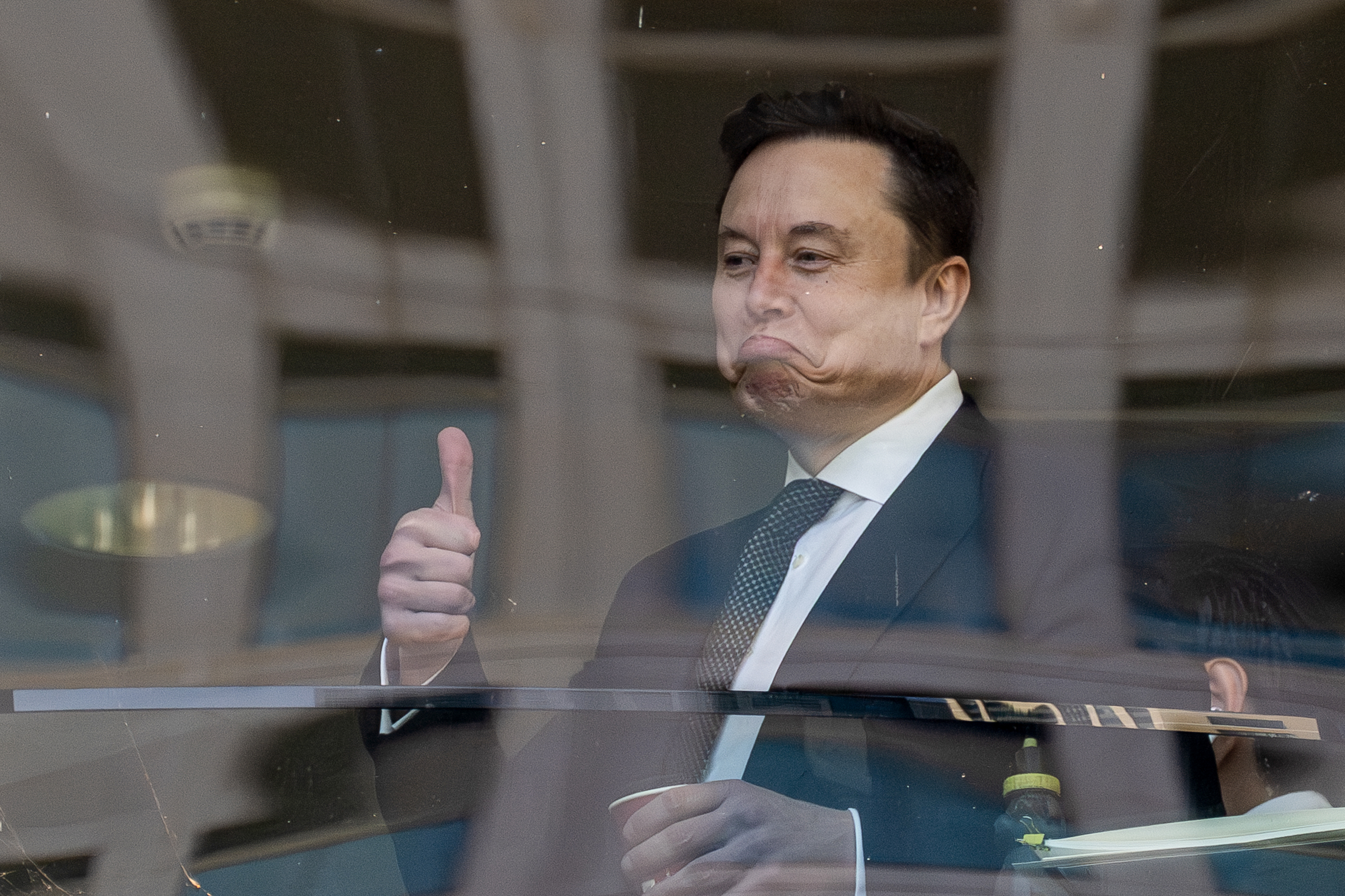
It’s official: Tesla and SpaceX are in talks. Independent board members at the two Elon Musk-led companies have formed special committees to hash over a possible merger, Musk told investors this week.
“These special committees consist of independent directors, and because I’m a conflicted party, I can’t actually be in the discussions of the special committees,” said Musk. “This is definitely the kind of question where I feel like I’m tap dancing through a minefield.”
Tesla stock rose just over 1% in the wake of the news, while SpaceX rose above 5%.
Musk said the committees haven’t reached any kind of agreement on the terms of a potential transaction, and there’s no guarantee that they will. As the CEO of both companies, he owns roughly 20% stake in Tesla and 45% of SpaceX—and wields control over about 82% of the voting power at the latter.
Musk has made clear he believes a tie-up would be a fine idea. He cited collaboration on AI software, chip design, robotics, and connectivity, plus the planned Terafab chip plant, which is a colossal manufacturing complex being developed by SpaceX and Tesla jointly.
A combined Tesla-SpaceX would have a total market value of about $3.5 trillion, with SpaceX at about $2 trillion and Tesla at nearly $1.5 trillion. Musk would own about a third of the combined entity. The companies are already financially entangled, including a $2 billion investment by Tesla in SpaceX.
There are also areas of overlap between the Tesla and SpaceX boards in Ira Ehrenpreis, founder of venture capital firm DBL Partners, and Tesla board member James Murdoch, who testified in a legal setting that he had previously invested in SpaceX.
SpaceX this week reported its first operating profit since its June IPO. Revenues for its third quarter rose 161% to $14.58 billion, well above the $12.86 billion analysts expected. Operating revenue came in at $2.79 billion; net income was $4.4 billion.
Revenue from the company’s AI business nearly tripled from the second quarter to $7.56 billion, surpassing Starlink’s $5.25 billion for the first time since the company went public. —Amanda Gerut
THE BLIND BOX
“We consider this one of the most impactful security issues in recent memory.”
THE RUNDOWN
—Meta revenue surges to $64.6 billion, but billions in settlements and skyrocketing AI spending are hurting profit and cash flow.
—Electronic Arts will reportedly cut 400 jobs, or 3% of its total staff, and shut down BioWare.
—Anthropic adds Harvard astrophysicist Chris Stubbs to the trust that controls its board.
—Alphabet and Microsoft opt out of tokenized stocks, a blow to plans by OKX and the owner of the New York Stock Exchange.
—A look at Space42’s $1.7 billion bid to go beyond the UAE to conquer new markets.
—Apple’s iPhone Duo, reviewed: A “hand warmer” for early adopters that’s exciting, expensive, and in dire need of better app support.
—Spotify debuts its first native in-car app, available on select Audi models.
—New Mexico wins a $25 billion judgment over Facebook privacy violations.
THE PARTING SHOT

The AI boom is almost $5 trillion short of paying for itself, according to Gartner’s latest estimates.
The math goes like this: Data center owners are investing so much in their facilities that they’ll need to generate $8.5 trillion in cumulative revenue by the end of the decade to justify their investments. The problem? No more than $3.6 trillion in enterprise and consumer AI revenue is estimated to be attributed to those facilities over the same period. Harrumph.