
The longstanding allegiances between global powers have been tested over the past few years. Wars between Russia and Ukraine, and between the U.S., Israel, and Iran in the Middle East, have pushed governments around the world to signal where their loyalties lie—even when the conflicts are domestically unpopular and far removed from their own borders.
And that’s before you get to President Trump’s tariff agenda and the trade battles that have ensued because of it.
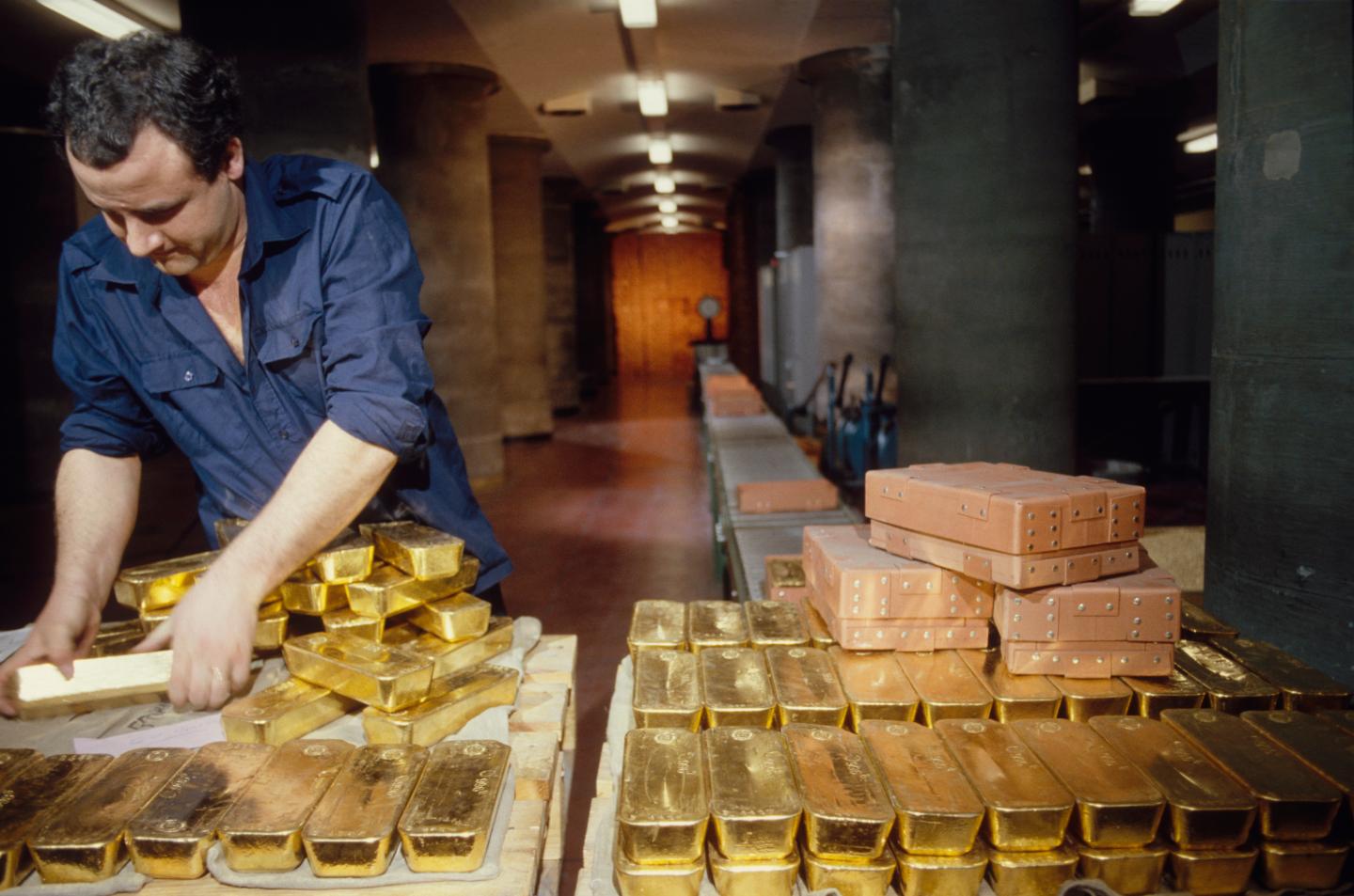
So it is perhaps no wonder that, under the radar, central banks across the world are stocking up on the safe-haven asset of gold, and they don’t want to share where they’re keeping it.
Goldman Sachs wrote in a note earlier this week that it estimates central banks globally purchased 79 tonnes of gold in August, more than four times the amount of the pre-2022 average (the year the Russia-Ukraine war began) of 17 tonnes. On a three-month seasonally adjusted basis, purchases are running at 85 tonnes per month, Goldman noted.
China seemingly makes up for a large portion of the demand, some 25 tonnes in August, Goldman noted. However, China was the largest identifiable buyer of gold, meaning—while unlikely—other economies could be buying more.
The People’s Bank of China isn’t necessarily buying at an alarming rate—nor are other emerging markets—points out Goldman. China remains underweight in gold relative to “plausible long-term allocations,” Goldman wrote, but the motivations for diversifying away from G7 reserve currencies (most notably the U.S. dollar) are “likely to remain in place.”
Domestic market central banks have “largely been on the sidelines” of the buying spree of the past four years, Goldman added, because they already hold substantial gold reserves for historical reasons.
For domestic economies, the debate is no longer the volume of gold, but where to store it. This points to “broader concerns around reserve security and cross-country trust.”
Quiet reallocations
In September, the Dutch central bank confirmed it had spent the previous six months reallocating 86 tons of gold out of New York and Ottawa to London, saying the move made it “better prepared for serious crises.”
De Nederlandsche Bank (DNB) stated that the decision had been made “due to the increasing geopolitical unrest” and therefore wanted to improve the “tradability” of Dutch gold. “Gold stored in London at the Bank of England … is considered the most easily tradable gold in the world,” wrote DNB. “This makes it the fastest way for DNB to deploy in a crisis situation. The part of the gold stock located in New York and Ottawa is less directly deployable.”
In March, the Banque de France—France’s central bank—also announced it had sold 129 tons (or 5% of its total gold holdings) in New York and had instead purchased gold in Europe. Unlike DNB, Banque de France made no reference to geopolitics, instead referencing a desire to bring the purity of its gold holdings to over 99.99%, and the U.S. stock was below that.
Central bank holdings at the New York Fed declined 40 tonnes in August, Goldman added, while holdings at the Bank of England rose 46 tonnes.
Indeed, when Goldman surveyed central banks in August about where they stored their gold, a higher percentage (12%) in 2026 declined to confirm its location, compared with 10% last year. Moreover, central banks significantly diversified their overseas storage in 2026 (10%) compared to the year prior (2%), and this year were more likely (9%) to have increased domestic storage compared to 2025 (5%).
The trend is set to continue: 18% of central banks declined to answer where they would store their gold over the next 12 months, with 9% saying they planned to diversify further.