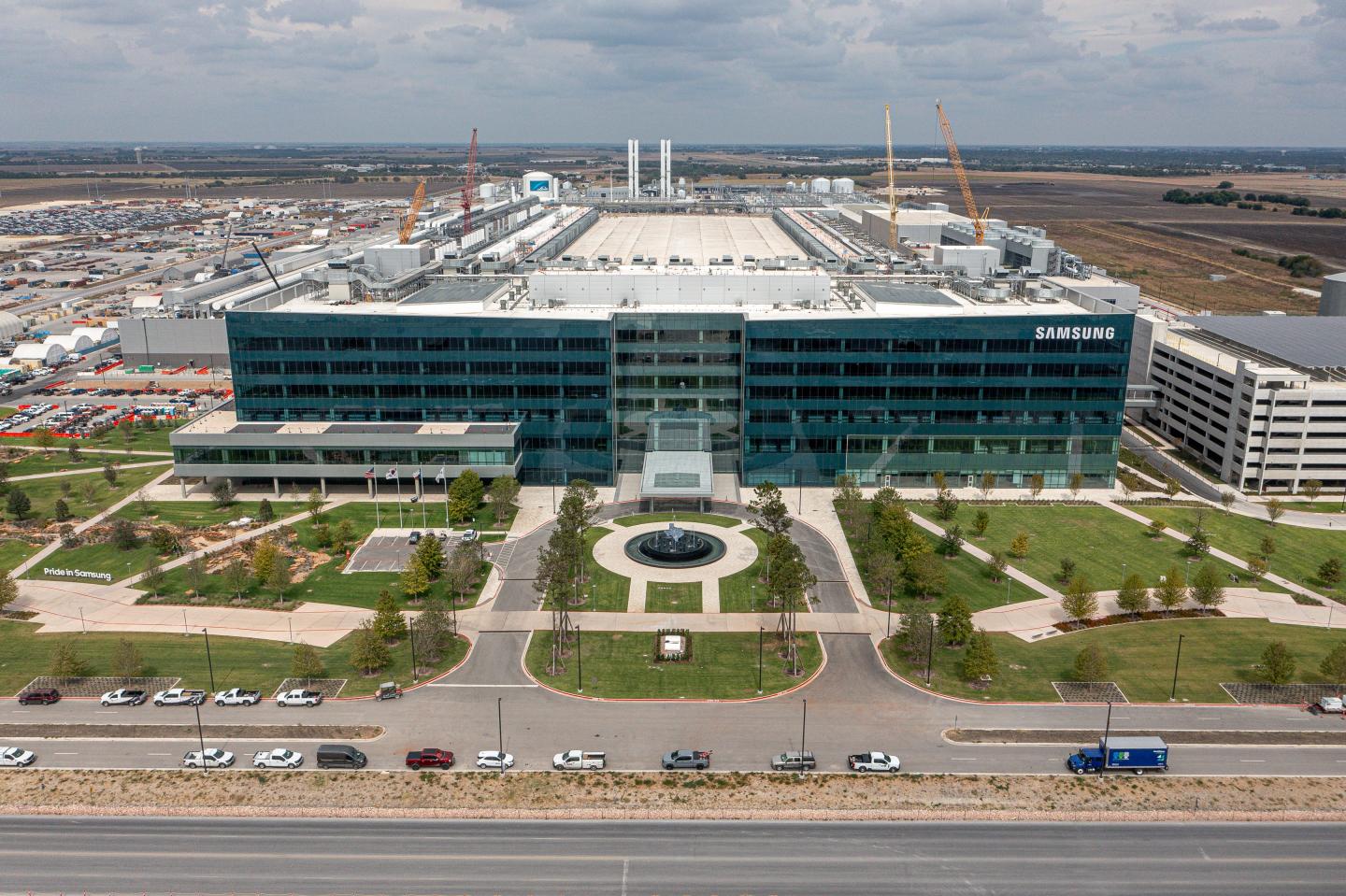
In Taylor, Texas, Samsung is preparing to open a new advanced semiconductor manufacturing facility. It began as the largest investment we had ever made in the United States. But the most important thing about Taylor is not the size of the facility or the dollar figure attached to it. It is what is being built around it.
Samsung began manufacturing semiconductors in Central Texas nearly 30 years ago. Taylor builds on the workforce, institutional knowledge and supplier relationships developed through decades of operating in Austin. Hundreds of employees began working from the Taylor campus last year, some bringing years of experience from Austin, while Samsung prepared a new local workforce and expanded partnerships with schools and colleges across the region.
Taylor illustrates a broader principle: Long-term investment is not a succession of disconnected announcements, but a sustained commitment in which each phase strengthens the foundation for the next.
Samsung was founded in Korea, but we have been investing, manufacturing and hiring in the United States for nearly five decades. During that time, Samsung has invested more than $100 billion here, and our U.S. facilities generate more than $40 billion in economic impact and support more than 175,000 jobs.
That experience has taught us that putting up capital is not the same as putting down roots. A facility can be built in a few years, but becoming part of a local economy takes much longer. It requires skilled workers, suppliers that can grow alongside the investment and institutions that prepare people for new opportunities.
What that looks like will differ from one community to another.
In Newberry, South Carolina, Samsung opened its first U.S. home appliance manufacturing facility in 2017. Since then, the facility has generated more than $900 million in economic impact for the region. Its longer-term value, however, also depends on whether the surrounding community is equipped to participate in and sustain the opportunities it creates.
Companies should not wait until a position needs to be filled to invest in that capacity. As the skills required across manufacturing and technology change, workers will need more accessible pathways into new careers—and young people will need earlier opportunities to see themselves as innovators and problem-solvers.
That is the idea behind Samsung’s Solve for Tomorrow program, which asks middle and high school students to use STEM to address problems in their own communities. In Newberry, for instance, students at Newberry High School developed a pollinator garden and composting system in response to a local sustainability challenge, connecting classroom learning with community problem-solving and career exploration.
That project is part of a much broader effort. Since 2010, more than 620,000 students have participated in Solve for Tomorrow, with Samsung providing technology and classroom resources to more than 4,300 schools nationwide.
The projects vary widely, but they begin with the same question: What is a problem in my community, and how can I help solve it? Giving students the tools to answer that question is different from building a manufacturing facility, but both can leave a community better prepared for what comes next.
This is why global scale and deep local roots are not competing ideas. The strongest global companies measure success not only by what an investment produces today, but by what workers, institutions and communities are equipped to do tomorrow.
As the United States marks its 250th anniversary, much of the conversation about its economic future is focused on what the country must build next. Communities receiving new investments have every right to ask a related question: What will remain after the announcement is made and the ribbon is cut?
The answer should be more than a facility or a dollar figure. It should be people with new skills, stronger pathways into emerging industries, suppliers prepared to grow and institutions equipped to support future opportunities.
Capital can build a factory. Durable investment builds the capabilities that allow companies and communities to keep moving forward together.
The opinions expressed in Fortune.com commentary pieces are solely the views of their authors and do not necessarily reflect the opinions and beliefs of Fortune.