
Matt DiStefano shares his screen and rotates a gray 3D model of a California neighborhood. He zooms in on one house and overlays a heat map. Red contours run along the sides and back, where trees stand close to the home. Blue sits near the pool. Then he starts deleting trees.
Removing one takes more than $1,100 a year off the home’s premium. Another, he says, “doesn’t contribute as much.”
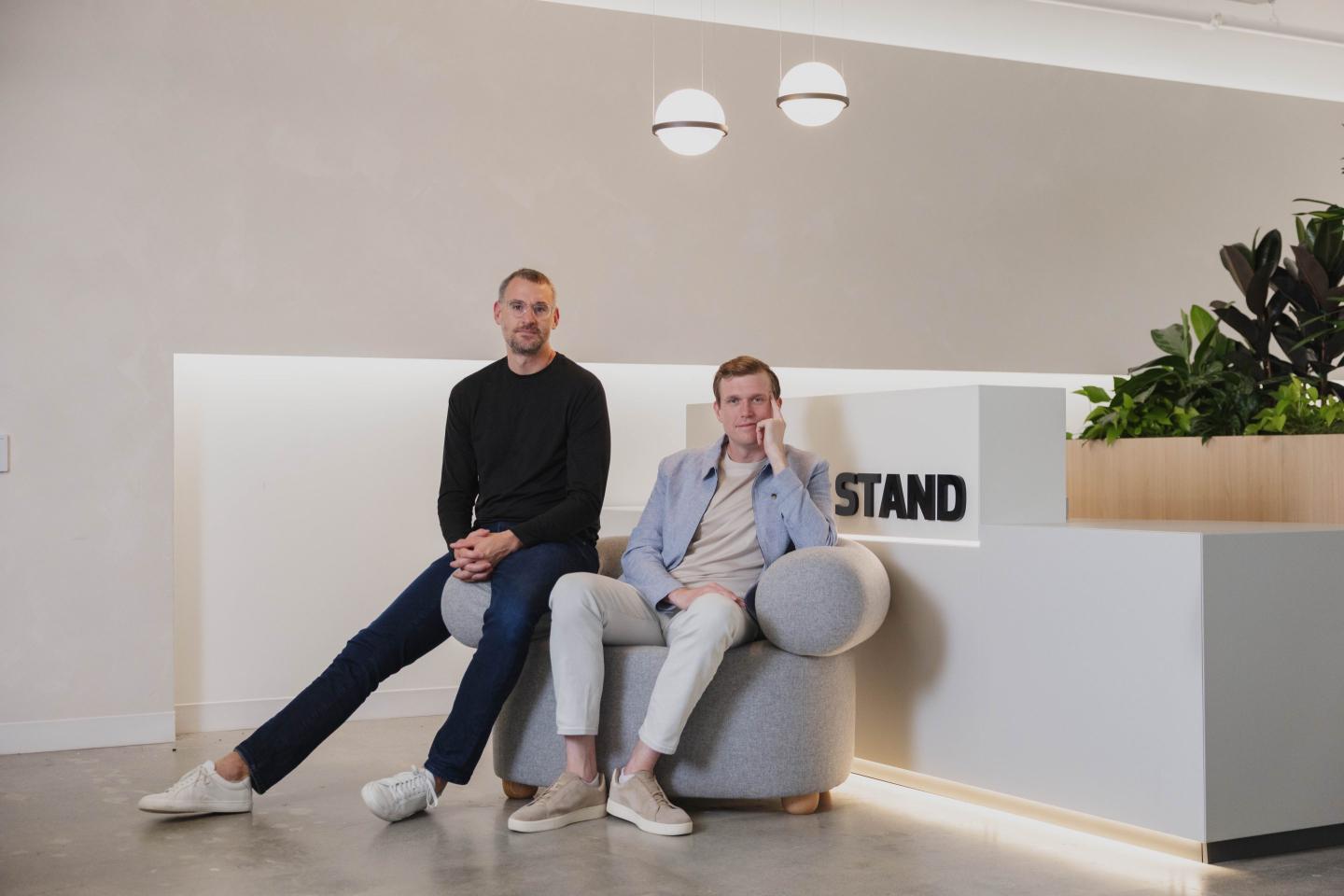
“This one’s the one that matters,” DiStefano says of the first tree. He is Stand’s 29-year-old chief science officer and he’s demoing, via screen share, Stand’s proprietary digital twin technology that hopes to solve the insurance industry’s multibillion-dollar problem.
The San Francisco home insurer is announcing today a $70 million Series C raise at a $1 billion valuation, Fortune can exclusively reveal. Its argument is that insurers have been pricing wildfire risk the wrong way, by looking backward at statistics and sorting homes by zip code. Stand says the better approach is to simulate each house and show the owner what to fix.
Saga Ventures led the round, with participation from Lowercarbon, Eclipse, Equal Ventures, Inspired Capital, Neotribe, and Jackson Square Ventures, among others. Stand says it now insures more than $10 billion of property, up from $1 billion a year ago. CEO Dan Preston says the business is growing about 15% a month, and that it has done so in only two states: in California for wildfire and in Florida for hurricanes.
“Like a credit score you can’t change”
DiStefano’s critique of the industry is that a zip-code model gives a homeowner a score that works like a credit score, but there’s nothing they do can move it. He said insurers can barely tell apart two homes on the same block. His illustration is a windowless brick bunker with nothing around it set beside a wooden shed with a thatched roof. “Logically, that home can’t burn,” and yet a location-based model treats the two alike.
The result, DiStefano said, is homeowners who spend tens of thousands of dollars hardening their houses and still get non-renewed. He said they have heard “hundreds of stories” like that from clients describing their experience before engaging with Stand.
Stand builds what it calls a digital twin of each home. “We simulate what would happen if an event happened, so if a wildfire occurred or if a tropical cyclone occurred,” DiStefano said. “We’re not looking at the neighboring home. We’re looking at this specific home, the specific materials and the specific arrangement of trees.” The model also accounts for wind direction and weather conditions, he said.
The 29-year-old DiStefano spent years in aerospace, at companies “some as large as Boeing, others were small YC startups,” building “models of circuit boards and satellites and simulating how they would react in orbit.” What was new at Stand, he said, was “applying it to something that was so much more tangible for hundreds of millions of people.”
Stand runs computational fluid dynamics, physics models built on top of digital twins. DiStefano likened it to work that you would do while designing an airplane (he has stints at Boeing and SpaceX on his CV). DiStefano argued that Stand is bringing a new level of detailed analysis to the insurance industry. Each digital twin consists of layers of site information accounting for the home structure, surroundings, and details such as trees, brush, wind direction and weather.
The company said it has also developed an in-house frontier AI, the Stand World Model, which understands physics and allows it to run simulations instantaneously. DiStefano said they “successfully taught neural networks to actually understand the physics.” That’s why he can delete a tree on screen and watch the price move.
A backtest, and a boast
DiStefano said Stand tested the model from a blind, forward-looking validation against actual outcomes for roughly 310 California homes that experienced wildfires over the past three to four years, including homes affected by the Palisades Fire.
The model was run as if it had no knowledge of what happened, DiStefano explained, and it predicted burn or survival about 85% of the time. He claimed that competing models, which add “secondary modifiers” like single-pane windows to a statistical base, got it right 50–55% of the time. The comparison figures were generated by evaluating industry standard location-based incumbent models against the same cohort and measuring whether they correctly distinguished burned from surviving homes.
Competitive models “really are a coin flip,” DiStefano said, arguing that this is why rates rise across the board after a disaster, and why customers get dropped seemingly at random. (The results are Stand’s own, and Fortune could not independently verify them.)
DiStefano said the model has rated some homes as having a 99.8% chance of being lost in a fire, and that targeted changes recommended by Stand’s model have brought that close to 15%.
Insurance for the house you can change
CEO and co-founder Dan Preston said the company’s structure follows from this model, as it actively helps customers redesign their properties around DiStefano’s simulations, a function that didn’t exist before.
“We literally have somebody on staff who used to be a construction builder,” Preston said.
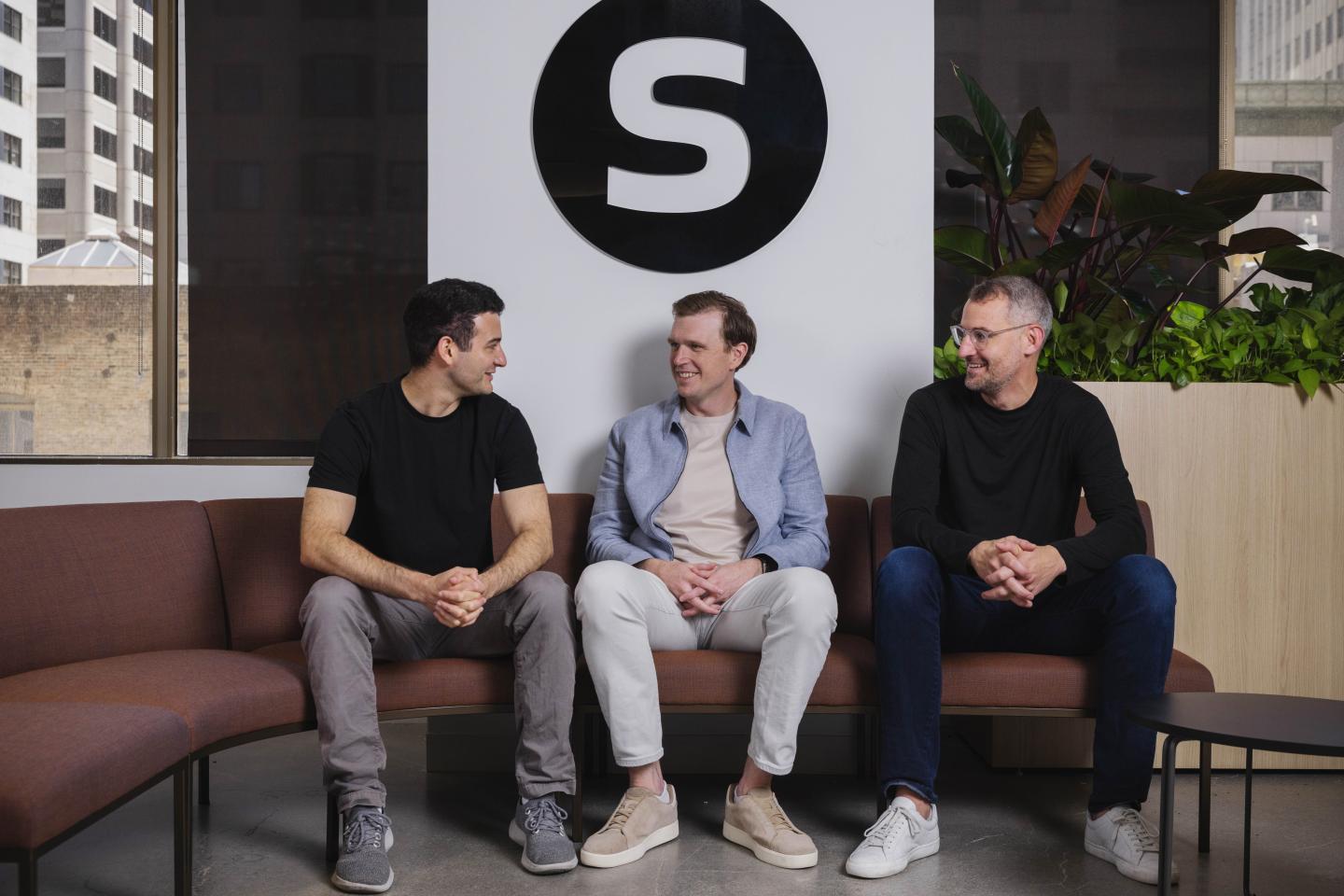
Preston, 41, was previously CEO at Metromile, the pay-per-mile auto insurer, before starting Stand about two-and-a-half years ago. “Disasters follow the laws of physics, and insurance should too,” Preston said in a statement. Stand sells through brokers, and Preston said it now works with the country’s largest.
Co-founder and chief product officer Jason Mueller said one of Stand’s “biggest secrets” is making brokers “look like heroes,” with near-instant quotes and a platform that replaces trading PDFs.
Mueller, who is 40, previously led product at Policygenius and said he has known Preston for about 17 years. He said his product and engineering team is about 10 people doing “100 times the work” of his last team of 100 or more, because modern AI tooling lets a small group build fast. The applied science team is about 10, as well.
Mueller said Stand has more in the works, such as financing the mitigation work over the life of a policy, letting real estate companies pre-underwrite their inventory, and letting a policy transfer to the next buyer of a home, although they aren’t in the short-term pipeline. “People often say, like, insurance is sold, not bought,” he said, adding that the company’s data on where it wins and loses deals is part of what it is building.
Growth, and what comes next
The last round, a Series B led by Eclipse, closed a little more than a year ago, and Preston said the company “hit our inflection point” soon afterward, and the new money mostly backs the growth that followed. It plans to expand across the wildfire-prone West and the Southeast, and later into regions exposed to severe convective storms, freezes and flooding.
Stand also announced two hires to run that expansion. Drew Saad, formerly chief underwriting officer at PURE Insurance, joins as president of property and casualty. Tony Landi, formerly head of strategic growth at Nephila and head of capital markets at Openly, becomes chief financial officer.
Stand’s policies are issued by Concert Specialty Insurance Company (AM Best A-) in California and by Stand Insurance Exchange (Demotech A) in Florida. Reinsurers include Arch, RenaissanceRe, Hannover, Nephila and Hiscox.
DiStefano grew up on Long Island and lived through Hurricane Sandy in high school, an experience that he said left him wanting to change how communities relate to the buildings around them. He said he first encountered digital twin technology in high school, when he built models of cancer cells reacting to drugs in a Mount Sinai lab. (Yes, he was literally trying to cure cancer before working to mitigate wildfires.) He said the common thread in his career has been applying models to “less highly engineered systems,” and a house is one of those.
DiStefano also draws on history. He said he is interested in 19th-century cities that burned and in how firefighting technology eventually solved the problem. “I see this as just the latest challenge among many challenges that society is facing and to solve it, we’re creating and deploying new technology.”