To promote its latest product launch, Apple—one of the world’s biggest technology companies—picked up a needle and thread.
In this era of AI food slop, AI agents behind plush toys with eerie smiles, and deepfakes that make it harder to trust what’s real, the human touch could become a selling point on its own. Showing that someone took the time to make something by hand gives brands a way to signal care, creativity, and attention to detail. The effort—along with the small imperfections that reveal a human hand—can become part of the appeal, potentially making a brand feel worth paying more for.
There’s early evidence it works. An Ipsos study with Syracuse University tested 20 advertisements with 3,000 U.S. consumers and found that human-made ads scored, on average, 14% higher on predicted short-term sales effectiveness and 17% higher on long-term brand health than AI-generated alternatives.
“Human-made might become more of a luxury over time,” Stijn van Osselaer, a Cornell University marketing professor who studies how consumers connect with the people behind products, told Fortune.
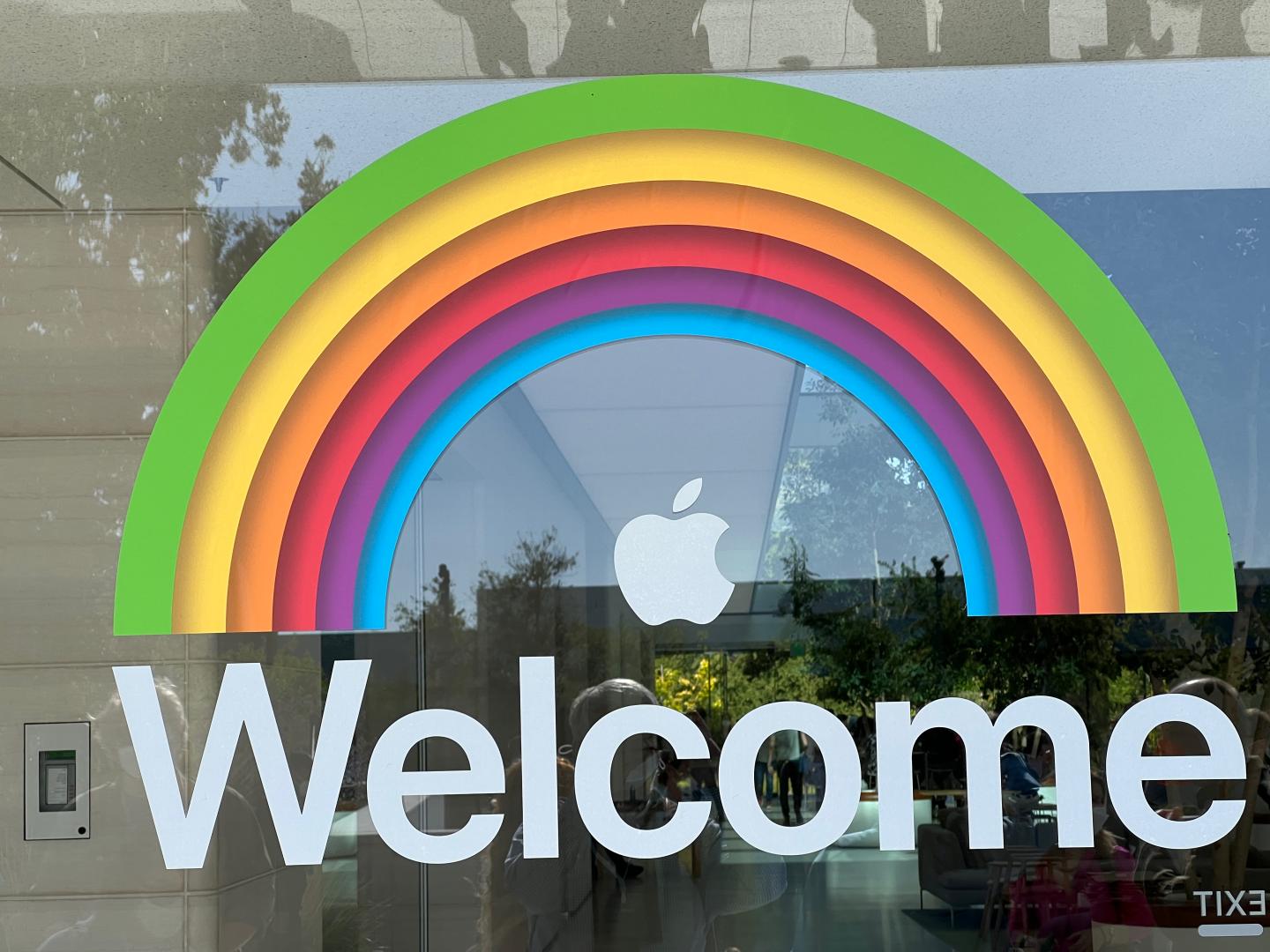
For Apple’s Oct. 13 “Welcome Home” launch, that human touch took the form of its iconic 1977 rainbow Apple logo embroidered by Sydney-based twin sisters Maricor/Maricar. The company didn’t share just a photo of the finished design. Instead, they released a video showing hands stitching the familiar shape, from the bite to the leaf.
Apple’s advertising hasn’t always shown such a delicate touch. In 2024, the company promoted its thin new iPad Pro by crushing musical instruments, cameras, and other creative tools beneath a hydraulic press, prompting a backlash and an apology. That year, it also pulled an ad filmed in Thailand after criticism that it portrayed the country through outdated stereotypes. Then in 2025, Apple removed “The Parent Presentation,” a video teaching students how to persuade their parents to buy them a Mac, though the company’s reason for removing it was unclear.
Rather than the AI-generated imagery spreading across sidewalks and Instagram feeds, its recent campaigns have put human handiwork on display. The embroidery follows Apple’s use of stop-motion animation campaigns for the Mac mini and Apple Games, which also followed the route of showing the humans at work behind the animation.
Apple and Maricor/Maricar did not respond to Fortune’s requests for comment.
The person behind the picture
The appeal of human craftsmanship goes beyond appreciating how many hours something took.
“What’s really important for people is to feel connected to other people,” van Osselaer said.
To explain that connection, van Osselaer pointed to buying shoes from a village cobbler 200 years ago. Customers would talk with the person making their shoes about what they needed, then return to collect a pair made for them. The shoes became more than a possession, carrying a connection to the maker long after the customer left the shop.
An advertisement, on the other hand, doesn’t create that same relationship, but showing the artist and their process can make the people behind a company’s marketing visible. The behind-the-scenes work showcases the skill and attention that went into it.
That distinction matters to van Osselaer’s ongoing research. A working paper he is developing with colleagues suggests that a preference for human-created content can reflect appreciation for its maker, rather than simply dislike of the technology competing with them.
“What we find is that it’s often not aversion to algorithms, but it’s human appreciation,” he said. “People like things that are made by humans.”
In research published in the Journal of Business Research by Dan Rice of Louisiana State University and Ripinka Patil of Southern Illinois University Edwardsville, participants saw the same AI-generated advertisements with or without an AI-use disclosure. The label made viewers perceive less effort behind the work, which reduced their willingness to engage with the brand and lowered their assessments of product quality.
“The finished ad does not need to look different at all,” Rice told Fortune. “Even when the image looks the same, seeing the word AI can make consumers hyper-aware of the production process.”
For Apple, showing the stitching or the painstaking movements behind a stop-motion film makes the production process part of the advertisement. Embroidery is hardly a technological breakthrough, but watching someone do it gives viewers a reason to notice the actual human work that might otherwise disappear into a finished image.
“Visible signs of human effort can communicate care, craftsmanship, and attention to detail,” said Rice. “Those thoughts can spill over into broader brand perceptions.”
And the human touch didn’t go unnoticed by viewers. “In a world of AI, I like how you guys still focus on humans,” one Instagram user commented beneath the video. Another celebrated seeing human-made work in 2026, writing, “love to see it.”
That doesn’t mean every brand should pick up a needle and thread. Rice and Patil found that the penalty for disclosing AI was stronger when participants also saw information emphasizing human involvement in AI production, and weaker when the information emphasized automated production. In other words, the production method needs to fit the pitch. AI may sit more comfortably with a message about speed and efficiency than one about painstaking human care.
Can craftsmanship command a premium?
Whether Apple’s embroidery translates into more device purchases is a separate question. Companies could test whether highlighting human involvement changes clicks and purchases, van Osselaer said.
“The effects can be small because it’s just about the ad,” he said. “It’s not the product itself.”
He sees greater potential when the product itself is handmade. To illustrate the appeal, he described the scenario of traveling to Maine to build a wooden canoe alongside a master craftsman. A buyer could purchase a ready-made boat, but working with its maker offers something beyond the finished object.
As AI-generated alternatives become more available, van Osselaer thinks human-made work could increasingly command a premium.
“I can imagine that companies will start putting things on advertisements or on products that say crafted by humans,” he said.
He offered a hypothetical twist on Apple’s familiar “Designed by Apple in California” credit.
“Crafted by humans in Wisconsin.”