For Steph Hon, the problem with packing wasn’t only that travel bottles leaked. It was that the containers she relied on seemed grossly mismatched with the products inside them.
“I was putting an $80 moisturizer in a $2 squishy bottle that would never look or feel clean again,” she recalls. Packing her skin care meant labels, zip-top bags, and the nagging worry that something would spill in her suitcase. To her, that experience didn’t match the care she and others put into their daily routines.
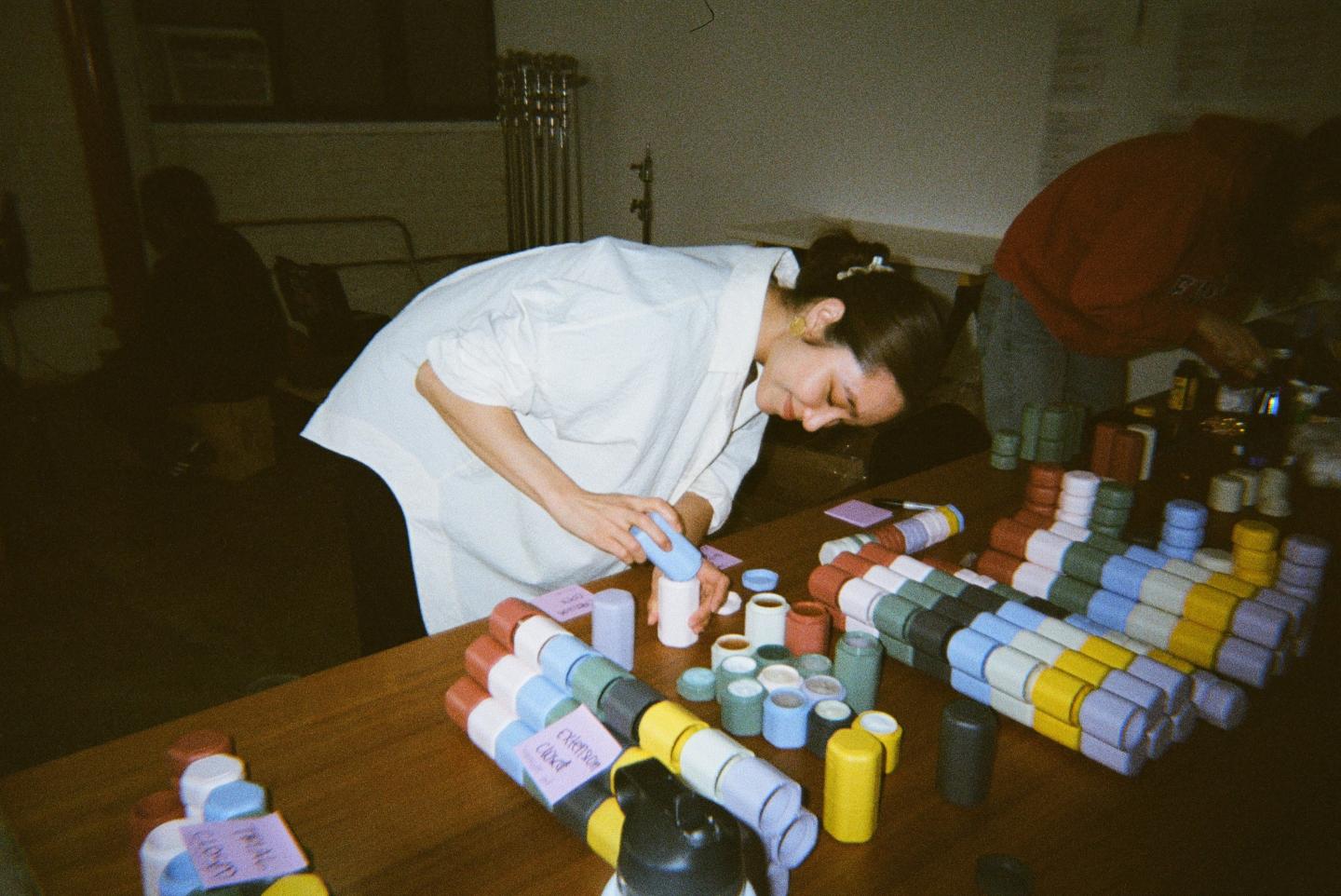
That personal pain point gave rise to Cadence, the company Hon launched in 2020 that makes modular, magnetically connectable capsules and travel parcels for the essentials people refuse to leave behind. Today, Cadence systems are sold online and by retailers including Nordstrom and Revolve, with more specialty retailers to come this year.
Along the way, Hon has built the company on two things small businesses can do better than almost anyone: sweating every detail of the product, and talking directly to the people who buy it.
An obsession with ritual
Hon’s path to product design ran through a modern dance studio, where she trained professionally before back surgery forced her to change course. She then moved into sports marketing, working at a company that produced films and short-form stories for brands like Patagonia and Red Bull. Traveling for work with athletes, families, and crews, Hon noticed that everyone had a version of her problem: a curated set of things—medication, supplements, skin care—that had to travel intact, or the day felt off.
“I thought about how important it was for busy people who are going places in life to remove that worry: ‘Do I have those things with me that are going to make me feel grounded and present in the moment?’” Hon says.
She spent two years designing the product and building a team as a side hustle. Her mantra: Get the word out far and wide.
“The number one thing that’s helped me through the years is telling every single person you meet, no matter what they do or where they are in the world, who and what you are looking for,” Hon says. She met a guy who knew a guy, “and that guy was a mechanical engineer and my first hire, who lived in his van in my driveway for six months.” He’s still with Cadence today.
Hon left her full-time job in early 2019, when the design was locked and the company needed to commit capital to the costly equipment required for injection molding.
“I didn’t know anyone in the startup space,” she recalls. “I went to Skidmore College, and it was just a chain of people from there who knew other people.” It took her about a year to raise $400,000 in seed money, mostly from founders and operators at companies including Madhappy and Glossier.
Innovative by design
Cadence launched in February 2020 with one capsule in one color. Three weeks later, the COVID pandemic stopped the world in its tracks.
“It was definitely a crazy time to launch a company,” Hon says. “People tend to buy us first for a trip, but I think people wanted to feel organized then as they moved about their day in small ways, controlling what they could. That’s where we come in, and after a few weeks we just exploded.”
About three years later, Cadence debuted an upgraded capsule system in three sizes.
The capsules are made not by container companies but by high-precision injection molders—the kind that make Lego bricks—and by medical-grade manufacturers. Production is split between two family-run factories, one in Canada and one in Thailand; the Thai partners liked the company enough to invest in it. The parcels, which launched last year, are made in Cambodia. Cadence’s fulfillment center, where it laser-engraves the custom tiles that label its capsules, is in Mount Kisco, N.Y., where Hon grew up.
“We’re a design company at our core—we start and end with our product,” Hon says. “Every piece is patented from the ground up. We never go to a manufacturer and pick something that already exists off of a shelf, and we’re very proud of that.”
That focus on innovation means a lot of trial and error. New products typically require about 150 prototypes, and the company does all its design and 3D printing in-house. No detail is overlooked. The capsules’ caps, for example, stick magnetically to the side of the capsule, because it’s easier to pop a cap back on from there than to pick it up off a counter.
“Our products are very much like Legos in a way,” Hon explains. “We build things that then form a singular product, so the level of manufacturing needs to be extremely precise. It looks simple, but it’s highly complex.”
New retailers and frontiers
Cadence’s marketing strategy follows the same product-first philosophy.
“So many companies are marketing engines first, then they think about product,” Hon says. “We’re the opposite—we want people to know we obsessively care about what we create. Our approach is, ‘How do we get this person to fall in love with Cadence and never go anywhere else?’”
To that end, Hon hosts “fireside chats” whenever Cadence launches something new.
“Between 500 and 1,000 people show up for a launch, and I’ll sit on the Zoom for two hours and answer hundreds of questions,” she says.
That direct connection with customers has helped Cadence achieve a 60% repeat purchase rate, which is high for a company that sells durable goods.
Next up is the Pump, which debuts this month. Six years and more than 1,000 prototypes in the making, it’s designed to be 100% leakproof, work seamlessly with Cadence’s capsules, and pump more than 5,000 times, compared with about 1,000 for a typical pump. A magnetic cap keeps it from pumping accidentally inside a bag.
“Like everything we create, it’s about rethinking an everyday object and making it more functional, beautiful, and enjoyable to use,” Hon says.
With business humming along, the Brooklyn-based company, which now has 15 full-time employees, is pushing further into retail. Cadence is currently sold at Nordstrom, Revolve, and the MoMA Design Store, one of the first stores to carry it, starting in 2023. By year’s end, it will add Bloomingdale’s, Goop, Clean Market, and Happier Grocery to its retail roster.
Looking ahead, Hon is widening her focus.
“We like to think of the opportunity as similar to a blueprint of a house, starting in the bathroom with your capsule system,” she says. “We stepped out of the house with our parcel system, and next we’ll move slowly but surely into kids, kitchen, and beyond.”
Whatever comes next, she says, will go through the same questions.
“Is it a problem? Could it be better? If yes, then we’ll go ahead and solve it.”
What small businesses can learn from Cadence
Tell everyone what you’re looking for. Hon found her first hire, a mechanical engineer who is still with the company, by telling every person she met exactly who she needed. When you’re ready to make a first hire without a recruiter or a big network, your own word of mouth can be the most effective search tool you have.
Know when to go all-in. Hon kept her full-time job for two years while she designed the product, and left only when the design was final and the business needed real capital for manufacturing equipment. Waiting for a clear milestone can make the leap less risky.
Use founder access as an advantage. Few big brands can put their founder on a two-hour Zoom answering hundreds of customer questions. That kind of direct connection is something small companies can offer, and it has helped Cadence earn a 60% repeat purchase rate.
Let the product do the marketing. With around 150 prototypes for a typical product and more than 1,000 for its newest, Cadence invests in getting the details right before spending on promotion. For a small business, a product people love enough to buy again can be the most efficient growth strategy.