

Good morning. Fortune’s Most Powerful Women Summit kicks off today in sunny Santa Barbara.
There are a number of top speakers from the tech world on the agenda this year. Among them: Flex’s Revathi Advaithi, Upwork’s Hayden Brown, Type Capital’s Terri Burns, Logitech’s Hanneke Faber, Kalshi’s Luana Lopes Lara, Dazzle’s Marissa Mayer, Alphabet’s Ruth Porat, CapitalG’s Laela Sturdy, and Cloudflare’s Michelle Zatlyn, plus more senior execs from Amazon, DoorDash, Dropbox, ServiceNow, et cetera.
The mainstage program begins at 4 p.m. Pacific. Watch the livestream here. —Andrew Nusca
Thoughts? Suggestions? Hot tip? Drop me a line.
THE BIG STORY
A $100 price hike may be all it takes to scare off iPhone buyers

Apple told some suppliers to cut production of components for the iPhone 18 Pro and iPhone 18 Pro Max, according to a new Nikkei Asia report, raising fresh questions about how much more consumers are willing to pay for premium smartphones as memory-chip costs soar.
The publication reported that Apple’s October component orders for the two models are at least 15% below what the company originally requested.
Demand has been softer than expected from late August into October, according to Nikkei, and Apple has grown more cautious about shipments since early September.
Price may be one factor. The iPhone 18 Pro starts at $1,199 and the iPhone 18 Pro Max at $1,299—each $100 more than the iPhone 17 Pro models they replaced.
The increases come amid a global memory-chip shortage fueled by the AI boom. Tech giants racing to build AI data centers are gobbling up a growing share of memory supply, leaving less for makers of phones, laptops, and other consumer electronics.
Those costs are rippling through the broader economy. The Consumer Price Index for software and accessories and the Producer Price Index for storage devices have both risen 23% since the end of 2024, while the import price index for computers, peripherals, and parts has climbed 37%, according to J.P. Morgan economist Abiel Reinhart.
Smartphones are feeling the squeeze, too. In August, IDC forecast that global shipments would fall 16.7% in 2026 to just over 1 billion units, the steepest annual decline on record. IDC also expects the average selling price of a smartphone to rise 27.6% to $581 as manufacturers pass higher costs on to consumers.
Apple’s launch calendar may be another factor. This fall, the company introduced only premium models: the iPhone 18 Pro, the iPhone 18 Pro Max, and its first foldable, the $2,000 iPhone Duo. It held back the standard iPhone 18, which is expected to arrive in spring 2027 alongside the lower-cost iPhone 18e and a second-generation iPhone Air. —Fernanda Tronco
THE BLIND BOX
“Firing people over a good faith attempt to use their best judgment in a novel and uncertain situation is a sign of a highly unhealthy culture.”
THE RUNDOWN
—Anthropic’s Claude submitted a false tip to police about an unsolved homicide case.
—A Ukrainian drone strike shut down a Yandex data center, disrupting AI, banking, and transportation services.
—Amazon may buy Decart for $7 billion. The frontier AI lab builds world models.
—Marc Benioff, Jensen Huang, Elon Musk, and Satya Nadella adopt Trump’s “super intelligence” term.
—Physical AI companies raised $48 billion so far this year, per PitchBook.
—A $165 million data center fight in Pennsylvania is representative of the bipartisan battle against AI in the U.S.
—Nvidia may reverse acqui-hire its way into Reflection AI. It’s already one of the startup’s largest shareholders.
—Sony trolls Mark Zuckerberg with an Instagram ad as The Social Reckoning opens in theaters.
THE PARTING SHOT
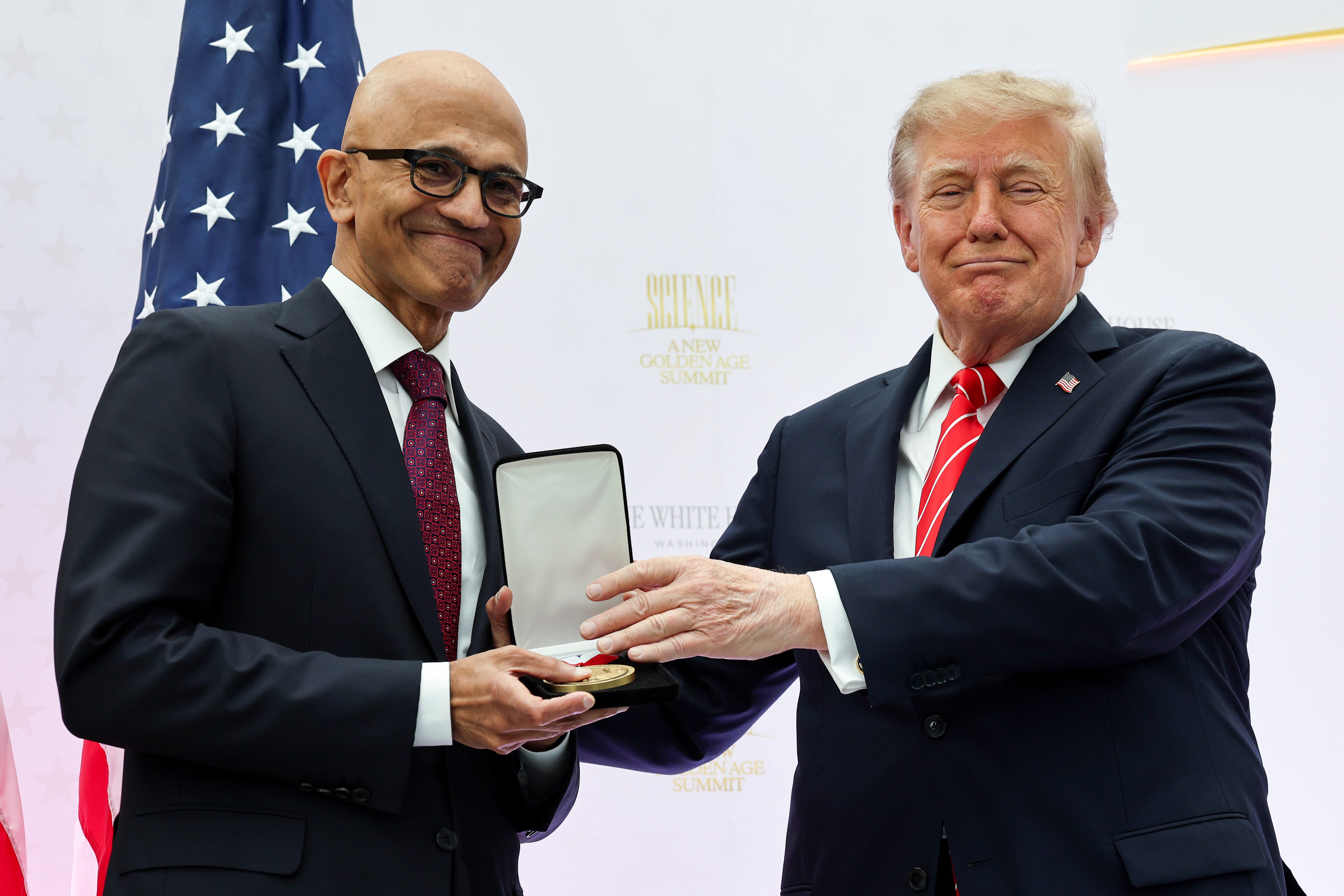
Microsoft CEO Satya Nadella, undoubtedly channeling the interests of his company’s business customers, has published a new missive about the risks of AI models.
Here’s the interesting bit:
“We simply can't outsource responsibility for what intelligence does on our behalf. A model provider’s assurances do not relieve us of that responsibility. We can’t treat Super Intelligence as a set of nested black boxes and simply accept or reject its recommendations, answers, and actions. We must build contained systems whose behavior we can observe, limits we can test, and actions we can always contain. In other words, we need to separate the supply of intelligence from the authority over it.”