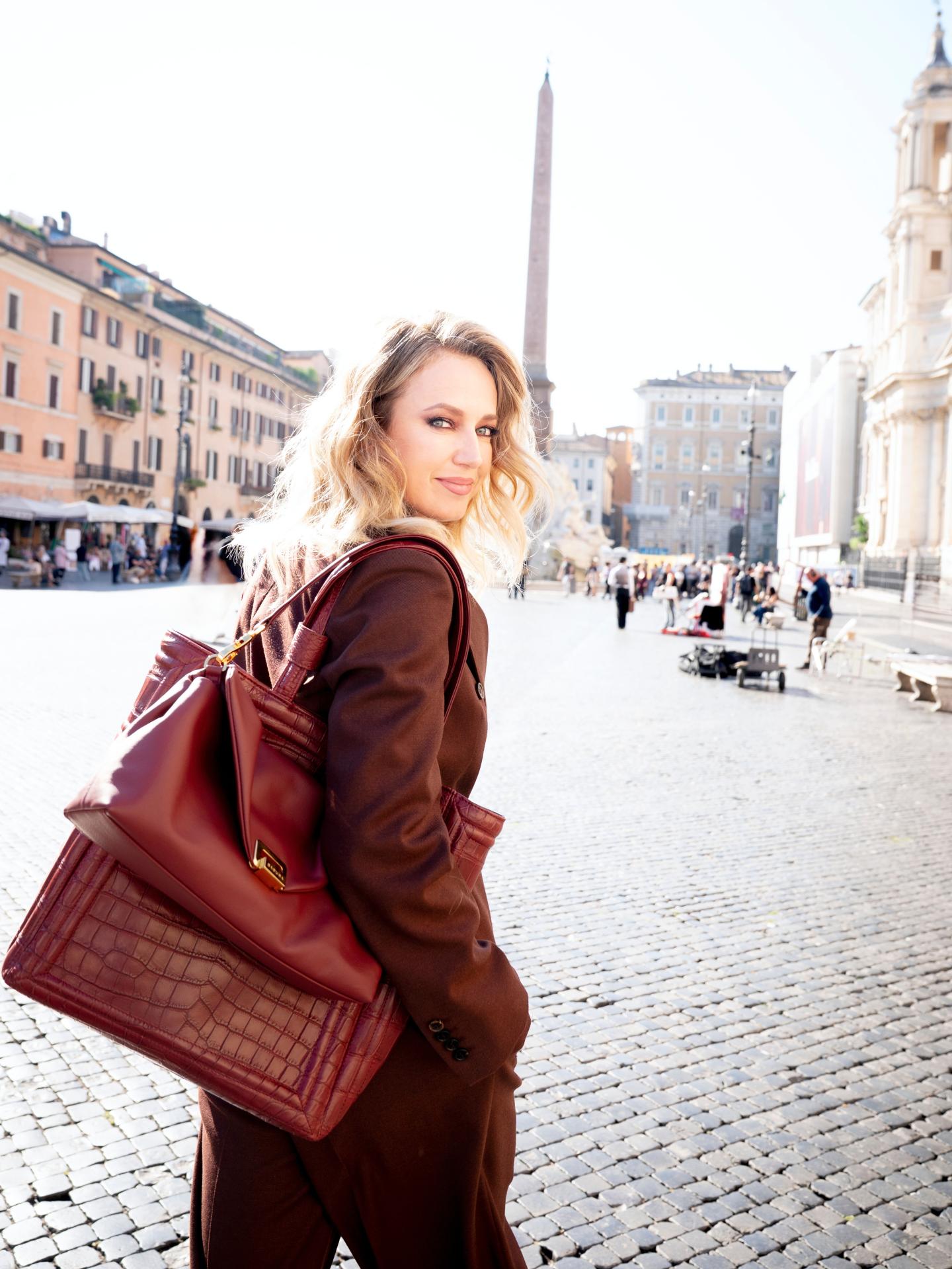
By many consumers’ definition, a luxury handbag is one that lands on a magazine’s market pages, becomes the must-have purchase of the season, and sends shoppers racing to buy one, or at least to join the waiting list.
Aleksandra Badura measures luxury differently. As the founder and designer of Aleksandra Badura, a collection of handbags and leather goods crafted entirely by hand in Italy, she finds it in the materials, the details, and the construction—and in the fact that no two pieces are alike.
After steadily growing the Rome-based business for more than a decade, Badura is taking on a two-part challenge: expanding the brand internationally while preserving the Italian craftsmanship that defines it. Her approach offers a lesson for any small business competing against far larger rivals. The things a big company can’t replicate, from personal attention to handwork to genuine scarcity, can become the core of the brand.
A vision and a collaboration
Born in Poland, Badura moved to Rome in 2001 to earn a master’s degree in international economics before channeling her passion for architecture and interior design into a career.
Her journey into alta pelletteria, or “high leather goods,” began miles above the clouds. Traveling often between the Middle East, London, and Paris as a contract interior designer, “I saw incredible luxury everywhere, yet I couldn’t find the bag I envisioned,” Badura recalls. On a flight home from Dubai, she decided to draw it herself.
Back in the Italian capital, a tailor she knew introduced her to a local artisan who had been making bags by hand for 40 years. She showed him the design—a multipurpose bag with three compartments—and he made it in green ostrich. That bag, the Ladylike, later became the brand’s signature style.
“I didn’t have to convince him in the conventional sense,” Badura says. “I brought a precise, technically challenging vision, and he brought an extraordinary knowledge of leather and construction.”
When she returned to Dubai with the bag, a client asked where she had bought it. Badura replied that she had designed it, and the client asked her to make one for her. Having created her dream bag and found her first customer in less than three weeks, Badura realized her idea could become a business. She launched the company in 2013.
Form meets function
Made from top-quality Italian leathers, suedes, and exotic skins, Badura bags are known for their combinations of materials and textures and a kaleidoscopic range of colors. Their shapes draw on the cuts of diamonds, a precise geometry that serves as the blueprint for each bag’s panels, lines, and proportions.
But in Badura’s world, there’s no style without substance.
“When I design a bag, I’m always thinking about real life: how it opens, how the weight is distributed, and how easily you can find what you need,” she says.
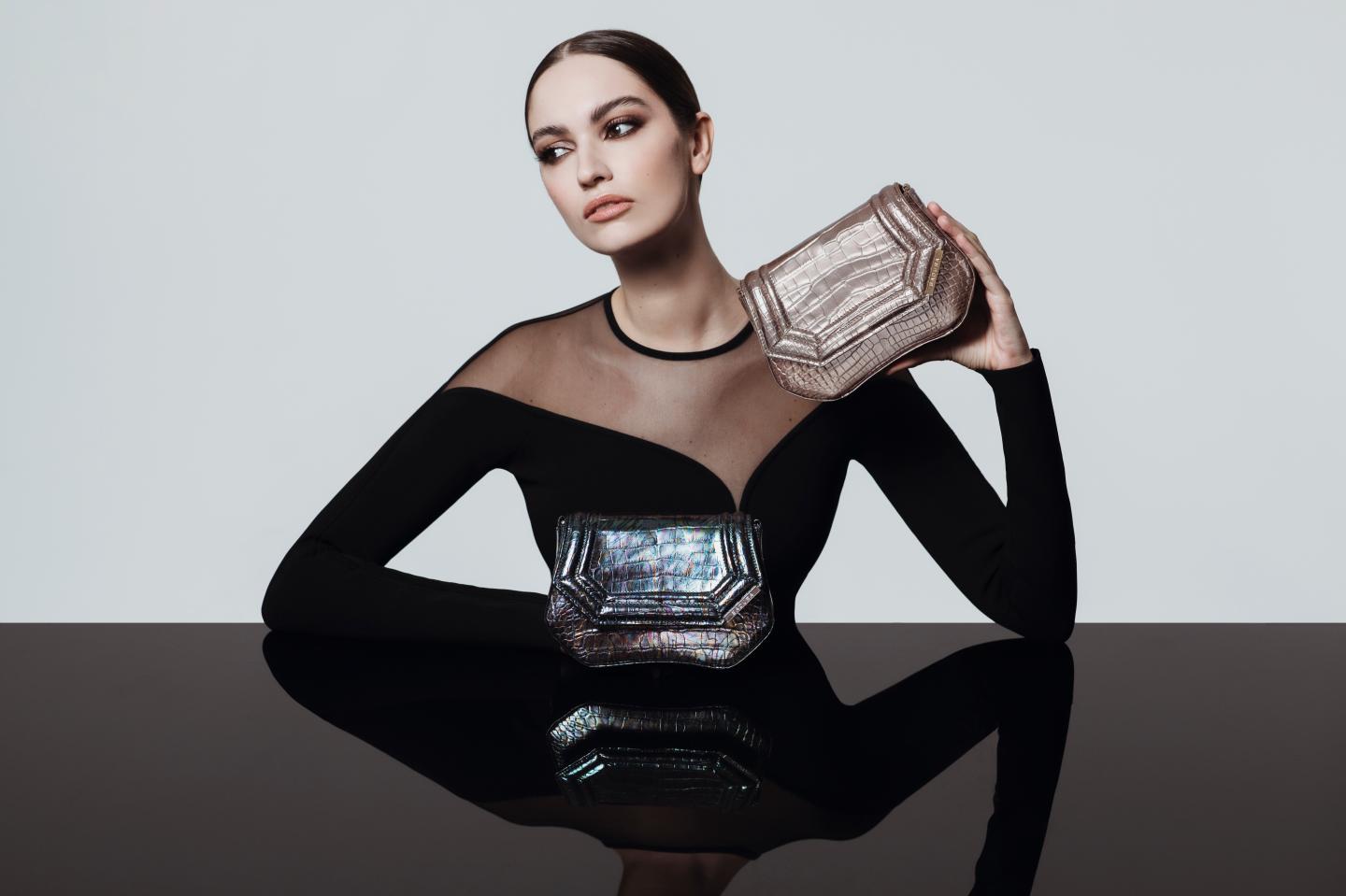
For Badura, real luxury lies in objects that are truly unique, an idea that animates the entire brand. She grew up accompanying her mother and grandmother to seamstresses who made their clothes to order. “I understood from an early age that something made specifically for you carries a completely different value,” she says.
That philosophy shaped the brand from the start. Its first collection was one of a kind: Each bag exists in a single interpretation and is never reproduced identically.
“That’s ultra-luxury—pieces that are inherently unique,” Badura says.
Made-to-order pieces take the idea further. A client can choose a model and ask Badura to create a singular version through materials, colors, and details. That includes the color of the leather or suede lining, an especially personal choice, since the owner is the only one who will ever see it.
Making the bags by hand demands uncompromising precision. The Ladylike is made of some 60 separate components, which Badura and her team of 11 artisans assemble at the brand’s workshop in Rome, which she calls the “lab.” By comparison, a machine-made handbag has four to eight components on average.
Beyond 10 women’s collections, the brand makes larger travel pieces and small leather goods, including card holders, wallets, and pouches. It also produces made-to-order accessory collections for some of the world’s leading luxury brands and for corporate clients ranging from beauty brands to pharmaceutical companies.
Luxury you can feel
The brand began with a traditional boutique near Rome’s Spanish Steps. But over time, Badura says, “I came to think that these unique pieces deserved a unique way to be discovered.”
Today she meets clients at a by-appointment atelier in the city’s leafy Prati district, a short walk across the Tiber River from Piazza del Popolo. The setting reflects a deliberate goal: to make luxury feel welcoming rather than intimidating.
The atelier makes craftsmanship tangible. Visitors can browse an array of leathers, see the handwork behind individual details, and understand the patience that goes into each piece.
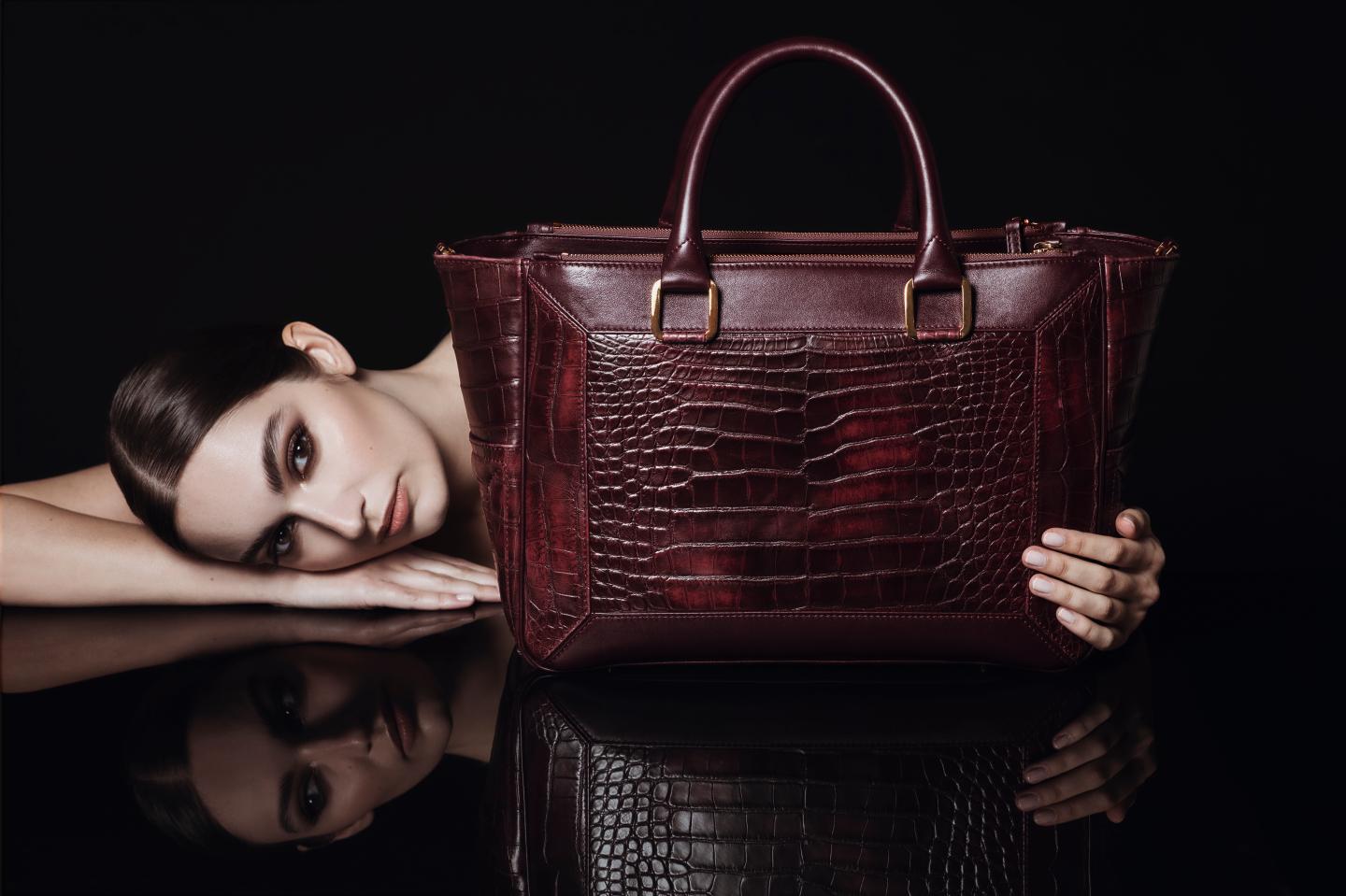
“I believe there are three questions worth asking in luxury today: ‘Where was it made? Who made it? And how long did it take to make it?’” Badura says. “In our atelier, those questions are answered in front of you.”
That emphasis on experience makes luxury about more than appearance. The finished object becomes inseparable from the creative decisions, craftsmanship, and care that produced it.
As she puts it, “It becomes something you can feel.”
Badura also offers an interactive leather workshop at the atelier and at her showroom in Milan. Guests design their own leather accessory, choosing from a range of precut leathers, and one of the brand’s master artisans helps them assemble it. Hotels including Rocco Forte’s Hotel de la Ville and Hotel de Russie, the St. Regis, and the Rome Cavalieri regularly send guests looking for a hands-on, made-in-Italy experience.
Beyond the atelier and the Milan showroom, a selection of Badura pieces is sold at the boutique in Rome’s Six Senses hotel and in Belmond hotel boutiques throughout Italy.
Preserving a disappearing art
Badura’s advice to other entrepreneurs? “Know your product down to the smallest detail, and never compromise on what makes it exceptional.”
Another lesson: “Be willing to listen to what others know, without losing faith in what they can’t yet see,” she says. “Sometimes, as a founder, you’re the only person who can envision what you’re trying to build before it exists.”
She’s taking that to heart as she considers her next move. Having grown the brand without institutional investment from the beginning, she’s now ready to bring on a strategic partner.
“I want to make Badura stronger by protecting what makes it rare,” she says. “The right partner would understand the value of what’s already been created and share the ambition to further develop the brand without diluting it.”
For her, the goal isn’t only to scale the business but also to ensure that Italian savoir-faire survives for future generations.
“One of my missions is to protect the extraordinary knowledge that still exists inside ateliers: the human intelligence, the mastery of materials, the time, and the experience that can’t be industrialized or reproduced overnight,” Badura says. “Preserving craftsmanship is not about safeguarding the past in a museum—it’s about giving this irreplaceable expertise a future.”
What small businesses can learn from Badura
Build on what big brands can’t copy. Large labels compete on scale; Badura competes on scarcity, with pieces that are never reproduced identically. For a small business, the qualities that don’t scale easily, like handwork and personalization, can be a lasting edge.
Let customers see how the work gets done. Badura’s atelier and workshops answer where, by whom, and how long, right in front of the customer. Showing your process builds trust and turns a purchase into an experience people remember and talk about.
Borrow reach from partners. Rather than relying on a single boutique, Badura works with luxury hotels that send guests to her workshops and stock her pieces in their shops. Partnerships with businesses that already serve your ideal customer can extend your reach without the cost of new storefronts.
Know your product better than anyone. Badura’s own advice is to understand your product down to the smallest detail and never compromise on what makes it exceptional. That depth of knowledge is what lets a small team command premium prices.
Grow on your own terms. After more than a decade without institutional investors, Badura is seeking a partner who shares her values rather than simply the largest check. Waiting for the right fit can protect what made the business worth investing in to begin with.