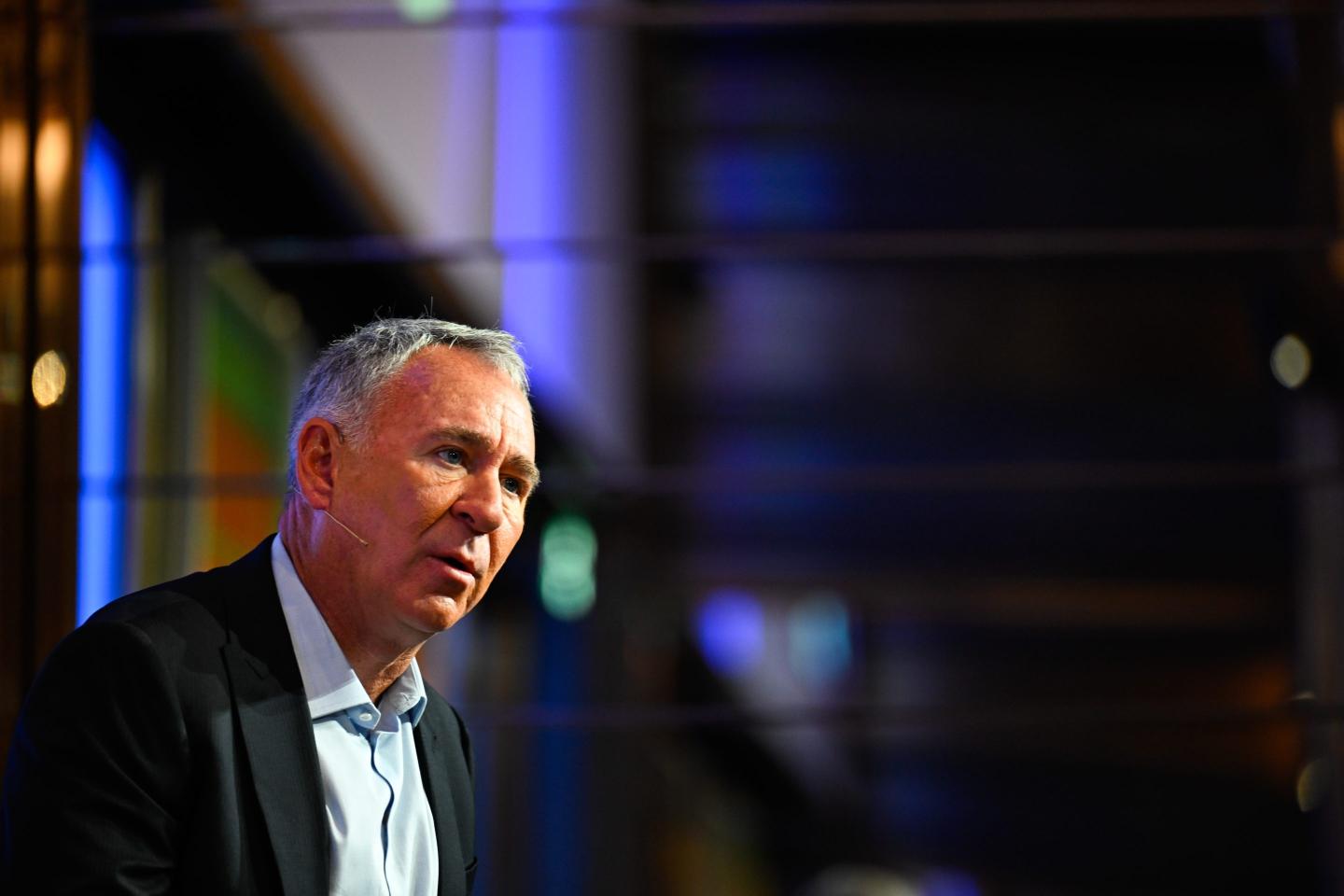
On Sept. 30, Citadel founder Ken Griffin pledged more than $3 billion to Carnegie Mellon University, the largest individual gift in the history of higher education. Much of it will build a new CMU campus in Miami’s Wynwood neighborhood, which is expected to enroll its first students in 2028, pending regulatory approval. Griffin described the challenge facing universities as how to “reignite both the belief and the realization of the possibility of the American dream.”
Griffin’s gift is an extraordinary act of philanthropy. It also raises a question philanthropy alone can’t answer. Must stewardship wait until a fortune is given away, or should conscience be part of how the fortune is made?
Griffin’s gift undoubtedly deserves admiration. The larger question is whether stewardship should begin only after wealth has been created, or whether it should also help guide the way wealth is created in the first place.
I believe it should. I also believe we rarely ask that question because we have come to expect too much of the invisible hand. We are asking an economic mechanism to perform a moral function it was never designed to perform: to supply a conscience.
I first met the invisible hand in an undergraduate class taught by Dr. Michael Smith. The idea is that individuals pursuing their own interests in a free market can, without intending it, advance the interests of society as a whole. It has stayed with me for a lifetime.
But Adam Smith was a moral philosopher before he was an economist. Seventeen years before The Wealth of Nations, he published The Theory of Moral Sentiments, a book about sympathy, virtue and our obligations to one another. Its central figure is the “impartial spectator,” the imagined observer within each of us who judges our conduct as a fair-minded stranger would. That is as good a definition of conscience as I know.
Smith understood that markets don’t operate in a moral vacuum. They depend on trust, on restraint, and on people who measure themselves by more than what the market will let them take. The invisible hand helps explain how self-interest can create prosperity. It cannot tell us when enough is enough, or what we owe the people who helped make our success possible.
I believe strongly in capitalism. It rewards ingenuity, hard work, risk and ambition, and it has created extraordinary prosperity. But implicit in our defense of economic self-interest has always been a bargain: if individuals are free to prosper, society prospers too.
There are reasons to wonder whether that bargain is under strain. Federal Reserve data from the second quarter of 2026 show that the wealthiest 10% of U.S. households hold roughly 69% of household wealth, while the bottom half hold just over 2%. And in a 2025 Gallup survey, only 15% of Americans said they had a great deal or quite a lot of confidence in big business.
No one builds a fortune alone. Every great business rests on a foundation it did not create: schools that educated its employees and customers, courts that enforced its contracts, and roads and networks that carried its goods and ideas. We inherit that foundation; we don’t create it from scratch. Many successful people have earned what they have. The harder question is whether benefiting so greatly from that foundation creates some responsibility to leave it stronger for whoever comes next.
Philanthropy usually arrives near the end of the story, once the fortune has been made. Conscience belongs earlier. It shows up in how a business owner treats employees, how widely opportunity is shared, what an investor chooses to back, how a company treats the environment it draws from, and what values a family passes along with its money.
Some companies have tried to build that idea into the way they do business. Costco reported an average U.S. hourly wage of about $32 for hourly employees in 2025—about $46 when benefits are included—even as the company earned $8.1 billion in net income. Publix took a different route: founder George Jenkins believed employees should have an ownership stake in the company they helped build, and today Publix remains the largest employee-owned company in the United States. Neither company is a charity. Both are successful businesses. The point is that sharing prosperity need not be the enemy of creating it.
For those fortunate enough to accumulate far more than they will ever need, some questions have no answer on a financial statement. What did I build? Whom did I help prosper? What did I return to the society that made my success possible? What did I leave stronger than I found it?
Those questions take wealth seriously. They recognize how much power it gives a person to improve the lives of others. Government cannot supply that conscience, and neither can the market. It has to come from within, which is exactly where Smith placed his impartial spectator.
So…I would ask every executive, founder and investor to add one question to the financial questions they already ask: If this decision succeeds, who besides us will be better off? Ask it when setting compensation, allocating capital, choosing investments and deciding how employees will share in the value they help create. Not every decision will benefit everyone equally. But the question itself belongs at the table.
Capitalism does not need to apologize for producing winners. But those who benefit most from it might ask more of themselves than capitalism asks of them. The invisible hand can help create extraordinary wealth. It cannot tell us what we owe one another.
For that, it needs a conscience. Ours.
The opinions expressed in Fortune.com commentary pieces are solely the views of their authors and do not necessarily reflect the opinions and beliefs of Fortune.