

Good morning. On Fortune’s radar today:
- Anthropic recruiting for White House lobbying effort for 2028 cycle.
- Trump: No more war until after the midterms.
- Wall Street fears ‘doom loop’ as ‘France is veering toward a full-blown civil crisis.’
- Schneider chairman defends $22.6 billion PTC deal.
- Lack of air conditioning could wipe 2.6% off global GDP.
- How much you need to retire comfortably in every U.S. state: See the list here.
➡️ If you would like to receive this information in your inbox every morning before the markets open in New York, sign up here.
ONE BIG THING
Anthropic launching a ‘presidential engagement’ effort for 2028 election cycle
Anthropic is setting up a “presidential engagement” program ahead of the 2028 elections, building an in-house team that will work directly with U.S. presidential candidates from both parties on AI issues, help Anthropic’s leadership set political strategy, and run the company’s political funding program.
The effort—which is taking shape before the November midterm elections and an impending initial public offering that could value Anthropic at as much as $2 trillion—underscores the extent to which government policy, and the support of the White House in particular, have become critical to the AI industry, Fortune’s Emily Forlini reports.
- OpenAI annualised revenues $20bn less than previously signalled - FT
- Anthropic's new plan to protect critical infrastructure - Axios
- OpenAI defends decision to fire researchers: ‘These decisions were not about raising safety concerns or speaking out’ - CNBC
Trump rules out further combat in Iran until after elections
The U.S. will not restart its war against Iran until after the midterms, President Donald Trump said last night on social media: “We are having productive discussions with the Islamic Republic of Iran. … we will not be attacking Iran at any time prior to the Midterm Elections to be held in the United States on November 3rd.”
Nonetheless, the Pentagon is sending three more aircraft carriers to the region, “a massive assembly of force,” according to the NYT, and presenting Trump with a range of plans for major combat operations.
- The president is hesitant, the NYT said: “Mr. Trump has repeatedly decided not to relaunch heavy combat operations against Iran. And the U.S. military response to Iran has been more muted in recent weeks, despite Iran’s escalating attacks on oil tankers.”
- Iran and Houthis Try to Regain Upper Hand in Hormuz With Spate of New Attacks - WSJ
- American Oil Refiners Are Printing Money as Wars Shrink Global Energy Supplies - WSJ
MORE FROM FORTUNE
The Big Mac Dilemma: Can McDonald's Fix Sales? | Fortune Daily
Disney offered a 13-year-old $2 million to sing in The Lion King—his mom took $100k plus royalties instead. He’s still getting paid 32 years later - Orianna Rosa Royle
‘The gap was not the awareness’: The company phishing trainings you loathe aren’t enough when nearly 1 in 4 security pros say their MFA is optional - Tatiana Sataua
‘You decided to evade them’: Former HSBC banker ‘clearly in a financial position to pay’ banned from finance for dodging $7,800 in fares - Catherina Gioino
Sweden’s startups will raise $5 billion in 2026. Our secret sauce is 150 years old - Jan Larsson
FRENCH TOAST
'What happens in Paris doesn’t stay in Paris!' Wall Street fears European 'doom loop'
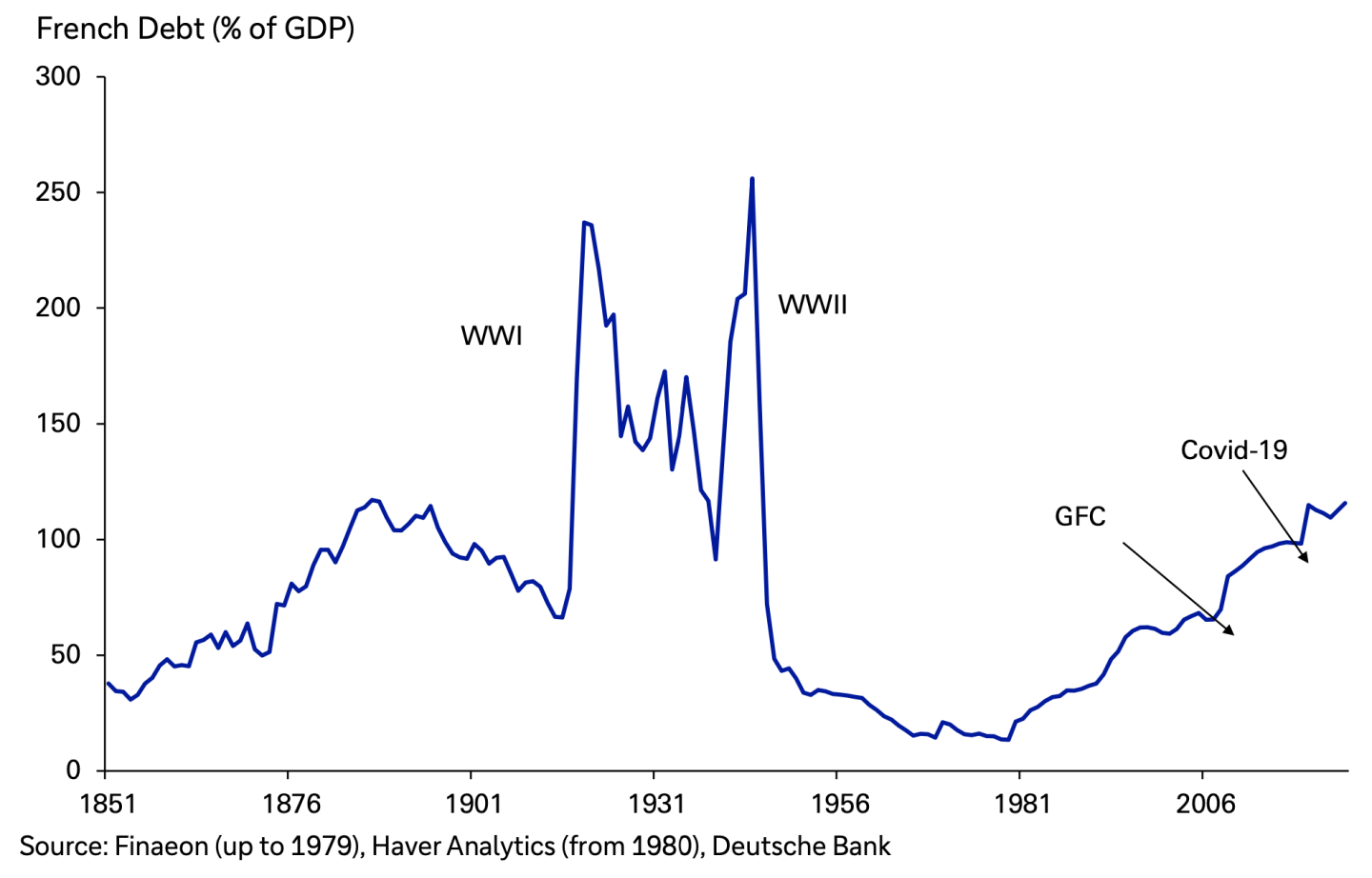
This week, Wall Street analysts began thinking seriously about how big the French debt crisis might get, and whether it will spread to other asset classes. Or even other countries. Their thoughts are not happy ones. “What happens in Paris doesn’t stay in Paris!” Peter Schaffrik and his team at RBC said in an email to clients this week. “We think there is more at play than simply concerns about the French finances—even though this has clearly been the epicenter of the moves.”
Europe already had an energy crisis (caused by the wars in Iran and Ukraine), plus high inflation, and this was already driving bondholders to demand greater risk premia to hold government debt before France blew up, Schaffrik argued.
Combined with already high government debt and low growth across Europe, this sets the stage for higher yield demands, which make new borrowing more expensive. And that “will weigh on growth even further,” he said.
And then you have all the people in the “carry trade” who borrowed money to bet on French bond prices and now need to sell those positions, exacerbating the problem.
“France is veering toward a full-blown civil crisis”
At Macquarie, Thierry Wizman and Gareth Berry are even more alarmist. “France is veering toward a full-blown civil crisis,” they told clients this week. “We think a direct and self-reinforcing causal connection can be drawn between the rise in France’s debt yields and the street riots of the past few days.” (The protestors are school students and others angry at the lack of spending on education.)
The pair argue that the longer the riots go on, the more likely it is that the government will cave and approve more spending, which would make the debt situation worse. That would drive up yields on French bonds, making borrowing to fund that spending even more expensive—and thus worsen the problem that the rioters are complaining about. French Prime Minister Sébastien Lecornu said he would make new fiscal proposals at the end of October, giving the rioters the rest of the month to pile pressure on the Élysée Palace.
“There is a direct and self-reinforcing causal connection (a ‘doom loop', perhaps) between the street riots and the rise in France's sovereign bond yields. Mediated by street protests and France's political polarization, rising bond yields lead to rising bond yields,” they told clients.
- Looming in the background is Italy, a country that was never great at balancing its books: “Italy has significantly revised up its 2027-2028 deficit forecasts to 3.4%-3.2% of GDP, from 2.6%-2.4% before. The new path surprised most market participants and exceeds the government’s April targets by a cumulative 1.2% of GDP,” Goldman Sachs’ Filippo Taddei said in a note.
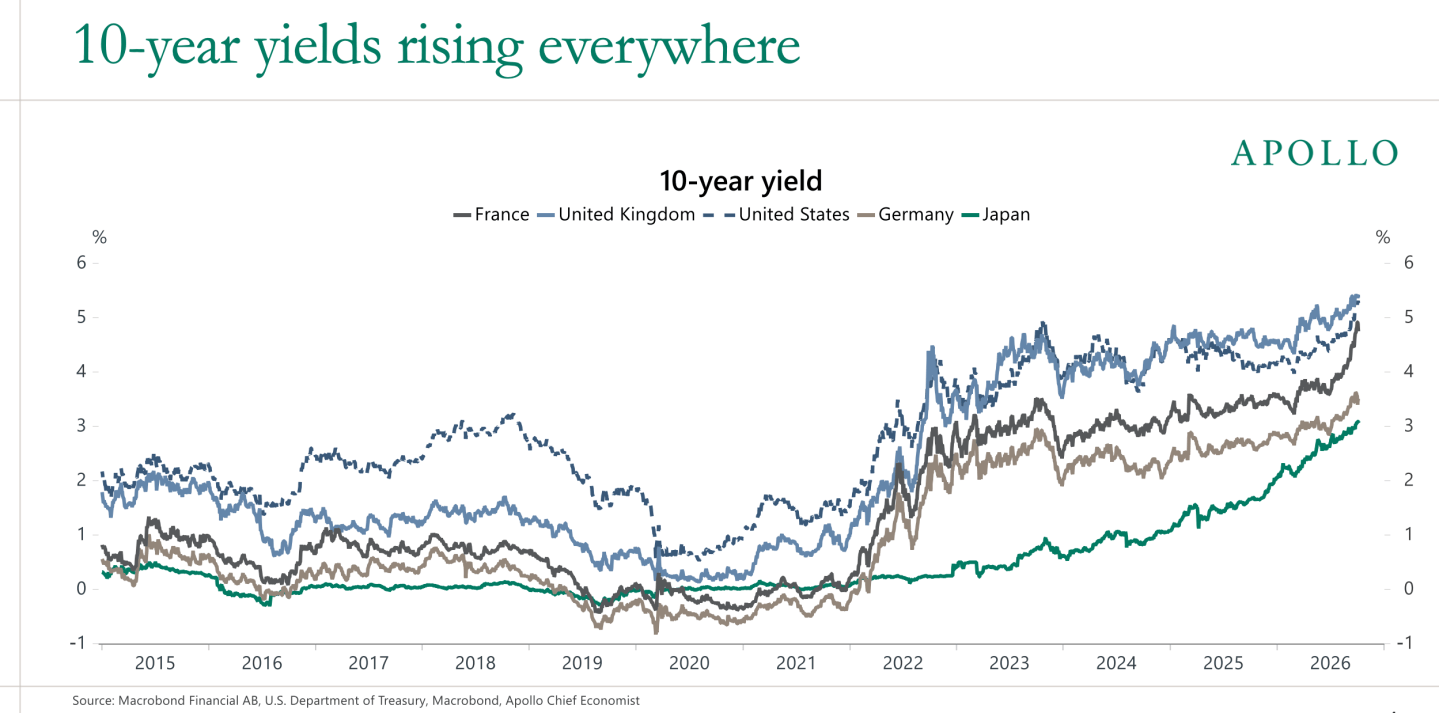
- OK, I hear you say, but I am an American—why should I care about the French, for whom rioting in the street is a national pastime? Because 10-year yields across the major Western economies tend to move together, as this chart from Apollo’s Torsten Sløk shows:
Schneider chairman defends $22.6 billion PTC deal that tanked the stock
Schneider Electric chairman Jean-Pascal Tricoire defended the company’s plan to buy U.S. industrial software maker PTC, arguing that investors need time to recognize the benefits of the deal. The agreement, which values PTC’s equity at $22.6 billion, making it Schneider’s largest-ever acquisition, was announced Monday; Schneider shares fell more than 8% in European morning trading that day. Reuters estimates the losses wiped out close to $17 billion from its market capitalization.
Speaking to Fortune at a company event in Hong Kong on Thursday, Tricoire said the market needed time to “appreciate the value” of the acquisition. He brought receipts, drawing a parallel with Schneider’s 2007 purchase of APC, which Tricoire credited with establishing Schneider’s data center business.
“At that time, the share price went down by, if I remember, 20% because people didn't get it,” he said, adding that data centers now make up 30% of Schneider’s business and are “growing high double-digits every year.”
Whether a nearly 20-year precedent will assuage investor doubts amid wider software skepticism, remains to be seen.—Lee Williamson
THE MARKETS
Traders regain their composure after yesterday’s tech selloff
The Nasdaq 100 slipped 1.39% yesterday after reports that OpenAI’s revenue base was $20 billion smaller than previously understood. Earlier reports said the company’s annualized revenue would be $70 billion, but that is a gross total counted before the revenue it is required to share with its suppliers. Its net revenue is $50 billion, the FT reported.
Traders took that as a signal that the AI economy might be smaller than hoped. Tech stocks took a beating, especially those related to AI: CoreWeave fell 7.77%, Oracle slipped 5.83%, and SpaceX was down 4.19%.
Stocks in Asia and Europe were broadly up this morning, and U.S. futures also showed gains before the open in New York. The yields on 10-year bonds in both the U.S. and France declined in the last 24 hours, a sign that traders hit the brakes in the bond selloff that has been pummeling markets globally.
Investors might be focused on the upcoming Q3 earnings season, according to Bob Edwards, chief investment officer of Edwards Asset Management ($3.3 billion AUM): “Corporate earnings may be stronger than investors appreciate. Third-quarter S&P 500 earnings growth year-over-year is expected to approach 30%, an extraordinary pace.”
- S&P 500 futures were up 0.42% this morning. The index fell 0.47% yesterday.
- In Europe, the Stoxx 600 was up 0.86% in early trading, and the U.K.’s FTSE 100 was up 0.83% before lunch.
- Asia: South Korea’s KOSPI was closed for a national holiday. Japan’s Nikkei 225 was down 0.02%. India’s Nifty 50 was up 1.49%. China’s CSI 300 was up 0.16%.
- Brent crude peaked at nearly $106 per barrel yesterday before falling back to $102 this morning.
- Bitcoin was at $82,512.
Retail investors keep buying tech, dip or no dip
Prior to yesterday’s carnage, retail investors net bought $5.7 billion in stocks in the week through Oct. 7, slightly below the 12-month average of $6.7 billion per week, according to Arun Jain and his team at J.P. Morgan. They especially favored tech stocks:
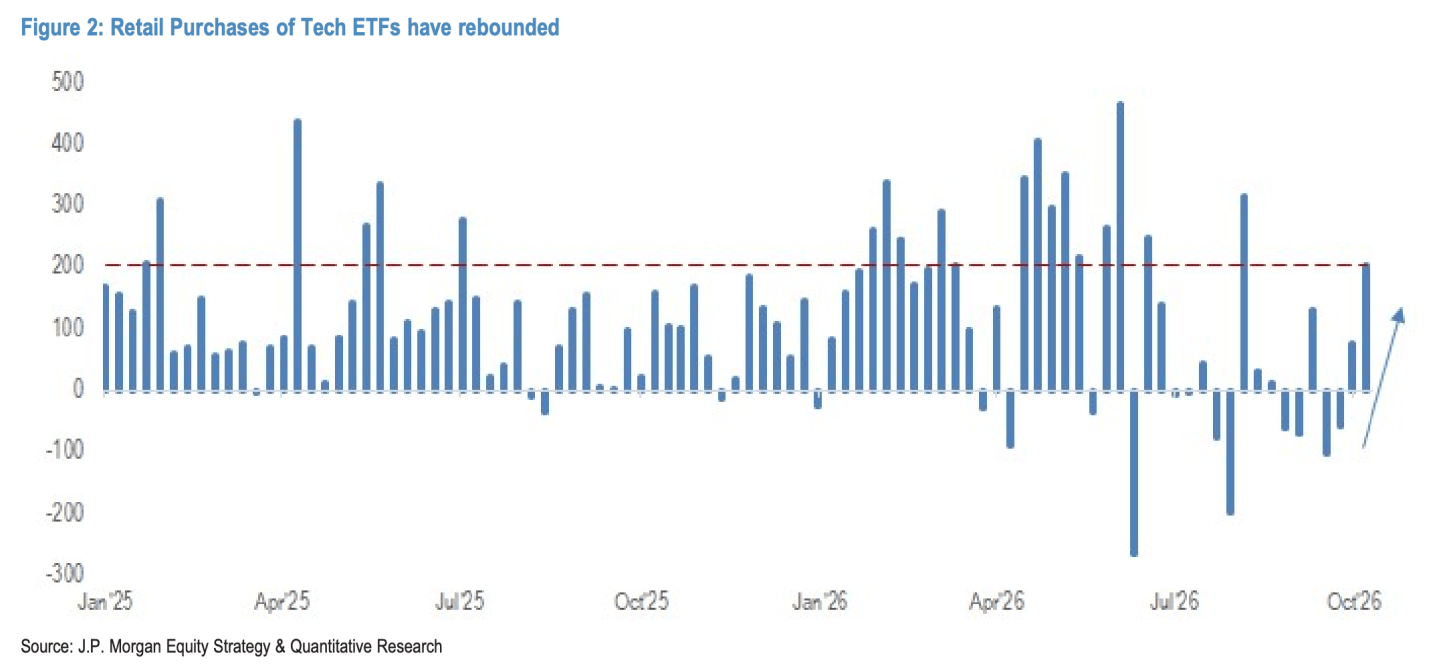
CHART OF THE DAY
Heat stress from global warming could wipe 2.6% off global GDP
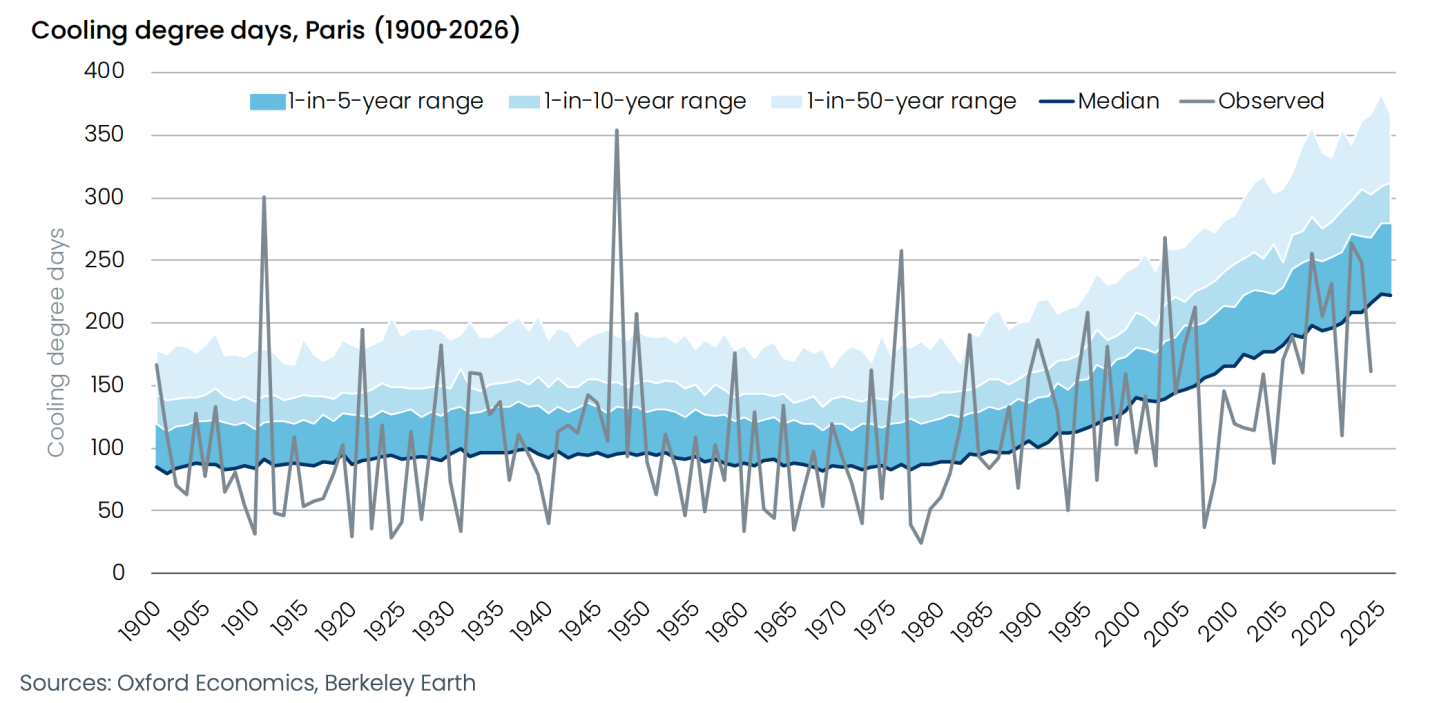
If human greenhouse gas emissions remain high, the loss of economic activity from people being too hot to work or slowing down in the heat could reduce global GDP by 1.4% to 2.6% by the end of the century, according to Oxford Economics’ Beatrice Tanjangco. “The steepest projected losses [would be] in South Asia (5.9%) and Africa (3.6%),” she said in a note.
Air conditioning in offices and houses is a major cause of global warming and could add 0.03°C to 0.07°C to temperatures by 2050, she said. “Air conditioners increase a household's electricity use by 36%. … Leakage of hydrofluorocarbons used as refrigerants generates direct emissions thousands of times more potent than carbon dioxide.” (In the chart above, a "cooling day" is a day when AC would be needed.)
QUOTE OF THE DAY
“Nobody suffers better than I can.”
—Nvidia founder Jensen Huang, giving a talk to the Korea Society recently. “In order to do something incredible, you have to suffer. It’s not a walk in the park. If it’s a walk in the park, anybody could do it.”
THE FRONT PAGES TODAY
‘Real boss of India?’: Elon Musk takes aim at Indian billionaire Ambani as Starlink launch stalls - CNBC
Kushner, Witkoff to pitch "new ideas" to end Russia-Ukraine war - Axios
Famous Italian winery loses 30,000 bottles worth €5mn in heist - FT
Firmus Is Said to Explore Raising $3 Billion After Shelving IPO - Bloomberg
Labour Holds Off Green Party in Election for Starmer’s Former London Seat - NYT
Meta bans social media TikTok ads across the US - NY Post
ONE MORE THING
How much money you need to retire comfortably in every U.S. state
$1.2 million. That’s how much Americans in workplace retirement plans say they’ll need to retire comfortably, according to Schroders’ 2026 U.S. Retirement Survey.
If that number makes you check your 401(k) twice, you’re in good company. In the same survey, 51% of plan participants said they expect to have less than $500,000 saved by retirement, including 24% who expect less than $250,000.
But where you live can affect your fortunes as much as how much you have saved.
Investopedia made a state-by-state set of estimates for a single retiree who collects the average Social Security benefit of $1,975 a month and withdraws 4% of savings a year. Each entry shows the estimated annual cost of a comfortable retirement and the nest egg needed to cover what Social Security doesn’t. See the list here.
- Would you like to sponsor this newsletter? Contact advertising@fortune.com for details.