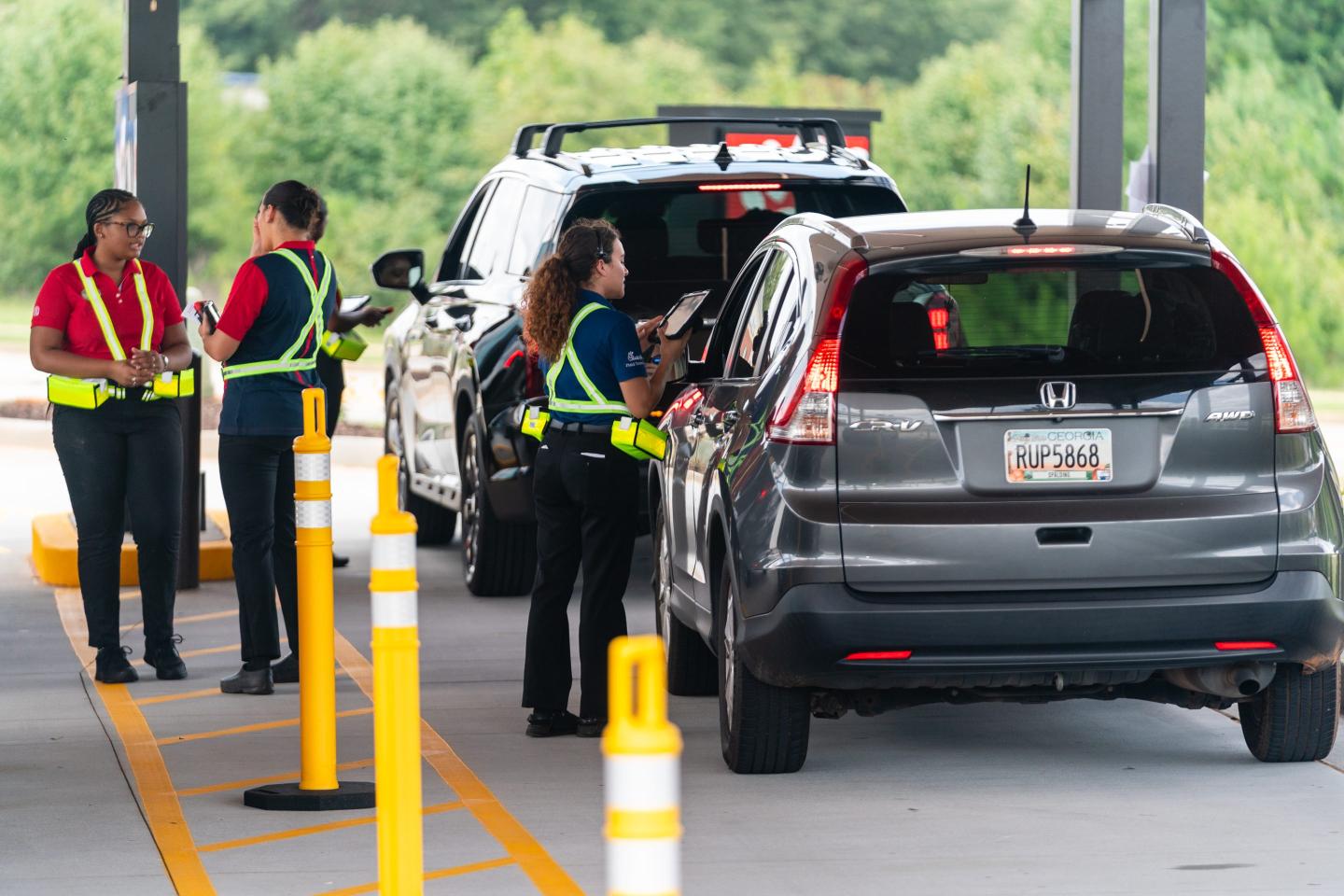
The fast food industry has spent decades trying to make ordering a burger faster. Digital menus, mobile apps, self-service kiosks—you name it. Now, artificial intelligence wants a turn at the drive-thru speaker. But at Chick-fil-A, the familiar “my pleasure” still needs to come from a human.
While McDonald’s is testing AI-powered voice ordering at its drive-thrus, Chick-fil-A CEO Andrew Cathy says his restaurants won’t follow suit. The chicken chain isn’t rejecting AI altogether, but it believes some parts of the fast food experience are better left to humans, even if technology could make them more efficient.
McDonald’s is also defending a different kind of algorithm in court. A new lawsuit alleges its pricing-recommendation system helped coordinate higher menu prices—a claim the company denies. The two technologies are separate, but both put a spotlight on how much control restaurants are willing to hand over to AI—and how much responsibility remains with the people using it.
Why Chick-fil-A is keeping people at the speaker
Chick-fil-A calls its approach to technology “human plus.” The company is exploring AI behind the scenes but won’t use it to replace drive-thru order-takers, Cathy told CNBC.
“We’re not gonna substitute that interaction with technology, because we feel like that hospitality is so important to create that warm environment for consumers,” he said.
Alex Susskind, a Cornell University professor who studies restaurant operations and hospitality technology, sees the logic. Chick-fil-A’s drive-thrus often have employees standing outside with tablets, taking orders and directing cars through lines that can stretch around the building. Those human interactions, he told Fortune, make the wait more tolerable.
Susskind, a former chef and restaurant operator, isn’t against automation. Technology has an important role in restaurants, he said, particularly when it removes repetitive tasks without sacrificing service. Before adopting it, he said restaurants should ask: “Is this making my customers’ experience better or more meaningful?”
In contrast to Chick-fil-A’s human-centric approach to drive-thru ordering, McDonald’s is testing Archy, an AI-powered system that takes drive-thru orders in English and Spanish, claiming to be accurate more than 90% of the time.
The technology is part of a broader system called ArchIQ, which also includes automated inventory management and equipment monitoring. McDonald’s says these tools are intended to simplify restaurant operations and free employees to spend more time serving customers.
It isn’t the burger giant’s first try. McDonald’s ended an earlier drive-thru voice-ordering test with IBM in 2024 after rolling it out to more than 100 U.S. restaurants, a trial that drew attention for viral videos of botched orders.
When the order goes wrong
Susskind has seen firsthand how quickly an automated ordering system can go wrong. He called a local pizzeria to order one large pizza, half pepperoni and half plain cheese, which seemed simple enough. But on the other end was an AI phone assistant that kept insisting he wanted two pizzas, even after he repeatedly corrected it.
With no easy way to reach a person, Susskind eventually went to the restaurant himself. Employees explained there was a bug in the system, which the restaurant later fixed.
“We only talk about technology when it doesn’t work. We’ve been using AI in a million different ways without even knowing it, or without calling it AI,” he told Fortune, pointing to spell-check as an example.
Restaurants should use technology in ways customers appreciate, he said: “Because if it works well, then it makes their experience easier.”
For customers, the frustration can be as simple as an ordering bot that turns one pizza into two. For employees, it can mean having to clean up mistakes made by technology that was supposed to make their jobs easier.
Keith Spencer, a career expert focused on AI’s impact on workers, said automated ordering could eliminate some repetitive responsibilities for restaurant employees. But fewer tasks don’t necessarily mean less work. Some workers may find themselves handling customer complaints, correcting automated orders, and troubleshooting systems they didn’t choose to implement.
“If AI takes over routine tasks while workers have more opportunity to focus on customer service and problem-solving, it could make shifts more manageable,” Spencer told Fortune. “If the primary goal is simply to reduce labor hours, the impact could look very different.”
When algorithms influence more than orders
McDonald’s is facing a different set of questions about its use of algorithms, this time over whether a pricing-recommendation system could undermine competition among its restaurants.
In a proposed class action lawsuit filed Oct. 2 in federal court in Chicago, customer Michael Thomas alleges McDonald’s used confidential restaurant sales data and a shared pricing algorithm to coordinate menu prices among independently operated franchises. The complaint further alleges McDonald’s pressured franchisees to follow the system’s recommendations and tracked when they deviated from them. The plaintiff argues those practices reduced competition among restaurants and led customers to pay higher prices.
McDonald’s disputes the allegations.
“The complaint is filled with inaccuracies, and we will vigorously defend against this lawsuit,” McDonald’s Corp. said in a statement. “AI does not set menu prices at McDonald’s restaurants—McDonald’s franchisees do.”
According to McDonald’s, franchisees independently set their prices and may choose whether to use the company’s pricing recommendations. The company also denies using dynamic pricing or changing prices in real time based on individual customers.
David Scupp, an antitrust attorney, said the legal distinction depends partly on whether competing businesses share confidential information through a common pricing tool and whether they retain genuine independence in setting prices.
“In general, having a human making the final pricing decision and being able to reject or accept the pricing recommendation, I think, makes it less of an antitrust problem,” Scupp told Fortune. That alone doesn’t settle it, he added. The underlying data and how the system operates also matter.
The allegations have not been established in court, and McDonald’s pricing-recommendation system is separate from its AI drive-thru technology.
For Susskind, the debate isn’t about rejecting AI. It’s about making sure technology improves the experience rather than getting in the way of it.
“Hospitality is a human business,” he said.