The companies behind America’s power plants, oil refineries, and data centers have spent decades developing the most efficient infrastructure systems in human history.
They’ve achieved that efficiency, in large part, by prioritizing scale and concentration. A massive refinery can produce more barrels at a lower cost than a network of smaller ones. A centralized data center complex can be simpler to maintain and cheaper to power. These economies of scale have reduced waste and improved margins.
Yet now, that painstaking optimization is becoming a potentially catastrophic vulnerability.
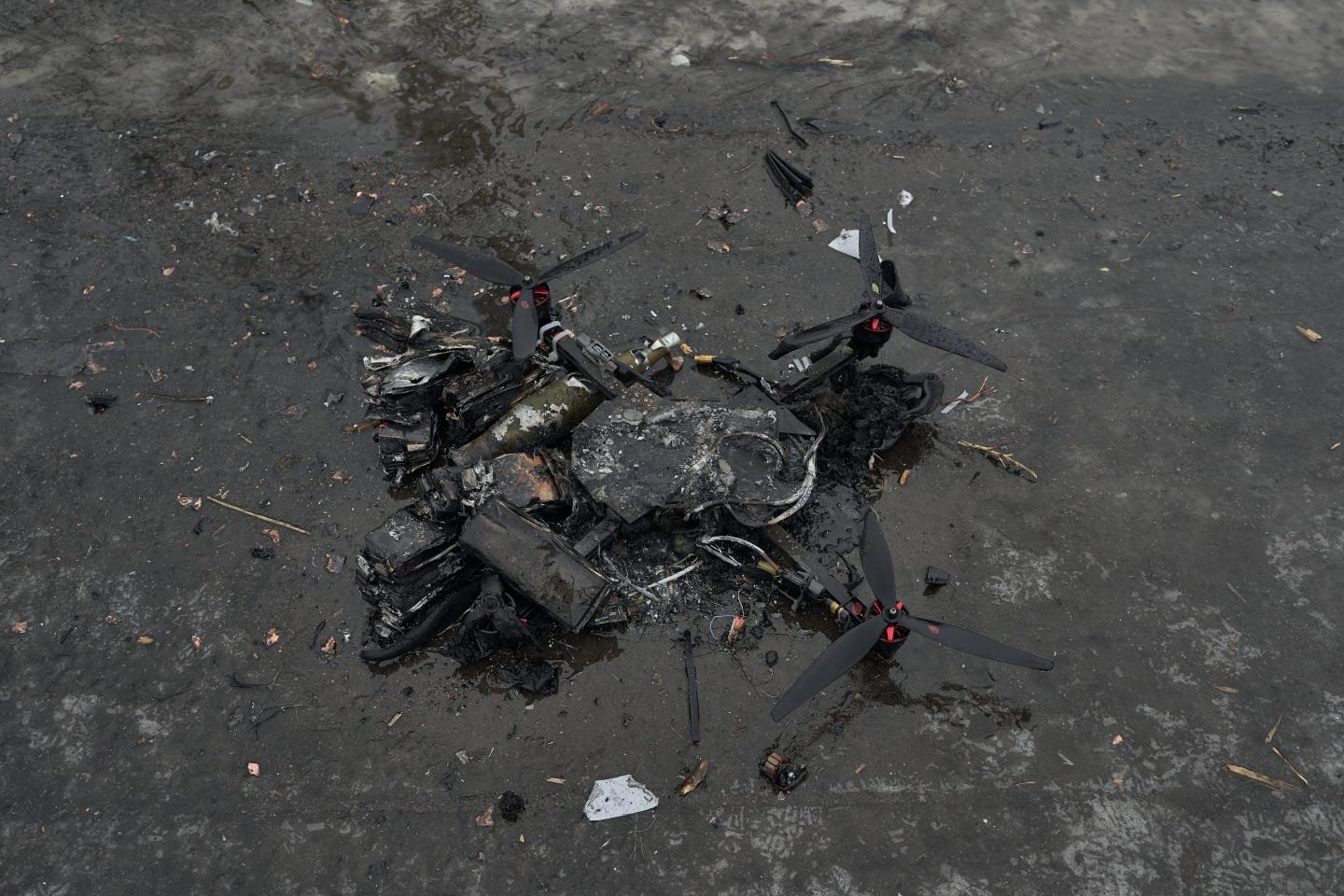
Just as countries around the world have come to rely on fewer, larger facilities to support their critical infrastructure, cheap drones and increasingly precise weapons systems are making those facilities easier than ever to attack. And that’s rapidly turning concentrated infrastructure from an advantage into a liability—not only for America’s national security, but also for the businesses that own and operate these assets.
Infrastructure operators around the world are already learning this lesson the hard way. In August, Ukrainian drones struck refineries and other energy facilities across Russia, including a major petrochemical complex roughly 800 miles from Ukraine. According to the Associated Press, four oil facilities were hit in just three days, and one refinery was forced to shut down.
Similarly, Iran and allied groups have carried out dozens of attacks, including drone strikes, on energy infrastructure and data centers in countries such as Kuwait, the United Arab Emirates, Saudi Arabia, and Bahrain. Devastating strikes on refineries, power stations, and other infrastructure have also taken place in recent conflicts in Sudan and Libya.
This dynamic is not entirely new. Historians have posited that the Bronze Age collapsed in part because a technological shift, the spread of iron weapons, gave smaller groups the ability to challenge established empires. Today, drone technology is creating a similar dynamic, helping weaker adversaries narrow the strategic advantages that major powers — including the United States — have long enjoyed.
America’s geography insulates it from many conventional threats. But it may not offer the same protection from drones, which often cost less than $50,000 and can bypass air defenses. In 2025, Ukraine smuggled over 100 small drones into Russia in commercial cargo trucks and used them to strike strategic air bases thousands of miles from the border.
An attack on the United States could be launched by a single foreign operative — or even a U.S. citizen. In 2024, the FBI stopped a domestic extremist in Tennessee who had planned to attack an electrical substation with an explosives-laden drone.
And it would only take one attack to cause enormous disruption. In 2022, gunmen attacked two electrical substations in North Carolina, knocking out power to roughly 45,000 customers for multiple days.
Simply put, America’s critical infrastructure has never been more strategically valuable — or more exposed. And the more productive and concentrated a facility is, the more attractive a target it becomes.
Defense strategists are quickly coming to terms with this new reality. Business leaders need to follow suit — and weigh the potential savings from concentrated infrastructure against the risk and potential costs of a catastrophic disruption.
Infrastructure companies have been trained to optimize for the costs of building and operating an asset, which leads them to favor more concentrated systems due to economies of scale. As threats to infrastructure evolve, however, companies must look beyond everyday operating costs and optimize for risk-adjusted costs — accounting for the potential costs of shutdowns and repairs caused by physical attacks.
The probability of such an attack — and the amount of damage one could inflict — is likely greater in concentrated systems with a single point of failure. That could make concentrated systems costlier over time, despite their apparent efficiency advantages.
By contrast, companies could diversify their risks by distributing capacity across multiple modular sites. Geographic dispersion might seem inefficient to a company that only considers its typical operating costs. But over the lifetime of a system, this redundancy could actually minimize total costs, as it would both reduce each asset’s target value to adversaries and limit productivity losses and repair costs if any single facility falters.
America’s infrastructure companies have long assumed that because centralized systems are cheaper to build and operate, they’re also cheaper to own. But in an age when drone attacks can cause millions of dollars in damage to a refinery or power plant, that assumption may no longer be true.
The competitive advantage will belong to those who recognize when efficiency is worth the risk.
The opinions expressed in Fortune.com commentary pieces are solely the views of their authors and do not necessarily reflect the opinions and beliefs of Fortune.