
• Home
  • Latest
  • Fortune 500
  • Finance
  • Tech
  • Leadership
  • Lifestyle
  • Rankings
  • Multimedia

Trendingnow

1

Google cofounder Sergey Brin has spent $102 million to fight California’s proposed billionaire tax—he could owe $13 billion if he loses

2

The 'golden passport': Argentina to offer citizenship for foreigners that make a $350,000 contribution to its treasury—or invest $800,000 in its bonds

3

Iran's currency is getting obliterated as the regime is about to run out of oil to sell and can’t even get its money from customers

1

Google cofounder Sergey Brin has spent $102 million to fight California’s proposed billionaire tax—he could owe $13 billion if he loses

2

The 'golden passport': Argentina to offer citizenship for foreigners that make a $350,000 contribution to its treasury—or invest $800,000 in its bonds

3

Iran's currency is getting obliterated as the regime is about to run out of oil to sell and can’t even get its money from customers
EconomyBonds

Even ‘Bond King’ Bill Gross warns ‘don’t own bonds’ as long-term debt enters a new ear of volatility 

Jason Ma
By
Jason Ma
Jason Ma
Weekend Editor
Down Arrow Button Icon
Jason Ma
By
Jason Ma
Jason Ma
Weekend Editor
Down Arrow Button Icon
October 4, 2026, 1:34 PM ET
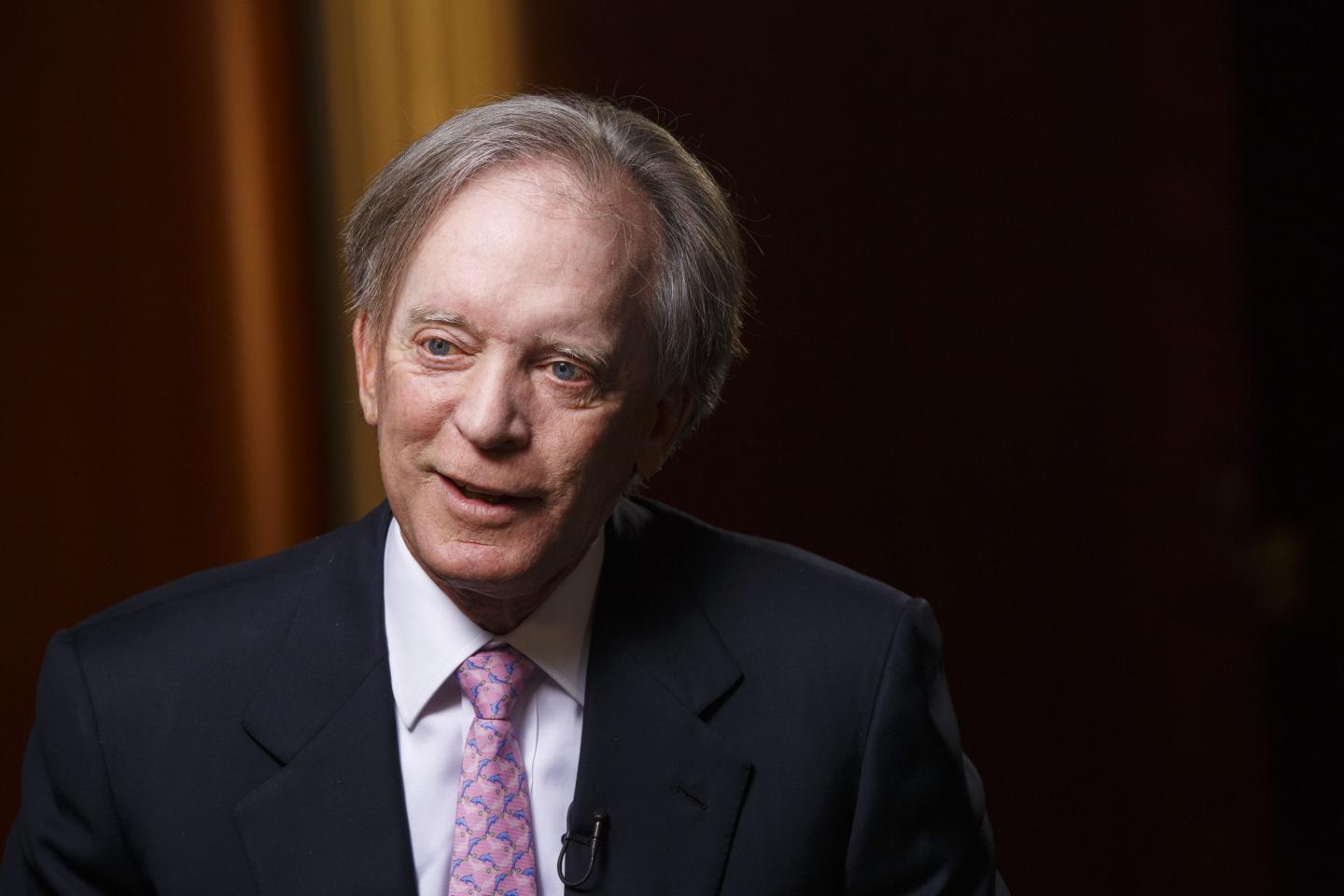
Bill Gross, co-founder of Pacific Investment Management Co. (PIMCO), speaks during a Bloomberg Television interview at the Bloomberg FI16 event in Beverly Hills, California, U.S., on Wednesday, May 25, 2016.
Bill Gross, co-founder of Pacific Investment Management Co. (PIMCO), speaks during a Bloomberg Television interview at the Bloomberg FI16 event in Beverly Hills, California, U.S., on Wednesday, May 25, 2016.Patrick T. Fallon/Bloomberg via Getty Images
Google source logo
Add Fortune on Google for similar content.

PIMCO cofounder Bill Gross, who revolutionized bond investing with active trading strategies, warned the overall credit landscape has become unbalanced and cautioned against holding longer-term debt.

Recommended Video

In a Financial Times op-ed on Wednesday, he pointed out that government, mortgage and corporate credit now totals about $84 trillion.

“Too much debt can lead to too much risk and too much equity can lead to less earnings per share growth under certain underperforming productivity cycles,” Gross wrote. “Move them both at the same pace consistent with industry standards and economic growth more than likely expands as well.”

But balance sheets have grown too lopsided, putting growth at risk, he said. The AI sector’s debt boom is an anomaly by historical standards, and federal debt has already hit peak levels for peacetime, now at 100% of GDP.

While all that debt is fueling growth now, it has led to higher inflation today and will likely slow growth in the future, Gross added.

“In such an environment, my view is: don’t own bonds, with the exception of one-year Treasury bills, which are now at 4.55%,” he said. “Be cautious with stocks at record levels as higher yields over time will contract profit margins. Be prepared for the end of ‘what you are used to’ stock markets and higher volatility in prices for the benchmark 10-year Treasury bonds.”

His admonition is notable given his career in bond investing, which earned him the moniker “Bond King.” For decades, he dominated a corner of financial markets that was considered sleepy before he arrived on the scene.

Rather than simply buying bonds and holding them to maturity to collect interest, his investment strategies generated returns well beyond what “clipping coupons” provided.

But in recent years, the market has experienced its own transformation as well. Central banks around the world no longer reliably buy and hold Treasury debt as they seek to diversify their reserves. At the same time, price-sensitive hedge funds have emerged as bigger players in the bond market and are quicker to sell.

The so-called basis trade that’s become popular among hedge funds, where they profit from small price differences between Treasury bonds and the Treasury futures, has made the market more volatile.

In fact, the basis trade has grown so much that hedge funds’ share of total Treasury holdings has almost doubled since 2023 to 8.5%, exceeding the portion that depository institutions and mutual funds command.

The new era of volatility has been on display this year, as 10-year Treasury yields have soared more than 100 basis points since the Iran war started and recently hit the highest levels in 24 years. 

While hedge funds are a key source of liquidity in the market, they may weaken bonds’ reputation as a safe-haven asset, Joe Maher, markets economist at Capital Economics, said in a note in August.

“In a risk-off environment, safe-haven flows into sovereign bonds may be offset by hedge funds unwinding their leveraged trading positions as funding conditions tighten,” he wrote. “And given they have no obligation to act as market makers, the more likely it is that liquidity dries up in these markets in times of stress.”

On top of that, hedge funds could transmit stress across different assets, Maher warned. For example, a stock market selloff could force hedge funds to dump bond positions to cover their losses in equities.

For his part, Gross said he is suspicious of AI hyperscalers, unless they have price-to-earnings ratios of less than 20. And while stocks like Verizon and AT&T have decent yields, their mobile phone businesses are threatened by SpaceX’s Starlink.

Some income funds that are trading at a discount to net asset values may offer some opportunities, but they would suffer if short-term interest rates rise higher than expected, he added.

“Preserve and protect is my current investment motto,” Gross wrote.

Fortune Daily breaks the traditional barrier between audience and newsroom. The show transforms Fortune’s trusted reporting into actionable, conversational, and entertaining insights for an emerging class of business leaders. Watch here.
About the Author
Jason Ma
By Jason MaWeekend Editor

Jason Ma is the weekend editor at Fortune, where he covers markets, the economy, finance, and housing.

See full bioRight Arrow Button Icon
Google source logo
Add Fortune on Google for similar content.

Latest in Economy


Most Popular

Fortune Secondary Logo
Rankings
  • 100 Best Companies
  • Fortune 500
  • Global 500
  • Fortune 500 Europe
  • Most Powerful Women
  • World's Most Admired Companies
  • See All Rankings
  • Lists Calendar
Sections
  • Finance
  • Fortune Crypto
  • Features
  • Leadership
  • Health
  • Commentary
  • Success
  • Retail
  • Mpw
  • Tech
  • Lifestyle
  • CEO Initiative
  • Asia
  • Politics
  • Conferences
  • Europe
  • Newsletters
  • Personal Finance
  • Environment
  • Magazine
  • Education
Customer Support
  • Frequently Asked Questions
  • Customer Service Portal
  • Privacy Policy
  • Terms Of Use
  • Single Issues For Purchase
  • International Print
Commercial Services
  • Advertising
  • Fortune Brand Studio
  • Fortune Analytics
  • Fortune Conferences
  • Business Development
  • Group Subscriptions
About Us
  • About Us
  • Press Center
  • Work At Fortune
  • Terms And Conditions
  • Site Map
  • About Us
  • Press Center
  • Work At Fortune
  • Terms And Conditions
  • Site Map
  • Facebook icon
  • Twitter icon
  • LinkedIn icon
  • Instagram icon
  • TikTok icon
  • YouTube icon

    Latest in Economy


    Most Popular

    © 2026 Fortune Media IP Limited. All Rights Reserved. Use of this site constitutes acceptance of our Terms of Use and Privacy Policy | CA Notice at Collection and Privacy Notice | Do Not Sell/Share My Personal Information
    FORTUNE is a trademark of Fortune Media IP Limited, registered in the U.S. and other countries. FORTUNE may receive compensation for some links to products and services on this website. Offers may be subject to change without notice.