
• Home
  • Latest
  • Fortune 500
  • Finance
  • Tech
  • Leadership
  • Lifestyle
  • Rankings
  • Multimedia

Trendingnow

1

Trump removes chairs for TSA agents, saying they ‘must meet fitness for duty requirements’

2

Mike Rowe on America’s great tradesperson shortage: ‘I don’t care what your politics are. Math doesn’t care, either’

3

'They’ll be hit very hard': Trump sends roughly 9,000 troops and a third aircraft carrier to the Middle East after warning strikes on Iran

1

Trump removes chairs for TSA agents, saying they ‘must meet fitness for duty requirements’

2

Mike Rowe on America’s great tradesperson shortage: ‘I don’t care what your politics are. Math doesn’t care, either’

3

'They’ll be hit very hard': Trump sends roughly 9,000 troops and a third aircraft carrier to the Middle East after warning strikes on Iran
EconomyInflation

Trump just soft-launched higher inflation as the new solution for rebalancing the $40 trillion U.S. national debt

Eleanor Pringle
By
Eleanor Pringle
Eleanor Pringle
Senior Reporter, Economics and Markets
Down Arrow Button Icon
Eleanor Pringle
By
Eleanor Pringle
Eleanor Pringle
Senior Reporter, Economics and Markets
Down Arrow Button Icon
October 2, 2026, 7:10 AM ET
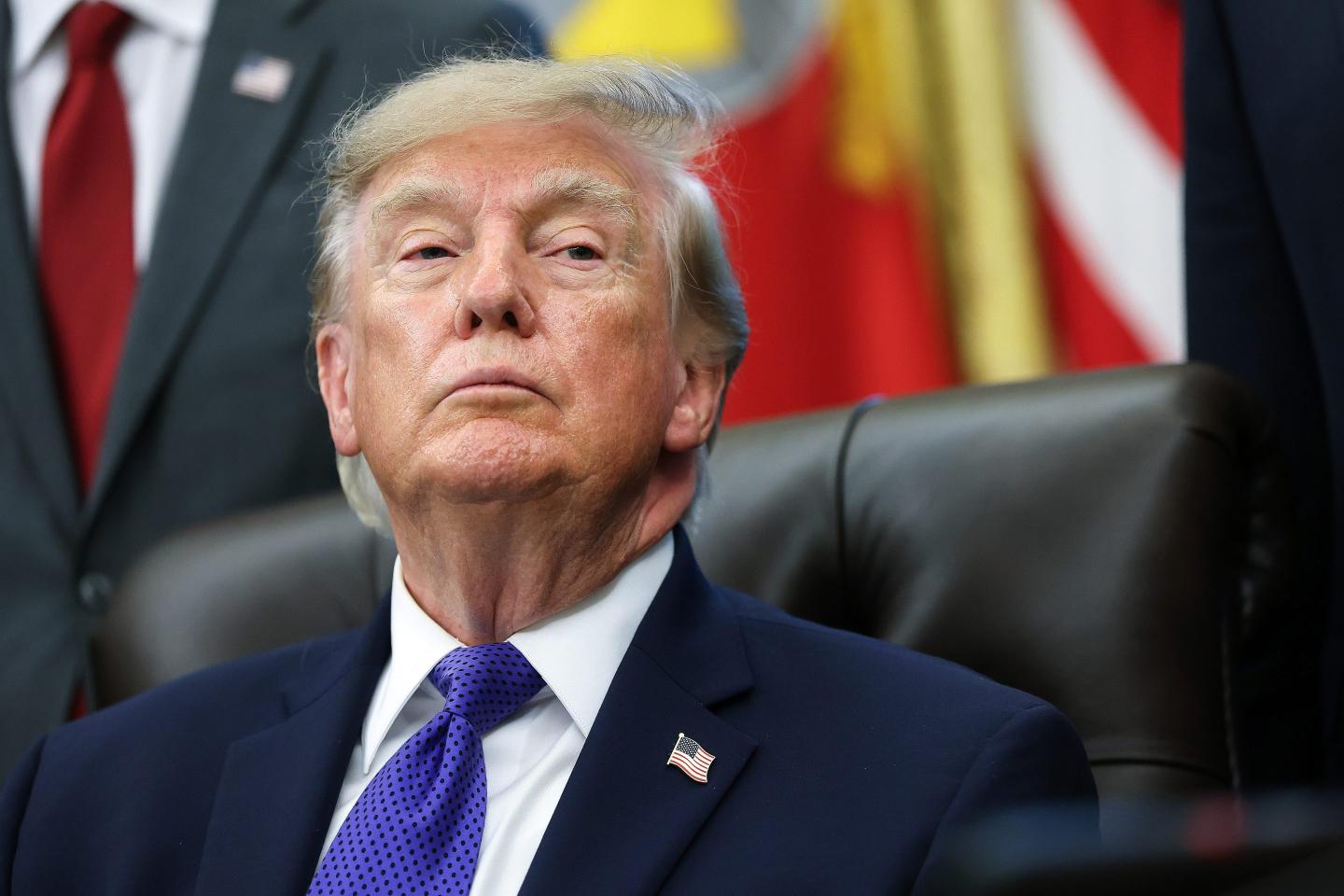
U.S. President Donald Trump listens to a reporters question in the Oval Office at the White House on September 28, 2026 in Washington, DC.
President Donald Trump in the Oval Office, Sept. 28, 2026.Kevin Dietsch—Getty Images
Google source logo
Add Fortune on Google for similar content.

It was an outcome that droves of economists warned was coming: higher inflation being tolerated—consciously or otherwise—to bring down the value of America’s $40 trillion national debt.

President Trump and his second administration haven’t been short of ideas on how to rebalance the national debt, which now demands $2 trillion in interest payments a year. The White House suggested everything from tariffs to visa revenues might be directed toward the debt accumulated by both Republican and Democrat governments.

The key metric is the U.S. debt-to-GDP ratio, currently at more than 120%. When that balance tips too far, it signals that a nation is borrowing beyond its economic growth, and higher risk premiums become attached to lending as a result.

Recommended Video

Raising revenues through tariffs, for example, would have addressed the balance by lowering debt. Economic growth could also impact the ratio from the other side. Trump and key members of his team, such as Treasury Secretary Scott Bessent, have suggested this is now the path forward to allay any debt concerns.

It was a point Trump touched on in a recent interview with Time. In the past, he said, lower rates made borrowing cheaper. He added that in the current period, where the Fed has recently increased rates, “you can do it through other means. I know I’m the best in the world. The best—I don’t want to tell you what those means are, but you can pay off the debt through other means.”

The president added: “But the one thing that you can do is pay it off through growth, and we’ve never had growth like this. Look at the numbers. Look at the poverty numbers. The lowest we’ve had in … ever. Look at the murder numbers. Look at the crime numbers. We have the best crime numbers we’ve ever had in history.”

Trump also said something that will prick the ears of economists: “You know, inflation, certain levels of inflation, will also pay off that debt very rapidly. Very rapidly.”

An expected outcome

That option may be politically unpopular with voters who are already concerned about affordability. But above-target inflation is the outcome many analysts saw coming.

In its simplest form, above-target inflation would erode the value of existing debt, allowing the government to repurchase or refinance at relatively cheaper rates.

Last year, J.P. Morgan said: “We could see a less straightforward path to reduce the U.S. government’s debt load. Policymakers could erode Fed independence and effectively inflate the debt away by driving a stronger nominal growth environment characterized by higher inflation and, over the near term at least, lower real interest rates.”

An obvious snag in the plan is the Federal Reserve, the legally independent central bank which is mandated to confine inflation to 2%. While new chairman Kevin Warsh has been clear that above-target inflation will not be tolerated, there are other ways to reduce real interest rates—through Treasury-influenced bond buybacks, for example.

However the mechanics shake out—and President Trump didn’t drop any hints—above-average inflation is in the outlook for many. As Kent Smetters, professor of business economics and public policy at the University of Pennsylvania’s Wharton School, previously told Fortune: “Defaulting can take many different forms. I’ve said this several years ago, that it doesn’t have to be [default], it could actually be just higher inflation, never getting back to 2% and so forth … Because inflation tends to increase the tax base size as well over time, it’s the real yields that matter.”

Fortune Daily breaks the traditional barrier between audience and newsroom. The show transforms Fortune’s trusted reporting into actionable, conversational, and entertaining insights for an emerging class of business leaders. Watch here.
About the Author
Eleanor Pringle
By Eleanor PringleSenior Reporter, Economics and Markets
LinkedIn icon

Eleanor Pringle is an award-winning senior reporter at Fortune covering news, the economy, and personal finance. Eleanor previously worked as a business correspondent and news editor in regional news in the U.K. She completed her journalism training with the Press Association after earning a degree from the University of East Anglia.

See full bioRight Arrow Button Icon
Google source logo
Add Fortune on Google for similar content.

Latest in Economy


Most Popular

Fortune Secondary Logo
Rankings
  • 100 Best Companies
  • Fortune 500
  • Global 500
  • Fortune 500 Europe
  • Most Powerful Women
  • World's Most Admired Companies
  • See All Rankings
  • Lists Calendar
Sections
  • Finance
  • Fortune Crypto
  • Features
  • Leadership
  • Health
  • Commentary
  • Success
  • Retail
  • Mpw
  • Tech
  • Lifestyle
  • CEO Initiative
  • Asia
  • Politics
  • Conferences
  • Europe
  • Newsletters
  • Personal Finance
  • Environment
  • Magazine
  • Education
Customer Support
  • Frequently Asked Questions
  • Customer Service Portal
  • Privacy Policy
  • Terms Of Use
  • Single Issues For Purchase
  • International Print
Commercial Services
  • Advertising
  • Fortune Brand Studio
  • Fortune Analytics
  • Fortune Conferences
  • Business Development
  • Group Subscriptions
About Us
  • About Us
  • Press Center
  • Work At Fortune
  • Terms And Conditions
  • Site Map
  • About Us
  • Press Center
  • Work At Fortune
  • Terms And Conditions
  • Site Map
  • Facebook icon
  • Twitter icon
  • LinkedIn icon
  • Instagram icon
  • TikTok icon
  • YouTube icon

    Latest in Economy


    Most Popular

    © 2026 Fortune Media IP Limited. All Rights Reserved. Use of this site constitutes acceptance of our Terms of Use and Privacy Policy | CA Notice at Collection and Privacy Notice | Do Not Sell/Share My Personal Information
    FORTUNE is a trademark of Fortune Media IP Limited, registered in the U.S. and other countries. FORTUNE may receive compensation for some links to products and services on this website. Offers may be subject to change without notice.