Welcome to this week’s Fortune Gulf Brief. We’ll be covering:
- Riyadh and Abu Dhabi move to mend Yemen rift, U.S. and Iran trade proposals and denials
- Microsoft pours $10 billion into Gulf AI despite war risks
- Saudi Arabia proposes sweeping IPO market reforms
- S&P doubles Oman’s 2026 growth forecast to 3.5%
- And, the three things we enjoyed reading this week
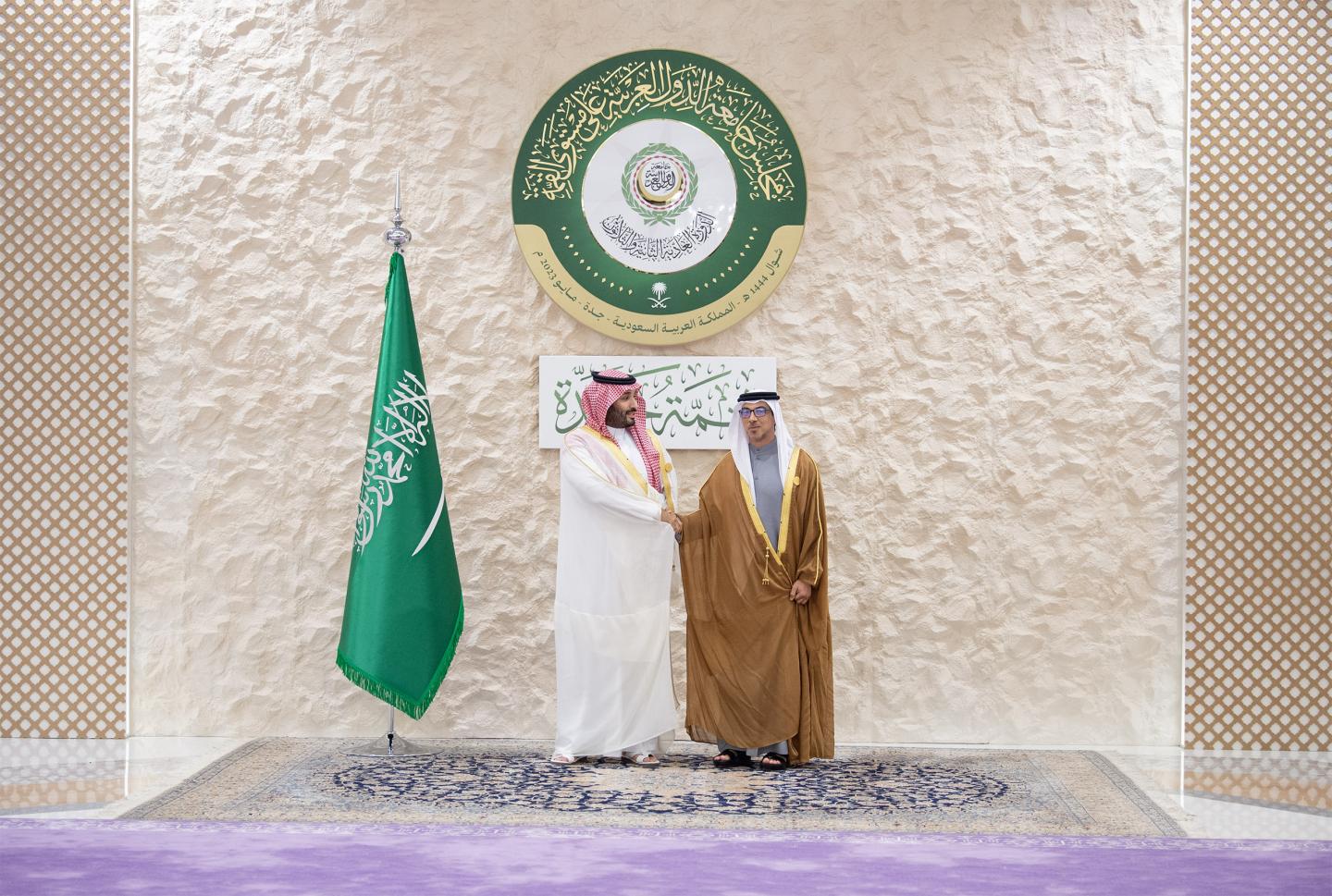
In a sign of thawing relations, UAE vice president Sheikh Mansour bin Zayed met with Saudi crown prince, Mohammed bin Salman, in Riyadh on Tuesday, marking the first high-level bilateral meeting since a major rift over Yemen opened up earlier this year.
In January, Saudi forces attacked and defeated the UAE-aligned Southern Transitional Council (STC), which had been seeking to re-establish an independent southern Yemen. The UAE subsequently effectively withdrew from Yemen.
However, in September, the Iran-aligned Houthis pushed south towards the Bab al-Mandab Strait, defeating pro-government forces, including the UAE-backed National Resistance Forces led by Tareq Saleh.
This has changed the geopolitical faultlines.
In a further sign of a diplomatic rapprochement, the future role of the UAE in Yemen was discussed during a meeting in Abu Dhabi on Sunday attended by Israeli Prime Minister Benjamin Netanyahu, UAE President Sheikh Mohammed bin Zayed Al Nahyan, and representatives from several other Arab states, including Saudi Arabia.
Meanwhile, indirect talks between the U.S. and Iran to bring an end to the war have continued this week on the sidelines of the UN General Assembly, but publicly the two sides remain divided over both the sequencing and substance of any potential deal.
Last week, Iran’s foreign minister, Abbas Araghchi, presented a plan to end the conflict to U.S. negotiators via Qatari mediators that strongly resembles the 60-day interim deal reached in June, but with an accelerated seven-day timetable.
The plan is centered on the Strait of Hormuz, with Tehran proposing to reopen the critical waterway within seven days if Washington lifts its naval blockade, releases frozen Iranian funds, eases sanctions on Iranian oil and agrees to a regional ceasefire. Iran says nuclear negotiations could then begin.
On Monday, U.S.-based news outlet Axios published a report citing unidentified U.S. officials who said Trump was willing to grant Iran some sanctions relief and access to frozen funds in return for concessions on its nuclear program.
Shortly after, Trump denounced the report on Truth Social, writing, “This is untrue. I offered them NOTHING”.
Notably, CNN also cited an unidentified U.S. official who echoed the statements reported by Axios.
Araghchi left New York on Tuesday after telling state-run Islamic Republic of Iran Broadcasting (IRIB) that he expects a formal response to Tehran’s proposal by the end of the day.
On Tuesday, the Iranian rial plunged to a record low, trading at more than 2.54 million to the dollar in Tehran’s open market, down from around 2.4 million on Monday, according to Pashizi, a website tracking Iran’s free foreign exchange market.
Melissa Hancock
And as ever, thanks for reading, and do keep in touch with your thoughts and ideas.
melissa.hancock@fortune.com
Microsoft’s Gulf Bet
Microsoft plows $10 billion into Gulf’s AI ambitions as war exposes infrastructure risks
Microsoft has thrown its financial firepower behind the Gulf’s ambition to become a leading global AI hub at a time when Iranian attacks have cast doubt on the long-term viability of the Gulf’s rapidly expanding cloud and AI infrastructure.
The tech giant is planning to invest more than $10 billion across four Gulf countries—the UAE, Saudi Arabia, Qatar, and Kuwait—between now and 2030, with spending focused on cloud and AI infrastructure.
The investment reflects both its "ongoing build-out of infrastructure and also the expansion of operations in the region," Microsoft Vice Chair and President Brad Smith told Reuters, calling it “an aggressive spending schedule.”
Microsoft also plans to invest more than $400 million in subsea and terrestrial connectivity across the Middle East by 2030.
The investments represent a vote of confidence in the Gulf despite its data centers becoming a target in the ongoing U.S.-Iran war. In March, three Amazon Web Services (AWS) facilities in the UAE and Bahrain were damaged after being struck by Iranian drones.
Shortly after the attacks, Iran’s Revolutionary Guard warned that 18 U.S. tech companies, including Microsoft, Nvidia, Apple and Google, would be considered as “legitimate targets” in retaliation for U.S. and Israeli strikes on Iran.
Earlier this month, AWS said it cannot restore access to its cloud-computing facility in Bahrain and one of three data-hosting zones in the UAE following the damage, noting it was helping Bahrain-based customers to re-establish operations in other regions.
The UAE is reportedly reworking plans for a 5-gigawatt AI data center project—one of the biggest outside the U.S—in the wake of the Iranian attacks, including exploring more dispersed sites and underground, blast-resistant facilities.
Smith said Microsoft had supported local partners throughout the conflict, including by carrying out digital resilience assessments as early as the first week after the fighting began on 28 February.
A new paper published by the Middle East Institute this week noted that U.S. hyperscalers “know that the Gulf has structural advantages that cannot be replicated easily almost anywhere else. Speed, magnitude, and security alignment make the case for the Gulf states as a pillar of the U.S. strategy of building compute at scale globally."
Saudi slowdown
Saudi seeks to revive flagging IPO market
Saudi Arabia’s market regulator has proposed tougher rules for IPOs in an effort to revive its flagging market, which has seen a sharp decline in listings this year, as well as several high-profile IPOs being pulled.
Under the draft rules, institutional investors participating in the book-building process will be required to demonstrate sufficient liquidity to settle the IPO orders they back.
The Capital Market Authority (CMA) said that if shares acquired by an underwriter do not meet the listing requirements, the issuer’s shares will not be listed. However, underwriters will remain obliged to purchase all of the shares offered.
The reforms also include the mandatory disclosure of forward-looking statements, forecasts, and financial performance indicators that cover at least the next year, bringing the Saudi stock exchange closer in line to markets like the U.S. and Europe.
The rules are aimed at boosting confidence in Saudi capital markets by increasing transparency and strengthening the IPO framework, the CMA said. It is seeking public feedback on the proposals.
Saudi IPOs have raised $144 million this year, according to data compiled by Bloomberg. The decline reflects a broader trend across the Gulf where IPO proceeds have fallen below $1.1 billion so far this year, even trailing the $1.37 billion in sub-Saharan Africa—and far below the $5.1 billion that Gulf IPO markets raised from 40 offerings in 2025.
You can read my in-depth article assessing the outlook for Saudi’s capital markets here.
Oman growth forecast doubled
S&P sees Oman growth accelerating to 3.5%, Muscat launches fintech strategy
S&P Global has more than doubled its 2026 economic growth forecast for Oman to 3.5%, noting that its favorable geographical position in the Gulf has enabled it to maintain the strength of its energy industry amid the U.S.-Iran war.
Oman has benefited from the fact that its energy exports are not dependent on the Strait of Hormuz; its ports at Duqm, Mina Al Fahal, and Salalah all have unobstructed access to the Arabian Sea. S&P’s forecast is higher than the 2.3% growth posted by Oman last year.
Meanwhile, last week, the Central Bank of Oman (CBO) launched a National Fintech Strategy and a new single-entry portal for fintech companies in an attempt to accelerate financial innovation and build a competitive digital economy in line with its Vision 2040.
H E Ahmed Jaafar Salim Al Musalmi, Governor of CBO, said the strategy aims to respond to changes in fintech and help shape these by bringing regulation, technology, and entrepreneurship together within a national framework.
The single-entry portal, known as Oman Fintech Gate, is designed to provide innovators with a central platform to understand the market, evaluate their readiness and engage with relevant stakeholders.
In doing so, it addresses a common challenge in fragmented GCC fintech markets, where startups often have to navigate multiple regulators and determine which requirements apply to them before they can begin the licensing process.
Oman has taken a more conservative approach to fintech than some of its Gulf peers, with the UAE and Bahrain having established dedicated fintech hubs and regulatory sandboxes a decade ago.
Abu Dhabi Global Market launched the region’s first regulatory sandbox, ADGM RegLab, in 2016, followed within a year by Bahrain and Dubai’s DIFC, each of which established dedicated fintech hubs.
The Big Number
$500 million
Saudi Arabia’s Public Investment Fund (PIF) is considering an initial $500 million allocation to Pimco, primarily targeting Gulf government bonds, in order to increase its exposure to fixed-income assets. PIF’s assets currently stand at $906 billion, according to Global SWF, a data platform that tracks sovereign wealth funds.
The 3 things we enjoyed reading this week
- Elite Wall Street boutiques are struggling to comply with Saudi Arabia’s Regional Headquarters Program (RHQ) and are pushing back against the initiative, despite the risk of losing major business. Effective since January 2024, the program mandates that foreign companies must establish their regional HQ in the kingdom to compete for and secure many Saudi government contracts, including from the PIF. The program is widely seen as a challenge to Dubai’s position as the Gulf’s financial center, but several prominent advisory firms, including Moelis and Rothschild, continue to use Dubai as their main regional hub and have yet to secure RHQ licenses despite opening offices in Riyadh. One banker noted: “The problem is that it is a ‘one size fits all’ approach." Under the rules, companies have to employ at least 15 full-time staff within a year of obtaining the license.
- Wealthy Gulf residents and family offices are increasingly seeking small private data centers for their homes and luxury yachts, with some systems costing millions of dirhams. Interest has risen following Iranian drone attacks earlier this year that disrupted cloud infrastructure across the Gulf, prompting greater interest in keeping sensitive data under direct, private control. Dubai-based Ragoa Technologies prices the private systems at between AED2 million ($545,000) and AED4 million, depending on requirements.
- Amid a slew of recent cancellations, the Gulf’s events market has been given a boost by the news that U.S. popstar Katy Perry will headline the Atlantis hotel’s New Year’s Eve show on the iconic Palm Jumeirah resort in Dubai. The black-tie event will feature live entertainment, a lavish dinner, and a major fireworks display across the Dubai skyline. Tickets start at $2,315 for adults, while VIP Sky Suites start at $68,073 for up to 10 guests. Whether her partner, Justin Trudeau, will also be ringing in 2027 at the event hasn’t been confirmed just yet.