
• Home
  • Latest
  • Fortune 500
  • Finance
  • Tech
  • Leadership
  • Lifestyle
  • Rankings
  • Multimedia

Trendingnow

1

Mike Rowe on America’s great tradesperson shortage: ‘I don’t care what your politics are. Math doesn’t care, either’

2

Jeff Bezos is giving $25 million to protect the Pacific—but his climate fund still has about $7 billion left to spend in four years

3

Palantir CEO Alex Karp quietly purchased 37,000 acres of forests in Sweden—and locals found out when hunters lost leases to use the property

1

Mike Rowe on America’s great tradesperson shortage: ‘I don’t care what your politics are. Math doesn’t care, either’

2

Jeff Bezos is giving $25 million to protect the Pacific—but his climate fund still has about $7 billion left to spend in four years

3

Palantir CEO Alex Karp quietly purchased 37,000 acres of forests in Sweden—and locals found out when hunters lost leases to use the property
EconomyBonds

The economist who coined the phrase ‘Magnificent 7’ says the very thing that made them extraordinary is under threat

Eleanor Pringle
By
Eleanor Pringle
Eleanor Pringle
Senior Reporter, Economics and Markets
Down Arrow Button Icon
Eleanor Pringle
By
Eleanor Pringle
Eleanor Pringle
Senior Reporter, Economics and Markets
Down Arrow Button Icon
September 28, 2026, 7:02 AM ET
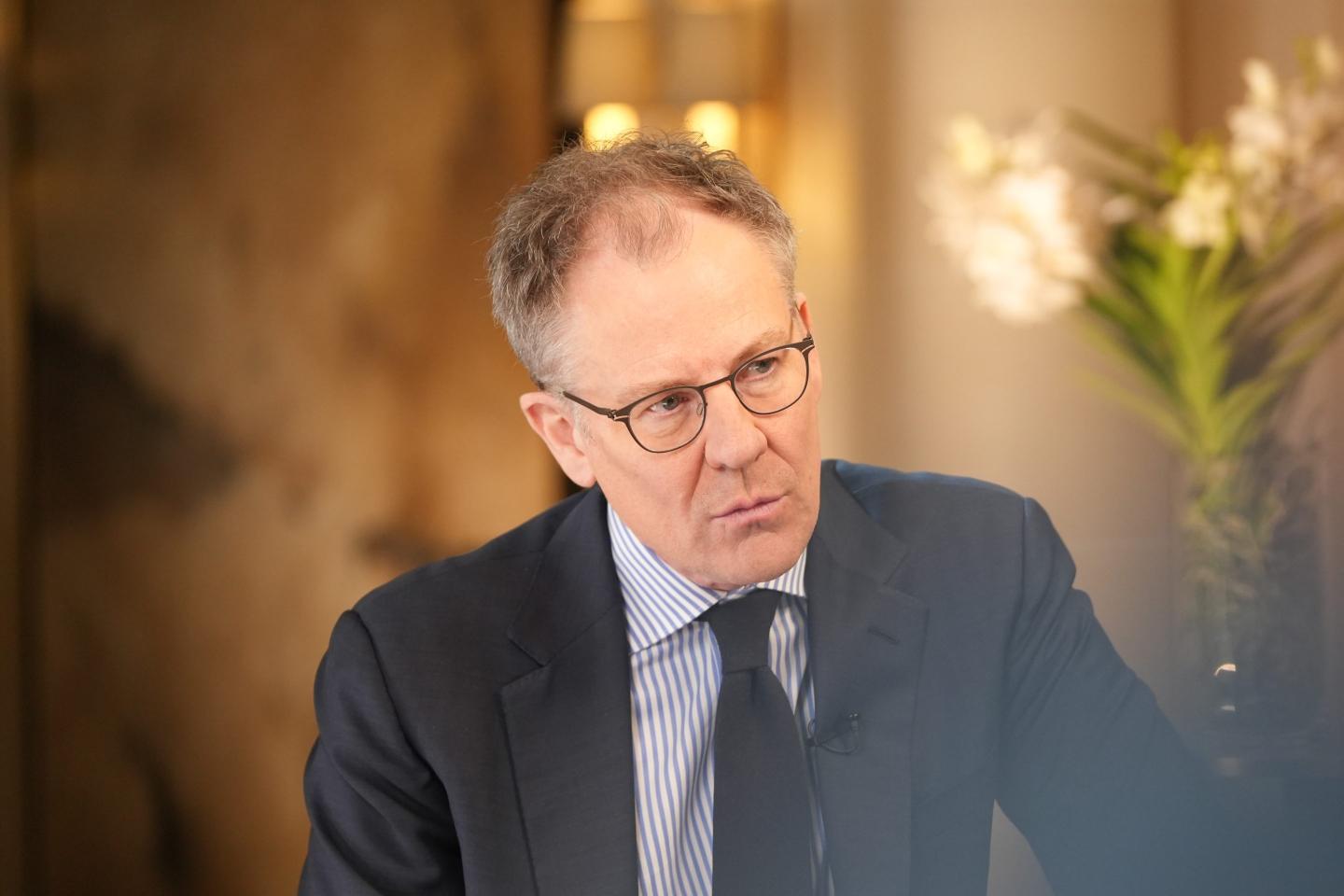
Photo of Michael Hartnett
Michael Hartnett, chief investment strategist at Bank of America.Nathan Laine/Bloomberg - Getty Images
Google source logo
Add Fortune on Google for similar content.

It was May 2023 when Bank of America’s Michael Hartnett took inspiration from the Wild West, coining the phrase “Magnificent Seven” for a group of American companies that have proved to be the main driver of the stock market during an AI boom.

And while the Mag Seven—Apple, Amazon, Alphabet, Meta, Microsoft, Nvidia, and Tesla—remain dominant forces in the asset class, Hartnett now says that the very thing which once made them a portfolio “must” is now a vulnerability.

Fiscal excess led investors to put their money toward something more sustainable, BofA’s chief investment strategist suggested in a recent episode of the Master Investor podcast. He said, “To a certain extent, the rise of the Mag Seven was because nobody wanted to hold government bonds: ‘I don’t want the government balance sheet. They spend like drunken sailors. Why do I want to lend to them?…I’d rather put my money with companies that have tons of cash and…don’t spend any of it.’ That was the Mag Seven,” Hartnett said.

Recommended Video

However, AI hyperscalers have now begun spending—to a breathtaking degree. Global AI investment is expected to exceed $1 trillion in 2026, per Goldman Sachs’ latest calculations, with JPMorgan Chase CEO Jamie Dimon expecting hyperscaler AI spending will hit the $1 trillion mark next year.

But with bond yields rising at the longer end of the scale (10-year Treasuries sit at a nearly two-decade high, while 30-year Treasuries haven’t sat at their current levels of more than 5.5% since 2002), borrowing costs across the economy have increased.

The tech sector has run down its pile of cash and begun borrowing heavily in the corporate credit markets. Increasingly, that means the prospects of the Mag Seven are tied to the very asset class it was once used as a hedge against.

As Hartnett explains, “Let’s not forget that the Mag Seven, the hyperscalers, whatever you want to call them, part of the reason to say they’re magnificent is because they made magnificent amounts of cash and didn’t spend any of it. That’s why they were magnificent.

“Now they’re spending a trillion-plus a year on AI capex, and they’re negative cash flow to the tune of $200 billion. So…they have to be kind of subservient to the bond market. If the bond market pushes up yields or spreads too much, you’re not going to get the spending.”

The pain threshold

While Wall Street is divided on U.S. Treasury Secretary Scott Bessent’s recent bond buyback scheme, economists told Fortune that the action had taught investors an important lesson: the point at which the Treasury will step in to smooth volatility.

And while the 5% mark is a threshold that sticks in investors’ minds, it hasn’t automatically triggered action in the past. As Hartnett points out: “Half of what I do is listen to smart clients and half of what I do is just watch prices in the market. It’s not me thinking 5% is a magical level.”

The threshold means more to policymakers, Hartnett argues, because domestically, higher yields mean “the AI companies can’t borrow to do AI capex, and you really hurt the wealth effect that’s been so strong via the equity market.” Additionally, geopolitically, “There’s one objective, which is to beat China at AI, and they cannot allow a disorderly move in the bond market—and to a certain extent that’s why I feel that they’ll succeed because they’ll do anything they can to prevent that.”

Hartnett adds: “What they can’t necessarily…manipulate is if voters basically vote against AI. So the Wall Street threat is bonds. The Main Street threat is voters.”

Fortune Daily breaks the traditional barrier between audience and newsroom. The show transforms Fortune’s trusted reporting into actionable, conversational, and entertaining insights for an emerging class of business leaders. Watch here.
About the Author
Eleanor Pringle
By Eleanor PringleSenior Reporter, Economics and Markets
LinkedIn icon

Eleanor Pringle is an award-winning senior reporter at Fortune covering news, the economy, and personal finance. Eleanor previously worked as a business correspondent and news editor in regional news in the U.K. She completed her journalism training with the Press Association after earning a degree from the University of East Anglia.

See full bioRight Arrow Button Icon
Google source logo
Add Fortune on Google for similar content.

Latest in Economy


Most Popular

Fortune Secondary Logo
Rankings
  • 100 Best Companies
  • Fortune 500
  • Global 500
  • Fortune 500 Europe
  • Most Powerful Women
  • World's Most Admired Companies
  • See All Rankings
  • Lists Calendar
Sections
  • Finance
  • Fortune Crypto
  • Features
  • Leadership
  • Health
  • Commentary
  • Success
  • Retail
  • Mpw
  • Tech
  • Lifestyle
  • CEO Initiative
  • Asia
  • Politics
  • Conferences
  • Europe
  • Newsletters
  • Personal Finance
  • Environment
  • Magazine
  • Education
Customer Support
  • Frequently Asked Questions
  • Customer Service Portal
  • Privacy Policy
  • Terms Of Use
  • Single Issues For Purchase
  • International Print
Commercial Services
  • Advertising
  • Fortune Brand Studio
  • Fortune Analytics
  • Fortune Conferences
  • Business Development
  • Group Subscriptions
About Us
  • About Us
  • Press Center
  • Work At Fortune
  • Terms And Conditions
  • Site Map
  • About Us
  • Press Center
  • Work At Fortune
  • Terms And Conditions
  • Site Map
  • Facebook icon
  • Twitter icon
  • LinkedIn icon
  • Instagram icon
  • TikTok icon
  • YouTube icon

    Latest in Economy


    Most Popular

    © 2026 Fortune Media IP Limited. All Rights Reserved. Use of this site constitutes acceptance of our Terms of Use and Privacy Policy | CA Notice at Collection and Privacy Notice | Do Not Sell/Share My Personal Information
    FORTUNE is a trademark of Fortune Media IP Limited, registered in the U.S. and other countries. FORTUNE may receive compensation for some links to products and services on this website. Offers may be subject to change without notice.