
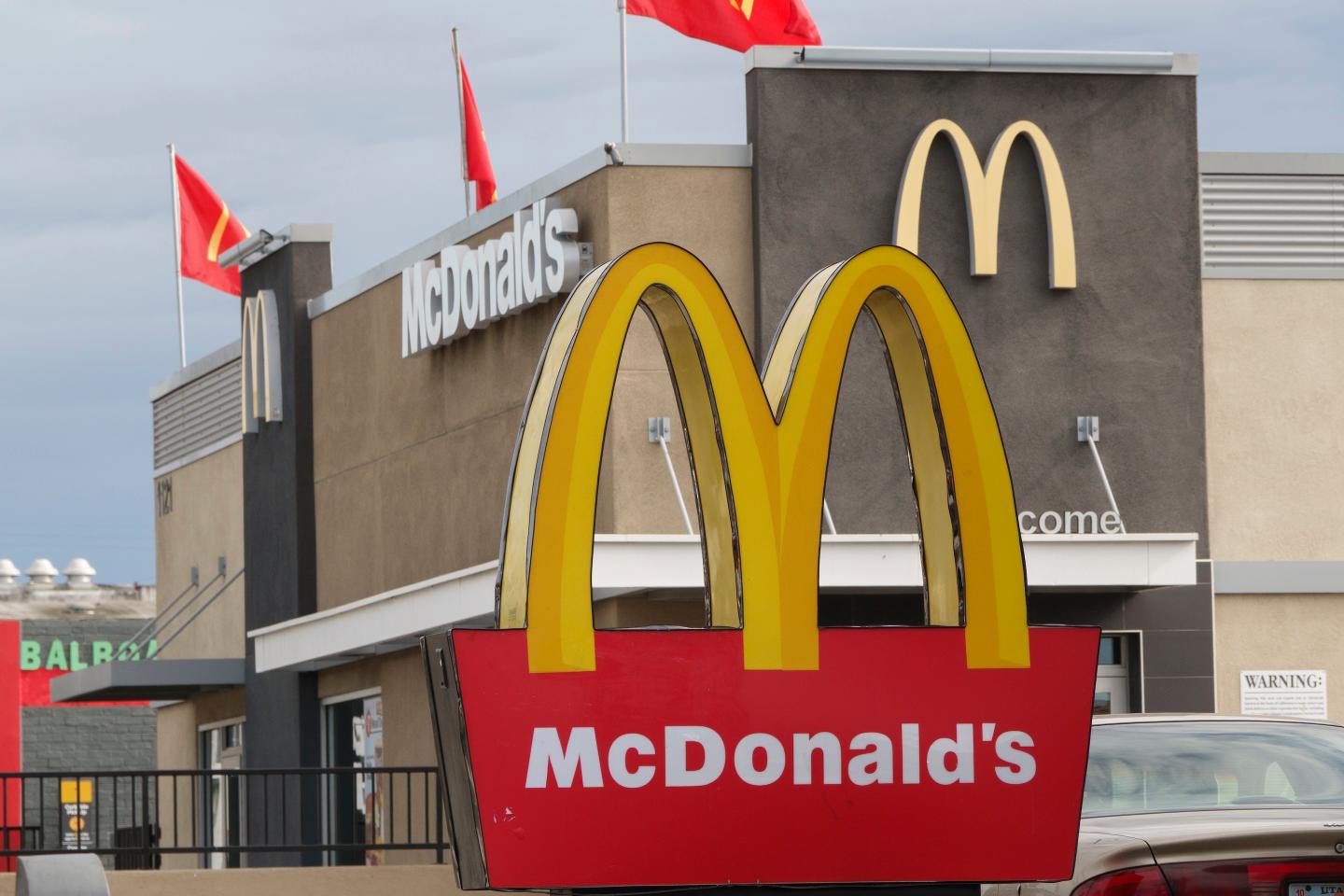
Good morning. Ian Borden, McDonald’s EVP and global CFO, is betting that the company’s next phase of profitable growth will come not just from opening more restaurants, but from making its existing network more productive.
McDonald’s unveiled its updated NEXT growth strategy on Wednesday at its investor day, committing about $8.5 billion in support for franchisees through 2036. That includes roughly $5 billion through 2030, primarily through rent relief and capital support.
The company also expects to spend about $3 billion a year on baseline capital expenditures from 2027 through 2030, based on current foreign exchange rates, plus $1.5 billion to $2 billion in cumulative capital partnering support to accelerate the rollout. The capital partnering support is part of the broader NEXT investment framework.
“It’s a value creation strategy, designed to generate attractive returns for franchisees and shareholders,” Borden said during his investor day presentation. It aims to strengthen restaurant economics and create the capacity to reinvest for long-term growth. Borden, who has been global CFO since 2022, has spent more than 30 years with McDonald’s, including extensive experience leading markets and global functions.
The strategy pairs continued expansion with productivity investments at existing restaurants. Unit growth is expected to contribute nearly 2.5% to systemwide sales growth in 2027, moderating to about 2% by 2030—meaning a growing share of McDonald’s sales gains will come from existing restaurants becoming more productive, not just from opening new ones.
Technology is another part of the strategy. McDonald’s plans to deploy ArchIQ, a generative AI-enabled operating system, at scale to help improve restaurant operations, including the drive-thru.
The company expects its Restaurant NEXT investments to generate about 250 basis points of gross restaurant-level efficiency gains, translating to roughly $100,000 in additional annual cash flow for the average U.S. restaurant. McDonald’s estimates a four-year payback period for franchisees, after partnering support.
By 2030, the company is targeting operating margins in the low-to-mid 50% range, free-cash-flow conversion in the mid-to-high 80% range and G&A costs of about 1.9% of systemwide sales.
The scale of the investment also creates execution risk. Investors appeared cautious: McDonald’s shares fell as much as 6.5% intraday Wednesday, amid concerns about the timing of the benefits and the execution of the strategy. CEO Chris Kempczinski attributed some of that caution to persistent inflation. “We expect industry traffic growth in our wholly owned markets will be flat while inflation remains elevated,” he said.
The strategy also calls for McDonald’s to gain 1.5 percentage points of market share in both chicken and beverages by 2030 while maintaining its leadership in beef.
McDonald’s (No. 170 on the Fortune 500) has more than 46,000 restaurants globally. Approximately 95% are owned and operated by independent local business owners, and the company says its restaurants serve more than 70 million customers daily.
The real test will be whether McDonald’s can turn billions of dollars in restaurant investments into the productivity gains and cash flow it has promised.
Sheryl Estrada
Sheryl.Estrada@fortune.com
Leaderboard
Todd Cello is stepping down as EVP and CFO of TransUnion (NYSE: TRU), a global information and insights company, effective Dec. 31, after 29 years with the company, including nine as CFO. Cello will then serve as a full-time advisor through March 1, 2027. TransUnion has launched a search for his successor.
Bob Hau was named EVP and CFO of Pentair plc (NYSE: PNR), a water treatment and solutions company, effective Nov. 1. He succeeds Bob Fishman, who has served as interim CFO and will remain with the company through the transition. Hau brings more than 16 years of experience as a public-company CFO, most recently at Fiserv from 2016 to 2025, and previously held the same role at TE Connectivity and Lennox International. He spent 22 years at Honeywell International earlier in his career.
Big Deal
Nearly nine in 10 organizations are using AI heavily within their cybersecurity operations, yet just 8% conduct regular AI-specific incident response exercises, according to ISACA's 2026 State of Cybersecurity report, which surveyed more than 1,800 security professionals globally.
Sixty-four percent have not conducted any AI-related incident response exercises at all, and 48% either lack an established AI incident playbook or don't know if one exists.
The readiness gap comes even as AI reshapes the field. Eighty-seven percent of respondents now use AI in security operations, more than half are directly involved in developing or governing AI solutions (up from 29% in 2024), and 45% cite LLM security operations as a growing skills gap, a 21-point jump from two years ago.
Meanwhile, 68% say their roles have grown more stressful over the past five years, with 71% blaming an increasingly complex threat landscape and 45% expecting a cyberattack on their organization within the next year.
Going deeper
A new PitchBook report puts Kalshi's fair value at $30.4 billion based on projected 2028 adjusted earnings, ranging from $22.8 billion in a bear case to $42.1 billion if bullish scenarios play out, according to Fortune's Jeff John Roberts. The analysis comes as Kalshi eyes an IPO as soon as next year following a $1 billion Series F in May that valued the prediction-market startup at $22 billion. Read more here.
Overheard
“If you plan on giving money to your kids, well, that’s their money, not your money. And then we think about when is the best time to give them that money, and the answer—the short answer—is it’s not a bequest. It’s long before you die.”
—Bill Perkins, the hedge fund multimillionaire and best-selling author of Die with Zero: Getting All You Can from Your Money and Your Life, told Fortune Daily host Ellie Austin in an interview. Perkins argues kids should get their inheritance early—before they get so old that it won’t make a difference.