
Good morning. On Fortune’s radar today:
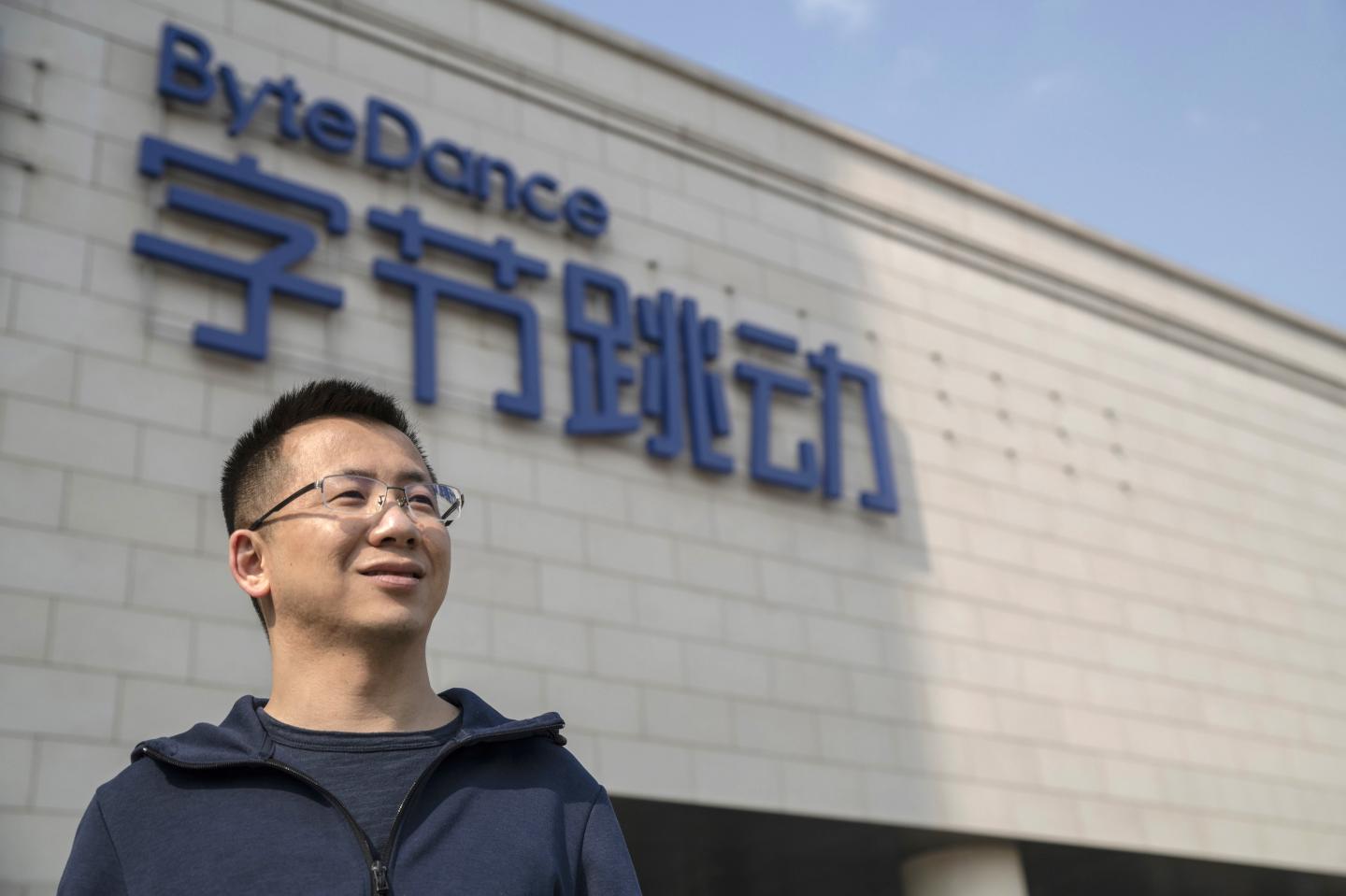
- Nscale’s $35 billion IPO is heavily dependent on ByteDance.
- See Fortune’s 2026 Change the World list here.
- The U.S. semiconductor export bans did little to slow down China’s chip trade.
- Markets: A rare double-zero day.
- AI is creating some jobs—at very small companies.
- For most people, the weekend is now only one day.
- Despite their complaints, Gen Z is richer than the Millennials, Gen X, or the Baby Boomers ever were.
➡️ If you would like to receive this information in your inbox every morning before the markets open in New York, sign up here.
DON’T MENTION IT
Nscale’s $35 billion IPO is heavily dependent on ByteDance’s access to Nvidia’s chips
ByteDance—TikTok's Chinese corporate parent—accounted for 73% of Nscale’s revenue in 2025, the Financial Times reported today. The company’s S-1 IPO filing discloses that it generated $33 million in revenue that year and an additional $140.6 million through the first half of 2026. During the more recent period, Nscale’s largest customer provided 52% of the company’s revenue.
Since then, Nscale has signed agreements with Microsoft (worth $43.8 billion through December 2033) and Anthropic (worth $44.6 billion over an unspecified period of time).
The S-1, however, doesn’t mention ByteDance at all.
Rather, the information can be found in Exhibit 10.9 to a September 2025 “draft registration statement” disclosing a loan from Macquarie, the investment bank. The loan was secured based on Nscale’s customer contracts, specifically citing a client named “Spring (SG) Pte. Ltd., a company incorporated and registered in Singapore with company number 202325236K and its registered office at 1 Raffles Quay, #26-10, South Tower, Singapore 048583.”
Spring is a subsidiary of ByteDance. The FT said:
- “ByteDance used Nscale’s cloud facility in Norway to access Nvidia chips that it would otherwise have been unable to buy in China, exploiting a loophole in US trade restrictions, according to filings. … The arrangement is entirely legal but exposes companies such as Nscale to regulatory and reputational risks, at a time when the U.S. and China are engaged in a high-stakes race to dominate the fast-growing technology.”
Nscale warns in its S-1 that its business is highly dependent on a small number of customers. “A substantial portion of our revenue is driven by a limited number of our customers, and the loss of, or a significant reduction in, spend from one or a few of our top customers would adversely affect our business, operating results, financial condition, and future prospects,” the S-1 says. Nscale's S-1 also does not mention the name of its biggest customer in 2026.
The company also disclosed $56.4 billion in “remaining performance obligations” (future contracts where revenue has not yet been paid) and $103 billion in “total contract value” deliverable over an unspecified period.
- How ‘Effective Altruism’ went from fringe philosophy to Trump’s AI villain - Beatrice Nolan and Emily Forlini
- OpenAI’s search for a chief communications officer hits 9 months after a top candidate turned down the role - Emily Forlini
ONE BIG THING
Fortune’s 2026 Change the World list is out!
The companies on this year’s Fortune Change the World list are tackling stubborn challenges. Some are developing cleaner ways to meet rising energy demand. Others are retraining employees, expanding access to education, or creating pathways to better-paying careers. Still others are addressing problematic supply chains—recovering and recycling scarce materials, reducing waste, improving traceability, and helping farmers and other suppliers earn a more sustainable living. Their approaches vary, but they share a conviction: Social impact is most powerful, and most durable, when it is embedded in a business rather than bolted on as an afterthought.
- See Fortune’s 2026 Change the World list here.
- Fortescue chairman Andrew Forrest is staking billions on two long shots: decarbonizing his iron ore mines and rebuilding war-ravaged Ukraine - Vivienne Walt
CHIP SHOT
China won the trade war when it came to chips
Since 2020, both the Trump and Biden administrations have attempted to ban the export of certain semiconductors to China in an attempt to prevent the country from catching up, technologically, with the U.S.
Did it work?
No.
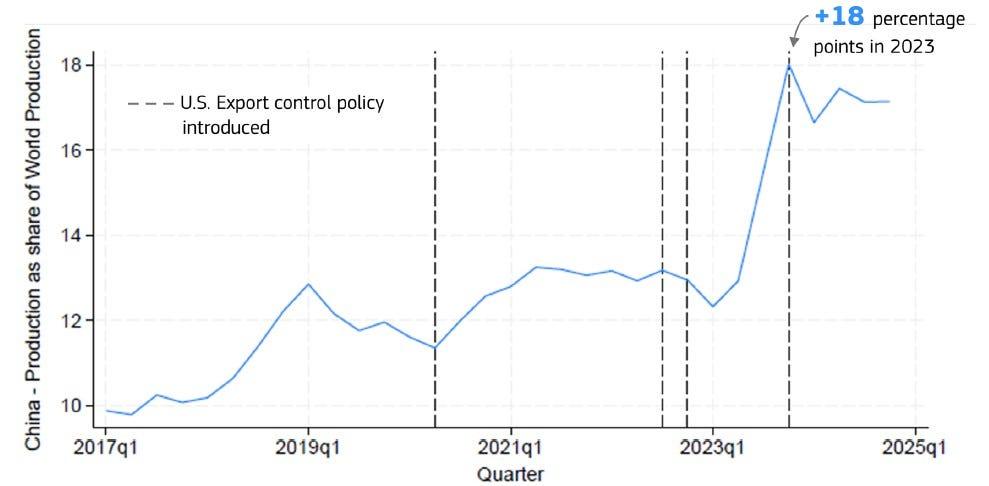
It had the opposite of the intended effect. U.S. chip exports to China declined by 22 points to 36%, according to Panmure Liberum’s Joachim Klement. But China’s market share of the global semiconductor market rose from single digits to 18% through 2023, despite multiple bans.
The U.S. bans did boost the semiconductor export trade of multiple other countries, however, as non-U.S. chipmakers stepped in to supply demand from China. EU exports rose 139%, Singapore’s rose 94%, and Japan’s rose 65%.
“As a European, I would like to thank the U.S. government for supporting our local semiconductor industry,” Klement says.
This chart shows U.S. trade policies and China’s global market share of chip production:
MORE FROM FORTUNE
When to spend everything ft. Bill Perkins | Fortune Daily
Why Costco has the luxury of sitting out the delivery arms race - Phil Wahba
In midterm years, October is usually the best month for stocks, with gains 73.7% of the time - Sheryl Estrada
Retail CEOs see a holiday paradox: shoppers are anxious but still willing to spend - Diane Brady
Warren Buffett’s son worked on a farm instead of going to college—he’s now the chairman of $1 trillion Berkshire Hathaway - Sydney Lake
‘Taxes aren’t really high enough for them to be sensitive’: the fears of the wealthy fleeing New York and California were just that - Catherina Gioino
DOGE’s push to shrink the federal workforce cost the Trump administration $6.7 billion for employees not to work - Sasha Rogelberg
- IN CASE YOU MISSED IT: Amanda Gerut's must-read story on the civil war inside Better.com.
THE MARKETS
Nothing to see here: Markets flatline after a rare double-zero day
Stocks are mostly doing nothing today. The VIX volatility index hit 14.14 this morning, one of its lowest readings of the year. Japan’s Nikkei 225 rose 1.38% but that was the only major index to make a move greater than one percentage point. Even South Korea’s wildly volatile KOSPI only moved 0.9%.
U.S. futures were flat this morning after the index moved only 0.06 points yesterday, meaning that in percentage terms it closed exactly flat, closing with a rare 0.0% reading. Here’s what it looked like:
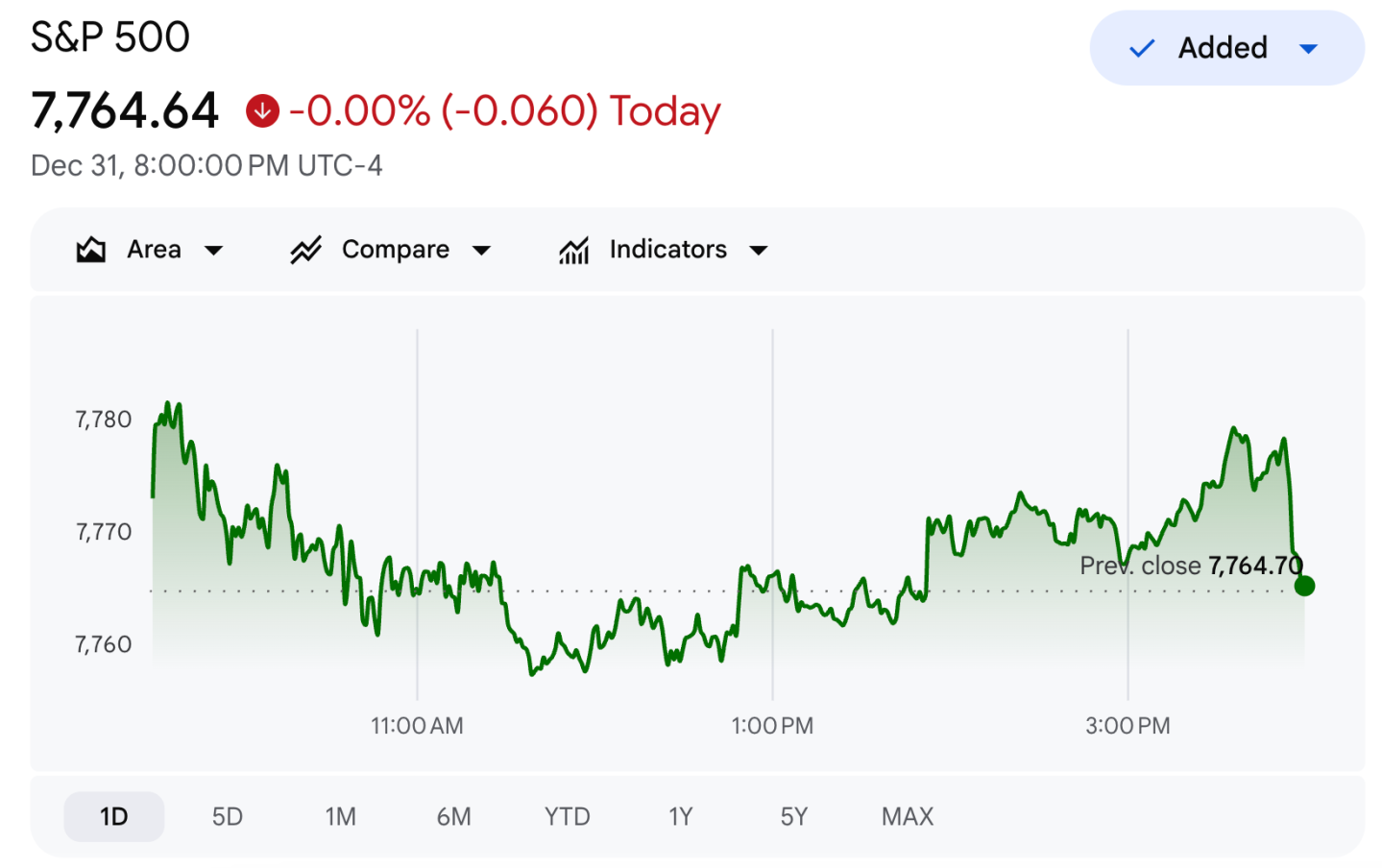
- S&P 500 futures were up 0.04% this morning. The index closed exactly flat at 0.0% yesterday.
- In Europe, the Stoxx 600 was down 0.08% in early trading and the U.K.’s FTSE 100 was up 0.11% before lunch.
- Asia: South Korea’s KOSPI was up 0.9%. Japan’s Nikkei 225 was up 1.38%. India’s Nifty 50 was up 0.44%. China’s CSI 300 was down 0.6%.
- Brent crude was $99 per barrel this morning, pretty much where it was yesterday.
- Bitcoin was at $85,826.
Retail traders can’t buy the dip if there ain’t any dips
Ohsung Kwon and his folks at Wells Fargo produced this interesting chart, which shows a recent decline in the amount of stock buying done by retail investors (individuals like you and me as opposed to large institutional traders). Kwon theorizes that as the extra tax refunds from the One Big Beautiful Bill Act got spent, retail buyers pulled back. It’s also noteworthy that the S&P 500 hasn’t seen a major dip worth buying since late March.
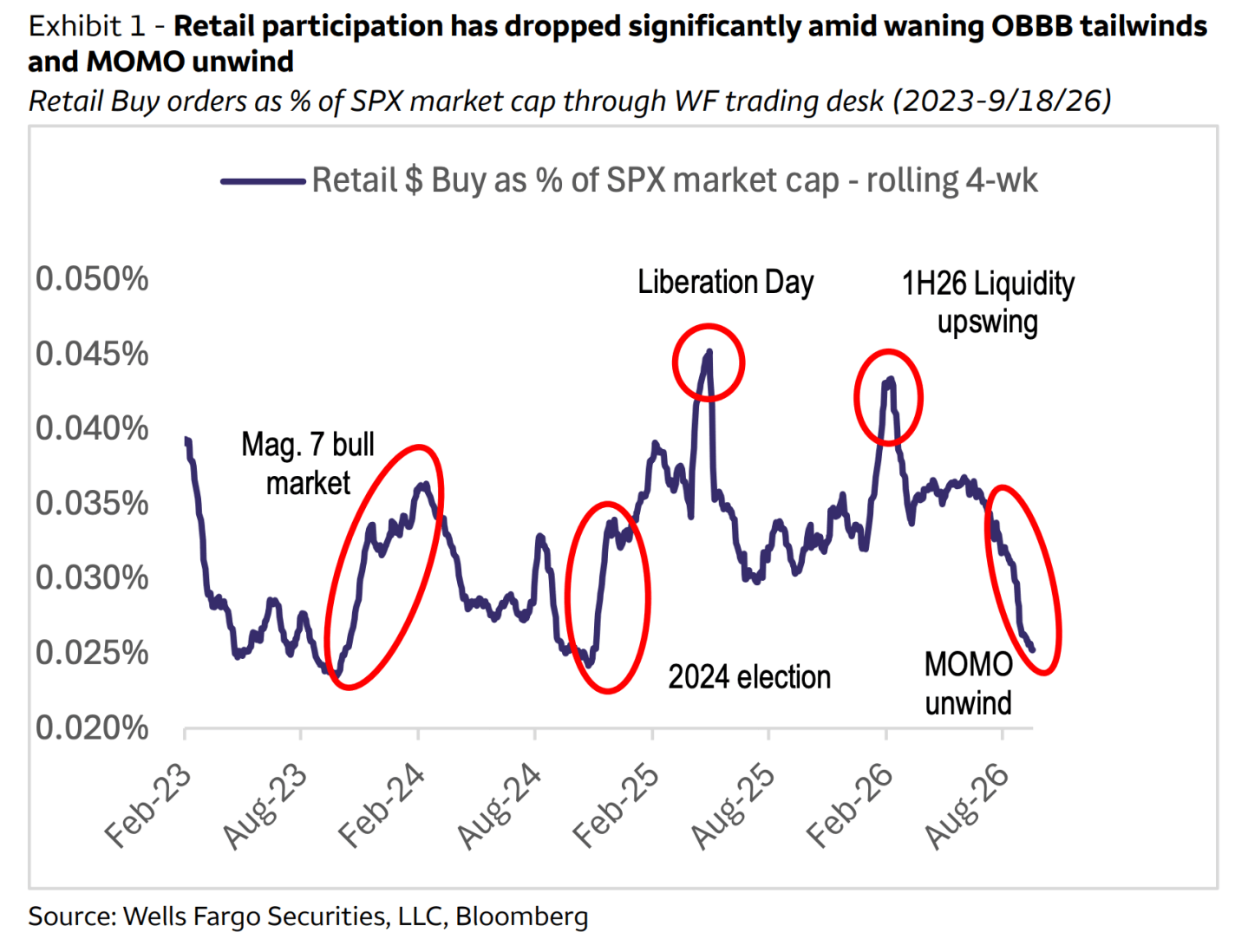
CHART OF THE DAY
AI may be creating jobs at the smallest companies
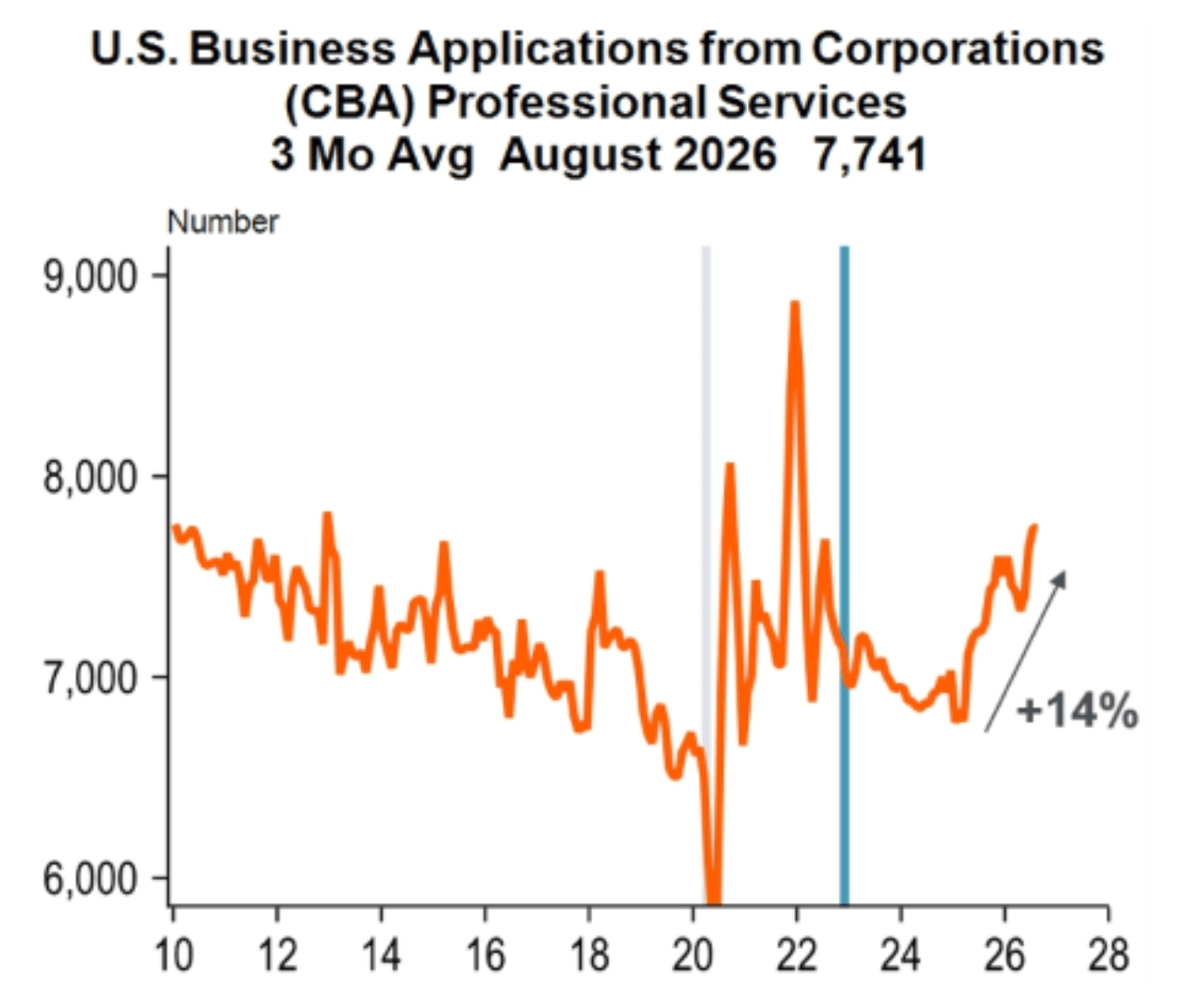
Yesterday we looked at the jobs data which shows that, so far, AI has been net destructive of jobs because the new roles it is adding in tech manufacturing and data center construction are eclipsed by the jobs that are being lost in sales, finance, and other areas where AI is in heavy use.
Today, we have some good news. AI may be creating a lot of jobs in very small startup companies, those with between one and four employees, according to Piper Sandler summer intern(!) Neel Scherfke. “The gains are concentrated in professional services, which is where AI-related businesses show up,” the bank said in an email based on research by Scherfke. “Core business applications clearly hooked up after ChatGPT’s release.”
NUMBER OF THE DAY
74%
The percentage of employees who say they do some kind of work on a typical Sunday, according to Owl Labs’ latest State of Hybrid Work Report. A fifth (21%) report working a full or near-full day on a Sunday.
“Workers have simply had their week stretched into a sixth day, breaking the day into non-linear blocks around parenting, energy levels, or personal errands,” Fortune’s Nick Lichtenberg reports.
THE FRONT PAGES TODAY
Mark Carney and the limits of defying Donald Trump - FT
Iran floats conditions for Hormuz reopening as Trump says deal could come after midterms - CNBC
GOP breaking with an unpopular Trump - Axios
Meta’s new AI agent is an instant hit—and the backlash has already begun - WSJ
Saudis tell Asian refiners they can soon pick up oil on Red Sea - Bloomberg
Alexandria Ocasio-Cortez on 2028: ‘Life doesn’t wait for you to be ready’ - NYT
ONE MORE THING
Maybe Gen Z worries about money because they have so much of it
“It requires a little fortune, now, to buy a house, and every article of furniture costs about three times as much as it did ten years ago.” That complaint isn’t from a TikTok video or a Substack newsletter — it’s a line in a piece titled “The Men Won’t Propose,” published in 1866 in a health magazine called Hall’s Journal of Health, more than a century before anyone had coined the term “Gen Z.”
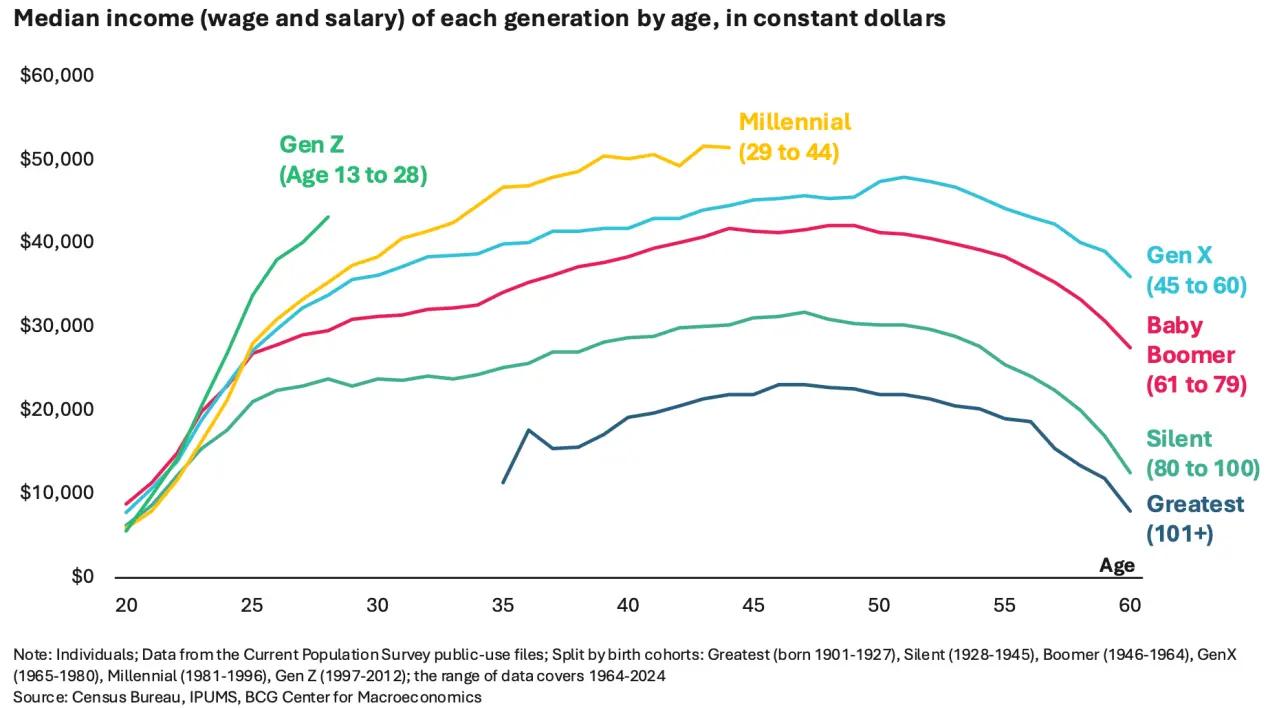
The quote opens a new report from the BCG Center for Macroeconomics, “The Kids Are Alright: The Timeless Angst Over Young People and Money.” Economists Philipp Carlsson-Szlezak, Paul Swartz, and Henry Rubin argue that the received wisdom about a failing, falling-behind generation doesn’t survive contact with the data: Gen Z, by their reckoning, is richer at the same age than Millennials, Gen X, or the Baby Boomers ever were.
When measured in constant dollars that account for inflation, Gen Z is the richest generation so far:
- Would you like to sponsor this newsletter? Contact Polly Raven (polly.raven@fortune.com) for details.