
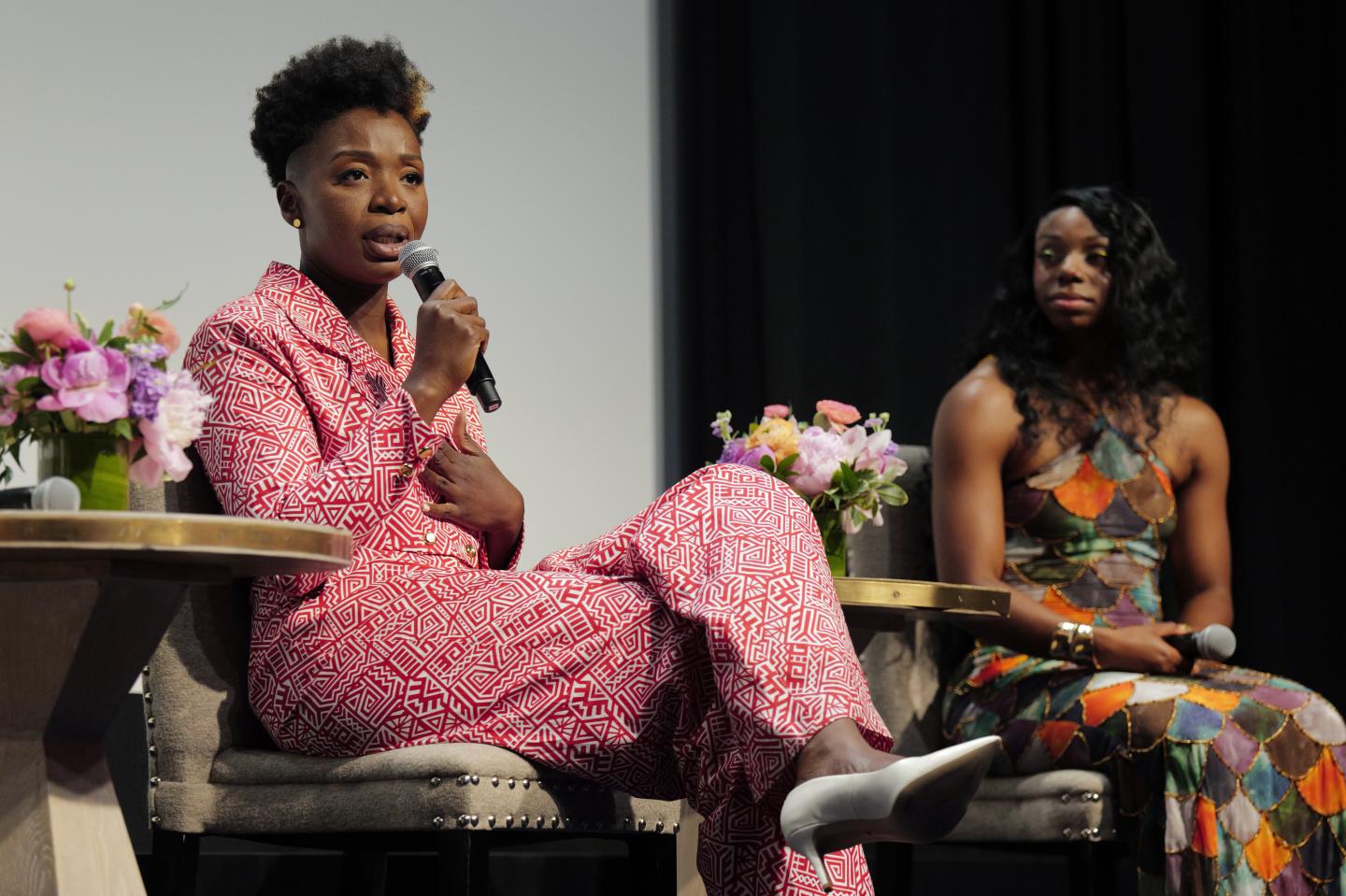
Last week, I joined a group of women inside a midtown Manhattan screening room to watch a documentary. It was about a topic many in the room were intimately familiar with: endometriosis and its impact on women’s lives.
The chronic disease in which endometrium-like tissue grows outside the uterus affects about 10% of women of reproductive age, or about 265 million women around the world. But it remains under-researched, under-diagnosed, and misunderstood. Its impact can be life-altering. Women live with daily, severe pain; consequences to their fertility; and often have multiple surgeries.
End of the Cycle directors Sammy Jaye and Soraya Simi brought the reality of endometriosis to life through the stories of multiple women who live with the condition (Jaye included). The film featured comedian Amy Schumer, actress Janel Parrish of Pretty Little Liars, actor Folake Olowofoyeku, Dancing With the Stars’ Julianne Hough, Olympic sprinter Brittany Brown, and even Marilyn Monroe, with a historical analysis of how endometriosis was likely behind her fertility struggles, chronic pain, and use of painkillers.
These women all had stories about endo’s impact on their lives and careers. Brown’s stuck with me the most: she won a major medal and collapsed on the ground in pain immediately after her race, missing the media appearances that are so crucial to an athlete’s career.
Celebrities aren’t the only ones affected by this disease, of course, and in my inbox this morning was a new study evaluating endometriosis’s impact on women in the workforce. Researchers in Hungary recently studied 566 women with endo against a control group of 447 women without the condition. Women with endometriosis missed more than double the work hours than women without the disease. Absenteeism, productivity, and daily functioning were all affected. Forty-two percent of women with endo had what would be considered a “poor” working ability, while only 17.9% of the control group did.
It would be wrong to draw the conclusion that women with endometriosis can’t thrive in the workplace. Instead, the answer—according to both the documentary and this study—is that we need treatments, a cure, and workplace accommodations.
“Addressing these factors,” the authors write, “is essential to reducing avoidable productivity losses and protecting women’s economic participation during their peak working years.”
Emma Hinchliffe
emma.hinchliffe@fortune.com
The Most Powerful Women Daily newsletter is Fortune’s daily briefing for and about the women leading the business world.
ALSO IN THE HEADLINES
Is honesty the key to Xbox? Asha Sharma is fixing Xbox at Microsoft with "brutal honesty," per the WSJ. She "aggressively shares bad news" as she pursues a turnaround and is running the video game company with the mantra that "clarity is kindness."
The Wired women issue. The tech magazine devoted its latest issue to the state of women in tech. It's asking questions like why women who hold power in Silicon Valley don't achieve cult-figure status. In a survey of women at all levels of the tech industry, 64% say they're satisfied with their careers and 63% are confident their company fairly promotes and pays women.
Ann-Marie Campbell is going viral. The Home Depot senior EVP of U.S stores and operations has made several appearances on Fortune's Most Powerful Women list. Right now she's having a viral moment as an example of the "perfect LinkedIn profile." She started at Home Depot as a cashier in 1985 and has risen the ranks uninterrupted for 41 years.
ON MY RADAR
What Barbara Kingsolver believes the novel can do New Yorker
Donatella Versace is back with a new brand Vogue Business
After The Tell NY Mag
PARTING WORDS
"I was talking about how hard it was to find yourself at a time when your kids are leaving home and you have time to focus on you, and then everything just falls apart. You realize time is ticking, but you seem to have less time than ever."
— Sharon Horgan on her new HBO show Youth, about the life of a fifty-something divorcée