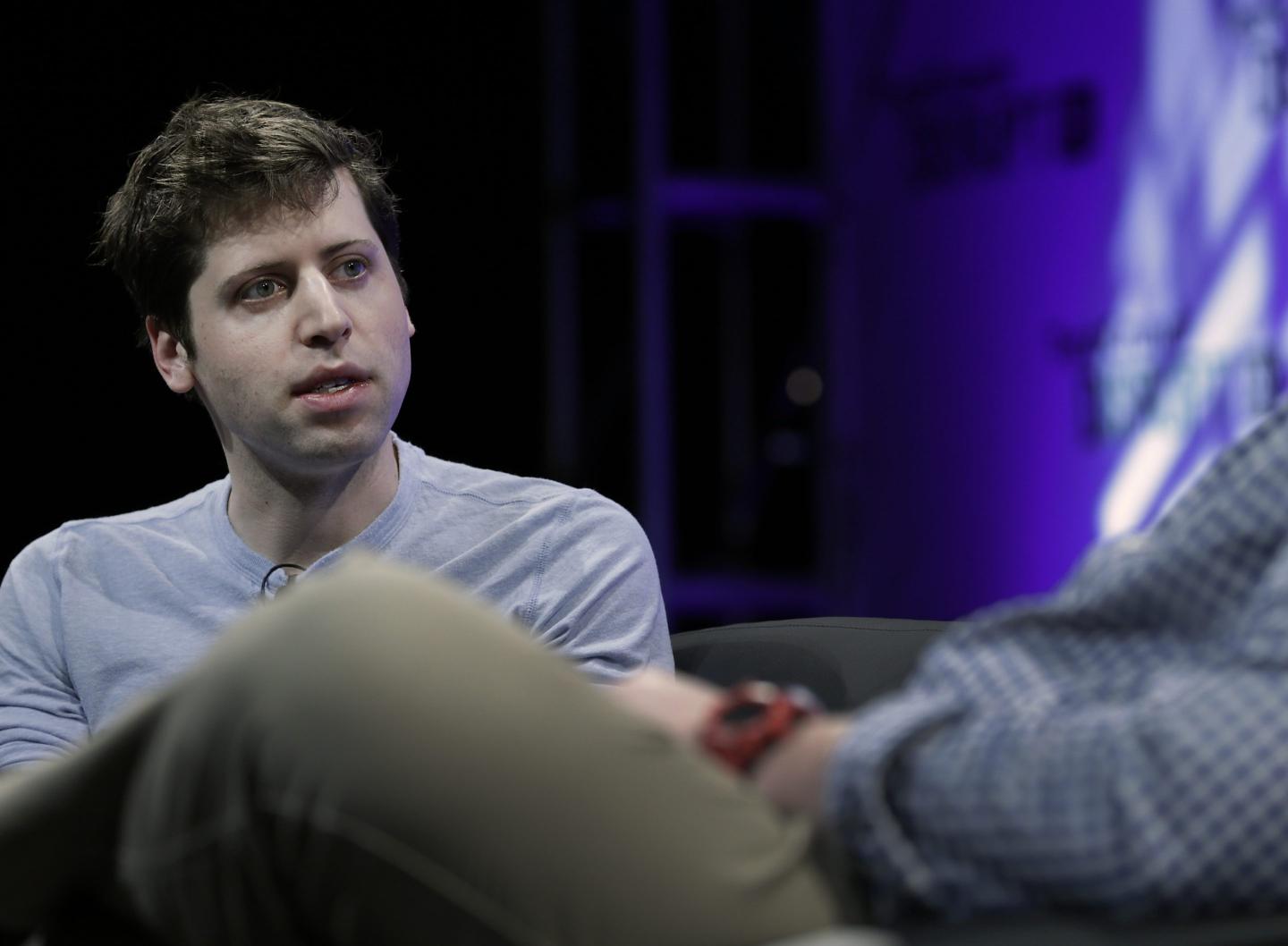
Sam Altman may be one of the most powerful people in artificial intelligence. Still, he says an early lesson from Silicon Valley taught him there’s a limit to what being in charge really means.
Long before Altman made decisions at the helm of OpenAI, he ran Y Combinator, the influential startup accelerator that has backed thousands of young companies. Unlike running a traditional company, however, Altman couldn’t simply tell the startups YC invested in what to do. “At best you can govern—you don’t get to, like, rule,” Altman told Fortune Editor-in-Chief Alyson Shontell in the latest episode of Titans and Disruptors.
Altman says learning how to navigate different stakeholders as he did at YC has become particularly useful at OpenAI, where he now faces pressure from governments, competitors, investors, and the broader AI ecosystem over how quickly the technology should advance—and whose interests should win when they conflict.
“We have all kinds of crazy pressure on us and people who really want one thing or another thing,” Altman told Shontell. “We have to negotiate tense things with governments and with our ecosystem.”
Altman said the experience taught him the importance of being “reliable partners to the world”—acting in a way where people can understand what OpenAI will do while taking “a lot of very different interests and equities into account.”
“We won’t get every decision right,” Altman said, “But we will make ones that benefit not just us directly but this entire ecosystem and world around us.”
From Y Combinator to OpenAI
Altman first learned of stakeholder management during his tenure at Y Combinator. He first came through YC as a founder before becoming its president in 2014, a position he held until 2019, and he said because he wasn’t in charge of every company, but rather, was an investor in them, he had to learn how to approach each company differently.
“You can say, ‘Hey, you’re, like, making a big mistake. We’re a small shareholder of yours. You’re hurting the community,’” Altman said. “We need new norms.”
Because those companies were independent and YC was simply an investor, Altman said that taught him “how to govern versus run as an executive,” an experience he now considers “a very important lesson” for navigating OpenAI. And there, that approach can mean making decisions that conflict with the interests of the people who have money riding on the company.
Earlier in the interview, Altman defended OpenAI’s “incredibly complicated structure,” saying the company needs to be able to make decisions that are “not obviously in the interest of our business and our shareholders” when its broader mission demands otherwise.
Altman told Fortune that now would be an “ill-advised moment” for OpenAI to go public amid concerns about AI safety. If slowing down AI development became necessary, he would be willing to tell investors OpenAI had to make a decision “extremely against your financial interest right now.”
“For the good of humanity, we’re going to do that,” he said. Altman insisted the choice wouldn’t be difficult, arguing OpenAI could still “build an incredibly profitable business” even if development slowed.
“This is, like, not a hard decision if these two things come in tension,” he said.
Governing an AI ecosystem
Altman also sees some of the biggest decisions facing OpenAI as ones the company can’t make alone.
In the same interview, he hinted that leading AI companies could be moving toward some form of collective agreement to address safety risks as their models become more powerful.
“I think that will happen,” Altman said when Shontell asked why he, Anthropic CEO Dario Amodei, Elon Musk, and Google DeepMind cofounder Demis Hassabis couldn’t get in a room and agree on how to move forward.
Altman said he wouldn’t “pre-announce private discussions,” but argued AI companies—and eventually governments—will need to coordinate as the technology advances.
He even suggested President Donald Trump and Chinese President Xi Jinping could win the Nobel Peace Prize together if the U.S. and China agreed on shared standards and testing for advanced AI development.
“Even if just the U.S. and China could agree on some shared standards and testing for development of this technology,” Altman said, “I think that’d be a wonderful accomplishment that the two of them can deliver.”
After his reflection on Y Combinator briefly detoured from Shontell’s original question about what technologies he was excited to invest in, Altman eventually returned to it.
“Everything in bio, everything in material science I think is about to be transformed,” Altman said, also pointing to cybersecurity, new kinds of energy, and software built on the fly.
If he’s right, the lesson he learned at YC about governing an ecosystem rather than ruling one may be tested on a much bigger scale.