
Good morning, it’s finance editor Jeff John Roberts pinch-hitting for Allie. Term Sheet readers of a certain age may recall when a young and still up-and-coming company called Google went on an acquisition spree for the ages. In a four-year span starting in 2003, the search giant hoovered up two ad tech firms, DoubleClick and AdSense, that gave it a full suite of digital advertising tools. And for good measure, it acquired the firm that built the tech behind Google Earth as well as two little startups called Android and YouTube. That shrewd run of M&A is a big reason why Google, now Alphabet, is today one of the dominant companies on the planet.
I raise all of this because Stripe has been on a shopping spree of its own that, if things go right, could one day prove as successful as what Google pulled off 20 years before. Leaving aside its aborted play for PayPal (more on that in a moment), Stripe has since late 2024 acquired two crypto players, Privy and Bridge, that were leaders in the fields of wallets and stablecoins respectively. The fintech giant has also aquihired a team from Ourum, which specializes in account verification and bank transfers, as well as an outfit called Metronome that handles usage-based billing. For good measure, Stripe this month closed on a deal worth around $7.5 billion for the buzzy AI distribution service OpenRouter.
Put it all together and Stripe, like Google before it, is strategically absorbing firms that will help it consolidate its existing lead in its core service, while also building capacity in two fields—in this case blockchain and AI—that will define the next decade of technology.
That brings us to the aborted PayPal deal. The would-be acquisition, which was cooked up this spring, came undone this week after a recent uptick in PayPal’s share price suddenly made Stripe’s original offer of $60.50 per share look too cheap. Had the deal worked out, it would have added a critical additional piece to Stripe’s growing empire: A massive consumer-facing business to complement its existing merchant-heavy customer base.
According to James Wester, a research director at Javelin Strategies, the PayPal deal falling through may have been for the best. Wester points out that it would have been a tough cultural fit for Stripe, which he says is defined by a developer-focused ethos, and has little in common with a lumbering older brand like PayPal.
Wester also notes that Stripe can only bite off so much since, as a private company, it is relatively constrained in how much capital it has to throw around. Google, by contrast, carried out two of its major acquisitions—DoubleClick and YouTube—when it was flush with cash from its 2004 IPO.
As for the quality of Stripe’s acquisitions, and any forthcoming ones, it’s hard to predict how they will pan out. Looking back at Google’s purchase of its ad tech stack, the obvious reaction is “OMG, what a steal, how did regulators let that go ahead?”—but that’s with the benefit of hindsight. It remains to be seen whether Stripe’s purchases will prove as prescient. As one competitor to whom I made the Google comparison pointed out, Yahoo made a lot of acquisitions in that era too—only to flame out and get bought by the phone company a decade later. Wester, though, thinks it’s unlikely that will be Stripe’s fate.
“As much as the analyst in me wants to look at these latest acquisitions for AI and stablecoins with a jaundiced eye, I can’t help but think they’ve been pretty good at this so far,” he said, adding that Stripe has been a master of anticipating where the payments landscape is going next.
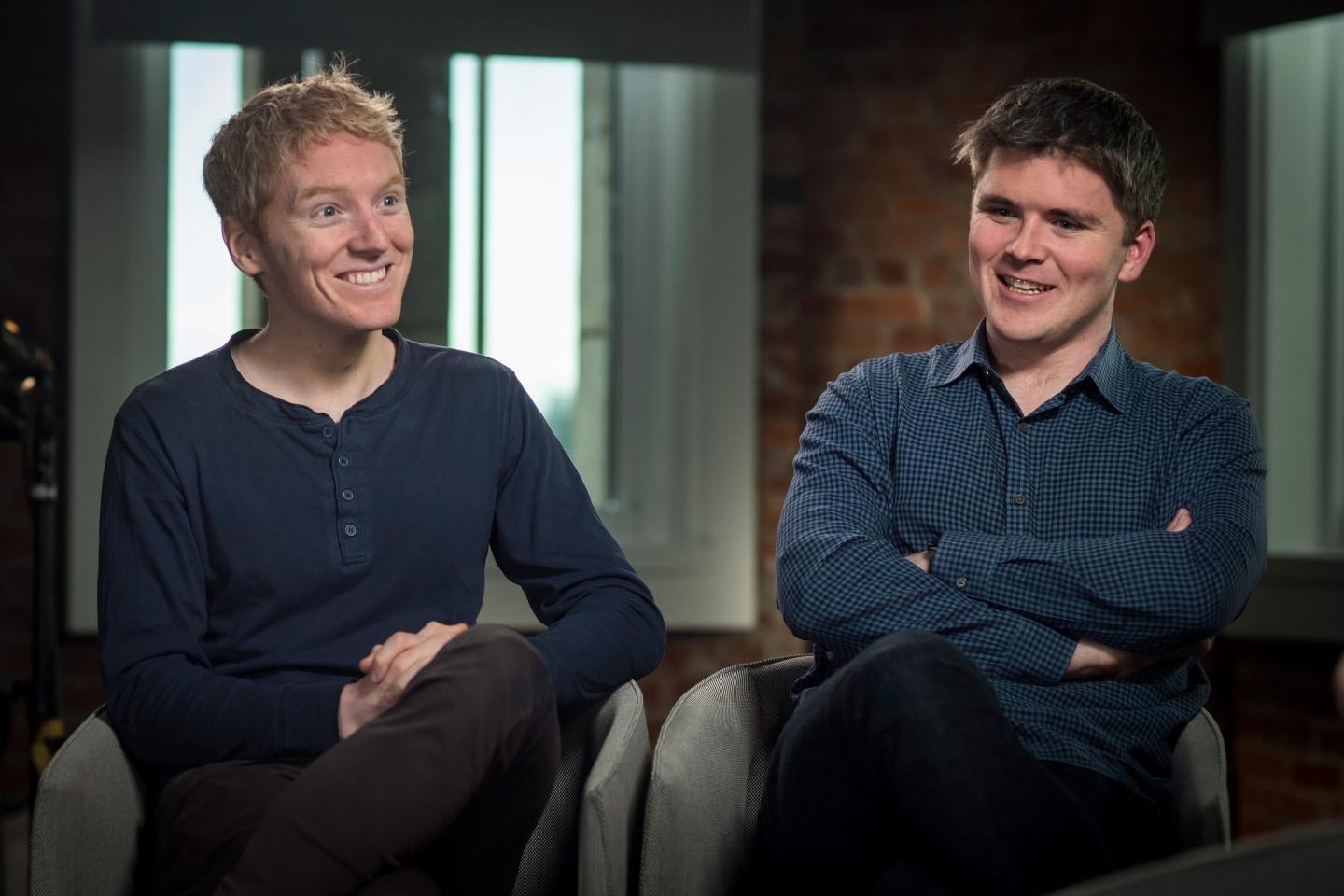
In addition to a penchant for M&A, Stripe has another attribute that invites comparison to early era Google: Its knack for public relations. Even as the company has grown into a behemoth, its charismatic founders have preserved a down-home Irish image, burnished by the company’s “Cheeky Pint” video interview series.
And unlike most fast-growing companies, Stripe makes no unforced errors. This can’t go on forever, of course. Just as sheer size and media glare forced Google to drop its “Don’t Be Evil” corporate logo, Stripe is likely to show sharper elbows in coming years. Then, there is the matter of antitrust, which became one of the few forces to slow Google down. Stripe is still not of the scale to worry about that yet—and antitrust seems to be out the window in the Trump era in any case—but don’t be surprised if all those acquisitions cause legal trouble down the road.
For now, though, Stripe can enjoy its current sweet spot of being powerful and likable at the same time, just as Google did long ago.
See you tomorrow,
Jeff John Roberts
X: @jeffjohnroberts
Email: jeff.roberts@fortune.com
Submit a deal for the Term Sheet newsletter here. Subscribe here.
Venture Deals
- Physical Superintelligence, a Cambridge, Mass.-based AI research lab focused on using AI to accelerate physics discovery toward optimizing data centers, raised $58 million in seed funding. Breakthrough Energy Ventures led the round and was joined by Dragon Global, Robot Ventures, Solari, Susa, SV Angel, Valkyrie, and others.
- AIR, a New York City-based cybersecurity startup focused on agentic AI, raised $50 million in funding. Sequoia Capital and Greenoaks led the round and were joined by Swish Ventures, Netz, and others.
- SciFin, a San Francisco-based platform that helps revenue teams centralize information, raised $44 million in seed funding. Altimeter and Madrona led the round and were joined by Foundation Capital, S32, Zetta Ventures, and others.
- Odyssey Energy Solutions, a Boulder-based platform for financing distributed renewable energy projects in emerging markets, raised $27 million in equity financing. New investors Broadscale Group, FMO, and Al Mada Ventures participated and were joined by existing investors Union Square Ventures, Equal Ventures, Abstract Ventures, and others.
- Gridsight, a Sydney, Australia-based platform that helps utilities manage electric grid capacity, raised $26 million in Series B funding. Insight Partners led the round and was joined by Galvanize, as well as existing investors Airtree, Energy Transition Ventures, and Aera VC.
- Empirik, a San Francisco-based startup that predicts and prevents tech infrastructure outages before they happen, raised $21 million in seed funding. Sequoia Capital, S32, Canapi Ventures, and Alumni Ventures participated.
- DataAgent, a Tel Aviv-based platform that automatically detects and fixes infrastructure faults inside a company's own digital systems, raised $10 million in pre-seed funding. MizMaa Ventures and Alicorn Venture Partners led the round.
- Aranya, a San Francisco-based startup that automates the setup and deployment of GPU clusters for AI workloads, raised $9 million in seed funding. First Round Capital led the round and was joined by BoxGroup, Vermilion Cliffs, and Asylum Ventures.
- Newlight, a San Francisco-based maritime technology company specializing in hydrogen injection systems for large commercial vessels, raised $9 million in seed funding. Lomarlabs, BIRD Energy, Undeterred Capital, CiRi Ventures, and Fusion VC participated in the round.
- Orchestra, a London, U.K.-based platform that helps businesses build and govern data pipelines and AI agents, raised $3.3 million in seed funding. Differential Ventures led the round.
PRIVATE EQUITY
- Yellow Wood Partners agreed to acquire the Holistic Health platform, a portfolio of vitamins, minerals, and supplements brands including Nature's Bounty, Nuun, Osteo Bi-Flex, and Gard, from Nestlé for $1 billion.
- A-LIGN, a portfolio company of Hg Capital and a provider of cybersecurity compliance services, acquired Pathfynder, a Bozeman, Mont.-based provider of offensive and defensive cybersecurity services. Financial terms weren't disclosed.
- Align Capital Partners acquired Trident Solutions, a Plano, Texas-based manufacturer of safety marking, identification, and damage prevention products. Financial terms weren't disclosed.
- Aria Care Partners, a portfolio company of Serent Capital, acquired Precision Mobile Care, a Utah-based provider of mobile onsite dental care to nursing facilities. Financial terms weren't disclosed.
- GI Partners acquired a majority stake in Otodata Holdings, a Montreal-based provider of remote monitoring and vehicle tracking solutions, from Renovo Capital, which will retain a minority stake. Financial terms weren't disclosed.
- Justrite Safety Group, a portfolio company of Audax Private Equity, acquired ServerLIFT, a Phoenix-based provider of material handling and lifting equipment for IT infrastructure and data centers, from American Pacific Group. Financial terms weren't disclosed.
- Midland Industries, a portfolio company of Gemspring Capital, acquired Pegasus Supply Group, a Noblesville, Ind.-based supplier of industrial and electronic connection products. Financial terms weren't disclosed.
- Mutares acquired AmeriTerpenes, a Jacksonville, Fla.-based producer of terpene-based ingredients used in perfumes, household products, and food and beverage flavorings, from Symrise. Financial terms weren't disclosed.
- Sequoia Financial Group, backed by Valeas Capital Management and Kudu Investment Management, acquired BSW Wealth Partners, a Boulder- and Denver-based wealth management firm with approximately $2.3 billion in client assets. Financial terms weren't disclosed.
- Valence Surface Technologies, a portfolio company of ATL Partners and British Columbia Investment Management Corporation, acquired Cametoid Technologies, a South Windsor, Conn.-based provider of Ion Vapor Deposition surface treatment for the aerospace and defense markets. Financial terms weren't disclosed.
- VayKLife, a portfolio company of Fort Point Capital, acquired Xplorie, a Destin, Fla.-based provider of local experiences for the vacation rental industry. Financial terms weren't disclosed.
- WHP Global, backed by Oaktree Capital Management, Ares Management, and G-III Apparel Group completed the acquisition of the Marc Jacobs brand from LVMH. Financial terms weren't disclosed.
IPOs
- SB Energy, a Redwood City, Calif.-based developer of power infrastructure for data centers, filed to go public on the Nasdaq. The firm posted $138.7 million in revenue for the six months ended June 30, 2026, up from $83.3 million a year earlier, and a net loss of $3.21 billion. SoftBank and OpenAI are strategic investors; Nvidia also backs the company.