A tense July inflation report came in exactly as economists expected it would on Wednesday, as the Bureau of Labor Statistics reported that consumer prices rose 0.1% in July and 3.4% over the past 12 months.
Core CPI, which takes out food and energy, rose 0.2% on the month and 2.5% on the year, the slowest annual pace since the post-pandemic surge.
The summer has provided relief to Spring’s energy shock. The energy index dropped 1.5% in July after a 5.7% decline in June, with gasoline down 2.9% for the month. Yet energy prices remain 14.7% higher than a year ago, and gasoline 24.6% higher after a war with Iran shut down the Strait of Hormuz.
Markets took the report as a relief. Stock futures rose after the release, and traders decreased the odds of a Fed hike next month to under 50%. The 10-year Treasury yield held near 4.66%.
“In-line inflation will keep the ‘no need to hike rates’ narrative that took hold after last week’s jobs report intact,” said Ellen Zentner, chief economic strategist for Morgan Stanley Wealth Management. “There will be another round of inflation data before the September FOMC meeting, so the storyline could still change. But unless those numbers tell a much different story, the Fed will likely still be in a position to leave rates unchanged next month.”
Not everyone reads it as a clean case for patience. Jeffrey Roach, chief economist at LPL Financial, expects a lively debate in September. His baseline is that the Fed holds, but he noted a growing number of hawkish voting members who could convince the majority to raise, using PCE, the Fed’s preferred measure, as the basis.
KPMG Chief Economist Diane Swonk cautioned ahead of the release that the July relief may be temporary. Pump prices climbed through the second half of the month, she wrote on a post on X, but were offset within the survey period by declines in late June and over the July Fourth holiday. So the data could be disguising higher gas prices, with the Strait of Hormuz still largely closed. But more of that increase is likely to appear in the August data.
Diesel prices rose considerably faster than gasoline, an input cost that filters into freight, food and services with a lag.
Shelter costs, which account for roughly a third of the index, rose 0.1% for a second straight month and 3.2% over the year. The monthly softness came from hotels, where prices for lodging away from home fell 2.8%.. Rent of primary residence and owners’ equivalent rent each rose 0.3%, keeping in line with their recent pace.
Swonk said rents have cooled in overbuilt markets, but they are rising again where little new construction has occurred; a dynamic that could push shelter inflation higher in 2027.
Airline fares jumped 2.2% in July after barely moving in June and are up 25.5% over the past year, reflecting fuel costs that airlines pass through on a delay.
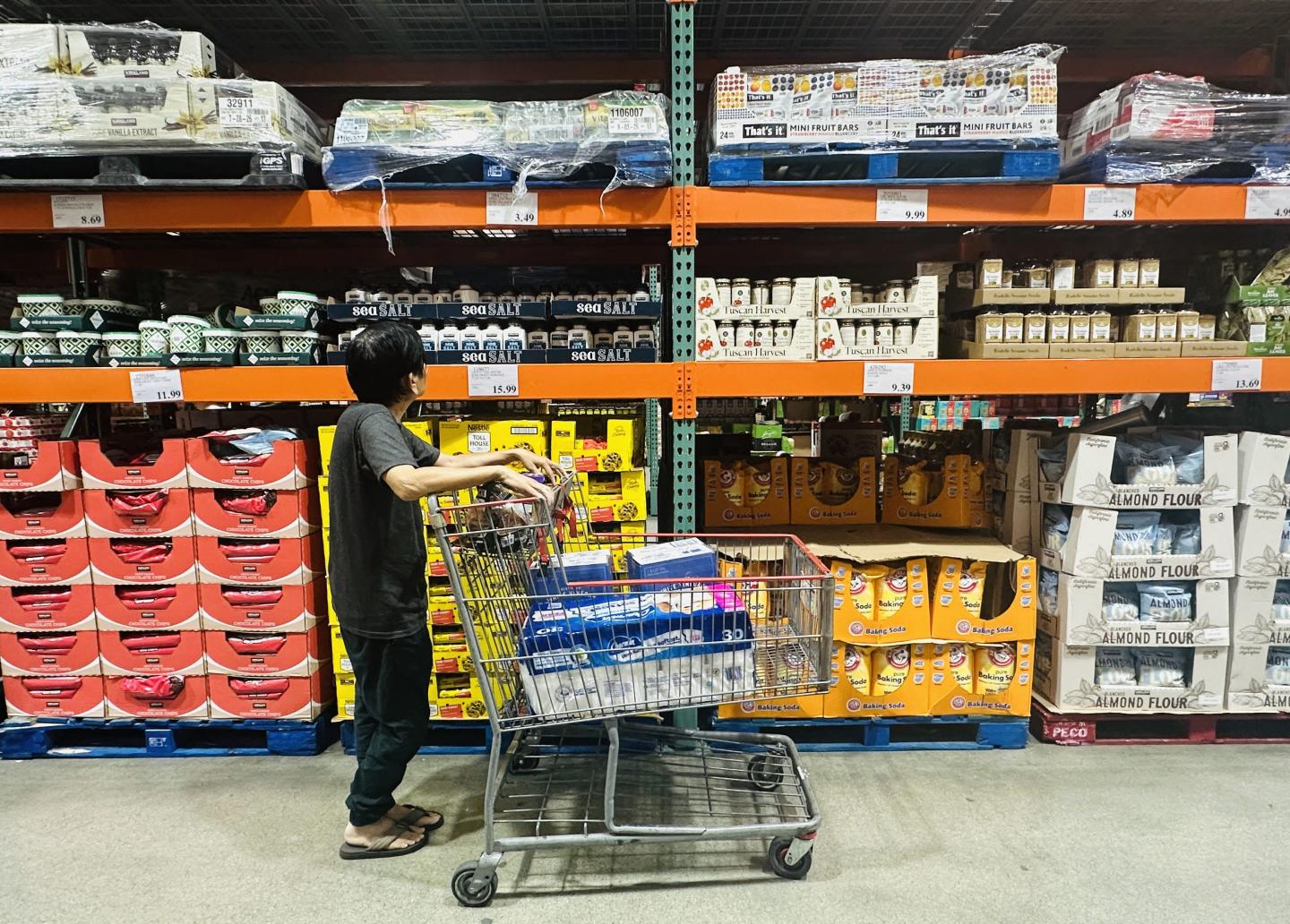
Grocery prices fell 0.1% for the month and are up 2.7% over the year. Lettuce dropped 16.4% in July, the steepest one-month decline on record, likely a result of the cyclosporiasis outbreak.
The index says little about how households are absorbing three years of higher prices. Wages have gone basically nowhere against prices: real average hourly earnings were up 0.1% over the year through June.
Kathleen Grace, CEO of Fiduciary Family Office, said consumer credit gives a cleaner read: revolving balances continue to climb, and late-stage delinquencies have risen to levels not seen in more than a decade. That is, she wrote in a note, “a different and arguably more meaningful view of affordability than the CPI alone.”
The labor market has softened alongside it. Payrolls fell by 23,000 in July, and revisions cut more than 100,000 jobs from the previously reported May and June gains. Real average hourly earnings have been roughly flat for a year, leaving households no further along than they were before inflation cooled.
Swonk, who has covered the Fed for three decades, wrote that she has never seen an economy like this one, and that neither has the Fed. She called it, in a word, a “mess.”