When Czech billionaire Michal Strnad bought a stake in Italian tire giant Pirelli & C. SpA last week, the transaction was heralded as a key moment for the company. It also cemented his home country’s position as Eastern Europe’s leader in foreign investment.
Strnad, who made his money from the arms industry, is part of a new generation of superrich who are giving the Czech Republic an outsized role in European mergers and acquisitions, helping drive a shift in the local economy as they outgrow their home market.
While there’s a similar pattern in larger neighbor Poland, the Czech investment activity reflects a trend going back more than a decade as the nation’s per-capita gross domestic product moved closer to that of France and Italy.
“For us, the Czech Republic is simply too small in terms of the sectors we operate in,” David Becvar, chief operating officer at MTX Group, the industrial conglomerate owned by billionaire Petr Otava, said in an interview in Prague. “There just aren’t enough companies we could pursue through acquisitions in the fields we are interested in.”
The most recent United Nations statistics show that outward stock of foreign direct investment, a measure of equity stakes held by Czechs abroad, more than quadrupled between 2014 and 2024 to the equivalent of about $74 billion. That was the biggest gain in the European Union behind financial hub Luxembourg and Romania, which started from a smaller base.
The holdings are beginning to have an effect on the economy, according to the central bank.
The export-reliant Czech economy was transformed by investment from global companies such as automakers seeking cheaper labor. They then repatriated profits, meaning the country’s trade surplus had been mostly offset by large outflows of dividends to foreign owners. Now the income from holdings abroad by billionaires and others is promising to improve the country’s current account over time.
“The dividend inflow from the profits of foreign-operating companies owned by Czech capital is beginning to rise gradually,” central bank Vice Governor Eva Zamrazilova said in a recent interview. “That is positive for the future of the external balance.”
Industrial tycoon Daniel Kretinsky, for example, has turned into one of the most prominent dealmakers in Europe. In the span of less than two decades, he built a conglomerate that includes one of the continent’s largest privately owned energy companies, retail chains and media outlets.
His high-profile deals included a takeover of the parent of the UK’s Royal Mail, International Distribution Services, in a £3.6 billion transaction in 2024. More recently, Kretinsky became one of the largest shareholders in the French energy giant TotalEnergies and is embroiled in a takeover battle for English football club West Ham United.
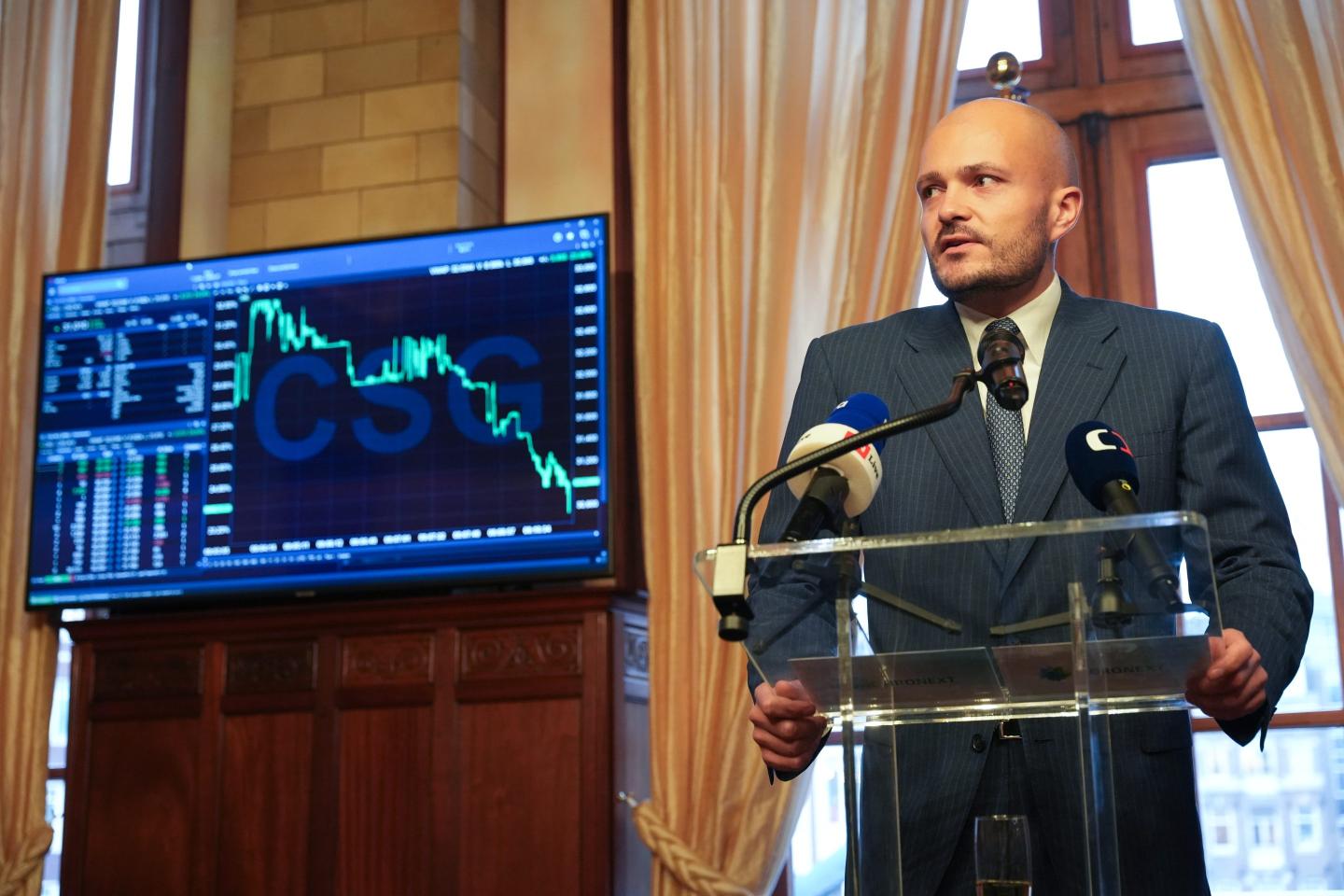
Currently the richest Czech, though, is Strnad, who listed his arms company CSG in Amsterdam in the largest initial public offering for a pure defense firm. Among CSG’s acquisitions are The Kinetic Group in the US, a deal worth $2 billion in 2024.
Strnad has also set up his own investment firm. The billionaire has already placed some of his personal holdings under the vehicle, including interests in Prague’s Four Seasons hotel, a fertility clinic and Czech dealerships for Ferrari and Maserati.
MTX Group, like businesses belonging to other Czech billionaires, continues to invest in its operations at home. Its activities range from production of aluminum chassis parts for carmakers to trading raw materials.
Expanding abroad also allows the company to diversify in an unpredictable world. Its biggest foreign exposure to date is a €100 million allocation for a stake in the Mimosa renewable energy project in Spain.
“Our investments are aimed at geographic stabilization beyond the Czech Republic and, in the future, probably beyond Europe,” said Becvar.
To contact the authors of this story:
Michal Kubala in Praha at mkubala3@bloomberg.net
Peter Laca in Praha at placa@bloomberg.net