• Home
  • Latest
  • Fortune 500
  • Finance
  • Tech
  • Leadership
  • Lifestyle
  • Rankings
  • Multimedia

Trendingnow

1

The rise of 'conspicuous waiting': The 19th-century economic theory that explains why Gen Z posts their place in line

2

He worked 100-hour weeks to save a nearly bankrupt boat company. At 83, he’s just turned down $400 million for it—and gave it all to charity instead

3

Tim Cook signed off on his final Apple earnings call with a warning about a ‘100-year flood’ in memory chip pricing

1

The rise of 'conspicuous waiting': The 19th-century economic theory that explains why Gen Z posts their place in line

2

He worked 100-hour weeks to save a nearly bankrupt boat company. At 83, he’s just turned down $400 million for it—and gave it all to charity instead

3

Tim Cook signed off on his final Apple earnings call with a warning about a ‘100-year flood’ in memory chip pricing
AIWorld Cup

The World Cup’s VAR fights are a preview of every company’s AI rollout problem

By
Pooya Tabesh
Pooya Tabesh
and
The Conversation
The Conversation
Down Arrow Button Icon
By
Pooya Tabesh
Pooya Tabesh
and
The Conversation
The Conversation
Down Arrow Button Icon
July 31, 2026, 12:27 PM ET
var
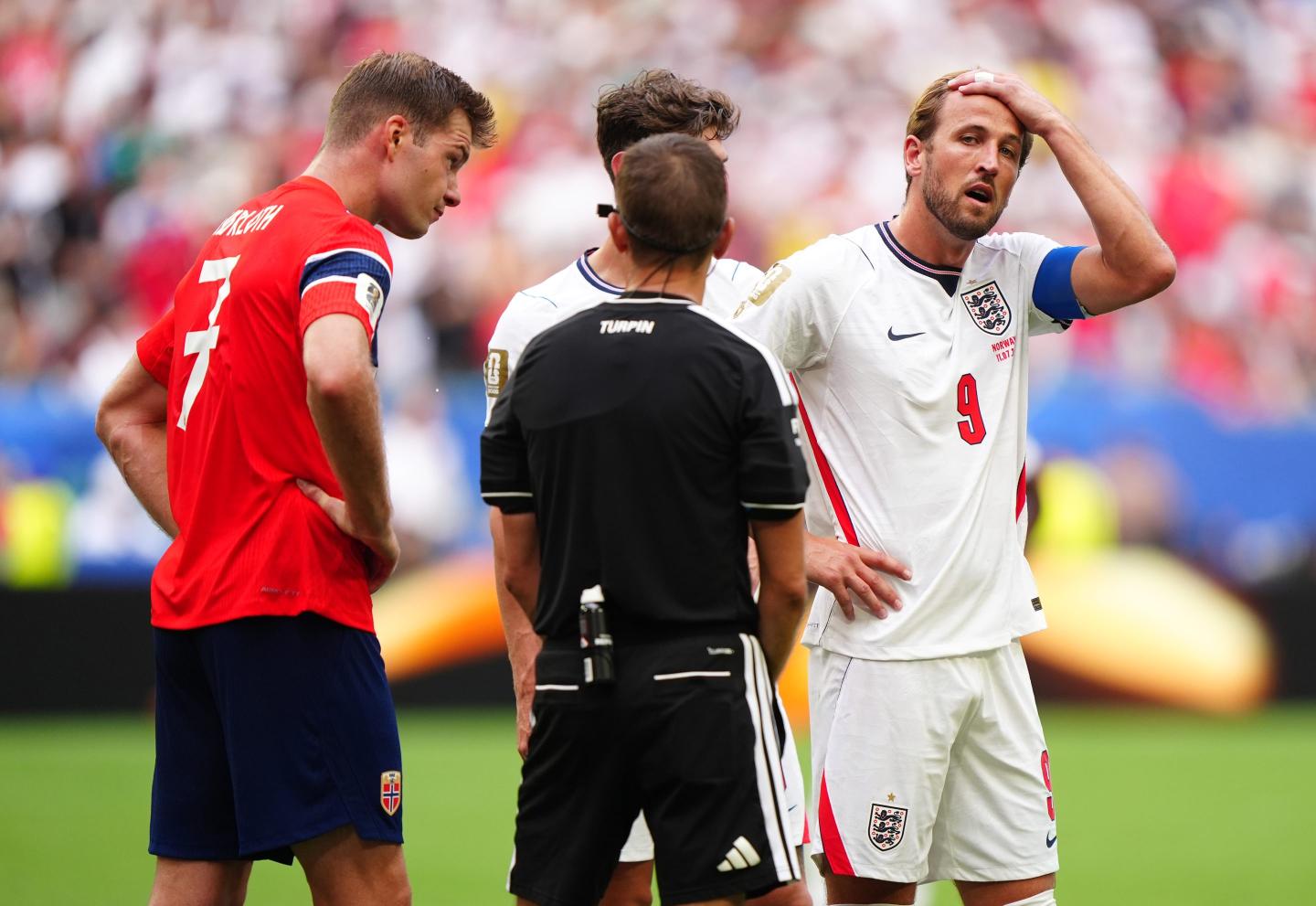
England's Harry Kane (right) and Norway's Alexander Sorloth with referee Clement Turpin before Norway's second goal being ruled out following a VAR check during the FIFA World Cup 2026 quarter-final match at the Miami Stadium. Picture date: Saturday July 11, 2026. Bradley Collyer/PA Images via Getty Images
Add Fortune on Google for similar content.

If you watched the 2026 FIFA World Cup, you probably saw the now-familiar ritual: a goal, a celebration, then a referee touching an earpiece while fans and players wait for the verdict from the video assistant referee, or VAR.

Recommended Video

That ritual is not unique to soccer. Baseball has a replay center in New York, and other sports have also moved once-human calls into review systems.

The hope is simple: Use better technology to yield better calls.

Soccer authorities expected more cameras, replay angles and tracking data to mitigate referee error, limit subjectivity and strengthen perceptions of fairness. But VAR has created new arguments among players, coaches, fans and commentators: Should VAR have intervened? Was the same standard for when to intervene applied consistently? Did the process itself feel fair?

Watching the World Cup as a decision-making researcher, I could not help but see VAR as more than a refereeing tool. It looked like a case study in technology-assisted decision-making, with parallels to the growing use of AI in organizational decision-making.

VAR produced a set of mismatches between what the technology promised and how people experienced it. It left fans disappointed and created new disputes about judgment, process and trust. These tensions offer a useful lens for understanding AI adoption more broadly.

a large video display board in a crowded stadium
Video replays give officials more accurate information, but that doesn’t automatically lead to better judgment – or less controversy. AP Photo/Martin Meissner

Better measurement is not better judgment

Some decisions are measurement problems: Was the player offside? Did the ball cross the line? Did contact occur? Technology is excellent at these questions because cameras, sensors and data reduce mistakes that come from people not seeing clearly.

But many decisions are judgment problems: Was the contact enough for a penalty? Was the tackle reckless? Was the referee’s original call clearly wrong? Those questions involve interpretation, context and standards. A camera can show that contact occurred. It cannot decide how that contact should be judged.

The same issue appears when organizations use AI to support decisions. AI can process data, predict patterns and classify cases. But a doctor, manager, judge or teacher still needs to decide what the output means, how much weight to give it and what values are at stake. Research on human-AI collaboration makes a similar point: AI is often strongest when paired with human judgment rather than treated as a full replacement for it.

Subjectivity does not disappear – it moves

Before VAR, arguments focused on what the referee saw. After VAR, arguments often focus on how the process works. When does VAR intervene? How far back can officials review the play? What counts as “clear and obvious” video evidence?

Subjectivity is still there. It has moved from the referee’s eyes to the rules, thresholds and governance of the review system. Baseball shows a similar pattern: Replay did not remove judgment from the game. It changed which plays could be reviewed, how challenges worked and where judgment entered the process.

a dark room with several large video displays showing multiple images
Major League Baseball uses a video replay system that requires ‘indisputable video evidence’ to overturn a call, leaving the determination of ‘indisputable’ to the judgment of the replay official. AP Photo/John Minchillo

AI systems create the same shift. Organizations often imagine AI as a way to remove human discretion. In practice, discretion reappears in new places: deciding which model to use, what data to train on, what error rate is acceptable and who is accountable when the system fails.

More precision can reduce trust

People often assume that greater precision creates greater trust. Sometimes it does. But it can raise expectations faster than it reduces ambiguity. If technology can measure an offside decision by centimeters, fans may expect every decision to feel equally certain. When penalty calls or red cards remain debatable, people can become frustrated.

Research on why people avoid using algorithms finds something similar: People can lose confidence in algorithms after seeing them make mistakes, even when they perform well overall. Accuracy alone does not guarantee legitimacy.

That finding matters for AI decision systems. A company may use AI to make hiring or performance evaluation more objective. But if applicants or employees see the system as inconsistent, biased or unfair, trust can fall instead of rise. When organizations frame AI as a silver bullet, they raise expectations the technology cannot always meet. The result can be deeper frustration and faster loss of trust.

A video camera at the end of a long, angled post
Tennis’s automated line-calling aims to take human error out of a crucial measurement: Was the ball on the line or not? Visionhaus/Getty Images

Where technology ends and judgment begins

Management research suggests that AI adoption today is not a simple choice between humans and machines. The better question is whether a decision should be automated, augmented or left to human judgment.

Measurement problems are the strongest candidates for automation: AI can scan documents, detect patterns, classify cases or flag anomalies faster and more consistently than people can. Interpretation problems call for human-AI collaboration: AI can provide information, options or recommendations, but people still need to think about the context of the decision, how much uncertainty is involved and the consequences the decision may have. And some decisions remain deeply human. Questions involving fairness, accountability, values or meaning cannot be handed over to technology without changing the nature of the decision itself – from one of human judgment to algorithmic assessment.

VAR makes this boundary visible in sport. AI is now forcing organizations to confront the same boundary across high-stakes decisions. The key question in AI adoption is not simply, “Can AI make this decision?” It is, “Which parts of the decision should AI make, and which parts should remain a matter of human judgment?”

Pooya Tabesh, Associate Professor of Management, California State University, Los Angeles

This article is republished from The Conversation under a Creative Commons license. Read the original article.

The Conversation
Subscribe to Fortune Gulf Brief. Every Tuesday, this new newsletter delivers clear-eyed, authoritative intelligence on the deals, decisions, policies, and power shifts shaping one of the world’s most consequential regions, written for the people who need to act on it. Sign up here.
About the Authors
By Pooya Tabesh
See full bioRight Arrow Button Icon
By The Conversation
See full bioRight Arrow Button Icon
Add Fortune on Google for similar content.

Latest in AI

Finance
Lorem ipsum dolor sit amet, consectetur adipiscing elit, sed do eiusmod tempor incididunt ut labore et dolore magna aliqua. Ut enim ad minim veniam
By Fortune Editors
October 20, 2025
Finance
Lorem ipsum dolor sit amet, consectetur adipiscing elit, sed do eiusmod tempor incididunt ut labore et dolore magna aliqua. Ut enim ad minim veniam
By Fortune Editors
October 20, 2025
Finance
Lorem ipsum dolor sit amet, consectetur adipiscing elit, sed do eiusmod tempor incididunt ut labore et dolore magna aliqua. Ut enim ad minim veniam
By Fortune Editors
October 20, 2025
Finance
Lorem ipsum dolor sit amet, consectetur adipiscing elit, sed do eiusmod tempor incididunt ut labore et dolore magna aliqua. Ut enim ad minim veniam
By Fortune Editors
October 20, 2025
Finance
Lorem ipsum dolor sit amet, consectetur adipiscing elit, sed do eiusmod tempor incididunt ut labore et dolore magna aliqua. Ut enim ad minim veniam
By Fortune Editors
October 20, 2025
Finance
Lorem ipsum dolor sit amet, consectetur adipiscing elit, sed do eiusmod tempor incididunt ut labore et dolore magna aliqua. Ut enim ad minim veniam
By Fortune Editors
October 20, 2025

Most Popular

Finance
Lorem ipsum dolor sit amet, consectetur adipiscing elit, sed do eiusmod tempor incididunt ut labore et dolore magna aliqua. Ut enim ad minim veniam
By Fortune Editors
October 20, 2025
Finance
Lorem ipsum dolor sit amet, consectetur adipiscing elit, sed do eiusmod tempor incididunt ut labore et dolore magna aliqua. Ut enim ad minim veniam
By Fortune Editors
October 20, 2025
Finance
Lorem ipsum dolor sit amet, consectetur adipiscing elit, sed do eiusmod tempor incididunt ut labore et dolore magna aliqua. Ut enim ad minim veniam
By Fortune Editors
October 20, 2025
Finance
Lorem ipsum dolor sit amet, consectetur adipiscing elit, sed do eiusmod tempor incididunt ut labore et dolore magna aliqua. Ut enim ad minim veniam
By Fortune Editors
October 20, 2025
Finance
Lorem ipsum dolor sit amet, consectetur adipiscing elit, sed do eiusmod tempor incididunt ut labore et dolore magna aliqua. Ut enim ad minim veniam
By Fortune Editors
October 20, 2025
Finance
Lorem ipsum dolor sit amet, consectetur adipiscing elit, sed do eiusmod tempor incididunt ut labore et dolore magna aliqua. Ut enim ad minim veniam
By Fortune Editors
October 20, 2025
Fortune Secondary Logo
Rankings
  • 100 Best Companies
  • Fortune 500
  • Global 500
  • Fortune 500 Europe
  • Most Powerful Women
  • World's Most Admired Companies
  • See All Rankings
  • Lists Calendar
Sections
  • Finance
  • Fortune Crypto
  • Features
  • Leadership
  • Health
  • Commentary
  • Success
  • Retail
  • Mpw
  • Tech
  • Lifestyle
  • CEO Initiative
  • Asia
  • Politics
  • Conferences
  • Europe
  • Newsletters
  • Personal Finance
  • Environment
  • Magazine
  • Education
Customer Support
  • Frequently Asked Questions
  • Customer Service Portal
  • Privacy Policy
  • Terms Of Use
  • Single Issues For Purchase
  • International Print
Commercial Services
  • Advertising
  • Fortune Brand Studio
  • Fortune Analytics
  • Fortune Conferences
  • Business Development
  • Group Subscriptions
About Us
  • About Us
  • Press Center
  • Work At Fortune
  • Terms And Conditions
  • Site Map
  • About Us
  • Press Center
  • Work At Fortune
  • Terms And Conditions
  • Site Map
  • Facebook icon
  • Twitter icon
  • LinkedIn icon
  • Instagram icon
  • TikTok icon
  • YouTube icon

Latest in AI

var
AIWorld Cup
The World Cup’s VAR fights are a preview of every company’s AI rollout problem
By Pooya Tabesh and The ConversationJuly 31, 2026
2 hours ago
bernie
AIWhite House
16 Nobel laureates just warned AI could displace workers. Bernie thinks a sovereign wealth fund may be the answer
By Patrick J. Schena and The ConversationJuly 31, 2026
2 hours ago
Dario Amodei speaking into a microphone.
AIAnthropic
Anthropic says its Claude models escaped a testing environment and hacked three real companies
By Beatrice NolanJuly 31, 2026
5 hours ago
u
AIcyber
Brussels responds to explosion of AI risks with a new team of 38 bureaucrats
By Sam McNeil and The Associated PressJuly 31, 2026
5 hours ago
a
CybersecurityAnthropic
Anthropic discloses that Claude broke out of its cage and hacked 3 companies — and 2 didn’t even notice
By Chan Ho-Him and The Associated PressJuly 31, 2026
6 hours ago
product
AIdisruption
Fed study: AI’s slow productivity story fits a century-old historical pattern
By Nick LichtenbergJuly 31, 2026
6 hours ago

Most Popular

The rise of 'conspicuous waiting': The 19th-century economic theory that explains why Gen Z posts their place in line
Retail
The rise of 'conspicuous waiting': The 19th-century economic theory that explains why Gen Z posts their place in line
By Tatiana SatauaJuly 31, 2026
11 hours ago
He worked 100-hour weeks to save a nearly bankrupt boat company. At 83, he’s just turned down $400 million for it—and gave it all to charity instead
Success
He worked 100-hour weeks to save a nearly bankrupt boat company. At 83, he’s just turned down $400 million for it—and gave it all to charity instead
By Preston ForeJuly 29, 2026
2 days ago
Tim Cook signed off on his final Apple earnings call with a warning about a ‘100-year flood’ in memory chip pricing
Big Tech
Tim Cook signed off on his final Apple earnings call with a warning about a ‘100-year flood’ in memory chip pricing
By Alexei OreskovicJuly 30, 2026
18 hours ago
Costco's $14 million email settlement: Who qualifies for an up-to $500 payment and how to claim before the Aug. 24 deadline
Retail
Costco's $14 million email settlement: Who qualifies for an up-to $500 payment and how to claim before the Aug. 24 deadline
By Sydney LakeJuly 29, 2026
2 days ago
Millennials say they’ll refuse to care for aging boomer parents—but they’ll be forced to as their inheritance shrinks to 40 cents on the dollar
Personal Finance
Millennials say they’ll refuse to care for aging boomer parents—but they’ll be forced to as their inheritance shrinks to 40 cents on the dollar
By Nick LichtenbergJuly 31, 2026
11 hours ago
The millennial generation is split in 2: an older crowd with boomer-style comfort, a younger set going 'back to the early 1900s'
Real Estate
The millennial generation is split in 2: an older crowd with boomer-style comfort, a younger set going 'back to the early 1900s'
By Nick LichtenbergJuly 25, 2026
6 days ago

© 2026 Fortune Media IP Limited. All Rights Reserved. Use of this site constitutes acceptance of our Terms of Use and Privacy Policy | CA Notice at Collection and Privacy Notice | Do Not Sell/Share My Personal Information
FORTUNE is a trademark of Fortune Media IP Limited, registered in the U.S. and other countries. FORTUNE may receive compensation for some links to products and services on this website. Offers may be subject to change without notice.