• Home
  • Latest
  • Fortune 500
  • Finance
  • Tech
  • Leadership
  • Lifestyle
  • Rankings
  • Multimedia

Trendingnow

1

The millennial generation has split, new Fed research shows: Those over 35 are edging toward boomer-style wealth, while everyone else falls behind

2

Scott Bessent casually says the U.S. has more than $1 trillion in gold—and that it doesn’t matter for the dollar

3

Mark Cuban says he has the solution to growing income inequality, and it's to reward every employee—from CEO to janitor—with company stock

1

The millennial generation has split, new Fed research shows: Those over 35 are edging toward boomer-style wealth, while everyone else falls behind

2

Scott Bessent casually says the U.S. has more than $1 trillion in gold—and that it doesn’t matter for the dollar

3

Mark Cuban says he has the solution to growing income inequality, and it's to reward every employee—from CEO to janitor—with company stock
CommentaryThailand
Asia

Can Bangkok future-proof itself against the heat?

By
Curtis S. Chin
Curtis S. Chin
and
Ella Tan
Ella Tan
Down Arrow Button Icon
By
Curtis S. Chin
Curtis S. Chin
and
Ella Tan
Ella Tan
Down Arrow Button Icon
July 23, 2026, 5:00 PM ET

Curtis Chin is chair of senior fellows and senior adviser for global markets for the Milken Institute, and a former U.S. ambassador to the Asian Development Bank. Ella Tan is associate director for policy and programs at the Milken Institute.

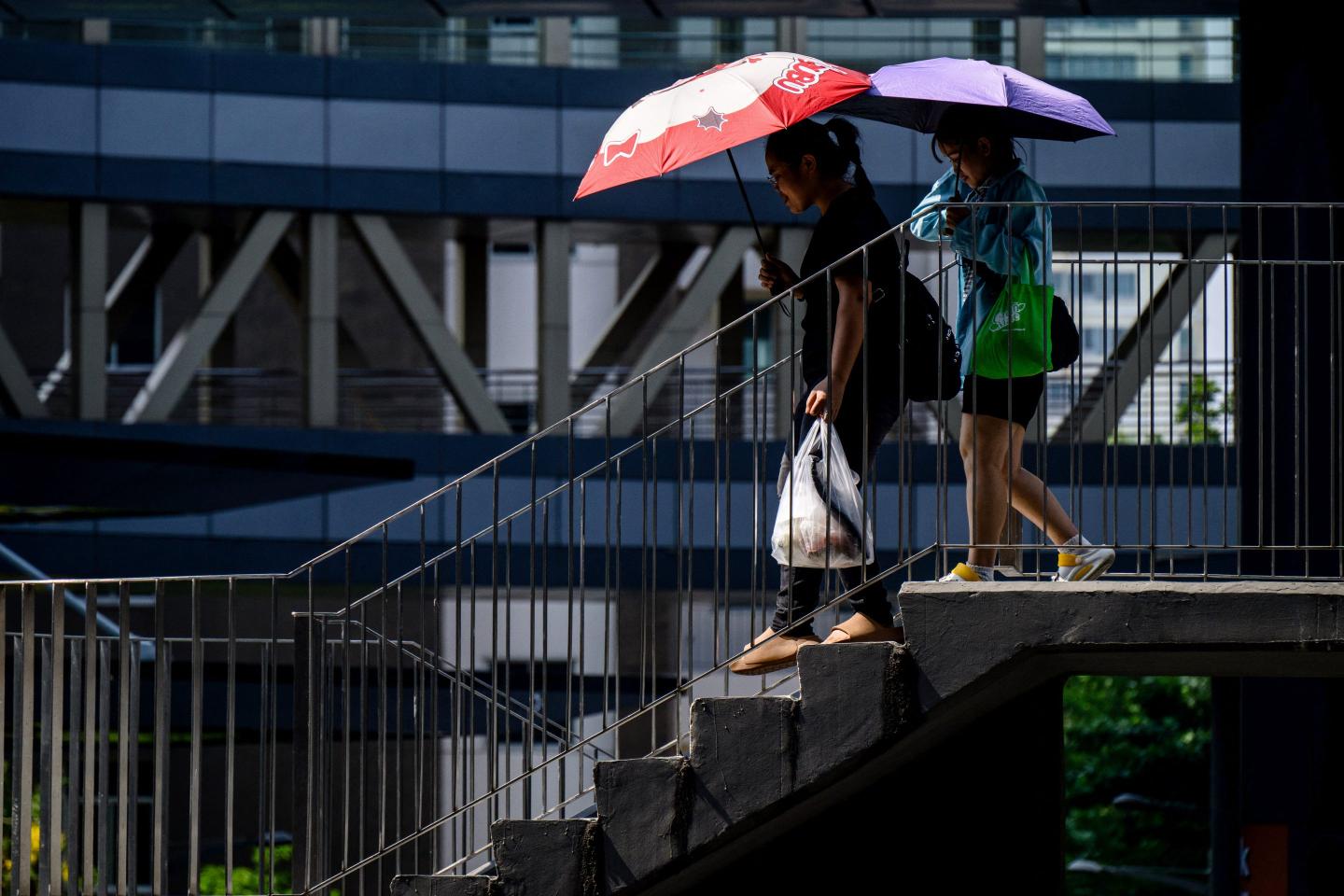
Women use umbrellas to shield themselves from the sun as they walk down a footbridge in Bangkok on April 29, 2026.
Women use umbrellas to shield themselves from the sun as they walk down a footbridge in Bangkok on April 29, 2026.Anthony Wallace—AFP via Getty Images
Add Fortune on Google for similar content.

Bangkok’s heat index reached a scorching 51.9 degrees Celsius in late June, capping a stretch of danger-zone readings that began in April. For residents, it was just another sweltering day. But for policymakers and city leaders, including newly re-elected Bangkok governor Chadchart Sittipunt, it’s another wake-up call about the dangers of heat.

Higher temperatures reshape how a city functions: People can’t work as long outdoors, businesses spend more on cooling, and tourists stay away during its hottest months.

Bangkok and other rapidly warming cities across Southeast Asia are already preparing for a hotter future. But it’s set to get much hotter: Bangkok’s average daily maximum temperature is projected to climb to 38.1 degrees Celsius by 2050, up from 33.3 degrees Celsius back in 2000. It would be the steepest rise forecast for any major Southeast Asian capital. The ASEAN Centre for Energy expects the number of “extreme heat days”–those with temperatures above 35 degrees Celsius, to nearly triple to 120 a year by mid-century.

According to the World Bank, a one degree Celsius rise in Bangkok’s average temperature could lead to more than 2,300 additional heat-related deaths each year, more than 44 billion Thai baht ($1.3 billion) in lost wages from reduced labor productivity, and roughly 17 billion baht ($509 million) in additional electricity costs.

Tourism, manufacturing, agriculture, and construction—the sectors that underpin much of Thailand’s economy—are particularly vulnerable. Outdoor workers lose productive hours, businesses face rising cooling costs, and heat increasingly threatens the city’s competitiveness as a place to live, work and visit.

The economic hit from high temperatures will no doubt be front and center amid the heated conversations—and the robust air conditioning—at the 2026 meetings of the International Monetary Fund and World Bank Group in mid-October, which are returning to Thailand for the first time since 1991.

To its credit, Bangkok hasn’t stood still. Under its Urban Heat Management Framework, the Bangkok Metropolitan Administration has established more than 300 cooling centers, rolled out hydration stations and heat-health advisories, and identified 379 heat-risk zones to guide emergency responses.

But today’s emergency measures may not be enough to keep pace with tomorrow’s climate. Cooling centers can offer relief during a heat wave, but they aren’t a systemic, long-term solution. They do little to reduce temperatures the following week, or the following year.

As instances of extreme heat become more frequent, resilience will depend less on the speed of a city’s response, and more on the quality of its planning, well before temperatures reach dangerous levels. That means shifting from responding to heat, to designing for it.

The first priority is to better direct long-term investments to where they’re needed most. The World Bank notes that Bangkok’s expanded cooling initiatives aren’t helping its hottest neighborhoods as detailed microclimate data is not fully integrated into planning.

Singapore’s Digital Urban Climate Twin offers one possible approach. It lets planners test measures like tree planting and ventilation corridors before committing public resources to a project.

The tool has already quantified what was once just common sense: The cooling effect of a single park can extend to a 300-meter radius, important in a city where the urban heat island effect can hike temperatures by up to seven degrees. (Still, researchers caution that planting too many trees will yield diminishing, or even counterproductive, returns.)

Bangkok doesn’t need to replicate Singapore’s model wholesale, but it can adopt the same principle of using evidence to direct investments to where they will do the most good.

Another priority is financing. Building a more heat-resilient city requires more than what municipal budgets can provide. Cities need a stronger pipeline of investable resilience projects, backed by reliable data and clear policy signals, to unlock both public and private capital.

The gap is not small: a 2025 Climate Policy Initiative analysis found Southeast Asia needs an estimated $20 billion a year in adaptation investment but receives only about $2.5 billion — an 88 percent shortfall, among the widest of any subregion in Asia.

Governor Chadchart, newly re-elected with a strong mandate, has the opportunity to make heat adaptation one of his signature second-term priorities. Bangkok has shown that it can respond quickly when temperatures spike dangerously high.

The bigger test is whether it invests now, deliberately, in a city built for the heat it already knows is coming.

The opinions expressed in Fortune.com commentary pieces are solely the views of their authors and do not necessarily reflect the opinions and beliefs of Fortune.

About the Authors
By Curtis S. Chin
See full bioRight Arrow Button Icon
By Ella Tan
See full bioRight Arrow Button Icon
Add Fortune on Google for similar content.

Latest in Commentary

Finance
Lorem ipsum dolor sit amet, consectetur adipiscing elit, sed do eiusmod tempor incididunt ut labore et dolore magna aliqua. Ut enim ad minim veniam
By Fortune Editors
October 20, 2025
Finance
Lorem ipsum dolor sit amet, consectetur adipiscing elit, sed do eiusmod tempor incididunt ut labore et dolore magna aliqua. Ut enim ad minim veniam
By Fortune Editors
October 20, 2025
Finance
Lorem ipsum dolor sit amet, consectetur adipiscing elit, sed do eiusmod tempor incididunt ut labore et dolore magna aliqua. Ut enim ad minim veniam
By Fortune Editors
October 20, 2025
Finance
Lorem ipsum dolor sit amet, consectetur adipiscing elit, sed do eiusmod tempor incididunt ut labore et dolore magna aliqua. Ut enim ad minim veniam
By Fortune Editors
October 20, 2025
Finance
Lorem ipsum dolor sit amet, consectetur adipiscing elit, sed do eiusmod tempor incididunt ut labore et dolore magna aliqua. Ut enim ad minim veniam
By Fortune Editors
October 20, 2025
Finance
Lorem ipsum dolor sit amet, consectetur adipiscing elit, sed do eiusmod tempor incididunt ut labore et dolore magna aliqua. Ut enim ad minim veniam
By Fortune Editors
October 20, 2025

Most Popular

Finance
Lorem ipsum dolor sit amet, consectetur adipiscing elit, sed do eiusmod tempor incididunt ut labore et dolore magna aliqua. Ut enim ad minim veniam
By Fortune Editors
October 20, 2025
Finance
Lorem ipsum dolor sit amet, consectetur adipiscing elit, sed do eiusmod tempor incididunt ut labore et dolore magna aliqua. Ut enim ad minim veniam
By Fortune Editors
October 20, 2025
Finance
Lorem ipsum dolor sit amet, consectetur adipiscing elit, sed do eiusmod tempor incididunt ut labore et dolore magna aliqua. Ut enim ad minim veniam
By Fortune Editors
October 20, 2025
Finance
Lorem ipsum dolor sit amet, consectetur adipiscing elit, sed do eiusmod tempor incididunt ut labore et dolore magna aliqua. Ut enim ad minim veniam
By Fortune Editors
October 20, 2025
Finance
Lorem ipsum dolor sit amet, consectetur adipiscing elit, sed do eiusmod tempor incididunt ut labore et dolore magna aliqua. Ut enim ad minim veniam
By Fortune Editors
October 20, 2025
Finance
Lorem ipsum dolor sit amet, consectetur adipiscing elit, sed do eiusmod tempor incididunt ut labore et dolore magna aliqua. Ut enim ad minim veniam
By Fortune Editors
October 20, 2025
Fortune Secondary Logo
Rankings
  • 100 Best Companies
  • Fortune 500
  • Global 500
  • Fortune 500 Europe
  • Most Powerful Women
  • World's Most Admired Companies
  • See All Rankings
  • Lists Calendar
Sections
  • Finance
  • Fortune Crypto
  • Features
  • Leadership
  • Health
  • Commentary
  • Success
  • Retail
  • Mpw
  • Tech
  • Lifestyle
  • CEO Initiative
  • Asia
  • Politics
  • Conferences
  • Europe
  • Newsletters
  • Personal Finance
  • Environment
  • Magazine
  • Education
Customer Support
  • Frequently Asked Questions
  • Customer Service Portal
  • Privacy Policy
  • Terms Of Use
  • Single Issues For Purchase
  • International Print
Commercial Services
  • Advertising
  • Fortune Brand Studio
  • Fortune Analytics
  • Fortune Conferences
  • Business Development
  • Group Subscriptions
About Us
  • About Us
  • Press Center
  • Work At Fortune
  • Terms And Conditions
  • Site Map
  • About Us
  • Press Center
  • Work At Fortune
  • Terms And Conditions
  • Site Map
  • Facebook icon
  • Twitter icon
  • LinkedIn icon
  • Instagram icon
  • TikTok icon
  • YouTube icon

Latest in Commentary

Can Bangkok future-proof itself against the heat?
CommentaryThailand
Can Bangkok future-proof itself against the heat?
By Curtis S. Chin and Ella TanJuly 23, 2026
2 hours ago
mm
CommentaryLeadership
Michael Muthukrishna: The ‘lone genius’ myth is wrong and it’s holding back your business
By Michael MuthukrishnaJuly 23, 2026
11 hours ago
Paul Keary (L) and Mike Sutcliff (R).
CommentaryAI agents
Teneo & Thoughtworks CEOs: the AI race will be won with governance, not speed 
By Paul Keary and Mike SutcliffJuly 23, 2026
11 hours ago
marks
CommentaryNational Security
General James ‘Spider’ Marks: there’s a strategic risk hidden inside closed AI systems
By James MarksJuly 23, 2026
11 hours ago
glp
Commentaryobesity
The GLP-1 paradox: too expensive to cover, too effective to cut
By Bryan Sivak and Elina OnitskanskyJuly 23, 2026
11 hours ago
data
CommentaryData centers
The hidden cost of AI: Why your town is negotiating with Amazon and Microsoft
By Melody BirminghamJuly 23, 2026
12 hours ago

Most Popular

The millennial generation has split, new Fed research shows: Those over 35 are edging toward boomer-style wealth, while everyone else falls behind
Real Estate
The millennial generation has split, new Fed research shows: Those over 35 are edging toward boomer-style wealth, while everyone else falls behind
By Nick LichtenbergJuly 22, 2026
1 day ago
Scott Bessent casually says the U.S. has more than $1 trillion in gold—and that it doesn’t matter for the dollar
Economy
Scott Bessent casually says the U.S. has more than $1 trillion in gold—and that it doesn’t matter for the dollar
By Sasha RogelbergJuly 22, 2026
1 day ago
Mark Cuban says he has the solution to growing income inequality, and it's to reward every employee—from CEO to janitor—with company stock
Success
Mark Cuban says he has the solution to growing income inequality, and it's to reward every employee—from CEO to janitor—with company stock
By Sasha RogelbergJuly 20, 2026
3 days ago
'The man who dies rich dies disgraced': The last time America had such wealth inequality, Andrew Carnegie knew he had to give it all away
Success
'The man who dies rich dies disgraced': The last time America had such wealth inequality, Andrew Carnegie knew he had to give it all away
By Nick LichtenbergJuly 22, 2026
1 day ago
Spain lifted the World Cup, but the IRS still gets a cut of its $50 million pay day as players, coaches and refs all face complex U.S. “jock taxes”
Personal Finance
Spain lifted the World Cup, but the IRS still gets a cut of its $50 million pay day as players, coaches and refs all face complex U.S. “jock taxes”
By Joshua HongJuly 23, 2026
16 hours ago
Mathematicians grapple with a ‘very rapid and very unsettling change’ as AI cracks yet another century-old problem
AI
Mathematicians grapple with a ‘very rapid and very unsettling change’ as AI cracks yet another century-old problem
By Eva RoytburgJuly 21, 2026
2 days ago

© 2026 Fortune Media IP Limited. All Rights Reserved. Use of this site constitutes acceptance of our Terms of Use and Privacy Policy | CA Notice at Collection and Privacy Notice | Do Not Sell/Share My Personal Information
FORTUNE is a trademark of Fortune Media IP Limited, registered in the U.S. and other countries. FORTUNE may receive compensation for some links to products and services on this website. Offers may be subject to change without notice.