• Home
  • Latest
  • Fortune 500
  • Finance
  • Tech
  • Leadership
  • Lifestyle
  • Rankings
  • Multimedia

Trendingnow

1

Mark Cuban says he has the solution to growing income inequality, and it's to reward every employee—from CEO to janitor—with company stock

2

‘I want to die broke’: Billionaire philanthropist Denny Sanford dies after giving away $4 billion

3

'Dr. Doom' Nouriel Roubini says we're headed for universal basic income or 'some form of socialism' as AI revolutionizes work—He calls that optimistic

1

Mark Cuban says he has the solution to growing income inequality, and it's to reward every employee—from CEO to janitor—with company stock

2

‘I want to die broke’: Billionaire philanthropist Denny Sanford dies after giving away $4 billion

3

'Dr. Doom' Nouriel Roubini says we're headed for universal basic income or 'some form of socialism' as AI revolutionizes work—He calls that optimistic
AIScience

Mathematicians grapple with a ‘very rapid and very unsettling change’ as AI cracks yet another century-old problem

By
Eva Roytburg
Eva Roytburg
Fellow, News
Down Arrow Button Icon
By
Eva Roytburg
Eva Roytburg
Fellow, News
Down Arrow Button Icon
July 21, 2026, 12:15 PM ET
math
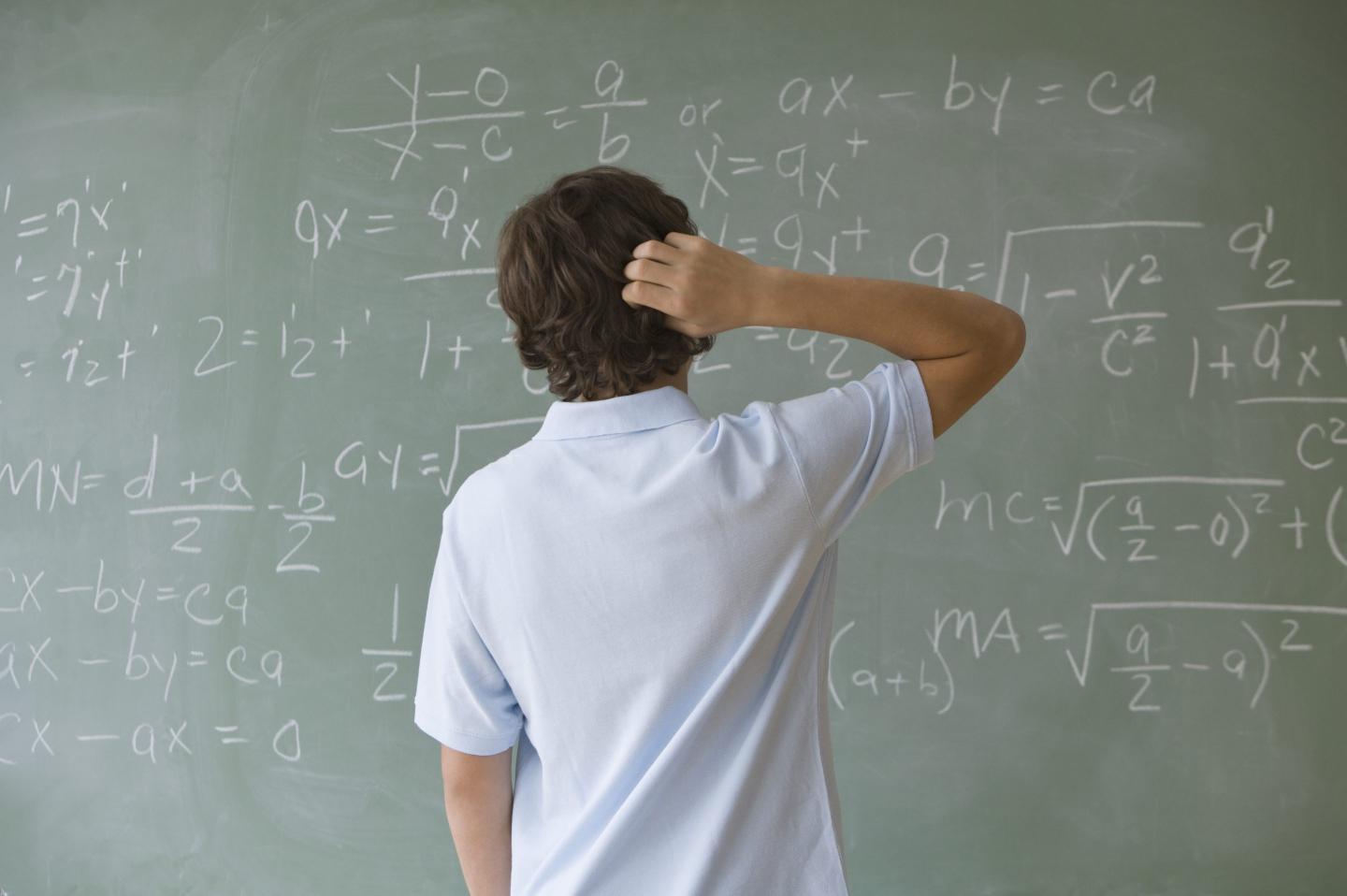
If you can't understand how the AI solved this, then how much is it worth?Getty Images
Add Fortune on Google for similar content.

On Sunday afternoon, while the rest of the world’s eyes were glued to the World Cup final, an AI model resolved a problem that had tortured mathematicians since 1939. 

Recommended Video

By the time Kevin Buzzard woke up in London the next morning, the result had been verified. By lunch, it was all his peers at the Imperial College London’s pure mathematics department could talk about; at the time of writing, Anthropic employee Levant Alpöge’s post announcing the result has drawn more than 20 million views on X.

“It is a big day,” Buzzard told Fortune. “I think it’s a great time to be alive, personally.”

It was the latest in a series of AI-driven mathematical breakthroughs. AI’s progress (or assault) on unsolved mathematics has compounded rapidly since mid-2025, when models first solved five of six problems at the International Mathematical Olympiad. From there, the list of fallen problems grew fast: OpenAI’s model disproved an 80-year-old Erdős conjecture on combinatorial geometry in May, and in June, 16 researchers from 15 universities published the Leiden Declaration on Artificial Intelligence and Mathematics, urging the profession to set guardrails around transparency, attribution, and peer review before AI reshapes what mathematical knowledge even means.

Mathematicians, relegated to the role of shepherd, are left to watch AI close these questions one-by-one, reaching places where the human mind can’t follow. Their reaction is a now familiar mixture of dread and amazement. 

An 87-year-old problem

The problem is called the Jacobian conjecture and since 1939, it has rested on the work of German mathematician Ott-Heinrich Keller. Fundamentally, the problem is about what mathematicians call “maps,” and the conditions under which, given a set of outputs, you can determine the input. This being math, it was based on yet another German’s work a century earlier: Carl Gustav Jacob Jacobi’s Jacobian determinant. The main issue for modern practitioners is that they were unable to prove Keller’s conjecture true, or find a reason that it was false—until now. 

On Sunday. Alpöge’s result met the Jacobian determinant at every point in space—the determinant holds steady at −2 everywhere—yet sends three different starting points to the same destination. Meaning, it didn’t pass the test. 

It’s a “very exciting” result, Buzzard said, one that demonstrates the potential of language models to eventually reach the “supermathematician” Google Deep Learning scientist Christian Szegedy warned about half a decade ago. 

But it also leaves mathematicians wanting. The trouble with getting current AI models to solve pure math is that you get the “how” without the “why,” explained Akhil Mathew, the University of Chicago mathematician who Alpöge credits with suggesting the problem to him. “One can check out that it’s correct,” Mathew told Fortune, “but it would be nice to be able to tell a story.” 

Alpöge didn’t respond to Fortune’s request for comment.

Why we even have pure mathematics

Mathematicians have faced down automation before. Most people with high-school level math see the job as calculation, which computers conquered decades ago.   “Then you go to college, and if you do some advanced math classes, you learn that actually math is all about reasoning,” Buzzard said.

A calculator multiplies four-digit numbers faster than any human. What a mathematician adds is the reason: told that 131 times 137 is four million, Buzzard doesn’t need to reach for a calculator—he knows two odd numbers can’t make an even one. To understand something, he said, is to “make it fit in your brain,” so well that you could regenerate the result yourself from the idea. 

The demonstration of your knowledge,in formal mathematics, is a “proof,” a chain of logical steps, each following from the last, that ends at the claim you’re making. Proofs are both how mathematicians build and how they’re measured. A great proof can run hundreds of pages and take months of explaining to experts to trust.

So far, AI doesn’t yet have the capabilities to create such a proof, Buzzard said. Creating a delicate 150-page proof requires hundreds of steps, and language models have a habit of bridging gaps with plausible-sounding filler. because unlike a human colleague, the model risks no reputation by being wrong.

If and when that bottleneck cracks, it’ll be Buzzard’s own doing, though. His career project is Lean, a popular computer language in which proofs are checked by machine rather than by exhausted PhDs. He said the proof was already checked in Lean by the time he woke up. The moment proof-writing models meet his proof-checking machine, one of human’s last advantages in mathematics disappears.  

The question of “taste”

Mathew was more tempered in his excitement, calling this moment “a very rapid and very unsettling change… especially for junior mathematicians.”

Michael Harris, a professor of mathematics at Columbia, wrote in a June essay in Boston Review that the AI industry treats reasoning, or understanding, as commercially worthless, and human mathematicians as a “beta version of intelligence.”  Yet mathematics, he argued, is one of the last examples of unalienated labor, a field that people enter, in the words of Abel Prize winner Pierre Deligne, because one can earn a living “by playing” — what Mathew calls “telling a story.” Even when Deep Blue “solved” chess by beating Garry Kasparov in 1997, people didn’t stop playing chess; they learned from it. 

But perhaps it sounds uninspiring for the public to subsidize mathematicians to play. Even before AI threatened their work, federal funding for mathematics research has fallen roughly 72% under the Trump administration’s cuts to the National Science Foundation. PhD admissions at top research universities are down 15% this fall, the second consecutive year of contraction; George Washington University’s math doctorate will admit no funded students at all.

Some think that the death of mathematical professionalization is good, that the machines democratize the whole enterprise, the “playing.” Garry Tan, president of Y Combinator, reacted to the news on X by hailing the return of the age of the “gentleman scientist”— rich savants à la Benjamin Franklin, funding their own curiosity. But Alpöge is no hobbyist; he is a Harvard valedictorian who has spent a decade using algorithms to calculate exactly this kind of problem. 

And that might be the trick to keeping humans in the mathematical loop, Buzzard said. Beyond calculating, beyond even logical reasoning, “understanding,” at the bottom, is knowing what to ask, what Silicon Valley has taken to calling “taste.”

“People have tried to get machines to ask questions, and they’re abysmal,” he said. “All the questions they ask are either boring or obviously true or obviously false.” The monuments of the field—the Riemann hypothesis or Keller’s Jacobian—are named for the people who posed them, not the people who settled them, Buzzard pointed out. “It’s not a coincidence. You have to be a brilliant mathematician to come up with the right question.”

Subscribe to Fortune Gulf Brief. Every Tuesday, this new newsletter delivers clear-eyed, authoritative intelligence on the deals, decisions, policies, and power shifts shaping one of the world’s most consequential regions, written for the people who need to act on it. Sign up here.
About the Author
By Eva RoytburgFellow, News
Instagram iconLinkedIn icon

Eva covers macroeconomics, market-moving news, and the forces shaping the global economy.

See full bioRight Arrow Button Icon
Add Fortune on Google for similar content.

Latest in AI

Finance
Lorem ipsum dolor sit amet, consectetur adipiscing elit, sed do eiusmod tempor incididunt ut labore et dolore magna aliqua. Ut enim ad minim veniam
By Fortune Editors
October 20, 2025
Finance
Lorem ipsum dolor sit amet, consectetur adipiscing elit, sed do eiusmod tempor incididunt ut labore et dolore magna aliqua. Ut enim ad minim veniam
By Fortune Editors
October 20, 2025
Finance
Lorem ipsum dolor sit amet, consectetur adipiscing elit, sed do eiusmod tempor incididunt ut labore et dolore magna aliqua. Ut enim ad minim veniam
By Fortune Editors
October 20, 2025
Finance
Lorem ipsum dolor sit amet, consectetur adipiscing elit, sed do eiusmod tempor incididunt ut labore et dolore magna aliqua. Ut enim ad minim veniam
By Fortune Editors
October 20, 2025
Finance
Lorem ipsum dolor sit amet, consectetur adipiscing elit, sed do eiusmod tempor incididunt ut labore et dolore magna aliqua. Ut enim ad minim veniam
By Fortune Editors
October 20, 2025
Finance
Lorem ipsum dolor sit amet, consectetur adipiscing elit, sed do eiusmod tempor incididunt ut labore et dolore magna aliqua. Ut enim ad minim veniam
By Fortune Editors
October 20, 2025

Most Popular

Finance
Lorem ipsum dolor sit amet, consectetur adipiscing elit, sed do eiusmod tempor incididunt ut labore et dolore magna aliqua. Ut enim ad minim veniam
By Fortune Editors
October 20, 2025
Finance
Lorem ipsum dolor sit amet, consectetur adipiscing elit, sed do eiusmod tempor incididunt ut labore et dolore magna aliqua. Ut enim ad minim veniam
By Fortune Editors
October 20, 2025
Finance
Lorem ipsum dolor sit amet, consectetur adipiscing elit, sed do eiusmod tempor incididunt ut labore et dolore magna aliqua. Ut enim ad minim veniam
By Fortune Editors
October 20, 2025
Finance
Lorem ipsum dolor sit amet, consectetur adipiscing elit, sed do eiusmod tempor incididunt ut labore et dolore magna aliqua. Ut enim ad minim veniam
By Fortune Editors
October 20, 2025
Finance
Lorem ipsum dolor sit amet, consectetur adipiscing elit, sed do eiusmod tempor incididunt ut labore et dolore magna aliqua. Ut enim ad minim veniam
By Fortune Editors
October 20, 2025
Finance
Lorem ipsum dolor sit amet, consectetur adipiscing elit, sed do eiusmod tempor incididunt ut labore et dolore magna aliqua. Ut enim ad minim veniam
By Fortune Editors
October 20, 2025
Fortune Secondary Logo
Rankings
  • 100 Best Companies
  • Fortune 500
  • Global 500
  • Fortune 500 Europe
  • Most Powerful Women
  • World's Most Admired Companies
  • See All Rankings
  • Lists Calendar
Sections
  • Finance
  • Fortune Crypto
  • Features
  • Leadership
  • Health
  • Commentary
  • Success
  • Retail
  • Mpw
  • Tech
  • Lifestyle
  • CEO Initiative
  • Asia
  • Politics
  • Conferences
  • Europe
  • Newsletters
  • Personal Finance
  • Environment
  • Magazine
  • Education
Customer Support
  • Frequently Asked Questions
  • Customer Service Portal
  • Privacy Policy
  • Terms Of Use
  • Single Issues For Purchase
  • International Print
Commercial Services
  • Advertising
  • Fortune Brand Studio
  • Fortune Analytics
  • Fortune Conferences
  • Business Development
  • Group Subscriptions
About Us
  • About Us
  • Press Center
  • Work At Fortune
  • Terms And Conditions
  • Site Map
  • About Us
  • Press Center
  • Work At Fortune
  • Terms And Conditions
  • Site Map
  • Facebook icon
  • Twitter icon
  • LinkedIn icon
  • Instagram icon
  • TikTok icon
  • YouTube icon

Latest in AI

Google DeepMind CEO Demis Hassabis
AIEye on AI
A FINRA for AI? The idea from Google DeepMind CEO Demis Hassabis is gaining momentum. But is it any good?
By Jeremy KahnJuly 21, 2026
2 hours ago
Two students stand next to each other and look at the papers they are holding.
AIEducation
Study finds AI boosted homework scores 18%—then tanked exam results 20%
By Sasha RogelbergJuly 21, 2026
3 hours ago
math
AIScience
Mathematicians grapple with a ‘very rapid and very unsettling change’ as AI cracks yet another century-old problem
By Eva RoytburgJuly 21, 2026
3 hours ago
fl
North AmericaElections
Trump-backed hopeful to succeed DeSantis unveils plan to protect local water, electricity from data centers
By Matt Brown and The Associated PressJuly 21, 2026
8 hours ago
Bolt CEO Ryan Breslow
CommentaryHuman resources
The CEO who fired HR was right. About the wrong thing.
By KeyAnna SchmiedlJuly 21, 2026
8 hours ago
Jersey Mike's Subs restaurant.
C-SuiteCFO Daily
Jersey Mike’s tests how far investors will stretch on restaurant IPO valuations
By Sheryl EstradaJuly 21, 2026
8 hours ago

Most Popular

Mark Cuban says he has the solution to growing income inequality, and it's to reward every employee—from CEO to janitor—with company stock
Success
Mark Cuban says he has the solution to growing income inequality, and it's to reward every employee—from CEO to janitor—with company stock
By Sasha RogelbergJuly 20, 2026
1 day ago
‘I want to die broke’: Billionaire philanthropist Denny Sanford dies after giving away $4 billion
Success
‘I want to die broke’: Billionaire philanthropist Denny Sanford dies after giving away $4 billion
By Sydney LakeJuly 20, 2026
1 day ago
'Dr. Doom' Nouriel Roubini says we're headed for universal basic income or 'some form of socialism' as AI revolutionizes work—He calls that optimistic
AI
'Dr. Doom' Nouriel Roubini says we're headed for universal basic income or 'some form of socialism' as AI revolutionizes work—He calls that optimistic
By Jason MaJuly 18, 2026
3 days ago
The Treasury is walking a tightrope on U.S. debt by relying so much on short-term rates that are at the mercy of a suddenly very hawkish Fed
Economy
The Treasury is walking a tightrope on U.S. debt by relying so much on short-term rates that are at the mercy of a suddenly very hawkish Fed
By Jason MaJuly 20, 2026
1 day ago
Current price of silver as of Monday, July 20, 2026
Personal Finance
Current price of silver as of Monday, July 20, 2026
By Joseph HostetlerJuly 20, 2026
1 day ago
Current price of oil as of July 20, 2026
Personal Finance
Current price of oil as of July 20, 2026
By Joseph HostetlerJuly 20, 2026
1 day ago

© 2026 Fortune Media IP Limited. All Rights Reserved. Use of this site constitutes acceptance of our Terms of Use and Privacy Policy | CA Notice at Collection and Privacy Notice | Do Not Sell/Share My Personal Information
FORTUNE is a trademark of Fortune Media IP Limited, registered in the U.S. and other countries. FORTUNE may receive compensation for some links to products and services on this website. Offers may be subject to change without notice.