
Good morning. How much would you pay for a robot companion?
The Chinese robot maker UBTech on Wednesday unveiled what it calls an “ultra-bionic” full-sized humanoid family called Uworld U1. According to its maker, the bot features “biomimetic skin” and “emotion-driven” AI; it can also do “up to 90% of fundamental human movements.” (There’s a joke in there somewhere, I’m sure of it.)
The U1’s starting price? About $17,600.
Why spend the equivalent of a pre-owned Kia on a robot? Hospitality, tourism, and other commercial settings, sure, but companionship and elder care, too. Like many nations, China is facing a generational challenge in the form of 118 million empty-nest senior citizens who might not mind someone’s company—even if that someone periodically receives over-the-air updates.
We’re off tomorrow to observe Independence Day in the U.S., and perhaps catch a few World Cup matches. (Take me home, country roads…) Have a wonderful long weekend. —Andrew Nusca
Want to send thoughts or suggestions to Fortune Tech? Drop a line here.
Meta prepares to join the cloud infrastructure fray
I heard this cloud computing stuff’s gonna be big. Huge!
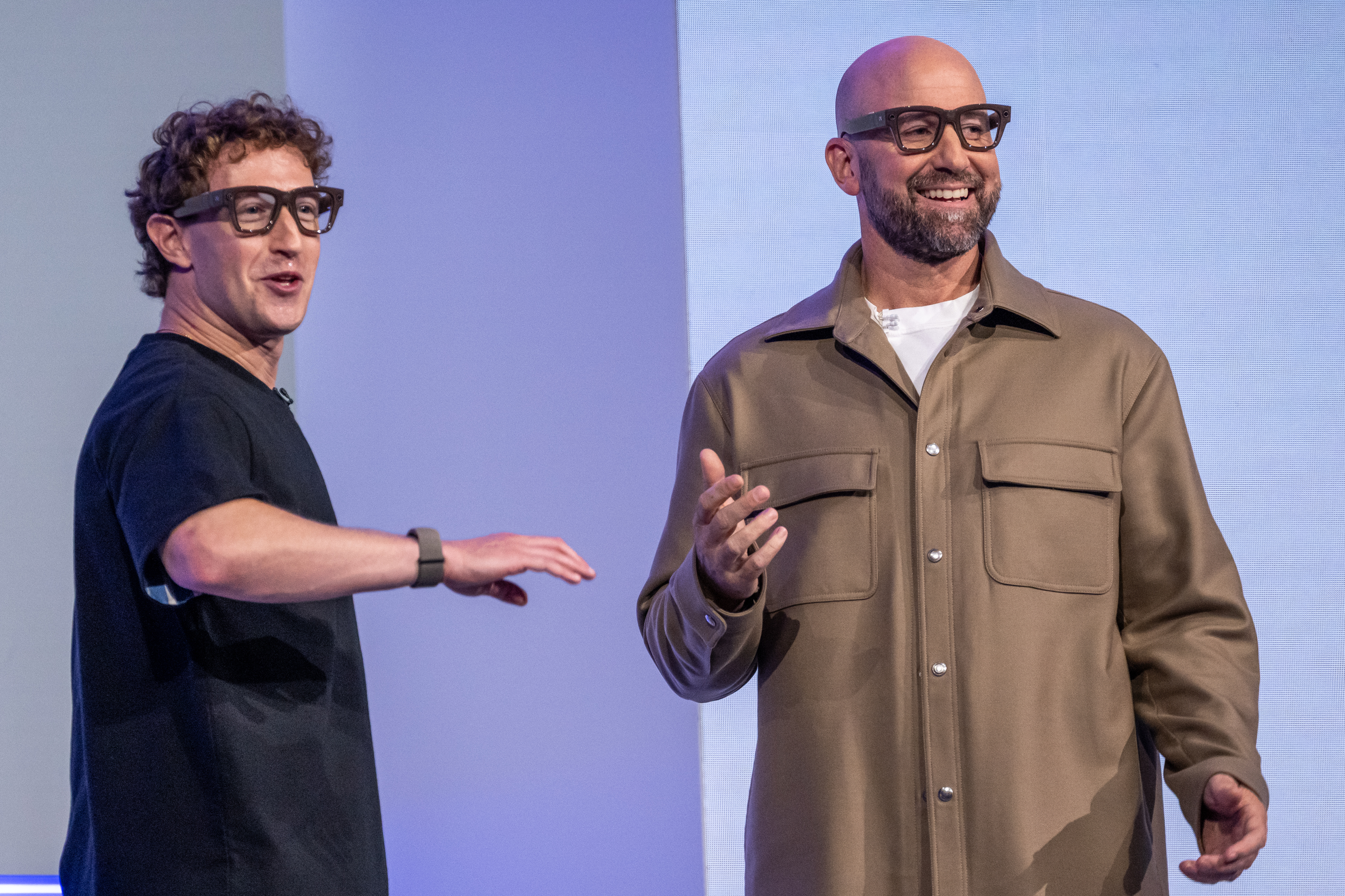
Mark Zuckerberg’s Meta is reportedly planning to build its own cloud infrastructure business, selling access to AI compute and pitting the card-carrying Magnificent 7 member against three others: Amazon, Microsoft, and Google.
Meta shares jumped more than 10% on the news.
According to a new Bloomberg report, Meta’s plans—which remain in flux—involve letting developers pay to access and run AI models, including Meta’s new Muse Spark, hosted on its infrastructure.
The Facebook parent is also considering selling raw computing capacity à la neocloud companies like CoreWeave, according to the report.
It’s not hard to see how Meta arrived at this idea. Like every publicly traded tech firm, it’s under investor pressure to show returns on eye-watering AI spending (Meta predicts 2026 capital expenditures of up to $145 billion), and layoffs (about 10,000 so far this year) will only get it so far.
Add in the supply-constrained AI market, and it suddenly makes sense why Meta would want to enter a business that has entrenched, deep-pocketed competitors. (And I mean entrenched: In March, market leader Amazon celebrated 20 years of AWS, and a 2026 revenue run-rate of $150 billion. Cough.)
Formidable, yes. But success in this area would give Meta a robust revenue stream that isn’t attached to its bread-and-butter advertising business, which drives all but 2% of the company’s total revenue. There’s precedent here from Google: Today, 1 in 4 dollars that the company collects is not attached to advertising, thanks to its 18-year-old cloud business. —AN
SpaceX shows off an xAI-powered mobile device
Ah, smartphones. Where the mighty go to be humbled. Microsoft tried it. Amazon tried it. Meta tried it.
And now SpaceX apparently wants to try it.
Elon Musk’s omnibus tech enterprise has reportedly developed a prototype handset intended to facilitate use of the company’s AI services.
SpaceX “showed the prototype, which features a sleek design that is slimmer than an iPhone, to some investors and other stakeholders ahead of the company’s mega initial public offering,” according to the Wall Street Journal. “The prototype was designed to run on a proprietary operating system and integrate AI technology from SpaceX’s xAI.”
It’s not clear if the device, which runs on Qualcomm silicon, will ever see the light of day, and Musk has previously expressed his distaste for building a phone.
“The idea of making a phone makes me want to die,” he told voters in Philadelphia in the run up to the 2024 U.S. presidential election. “But if we have to make a phone, we will. But we will aspire not to make a phone.”
Still, as Musk tightens the ties between his various business interests—the social media platform X, SpaceX’s Starlink satellite network, and Tesla vehicle services all tap into SpaceX-owned xAI compute infrastructure—it’s not hard to see the holes.
Much like rival OpenAI, which is also working on mobile hardware, Musk’s empire needs more endpoints to disseminate his AI. A super phone for Musk’s super corporation? We’ll soon find out. —AN
Sony PlayStation games will only be available digitally in 2028
Like Thanos, it was inevitable.
Sony Interactive Entertainment, the largest video game company in the world by direct revenue, will reportedly cease production of physical discs for its formidable library of games for the PlayStation console.
The adventure ends in January 2028, the company says, limiting PS titles purely to the digital realm.
“This is a natural direction for Sony Interactive Entertainment to adapt to consumer trends as the general preference for digital media significantly outpaces physical discs,” the company wrote in a blog post. “This transition will enable us to align more closely with how most of our community prefers to access and play games today.”
As Game File notes, almost four in five games for PS4 and PS5 were purchased digitally.
Sony didn’t mention how it will handle games for other platforms—though we can imagine how this tale ends: Microsoft is reportedly testing a way to digitize physical Xbox games, and Rockstar says it will release Grand Theft Auto VI in November sans physical media.
What won’t change is Sony selling PlayStation games at retail. Expect to see physical representation of some kind at Best Buy, Walmart, Target, and Game Stop, even if there’s no copy of a game within.
At any rate, the new policy informs what gamers might expect from the forthcoming PlayStation 6 —not just that it will lack a disc drive, but also that the console won’t likely arrive until 2028, clearing the decks for a thoroughly digital experience. —AN
More tech
—Swedish court orders Google to pay $1.5 billion to Klarna for antitrust violations.
—Vint Cerf will retire. The Internet pioneer, 83, has been a Google VP since 2005.
—After backlash, Anthropic rolls back a Claude Code feature that identifies users based in or affiliated with China.
—Meta rolls out smart glasses subscriptions. $20 per month for full access to AI features.
—Palantir CEO Alex Karp: Ceding control of the U.S. military’s battlefield to Silicon Valley is “effing insane.”
—MGX raises a $49 billion AI fund. The Abu Dhabi state-owned investment firm plans to spend $10 billion per year.
—Meta appoints Alex Schultz as its first-ever chief data officer and names Denise Moreno as CMO.
—Bending Spoons closes up 40% in U.S. market debut. The Italian firm, now valued at almost $26 billion, owns Vimeo and AOL.