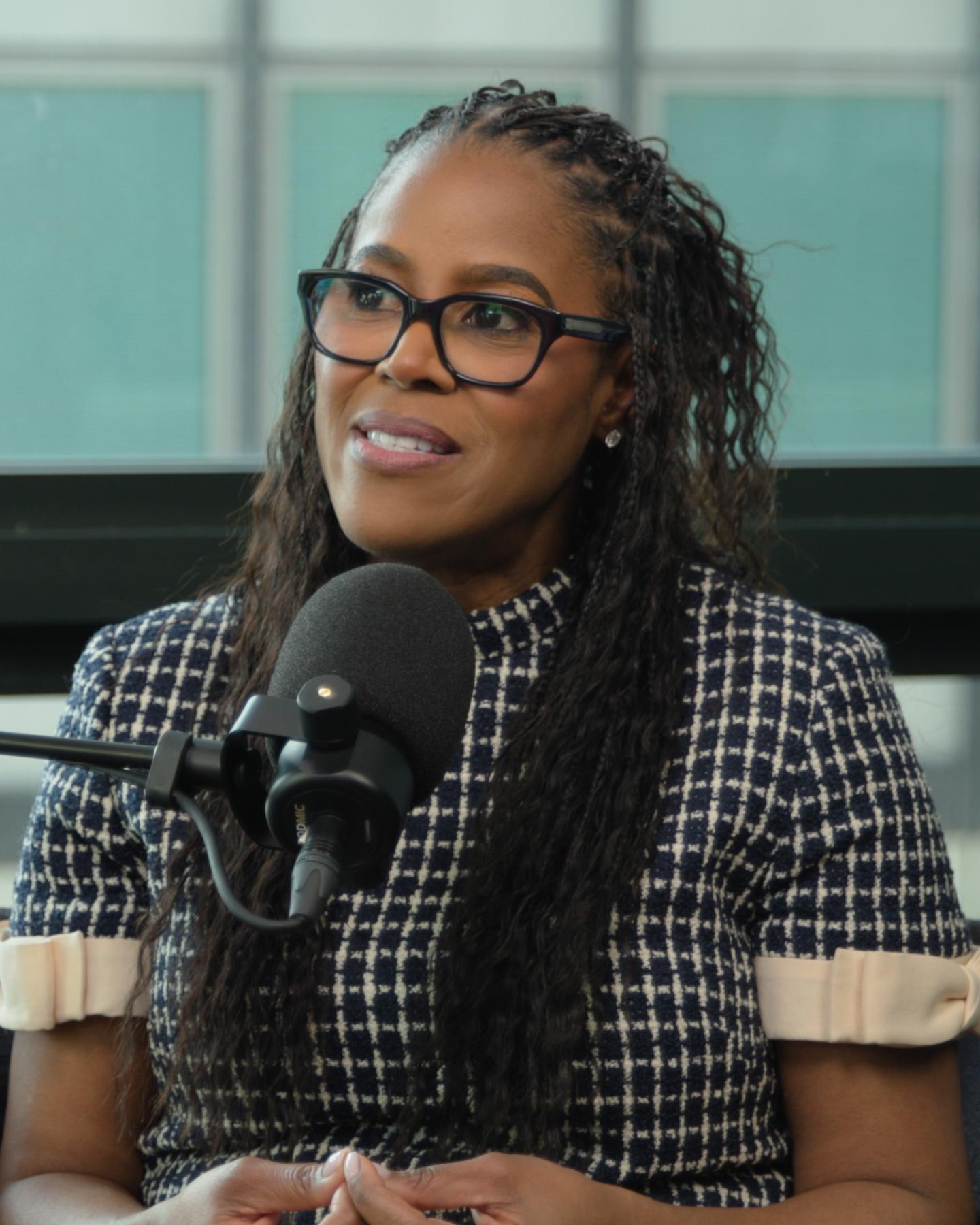

Retirement in the United States used to feel more achievable. Today, the road to living comfortably once you stop working is much more complicated, and many of us are wondering if we will ever be able to retire at all. Thasunda Brown Duckett, the president and CEO of TIAA, wants to make retirement a given again.
After rising through JPMorgan Chase, she got tapped in 2021 to lead a Fortune 100 company, TIAA. Today, she’s leading the company through a period of massive change, expanding beyond TIAA’s traditional markets and advocating for something she calls “lifetime income” that she hopes can redefine retirement for the next generation, while also increasing TIAA’s bottom line.
In a new episode of Fortune 500: Titans and Disruptors of Industry, Fortune’s Editor-in-Chief Alyson Shontell sat down with Brown Duckett to discuss why so many Americans are in danger of running out of cash, the non-scary ways she’s using AI to fight fraud, and the leadership philosophies that have guided her rise from a Fannie Mae intern in Texas to one of the most powerful executives in the world.
Here’s some of what they discussed during their interview:
On the state of U.S. retirement
- Why Brown Duckett believes the U.S. faces a “real crisis” in retirement, with a $4 trillion savings gap, 40% of Americans at risk of running out of money, and the decline of traditional pensions
On lifetime income and TIAA’s model
- How Brown Duckett explains “lifetime income,” an approach to retirement that turns a portion of workers’ contributions into a guaranteed paycheck they can’t outlive
- How a “loyalty bonus” differentiates the company’s retirement offering
On her father’s retirement wake-up call
- How reviewing her blue-collar father’s pension statement after college showed Brown Duckett he had missed out on 30-plus years of 401(k) compounding because he never contributed
- Why that experience became her personal mission to make sure “the answers to the test” reach workers furthest from the information
On AI, culture, and fraud prevention
- How TIAA is rolling out internal generative AI tools through “MYGAIT” so every employee can experiment, lowering anxiety and building confidence with the technology.
- The story of how TIAA’s AI flagged a suspicious $3 million transaction, enabling employees to intervene and prevent a retirement scam
- Why Brown Duckett rejects the idea of a future where no one works, arguing that work provides dignity and purpose even as AI reshapes roles and skills
On her unconventional path to the C-suite
- How a single advocate at Fannie Mae turned one internship opening into two, creating the Inroads opportunity that launched Brown Duckett’s career in corporate America
- Why she ultimately left Fannie Mae for JPMorgan Chase, and later jumped from running Chase’s consumer bank to TIAA
On “renting” your title and owning your character
- Why Brown Duckett says “you rent your title, but you own your character,” and how that mantra helps her decouple self-worth from any job
On living like a diversified portfolio
- How Brown Duckett applies an investing lens to life, arguing you only ever have 100% to allocate across work, family, and self, and that allocation shifts with “life volatility”
- Why she tells young people to “max out” on retirement early, build rainy-day funds, and view their own lives and careers with the same intentionality they’d bring to managing a portfolio
Read the transcript, which has been lightly edited for length and clarity, below.
Thasunda Brown Duckett, we are so thrilled to have you here today. You were just recently recognized again on our Most Powerful Women in Business list. It’s a global list, and you came in at No. 7. TIAA just rose four rankings on this year’s Fortune 500 to No. 94. You all are doing about $50.6 billion in annual revenue, so nothing too small there. A huge amount of accomplishments to you for five years at the helm of the company.
Thank you.
And thrilled to have you here today.
Thank you. It’s such a pleasure. Thank you for having me.
So, the first thing I want to talk about is retirement. It feels unachievable for many. It feels like the goal post has changed from generation to generation, and I’m wondering, from your vantage point of running TIAA, what is the state of U.S. retirement today? What’s the age? The amount? Is it achievable?
I think to understand where we are today, it’s good to go back. And you think about what was happening, let’s say in the ‘70s. And in the ‘70s. people had pensions. Close to two-thirds of Americans had a pension, so when we in the US were experiencing some of the highest inflation, people could still retire and know what their paycheck would look like.
When 401(k) plans were introduced, they were never designed to be everything, but over time what has happened is that the risk has shifted to the individual to decide and to create and to ensure they have a secure retirement. And the reality is, over 40% of Americans run the risk of running out of money, and so there’s a real crisis.
There’s a $4 trillion savings gap in this country, and when you think about what problems we have to solve—one, there’s an access gap. 59 million Americans do not have access to a retirement workplace plan, which is so important, because most of us get introduced to a secure retirement through work.
We also know that there’s a savings gap, as I mentioned. People are not saving enough, and so many times we’ll ask them, do you have a retirement plan? Yes, I contribute to my 401(k) plan or my 403(b) plan, but is it enough? And many times they’re not contributing enough, and then lastly, there’s a guarantee gap. No one knows how long they’re going to live. I’m going to live well past 100, but people don’t know how long they’re going to live. But they should still have confidence to know that they won’t run out of money. So we like to say income has to be the outcome.
The good news, and there is good news with this crisis, is that it is something that has garnered bipartisan support. So both Republicans and Democrats understand that secure retirement is important for everyone. And so there’s been some good policy that has passed, like the Secure Act 1.0, 2.0, which is basically allowing safe harbor where you can provide lifetime income in your design workplace plan, being able to auto-enroll people, auto-escalate.
But there’s more that can be done. For example, we should auto enroll everyone.
In 401(k)?
401(k) or 403(b) plan. So, when you start your job, everyone should be auto-enrolled. It should not be something you have to figure out.
Well, because a lot of people don’t even know how to enroll in the first place.
Exactly. And then, secondly, I would say it just starts with a 6% default rate, and then you can increase it at least 1% every year. You could take it down if you need to, and then next year take it back up. That’s auto-escalation.
And so, I think if you auto-enroll everyone, if you start with a 6% default, and if you auto escalate 1% every year to the max, then you can ensure the power of compounding, you can ensure that people have the best advantage of tax policy, and you can ensure that people can be on a better road to save, and what really matters to me is that people shouldn’t have to figure it all out.
Brown Duckett on the current state of the retirement market—and where TIAA fits within it
So talk to me a little bit about some of the things that you mentioned there, like pensions going away. For my parents’ generation, that was the thing. I’ve got my pension, I’m secure. Even social security felt more stable than it does today. You’ve been talking a lot about lifetime income, and I’m curious how that’s different. What is it, and how does that work?
When we talk about lifetime income, that’s really a nod to what we’ve done for over 100+ years, which is to ensure that people have an annuity. An annuity gives you guaranteed income, an income stream…
…so someone gives you a lump sum…
…or through accumulation. So, if you think about your retirement plan, you would have exposure today to equities and bonds, and then you can also have an insurance contract.
What that means is that when you are contributing every week or every two weeks, a portion of your money is going towards your insurance part, your lifetime income, so during the accumulation phase you are putting money in, just like you’re contributing to equities and bonds, and then when you are ready to retire, you have the opportunity to convert some or all of it into guaranteed income.
And for TIAA, what’s so great and special about us is that every year we return our earnings back to our participants, and so you’re getting all of our earnings every year. So when you are ready to retire, not only do you get what you put in, you get the performance through our investment strategy, but you also get all of our earnings, so you get what we call a loyalty bonus.
And so the bottom line is you’re getting exposure to equities, which you need in a retirement plan and bonds, but you also need insurance, and so that could come through accumulation, and then when you’re in DQ, which is taking your money out, that’s your paycheck. Income should be the outcome, that is the goal.
And there’s different ways you can design different insurance product solutions, but the most important thing is that when you are ready to retire, to be able to convert some of that to a paycheck, to me, is very important. Money that you cannot outlive and the ability to take care of your basic needs, and I would argue if you have that paycheck, then you may be able to take some of the equity investment and invest even longer, or take a little bit more risk, because you have the basics and get even more alpha.
But income has to be the outcome when we’re talking about retirement. It’s not just about how much you make, it’s not about this lump sum. It’s about will I have enough to take care of my basic needs, and will I have enough where I will not be a burden to my loved ones, and I won’t run out of money.
And is there a magic number that is the right amount? So you could say, I’m 65, I’ve got x amount, I’m golden. I think back to your Otis Brown story, your dad, where you had to sit down and say, Dad, I don’t think you have enough here, which must have…
I want to dig into that moment in your life, because I’m sure it shaped you, but people probably have that moment themselves quite often still.
I mean, there’s not one number, because your individual life and the way you live life is different from the way that I live life. I think what’s most important is that, when you are planning for retirement, to be able to talk to someone, to be able to understand what—what does my bill situation look like? What do I have to factor in, in terms of medical, which is a real expense in retirement? What are my debt obligations?
When you’re planning for retirement, you can address some of those issues, so that when you are retired, you have less debt, you have a little bit more certainty on the bills you need to pay, but there isn’t a magic number.
It’s more about what you need to live off of at this next stage of your life, and how do you convert this lump sum of money that you’ve been accumulating into a paycheck that can take care of your basic needs, take care of some of your rent, take care of your utilities, so that you can feel confident that your everyday needs can be taken care of. And that the excess money that you may have can be what you invest in longer, or some of the other goals and objectives that you may have in life, but there is no magic number.
So I want to go to the story about your dad, because it’s really powerful. Could you just walk me through a little bit about what happened there as you were sitting down with your dad to figure out, could he retire, could he not? And when was that moment, and how did it kind of shape you to have the role you have today?
My mom and dad are everything to me. Otis and Rosie Brown, they’re my hero and shero, but if you could imagine having a father who’s from Louisiana, very prideful, worked extraordinarily hard to provide for us. And many times the idea, the vision, and the love just was not enough.
So we definitely had financial insecurity growing up, but I remember when I graduated from college, I came home, and I don’t even know how we got into the conversation of looking at his statement, but he showed me his statement. And when I saw his statement—pension and what that would get converted into when you were looking to retire. And so I’m looking at it, and I’m like, you know, Dad, this is not enough money for retirement.
My dad was a blue collar worker. He worked in the warehouse, drove trucks, so his wages were not a lot. And to know that Otis Brown, who worked extraordinarily hard to provide for us, had access to a very rich 401(k) plan, and he never contributed $1. That’s 30+ years of compounding that never got compounded, and at the time I just graduated, I was making $26,000 a year, but my dad immediately maxed out.
I don’t know how they paid their bills, because he took the maximum contribution, and he did it because he said, You’re the smart one. If you said this is what I need to do, I need to do it. And to know that it just required someone not being comfortable with beautiful flyers being enough, not being comfortable with just probably celebrating your great benefits, but taking the time to reach someone like Otis Brown to help him understand that those benefits were for him too, that’s all it took.
And fast forward, he got to see the benefit of it, but he also felt bad that he could have changed the course of his life if he would have been able to know that that benefit was for him too, and so that deeply impacted me. And so what that has really inspired me to do is to always make sure our benefits—are the answers to the test reaching the people furthest from me? Are the things that are good for me? Am I ensuring that someone knows it’s good for them too?
And to not decide that because this person may be the one driving trucks or scanning boxes or working in the warehouse, that they would not want to do this because they’re trying to make ends meet. Do not make that decision for someone because they want the best future for their family too, and that to me is that fire that I have whenever I start talking about money and finance, is I think about Otis Brown, and I think about a father who had big dreams and big ambitions, but did not have all the best information, and did not understand, and he just needed someone to step in and show him.
And I think you make such a great point that you’re not only offering these products to external, but you’re offering them to internal, and making sure that your team can fully take advantage. And as a leader, it’s your job to make sure they’re the best taken care of, so you take care of your employees, they take care of the customers.
Brown Duckett on a new Vanguard partnership—and her playbook when she joined TIAA
You recently launched a product partnership with Vanguard, and your products are getting out to more people. This lifetime income is now being more widely distributed to millions and millions of people via this partnership. I was wondering if you could tell me a little bit more about that, like how did you partner with Vanguard? How did this come to be, and what’s the significance of that?
For the majority of TIAA’s history, we served higher-ed, health care, 403(b)market, K through 12, government. And just last year, two years ago, we decided that the value that we have been providing to educators for decades and people that work in higher education is something that everyone needs.
And so to be able to partner with such a phenomenal company like Vanguard—they’re the largest target date provider—is really a nod to recognizing that people should have the ability within their target date fund, within their allocation, to have access to guaranteed income, and Vanguard agreed with that as well.
They had done research and understand that, in addition to equities and bonds, having insurance in your workplace design plan is a way that can lead to better outcomes, and I think it’s also a nod for us in understanding the power of partnership, and that’s something that we have done on our own in the 403(b) market.
To be able to partner with Vanguard to solve a problem that many, many Americans face, to me is a real step forward, and one that really requires the entire industry to participate. And so we’re excited about this partnership, but we’re also excited about what it means to the entire industry.
And being able to have income as the outcome as part of one’s allocation should not just be confined to the 403(b) market, so we’re really excited about it, traveling to a much bigger marketplace, from a $3 trillion market, which is what we serve today, to now $12 trillion market, which opens it up to the 401(k) market, which is now what we’ve recently announced.
So, I mean, that’s a huge expansion, and you’ve been in the role for five years now. I’m curious, was that in your head on day one when you stepped into the big TIAA CEO job? What was the playbook you had in your head like? Did you have, like, three things I’m going to accomplish, and here’s the time frame I’m going to do it? What was that playbook?
Well, just to take you back to 2021 we were in COVID, and so to have spent 17 years at JPMorgan Chase, and then to join TIAA, still in the middle of COVID, from the outside in, I was mostly focused day one with really engaging with my team one Zoom call at a time.
I did not meet my board in person for over a year. I met the chair once, but we were navigating a pandemic, and so that required me to really engage, to really listen and engage more with my board to understand their perspective and feedback.
I spent day one doing skip levels, meeting my team on Zoom. understanding what problems they see we can solve, as well as what makes this place so special. And so, mission one was to navigate a pandemic. Mission two was to do a lot of listening, a lot of probing, a lot of asking questions, skip levels to really understand the opportunity for the go forward, but also embrace what makes TIAA incredibly special.
And so when it came to the strategy, we really simplified our strategy, and what I feel incredibly proud about is that what we set forth to do five years ago is exactly what we are doing today. It was to lead in lifetime income. That is a nod that our history still matters, and how do you modernize it in order to solve today’s problems? That’s when it opens up the ability to stay not just in the market we serve today, but to continue to serve that market extraordinarily well, but also expand it to a $12 trillion market, and ultimately a $43 trillion market when you look at it globally.
Secondly, it was to delight the client experience. To recognize that in order to ensure that people have the best version of your solutions, you have to delight them in how you service them, you have to delight them in the relationship, you have to invest in your technology to make it easier for them to do business with you, and so we went down that journey as well.
And then lastly to strengthen how we operate, and that really is a nod to technology. That really is a nod to looking at your processes. And in a world where we now have AI, and a world where you think about partnerships, being able to understand that what we have is not good enough to meet the needs of today as well as tomorrow and so how do we aggressively go on that journey.
And so five years later, we’ve grown our AUM, AUA over $400 billion. We’ve added over a million more people that have access to lifetime income, and the most important thing is that we return all of our earnings back to our participants.
We’ve gone from $12 billion which is amazing, to north of $15 billion last year, and so this growth journey that we’re on is all centered around being much more efficient, making sure that we can grow and ultimately serve so many more participants, and helping them have a secure retirement, and being able to give them confidence, because TIAA is right there with them. So it’s been a great journey.
How TIAA is approaching AI—and whether it threatens the retirement market
As you look at your org, the jobs you’re looking for that will still exist in a few years, the ones that won’t. How are you navigating this AI future as a leader?
For us, it first starts with your strategy, not the tool. And so we are very clear on what our strategy is. Who are we? That’s the first thing.
And then it’s about looking at how AI enables or accelerates our agenda—whether it’s efficiency, growth, or delighting our own employee experience, as well as the clients that we serve. And so, for us, what we’ve done is a couple things: one, we’ve looked at every area of our business, so not just tech. We’ve looked at marketing, HR, legal, to really ask ourselves, how could AI help? We also understood that you can’t just talk about AI by itself.
For us, it’s about the culture and it’s about the people with AI. And so, what does that mean? Well, we have our strategy, we’ve looked into it. How are we going to get everyone to embrace it?
And so what we have done at TIAA is we’ve launched what we call MYGAIT, and we wanted to just make sure everyone has it. If we could have every employee just play with it, that could lower anxiety and increase confidence. So every one of our employees have access to AI, and they’re able to just play with…
…it’s called MYGAIT?
MYGAIT, yes. Creating culture where there’s resiliency, agility, creativity, and just excitement to try the most powerful tools that we’ve ever encountered. Yes, I think it’s so important as a leader, and everyone’s gonna be fearful, you and me included. Like, wait a minute, this thing is happening fast, but I think to lead from a point of curiosity is really great, a point of curiosity and understanding the value.
We have a participant that was 76 years old, and he got scammed, and so when you think about scams, you have the romance scam with people that are older, you have the tech support scam, you have government scam.
One of our participants had over $3 million which was all of his retirement, and he was being scammed. But our AI tool flagged it. Our portfolio manager noticed an out-of-pattern with those flags, and referred it over to our fraud team. Our fraud team reached out to this participant, spent hours talking to him, because the first thing is you don’t want to believe you’ve been scammed,
Right?
And so you’ve almost been trained to defend the scam, and so our fraud specialist was able to get ahold of his daughter, and ultimately not have the money move.
Wow.
That was $3 million. Someone’s entire retirement.
And your employee stopped that?
Our AI tool flagged it. A portfolio manager saw the flag, reached out to our fraud specialist, and our fraud specialist spent hours talking to this person, and our participants said to us, you saved my bacon, but this is an example. That’s a lot of bacon, but the point in this example, this was the intersection of your workplace, which is your people, your culture, and AI, and that to me is the opportunity. AI by itself would not have necessarily protected this person,
And look, a good AI use case that’s not scary.
A great AI use case that’s not scary. And I think that’s the point. The human is not just in the loop, it’s still all about the humans, right? It’s not just the loop, it’s the whole highway, you know?
It’s everything. The people are still everything, and it’s how you think about designing the use case. How you think about the problem to solve, how you think about embracing the tool and the flags, and not ignoring it, how you think about going the extra mile and leading with empathy, not just the facts. But to understand this person does not fully appreciate that they are being scammed, and there’s a real emotion with that, and ultimately saving that person from not moving their money.
That to me is just the epitome of our culture, and the epitome of how I think we have to think about the intersection of AI culture in your workforce,
Not to take it to the negative place on AI, but given how connected retirement and jobs are, I’m sure you seep yourself in the data and numbers and predictions about how this could play out, how it could impact jobs. And now, of course, Anthropic is going public. Open AI is expected to do similar, and the leaders’ tunes are changing a little bit. They’re getting more positive. It’s not all doom and bloom about jobs.
But from your vantage point, how much are you thinking about, well, what if those bad predictions about mass job loss are real? And how can you plan for that as a CEO of a company that helps so many retire?
In order to have a secure retirement, you have to have a job. So the labor market matters, but for us, you look at different scenarios.
The most important thing is that people will work. I don’t believe we will have a scenario where none of us are working and we’re just enjoying life. I don’t even think we would enjoy life if we’re not working. Working comes with dignity, working comes with perfection, purpose, all the things, but the question for us would be more of, regardless of how work evolves, how do you ensure people can have access to a secure retirement plan? And so portability matters.
People are moving jobs—how do you make sure their retirement can move with them? How do you design different product solutions to meet the needs of everyday Americans, in terms of how work will be formed over time? But I don’t subscribe to a scenario where there will be no work.
I do think you want to run sensitivity analysis in terms of what happens if the labor market goes X to Y, but I think the most important thing is, regardless of how the workforce evolves and changes, will people have the ability to contribute to their retirement plan? To me, that is the most important thing, but I think just like every period of time where innovation has come, it took jobs away, but it created a lot more jobs, and I think that will be the same thing.
I think the hard part is the rate of change is so fast, and how do we make sure that you can shift people into new skills, new opportunities, to see new roles differently, to think about their career in a different kind of path than what you thought of?
I’m excited about what it can bring, ultimately, but I also think the cautiousness for us, especially in the example that I gave you, is that cyber is a big risk. We will need more people in cyber, we will need more people monitoring, we will need more people analyzing what AI is telling you to inform in the way in which I gave you the story, and I also don’t subscribe to the entry-level jobs not being there.
I think our young people have always informed leaders on where the puck is going, and so I think it would be a bad play to not continue to make sure that this younger generation is excited about the workplace, can come into the job, start and build a career. We learn from them, they are using the most recent tools more than we are inside our own companies.
And so I don’t subscribe to AI eliminating young students coming out of college and getting that entry-level job. I think we have to operate with intentionality to embrace the fact that these young people are coming out with a different set of imagination, they’re coming out with a lot more comfortability on these tools, but they’re also giving us the flags, giving us the flags of what AI can mean—the isolation, the mental health.
So they’re giving us real information that can also help us improve our culture, can help us solve tomorrow’s problems. So, I think we have to create internships. I think we have to make sure you have these entry-level positions, but the entry-level position may be more escalated or elevated than our entry level position, and that should be okay too.
Brown Duckett’s career progression—and why she says she “rents” her title
So, I want to talk about your personal story a little bit. I know you joined Fannie Mae through an Inroads internship program, and you rose through the ranks there to be spotted by JPMorgan, where you were there for 17 years. So talk about your path, because I know I’ve heard you say, if I planned my future, I could never have planned this. This is an incredible path.
I am so grateful that the power of information and the power of advocacy changed everything. So Inroads was founded by Frank C. Carr during the 70s. He was inspired by hearing Dr. King speak. He was a white male, and clearly it was during a time where there was a lot of injustice, and Frank C. Carr decided to do something different, and he decided to create inroads to give under-resourced Americans access to corporate America, and so I’m incredibly grateful to Frank C. Carr.
I never even heard the word corporate America until Inroads, but then how I got the internship is the power of advocacy, when I didn’t even know what that meant. So the way it worked is that companies would say, I want one intern or 50 or five.
Fannie Mae was looking for one intern. We happened to be on the campus of SMU, a lot of college students were being interviewed, and a woman by the name of Valerie Manning was the HR recruiter, and she interviewed me and a bunch of other talented people. She goes back to Fannie Mae and says, “I found our one intern, her name is Sarah.” My name’s not Sarah, but Valerie Manning, for whatever reason, said but there’s this other girl, and by Valerie Manning choosing to advocate Fannie Mae added a second intern.
You do not get extra credit for adding an extra intern, you don’t get an extra bonus, but for whatever reason Valerie Manning said those words, and so that is how I got to Fannie Mae. And so I am incredibly grateful for the power of information. And it didn’t matter her position or title, she just decided to advocate for me.
And so I started my career at Fannie Mae. I loved it. I drank the Kool-Aid. The mission is our business. The business is our mission. I could definitely relate to home ownership, because we did not own a home, so it was aspirational for me growing up, but I wanted to get closer to the consumer.
And so no matter how much I loved Fannie Mae—Fannie Mae was in the secondary market, and so I was on Fannie Mae business at a Chase event. The CEO of the mortgage company at the time asked me a question, I answered it, and then he asked about me, and you know, people shared my reputation there, and he wanted to interview me. That’s how I got to Chase. The brand of people, learning more about who you are, but also me recognizing that there was something that this company could not give me, no matter how much I loved it.
And I think that created space for me to see something different, because I truly enjoyed my time at Fannie Mae, and then I joined JPMorgan Chase, and had a fantastic 17 year career there with some of the most iconic people, like Jamie Dimon and Gordon Smith. People who I admire and learn from every day, but when an opportunity came along to lead a Fortune 100 company, a company that is so mission driven, which is something that deeply resonates with me. That’s just an opportunity I could not turn down.
So, what is it like behind the scenes of being recruited to run a Fortune 100 company?
Well, this was also in the middle of COVID, and I was running the consumer bank, so mission one was navigating all of our branches and ATMs, and working.
You’re the CEO of consumer banking, I mean, not a small job, not a small organization. Very big, actually, maybe even more people than might be in all of TIAA.
Yes, I had way more people. So that was mission one, but then we were navigating just a lot going on in our country, and I’m raising young kids, and my son had questions, and so you’re navigating, trying to explain really hard things to your children, which was very hard during that time, but timing sometimes is not perfect.
And so behind the scenes it was more of, you get the call from a recruiter, you do not not take the call, right? It’s a phenomenal opportunity, and you start asking a ton of questions, and then you get to the point where you’re like, this is something that I can’t pass up, and even though I loved my tenure at JPMorgan Chase. It was phenomenal for me. This was an opportunity to make a different impact. It was an opportunity to learn something different.
It was an opportunity to run the entire company, and I was following the footsteps of someone like Roger Ferguson, who is phenomenal, and making history at the same time, and ultimately I believe taking the baton during this season to modernize the company and to continue to build on such a rich history to make sure that we can make retirement more secure for even more Americans, so not easy, not an easy decision, but the right decision for me.
Amazing.
Incredibly grateful for it.
So, one of the things you say too is that you, you rent your title.
Yes.
But you own your character. You do have an impressive title, of course. But what is it about your character that you want to preserve? When you say that, what do you mean, and what do you want others to take away from it?
I think it’s so important for all of us to know you rent your title, regardless of the title.
Yes, I am a CEO of this Fortune 100 company. Mission-backed. I am jealous of me, you know, in terms of what I get to do every day, but I know that it is rented. There will come a time where I will no longer be the CEO of TIAA, but I am always going to be Thasunda Brown Duckett.
And what that means for me, and what I want it to mean to everyone, is what do you own? I own my character, I own my intellectual curiosity, I own my grit, I own my perseverance, I own my compassion. And the reason why that’s so important is because sometimes your role will change because a company had to downsize, or because maybe the role that you’re in was no longer playing to your strengths.
That is not who you are, so I needed to always be able to separate the rented title for the human that I am, and that is something that no one can take from me. I just think that’s something that is so important for all of us, because so many times you can become defined by your rented title, and then when you no longer have that job, or maybe you’re no longer the right person for the job, you lose yourself. You forgot that you were intellectually curious. You forgot your grit, your tenacity.
I never want to forget it, and I don’t want anyone else to forget it, which is why I say it publicly. I rent my title, I own my character. When this job is done, I can leave my business card, but what’s coming with me is all of who I am, and no one can take that away from me. No one, and I think that’s what’s so important, and what I am always reminded of [that] every step of the way, every role that I’m in.
Titles are rented, your character is owned, that’s what I worry about honing [in on], that’s what I focus on. And I recognize that when you move from a different job, there’ll be some people that won’t move with you, because it stayed with your title, and that is okay.
There was a really interesting recent article that Jeff Immelt, the former CEO of GE, wrote that was very raw, and he was like, the phone stopped ringing people I thought were my friends were not my friends, and it was very much like him kind of going through the realization that his purpose was his job, and what is he next? So, I think it’s just good advice for everybody to realize, like, you are bigger than your job, and it persists no matter what the time, right?
And you are the CEO of your character, and that is for you to own. And I think that’s important, because I also am calibrated, and it’s okay that there are some relationships that ended with my prior roles, that is okay.
But if I always show up as to Thasunda Brown Duckett, there will also be relationships that have transcended all of my roles, and they become lifelong friends, lifelong people that I stay in contact with, because we connected with my character, and our relationship deepened, and it didn’t end with just the title, and I think that’s so important.
Why Brown Duckett says there is no such thing as perfect timing in your career
And one thing I wanted to ask you about, too, that you mentioned earlier was timing is not always convenient for these big jobs and these big opportunities. And you had a story that you were telling me off camera about when you were six months pregnant, and your dream came up to run a P&L.
Could you tell me a little bit about that, and about the messy parts of leadership?
I think every opportunity one would say was not the perfect timing. So, in the example that you referenced, my goal in life from a work perspective was to run a P&L.
I love that.
And I’m talking like a manager of 10 P&L, and I would be winning.
From never having heard of corporate America to give me that P&L.
Like, I’m winning. That is why, if someone would have said, Dream your biggest dream, I would have fallen short. I could not have dreamt this dream. I didn’t know these dreams existed, but I wanted to run a P&L.
Goals: I was six months pregnant with my second child. So I had Madison, she was a high-risk pregnancy, and so my second pregnancy I was really concerned about. And the opportunity comes along where my boss is like, Thasunda, you’ve earned this opportunity, we think you’d be great to run the P&L of the mortgage business for the Northeast, the largest P&L.
I always wanted this opportunity, I know I was performing, you know what my response was—you know I’m six months pregnant, right? You know this is not from eating bonbons. You know that I’m going to be gone. It’s a scheduled C. I’ll be gone for three months.
I mean, I just unloaded on him to give him every reason to take it back, every reason, and he was so amazing. He just said, you’re coming back, though, right? ‘Oh, yeah, I’ll be back. And, of course, I had everything planned and all the things, but it was just such an important lesson—that sometimes the dreams and the aspirations of what you want, what you deserve, what you know you are built to do, the timing can feel so off that you literally talk yourself out of it. Which is fear.
You know, I’m like, how am I going to figure this out? It was just the fear talking, the mental gymnastics in my head. The reality is it was going to be okay. It was going to be a scheduled C-section, and I would be back, and we would keep going, but it was such an important life lesson, and one that I share all the time, because so many times we will try to define the perfect moment, and there will never be that perfect moment.
We will always have a reason to tell ourselves not now, which is really fear. I remember when I was at Fannie Mae, and I relocated from Texas to LA, and I was literally telling myself that I shouldn’t do it, because I just knew my husband was in Texas. I was not dating anyone at the time, my husband was in Ohio. I was telling myself, like, well, all my friends are here, as if I could not make friends anywhere else. And so [in] these moments of change and shift, I always had this explanation of why not, which really was fear.
And I’m just so thankful that it never got the best of me, but I’m also appreciative of the people that I’ve surrounded myself with, including in this example, that just stayed focused on the main thing, which is, Thasunda, you’re a great performer, we think you can do this job incredibly well. I see that maybe you’re pregnant, or maybe it’s baby weight, or I’m not judging, or food, but I see there’s some gain, but you’re going to be okay. I think that’s the message I would tell everyone, is don’t ever count yourself out, and even if it’s not the ideal time, it may be the perfect time, because there was a lesson for me to learn, and I’m so grateful that these moments happened at times that on its surface you would say absolutely not, and it was exactly what I was supposed to do at that time.
Why Brown Duckett runs her life like a diversified portfolio
One other thing that you’ve said that I really want to learn more about, and how to do it myself, is living life like a diversified portfolio. Can you explain that? It’s not work-life balance, but what is it?
Well, the first principle to embrace is work-life balance is a lie. It never reconciles. Work and life does not reconcile, so get rid of that. No more work-life balance, it’s a lie. But it comes from a place—I remember when I was working at JPMorgan Chase, I lived far, and so I would literally drive to the bus stop in New Jersey, then take the commuter bus into Port Authority, which was like an hour and 20 minutes, and then would walk or cab it to the office, right? And I had young children…
…Jersey is far…
…it’s close but far, and I was out there, and I remember it was another late night, and I was at Port Authority in my business attire, and I was, I think, the last person that was going to take the last bus in business attire, because everyone was going to the casino, and I literally could see the janitor cleaning Port Authority, that’s when you know it’s late, and I broke down crying, and I called my husband, who is a stay-at-home father, a Marine, an engineer.
And I broke down, and I said, Richard, when I wake up in the morning, I don’t see my kids, when I get home, I don’t see my kids. Just crying. Now, my husband, who’s an only child from Ohio, engineer, Marine says to me, then quit. I’m like, that’s not the point, you know. I was totally looking for a pity party, but he was serious. He was like, if it’s not working for you, it’s not working for us.
But it was at that moment that something had to change, and it was my mindset. And so this work-life balance—I was catching an L. I was feeling like I was failing my husband, I was failing my children, I was failing my mom, my dad, my brothers, everyone. I was just not winning, and I needed a win.
And so this diversified portfolio shift, because I am in finance, changed everything. So, if you live your life like a diversified portfolio, you tell yourself the truth. You only have 100%. You do not have 110%.
The other truth is that you allocate to the things that define who you are. I’m a philanthropist, I’m a mother, a sister, an auntie, a wife, an executive. You have to allocate, and the reality is, my children don’t get 100%. They get 30%. First of all, you sleep. It’s math, you start doing the subtraction—and then you have to work, they go to school—30% is what I could do, and I had to divide that across three kids. But you tell yourself the truth. Why is that important?
Because if you were like me, there were moments where I would be at a kid’s game and I’m multitasking. Yeah, good run, yes! But I’m working. But by recognizing that they only have 30%, I’m a more present mother. By living my life like a diversified portfolio, just like market volatility, you will have life volatility. When my brother suddenly passed away, I had to reallocate my 100% allocation to be more of a daughter to my mom and dad, and to be a sister and an auntie. When my children are working to go to college, you have to reallocate your allocation to spend more present time with them as they are stressed out about going to college.
But just like market volatility, you reallocate your portfolio, you give yourself permission, you respond to market conditions, and you keep going.
So, here’s the point: if you live your life like a diversified portfolio, on any given day I don’t feel like I’m the best mom when I’m traveling for two weeks or I don’t feel like I’m the best daughter, but over time I’m a really good mom. Over time, I’m a really, really good sister, because everything that matters to me is in my portfolio. And I give myself a ton of grace.
So if you live your life like a diversified portfolio instead of trying to reconcile work and life, you will outperform this thing called life, because everything that matters to you is in your portfolio, and you give yourself a lot of grace to simply respond to the market or life conditions. That’s what living your life like a diversified portfolio is.
And not going over 100%, too I appreciate that.
There is no 110%. It’s 100%.
Yep, make it work.
And tell yourself nothing gets 100%.
By the way, if this was a stock, no financial advisor would say put everything in one stock, no matter how great it is. That’s a lot of risk, a lot of volatility. Every good advisor tells you to have diversification, because over time you’ll outperform, and that’s why I compare it to life. Over time, I will outperform in any given market.
You may have a little choppy water or some volatility. Give yourself some grace, recalibrate. You may have to short the stock. If it’s not working for you, let it go. But yeah, it works for me. It gives me a different perspective, and it makes me feel great about all of who I am, understanding that I can’t be everything at that particular time, but over time I’m doing just fine.
So, you have this life you couldn’t have planned, it came out better, and still lots to go. When we plan who our Most Powerful Women in business are going to be, we use a quantitative formula.
Part of it is also where you are in the trajectory of your career, and you seem like you’re just continuing to be on the up and up as you think about your kids who are going to be graduating college soon, or the next gen who is looking at all of these crazy forces happening around them that they’re going to be entering the working world in, that they’re going to be hoping to retire someday in.
What do you think is the most important thing for them to do as they are looking to have great success?
When it comes to having a secure retirement?
When it comes to having a secure retirement, and a life that they feel fulfilled by.
Yeah, well, I think to answer your second question, I try to live a life of joy, not happiness.
Happiness is a reaction. Kids are happy, I’m happy. Good day at work, happy. Joy comes from within. And so I think the most important thing for everyone is to always get to joy, and for me that’s really important. And joy is this inner thing going on inside of me, and being grateful for all of who I am, the good, bad, and the ugly, but just being grateful for this life and understanding that it’s precious. So, joy.
In terms of a secure retirement, especially for young people, retirement seems so far away, but there’s a hack. The hack is first job, first dollar. You know, I made $26,000 when I graduated from college. That was $26,000 more than I made ever, and so I immediately maxed out on my 401(k) plan.
Even with a $26,000 salary?
Yes, because before I got the check, whatever that check is, it’s way more money than I had the prior week. So the first thing I tell young people is, your very first job max out before you get the check, because if you do that—why? Power of compounding, $1 today is worth more than $1 tomorrow. Two, companies match it, so unless you’re like, no, don’t worry about that money you were going to give me in my package, you can have it, you want to make sure you take full advantage of that match, which is why you want to max out.
And then also, tax policy. Retirement tax policy is very favorable to making those dollars work harder for you longer. And so, for young people, max out while understanding that you have to save to invest. So many young people are talking about all kinds of different financial instruments, but I’m like, max out on your retirement, have your rainy day fund to make sure that you can afford the flat tire and all the basic things that life will give you.
Then you can start investing as well, and as you start to invest, you can start to do all the things that you’re curious about, but do the main things well first, that’s what this system is designed to do. Make sure it’s working for you.
So, from savings to investing, take full advantage of the retirement policy in your workplace plan. It gets you great muscle habits. I think it’s really, really important. And I’m optimistic.
I think the last thing—there’s so much going on in the world, and our country is celebrating 250 years, and I just want to remind this next generation, if you go back 250 years and you look at where we are today, there is no better day that I want to be in than today. The future is always brighter because we get to decide, and I just think we have to be reminded that there were times where there were exclusionary practices. There were times where we didn’t have access. We have dealt with great depressions, we have dealt with wars, we’ve dealt with so many horrible things, but yet we were resilient as a country.
And so I just want to offer a lot of inspiration and hope when there’s so much hard going on. Let’s sit and let’s design the future that we want to shape, and let’s recognize that we all have a role to play to do the work, and so that to me I think is important, and when you’re doing the work, you can have a lot more optimism. When you’re doing the work, you can preserve your joy, and when doing the work, you can have a lot more interactions, and be able to conquer and face all the things that are happening and do it together. I think that’s really important for everyone.
Thasunda, thank you so much for sharing about your life, your philosophy on work, and for the retirement advice that we all need. Thank you.
[This report has been updated to clarify that the internal generative AI tools are called “MYGAIT,” not “My Gate.”]