• Home
  • Latest
  • Fortune 500
  • Finance
  • Tech
  • Leadership
  • Lifestyle
  • Rankings
  • Multimedia

Trendingnow

1

He worked 100-hour weeks to save a nearly bankrupt boat company. At 83, he’s just turned down $400 million for it—and gave it all to charity instead

2

Costco's $14 million email settlement: Who qualifies for an up-to $500 payment and how to claim before the Aug. 24 deadline

3

Tim Cook signed off on his final Apple earnings call with a warning about a ‘hundred year flood’ in memory chip pricing

1

He worked 100-hour weeks to save a nearly bankrupt boat company. At 83, he’s just turned down $400 million for it—and gave it all to charity instead

2

Costco's $14 million email settlement: Who qualifies for an up-to $500 payment and how to claim before the Aug. 24 deadline

3

Tim Cook signed off on his final Apple earnings call with a warning about a ‘hundred year flood’ in memory chip pricing
Commentarycyber

Accenture cyber leads: why hiring more people won’t solve the cybersecurity talent gap

By
Harpreet Sidhu
Harpreet Sidhu
and
Vikram Desai
Vikram Desai
Down Arrow Button Icon
By
Harpreet Sidhu
Harpreet Sidhu
and
Vikram Desai
Vikram Desai
Down Arrow Button Icon
June 13, 2026, 5:45 AM ET
cyber
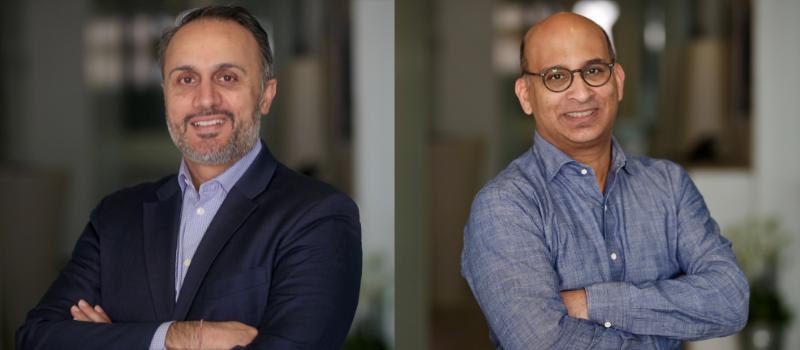
Harpreet Sidhu is the Global Cybersecurity Lead at Accenture and Vikram Desai is the Global Cyber Strategy, Risk, and Architecture Lead at Accenture.courtesy of Accenture
Add Fortune on Google for similar content.

There is an emerging numbers story about the growing cybersecurity talent gap that the industry can no longer ignore. 

Recommended Video

The demand for AI-related cybersecurity skills has more than doubled since 2020 and is now outpacing available supply globally. Average cybersecurity job tenure has fallen from 3.3 years to just 1.8. More than half of cybersecurity professionals report frequent work-related stress.

These are signals of a workforce under serious pressure and a talent model that no longer fits its purpose. To fix this model, organizations need to understand what’s going wrong, how it’s impacting their business, and why the solution to solving the cybersecurity talent gap isn’t just about headcount. It’s about capabilities.

Cybersecurity roles have fundamentally changed

Not long ago, cybersecurity teams operated separately from most company functions and focused mainly on implementing controls, monitoring threats and responding to incidents. So long as cyber staff were well-trained on networks, firewalls, and malware, strong technical specialization was sufficient. 

However, today, cybersecurity sits at the intersection of business strategy, digital platforms, regulation and customer trust. Cyber teams are no longer a nice-to-have. They are the first line of business resilience. That shift demands something the traditional talent model was never designed to produce.

Accenture’s latest report, “Reinventing the Cyber Workforce: Solving the Talent Imbalance,” looked at more than 550,000 cybersecurity job postings and professional profiles globally and found that 59% of open cybersecurity roles now require not just technical depth, but also business acumen, strategic leadership and soft skills. However, only 40% of today’s workforce fits that profile. 

We call these hybrid professionals “Conductors,” people who can translate risk into financial terms, lead cross-functional decisions and embed security into transformation initiatives. While the labor market is producing plenty of “Operators,” or technically-skilled professionals focused on executing controls and monitoring threats, it is not producing nearly enough Conductors.

A convergence of forces widening the talent gap

The supply and demand of necessary cyber skills is growing more complex. AI-related capabilities are now among the fastest-growing requirements in job postings, yet workforce capability is not keeping pace. 

Organizations are also underinvesting in the talent they already have. Fewer than three in ten organizations fund structured upskilling programs for their employees, and with the average cybersecurity professional’s tenure sitting at a low 1.8 years, companies are burning out and losing experienced people. Fifty-seven percent of organizations cite insufficient internal investment as a direct cause of their talent shortages, showing that many organizations are doing little to replace people they lose.

Additionally, external pressures keep intensifying the cybersecurity environment. Regulatory regimes in some nations now hold cybersecurity leaders personally accountable for governance failures, with penalties ranging from fines and sanctions to criminal liability. This is increasing demand for leaders fluent in law, risk and crisis management at exactly the moment the talent pool is at its thinnest.

Three Moves to Close it

First, build internal capability and a culture to sustain it. The hybrid professionals that organizations need are emerging too slowly from the labor market. Companies must develop them internally through cross-functional pipelines. Culture matters too. Cyber expertise cannot deepen when accountability is unclear, workloads are unmanaged and wellbeing is neglected.

Second, redesign roles and career paths. The traditional cybersecurity career ladder is too narrow for a field embedded across every major business function. Career paths must broaden to give cybersecurity professionals real business experience, whether it be cybersecurity professionals stepping into roles that build commercial fluency or business leaders with clear on-ramps into cybersecurity. Cybersecurity capabilities should be embedded wherever technology decisions are made, such as product development, change management and IT operations. At these intersections, talent gains context, experience and stronger reasons to stay.

Education systems must evolve too. Many university cybersecurity programs underemphasize cyber law, risk management, enterprise architecture and executive communication, producing graduates who can configure a firewall but cannot assess business risk or brief a board.

Third, augment human capabilities with AI, connected architecture and long-term partnerships — with humans always in the lead. AI can absorb the high-volume cybersecurity tasks that drive burnout, freeing people up to focus on judgment, architecture and strategic risk decisions. However, if automation takes on foundational work before practitioners can master it, these future leaders will lack a necessary experience base.  Additionally, architecture must be connected and long-term ecosystem partners need to be treated as strategic capability extensions, not interchangeable vendors that operate on short-term rotations, erasing institutional memory.

The question every boardroom should ask

Boardrooms and CEOs need to ask themselves an important question: Are you building the cybersecurity workforce your business depends on — or are you still hiring for yesterday’s threats?

Organizations that can answer this with confidence are already ahead. Those that can’t need to rethink their cyber talent strategy before the gap between their capabilities and the threats they face becomes a crisis. Getting this right does more than improve defenses. It accelerates recovery, strengthens regulatory confidence and builds deeper customer trust.

Cybersecurity done well isn’t a cost of doing business. It’s a competitive advantage, but only for leaders who build it deliberately before the next disruption forces their hand.

The opinions expressed in Fortune.com commentary pieces are solely the views of their authors and do not necessarily reflect the opinions and beliefs of Fortune.

About the Authors
By Harpreet Sidhu
See full bioRight Arrow Button Icon
By Vikram Desai
See full bioRight Arrow Button Icon
Add Fortune on Google for similar content.

Latest in Commentary

Finance
Lorem ipsum dolor sit amet, consectetur adipiscing elit, sed do eiusmod tempor incididunt ut labore et dolore magna aliqua. Ut enim ad minim veniam
By Fortune Editors
October 20, 2025
Finance
Lorem ipsum dolor sit amet, consectetur adipiscing elit, sed do eiusmod tempor incididunt ut labore et dolore magna aliqua. Ut enim ad minim veniam
By Fortune Editors
October 20, 2025
Finance
Lorem ipsum dolor sit amet, consectetur adipiscing elit, sed do eiusmod tempor incididunt ut labore et dolore magna aliqua. Ut enim ad minim veniam
By Fortune Editors
October 20, 2025
Finance
Lorem ipsum dolor sit amet, consectetur adipiscing elit, sed do eiusmod tempor incididunt ut labore et dolore magna aliqua. Ut enim ad minim veniam
By Fortune Editors
October 20, 2025
Finance
Lorem ipsum dolor sit amet, consectetur adipiscing elit, sed do eiusmod tempor incididunt ut labore et dolore magna aliqua. Ut enim ad minim veniam
By Fortune Editors
October 20, 2025
Finance
Lorem ipsum dolor sit amet, consectetur adipiscing elit, sed do eiusmod tempor incididunt ut labore et dolore magna aliqua. Ut enim ad minim veniam
By Fortune Editors
October 20, 2025

Most Popular

Finance
Lorem ipsum dolor sit amet, consectetur adipiscing elit, sed do eiusmod tempor incididunt ut labore et dolore magna aliqua. Ut enim ad minim veniam
By Fortune Editors
October 20, 2025
Finance
Lorem ipsum dolor sit amet, consectetur adipiscing elit, sed do eiusmod tempor incididunt ut labore et dolore magna aliqua. Ut enim ad minim veniam
By Fortune Editors
October 20, 2025
Finance
Lorem ipsum dolor sit amet, consectetur adipiscing elit, sed do eiusmod tempor incididunt ut labore et dolore magna aliqua. Ut enim ad minim veniam
By Fortune Editors
October 20, 2025
Finance
Lorem ipsum dolor sit amet, consectetur adipiscing elit, sed do eiusmod tempor incididunt ut labore et dolore magna aliqua. Ut enim ad minim veniam
By Fortune Editors
October 20, 2025
Finance
Lorem ipsum dolor sit amet, consectetur adipiscing elit, sed do eiusmod tempor incididunt ut labore et dolore magna aliqua. Ut enim ad minim veniam
By Fortune Editors
October 20, 2025
Finance
Lorem ipsum dolor sit amet, consectetur adipiscing elit, sed do eiusmod tempor incididunt ut labore et dolore magna aliqua. Ut enim ad minim veniam
By Fortune Editors
October 20, 2025
Fortune Secondary Logo
Rankings
  • 100 Best Companies
  • Fortune 500
  • Global 500
  • Fortune 500 Europe
  • Most Powerful Women
  • World's Most Admired Companies
  • See All Rankings
  • Lists Calendar
Sections
  • Finance
  • Fortune Crypto
  • Features
  • Leadership
  • Health
  • Commentary
  • Success
  • Retail
  • Mpw
  • Tech
  • Lifestyle
  • CEO Initiative
  • Asia
  • Politics
  • Conferences
  • Europe
  • Newsletters
  • Personal Finance
  • Environment
  • Magazine
  • Education
Customer Support
  • Frequently Asked Questions
  • Customer Service Portal
  • Privacy Policy
  • Terms Of Use
  • Single Issues For Purchase
  • International Print
Commercial Services
  • Advertising
  • Fortune Brand Studio
  • Fortune Analytics
  • Fortune Conferences
  • Business Development
  • Group Subscriptions
About Us
  • About Us
  • Press Center
  • Work At Fortune
  • Terms And Conditions
  • Site Map
  • About Us
  • Press Center
  • Work At Fortune
  • Terms And Conditions
  • Site Map
  • Facebook icon
  • Twitter icon
  • LinkedIn icon
  • Instagram icon
  • TikTok icon
  • YouTube icon

Harpreet Sidhu is the Global Cybersecurity Lead at Accenture. With nearly 26 years of experience in cybersecurity, Harpreet has advised some of Accenture’s largest clients on cybersecurity strategy, operations, and large-scale transformation programs, and has led recovery efforts for major cyber incidents across industries such as healthcare, energy, retail, insurance, and communications and media. He currently leads Accenture’s global cybersecurity practice and is responsible for the end-to-end cybersecurity business.

Vikram Desai is the Global Cyber Strategy, Risk, and Architecture Lead at Accenture, where he advises boards and C-suites on managing cyber risk, scaling safely in the advanced AI era, and turning cybersecurity from a cost center into the foundation for digital and AI-led growth. A former CEO of three companies, Vikram holds three issued patents in network security anomaly detection that underpin enterprise-deployed technologies.


Latest in Commentary

saunders
Commentarydisruption
Bausch & Lomb CEO: the AI hysteria is nothing new
By Brent SaundersJuly 31, 2026
4 hours ago
zelter
CommentaryInfrastructure
Apollo President: America’s industrial comeback requires  a new financial playbook and a fatter checkbook
By Jim ZelterJuly 31, 2026
4 hours ago
trader
CommentaryMarkets
The rise of financial nihilism in retail traders
By Derek HorstmeyerJuly 31, 2026
5 hours ago
Asia drives 60% of global growth, but the region’s CEOs can’t escape geopolitics. Here’s how they can stay competitive
Commentarygeopolitics
Asia drives 60% of global growth, but the region’s CEOs can’t escape geopolitics. Here’s how they can stay competitive
By Yasushi SasakiJuly 30, 2026
18 hours ago
byd
CommentaryChina
McKinsey auto leader: China’s auto industry is faster, cheaper and better. Here’s how the West can close the gap 
By Philipp KampshoffJuly 30, 2026
1 day ago
f
CommentaryPandemic
Dr. Fauci, the Lockdown Czar, just won’t go away
By Steve H. HankeJuly 29, 2026
2 days ago

Most Popular

He worked 100-hour weeks to save a nearly bankrupt boat company. At 83, he’s just turned down $400 million for it—and gave it all to charity instead
Success
He worked 100-hour weeks to save a nearly bankrupt boat company. At 83, he’s just turned down $400 million for it—and gave it all to charity instead
By Preston ForeJuly 29, 2026
2 days ago
Costco's $14 million email settlement: Who qualifies for an up-to $500 payment and how to claim before the Aug. 24 deadline
Retail
Costco's $14 million email settlement: Who qualifies for an up-to $500 payment and how to claim before the Aug. 24 deadline
By Sydney LakeJuly 29, 2026
2 days ago
Tim Cook signed off on his final Apple earnings call with a warning about a ‘hundred year flood’ in memory chip pricing
Big Tech
Tim Cook signed off on his final Apple earnings call with a warning about a ‘hundred year flood’ in memory chip pricing
By Alexei OreskovicJuly 30, 2026
15 hours ago
'Am I paying for the vibes?' Gen Z says it hates capitalism, but their spending patterns show they just don't like being ripped off
Retail
'Am I paying for the vibes?' Gen Z says it hates capitalism, but their spending patterns show they just don't like being ripped off
By Nick LichtenbergJuly 30, 2026
1 day ago
The rise of 'conspicuous waiting': The 19th-century economic theory that explains why Gen Z posts their place in line
Retail
The rise of 'conspicuous waiting': The 19th-century economic theory that explains why Gen Z posts their place in line
By Tatiana SatauaJuly 31, 2026
8 hours ago
Current price of oil as of July 30, 2026
Personal Finance
Current price of oil as of July 30, 2026
By Joseph HostetlerJuly 30, 2026
1 day ago

© 2026 Fortune Media IP Limited. All Rights Reserved. Use of this site constitutes acceptance of our Terms of Use and Privacy Policy | CA Notice at Collection and Privacy Notice | Do Not Sell/Share My Personal Information
FORTUNE is a trademark of Fortune Media IP Limited, registered in the U.S. and other countries. FORTUNE may receive compensation for some links to products and services on this website. Offers may be subject to change without notice.