
The numbers are in, and they are damning.
The global economy is on track to record its worst decade of growth since the 1960s, the World Bank declared Thursday in its June 2026 Global Economic Prospects report — with little chance of a turnaround before the 2030s. The sweeping assessment found nearly one out of every two developing economies since 2019 has failed to close the income gap with the world’s wealthiest nations. By the end of this year, one-quarter of all developing economies, one-third of low-income economies, and half of fragile and conflict-affected states will be poorer than they were on the eve of the COVID-19 pandemic.
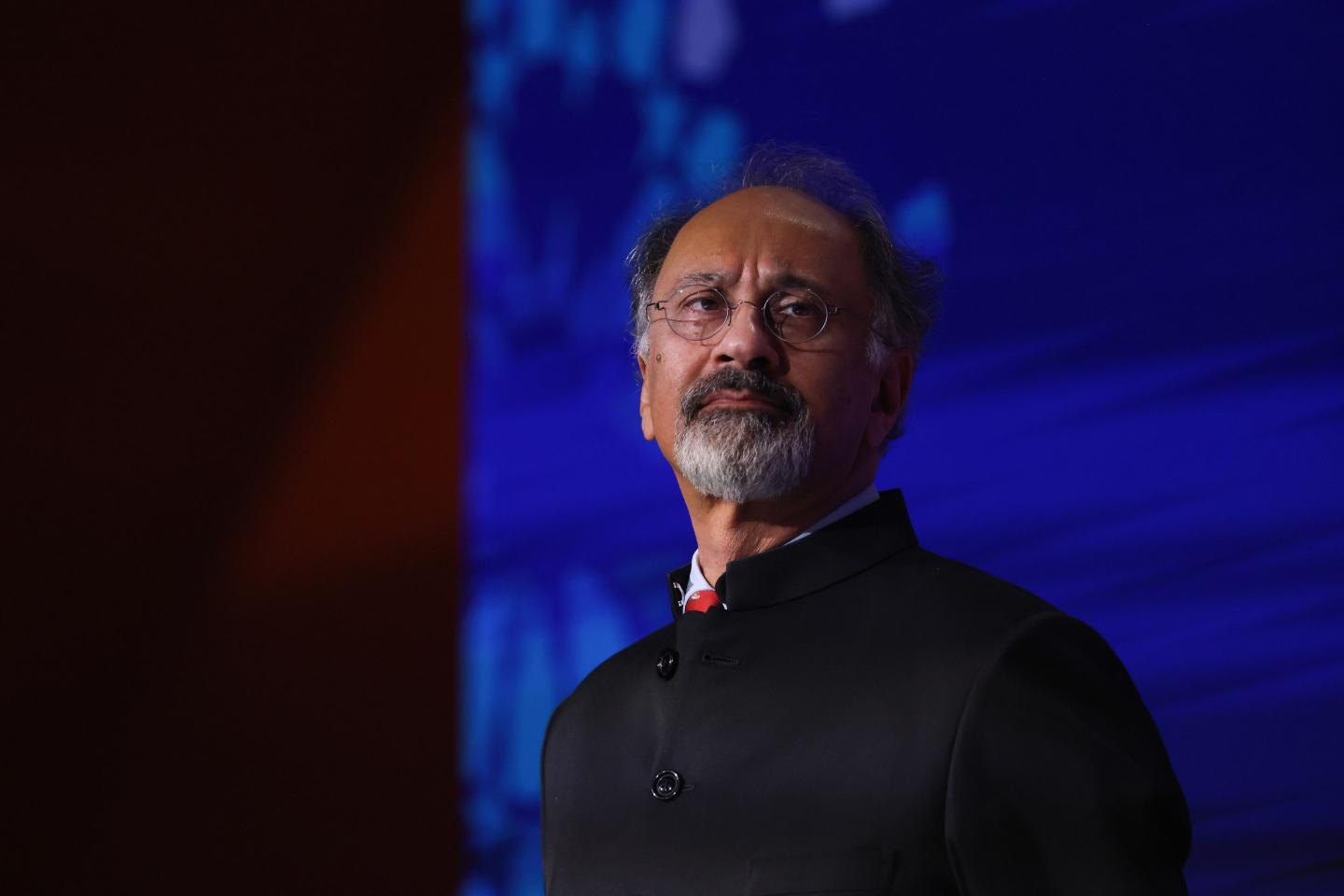
“Barring a miracle, the 2020s will prove to be what their ominous opening foreshadowed: a lost decade,” wrote Indermit Gill, the World Bank’s senior vice president and chief economist, in the report’s foreword.
The proximate cause of the latest blow is a conflict in the Middle East that has sent energy markets into upheaval, pushed Brent crude to an average of $94 a barrel — up 36% from 2025 — and reignited inflationary pressures across developing regions just as many central banks had begun to ease rates. Global growth is now projected to slow to just 2.5% in 2026, the weakest pace outside of outright recession in nearly 20 years. In a severe downside scenario — prolonged energy disruptions compounded by financial stress — that number could collapse to 1.3%.
“For light at the end of the tunnel,” Gill added, “you’d have to look to the 2030s.” And that is far from a sure thing, the World Bank warned.
A decade of compounding crises
The lost decade was not the product of any single shock. It was the accumulation of them.
The COVID-19 pandemic, Russia’s invasion of Ukraine, the sharpest global inflation surge in a generation, a historic rise in interest rates, and now a new Middle East conflict have struck in such rapid succession that developing economies have had almost no room to recover between blows. Government debt across the developing world has surged to all-time highs. Private investment growth in the 2020s has more than halved relative to the previous decade. Among the 24 poorest economies on earth, 19 still depend on foreign assistance just to feed their populations — at a moment when, as Gill put it, “the world has seldom been in a less charitable mood than it is today.”
The Middle East conflict has hit the region directly hardest. Growth in the Middle East and North Africa is forecast to tumble from 3.9% in 2025 to just 1.6% in 2026, a downward revision of 2.7 percentage points from the World Bank’s January forecast. Damage to critical energy infrastructure, disruptions to shipping through key waterways, and the human toll of active hostilities have compounded into an economic crisis with spillover effects spanning every developing region on the planet.
Low-income countries face an additional threat that has nothing to do with oil prices. In May, the Democratic Republic of Congo and Uganda reported the onset of the third-largest Ebola outbreak on record — caused by the Bundibugyo strain, against which no approved vaccine yet exists — adding a dire public health emergency to an already strained economic picture.
The regional toll
The damage is not evenly distributed, but no region has been spared.
In East Asia and Pacific, growth is slowing to 4.2% in 2026, with China — despite relative insulation from the energy shock due to large petroleum reserves and renewable energy capacity — facing headwinds from a prolonged property sector adjustment and subdued consumer demand. The bright spot: AI-related export demand continues to surge for semiconductors and electronics producers across the region.
In Europe and Central Asia, growth is expected to slow to 2.1%.
Latin America and the Caribbean is on track for 2.2% growth, with Mexico contracting amid uncertainty over the looming USMCA renegotiation, while the EU-MERCOSUR trade agreement has provided some export support elsewhere in the region.
South Asia remains the strongest-performing developing region, anchored by India’s robust growth, though the conflict is dragging on the broader outlook and threatening to worsen fiscal and current account balances across the region.
In Sub-Saharan Africa, per capita GDP growth of just 1.6% is insufficient to deliver meaningful poverty reduction, and food insecurity in fragile states is set to hit its highest levels since the early 2000s. Declining official development assistance — at precisely the moment it is most needed — threatens to reverse decades of hard-won progress.
The 2030s: Three reasons for optimism
Yet the World Bank’s report is not purely an autopsy. Embedded within its grim accounting is a forward-looking argument that the forces now gathering could make the 2030s the most prosperous decade in half a century — if governments act now to seize them.
Artificial intelligence tops the list. Even in a scenario where AI fails to live up to its most euphoric projections, the World Bank estimates it would still push global productivity above the paltry averages of the 2020s. In a well-managed scenario, global growth in the 2030s would surpass the average of the 2000s — “the world’s most prosperous decade since the 1970s,” Gill wrote.
AI adoption rates rose across all developing regions in the second half of 2025, a meaningful acceleration. But the gains are dangerously uneven: developing economies account for less than one-quarter of global data-center capacity, and the world’s 24 poorest economies hold less than one-tenth of 1%. The languages of roughly half the world’s population remain poorly represented in the training data of leading AI models. “Unless such gaps are closed,” Gill argued, “the AI revolution could widen rather than narrow the gap between rich and poor countries.” AI is emerging as a new language of wealth and exacerbating a K-shaped dynamic in the global economy, in other words.
Clean energy is the second engine. Global investment in clean energy hit a record $2.2 trillion in 2025, eclipsing fossil fuels by a wide margin. Critically, roughly 70% of the increase in clean-energy spending over the past five years has come from net importers of fossil fuels — nations motivated not by climate idealism but by energy security. That convergence of national security imperatives and development goals, the World Bank added, could accelerate economic growth in developing economies by expanding access to affordable power and reducing exposure to commodity price shocks. The caveat: China alone accounts for nearly a third of global clean energy investment, and smaller economies — particularly in Sub-Saharan Africa — are struggling to mobilize the capital needed to build out renewable infrastructure of their own.
Regional trade is the third pillar. The number of regional trade agreements has surged from just over 300 in 2020 to nearly 400 today. Those agreements now collectively account for 60% of global trade, up from 40% in 1990 — providing a stabilizing alternative to a global rules-based system that has lost much of its authority. The opportunity for developing economies is substantial: deeper regional integration, reduced border red tape, harmonized standards, and better access to financing for small businesses could unlock a new wave of growth.
The World Bank’s response
The institution framed the report as a call to action, not just a diagnosis.
In response to the current Middle East shock, the World Bank is providing up to $25 billion in immediate liquidity through existing instruments to help developing economies cope. If the conflict and its economic fallout persist, that financing capacity could be scaled up to $80 billion–$100 billion over 15 months. The five-year period ending June 30, 2025, already saw the bank provide more in financing commitments to developing countries than in any previous five-year period in its history.
But financing alone won’t be enough. The report’s analytical chapters add two more structural warnings: rising government debt in developing economies is now associated with non-linearly higher borrowing costs — the higher the debt-to-GDP ratio, the steeper the penalty for each additional dollar borrowed — and commodity-exporting nations have a long track record of spending windfalls rather than saving them, leaving them vulnerable when prices fall.
With the first half of the 2020s now behind us, “it is possible that this decade might already be lost,” Gill concluded, “but the 2030s are not.” He wrote that he sees the gathering economic forces of AI, energy transformation and deeper regional integration as “powerful enough to unlock transformative progress in the next decade,” but the work must begin now.