• Home
  • Latest
  • Fortune 500
  • Finance
  • Tech
  • Leadership
  • Lifestyle
  • Rankings
  • Multimedia

Trendingnow

1

He worked 100-hour weeks to save a nearly bankrupt boat company. At 83, he’s just turned down $400 million for it—and gave it all to charity instead

2

The rise of 'conspicuous waiting': The 19th-century economic theory that explains why Gen Z posts their place in line

3

Costco's $14 million email settlement: Who qualifies for an up-to $500 payment and how to claim before the Aug. 24 deadline

1

He worked 100-hour weeks to save a nearly bankrupt boat company. At 83, he’s just turned down $400 million for it—and gave it all to charity instead

2

The rise of 'conspicuous waiting': The 19th-century economic theory that explains why Gen Z posts their place in line

3

Costco's $14 million email settlement: Who qualifies for an up-to $500 payment and how to claim before the Aug. 24 deadline
EnvironmentInsurance

Florida’s insurance exodus is triggering a 2008-style chain reaction — with one critical difference

By
The Conversation
The Conversation
Down Arrow Button Icon
By
The Conversation
The Conversation
Down Arrow Button Icon
June 12, 2026, 2:07 PM ET
fla
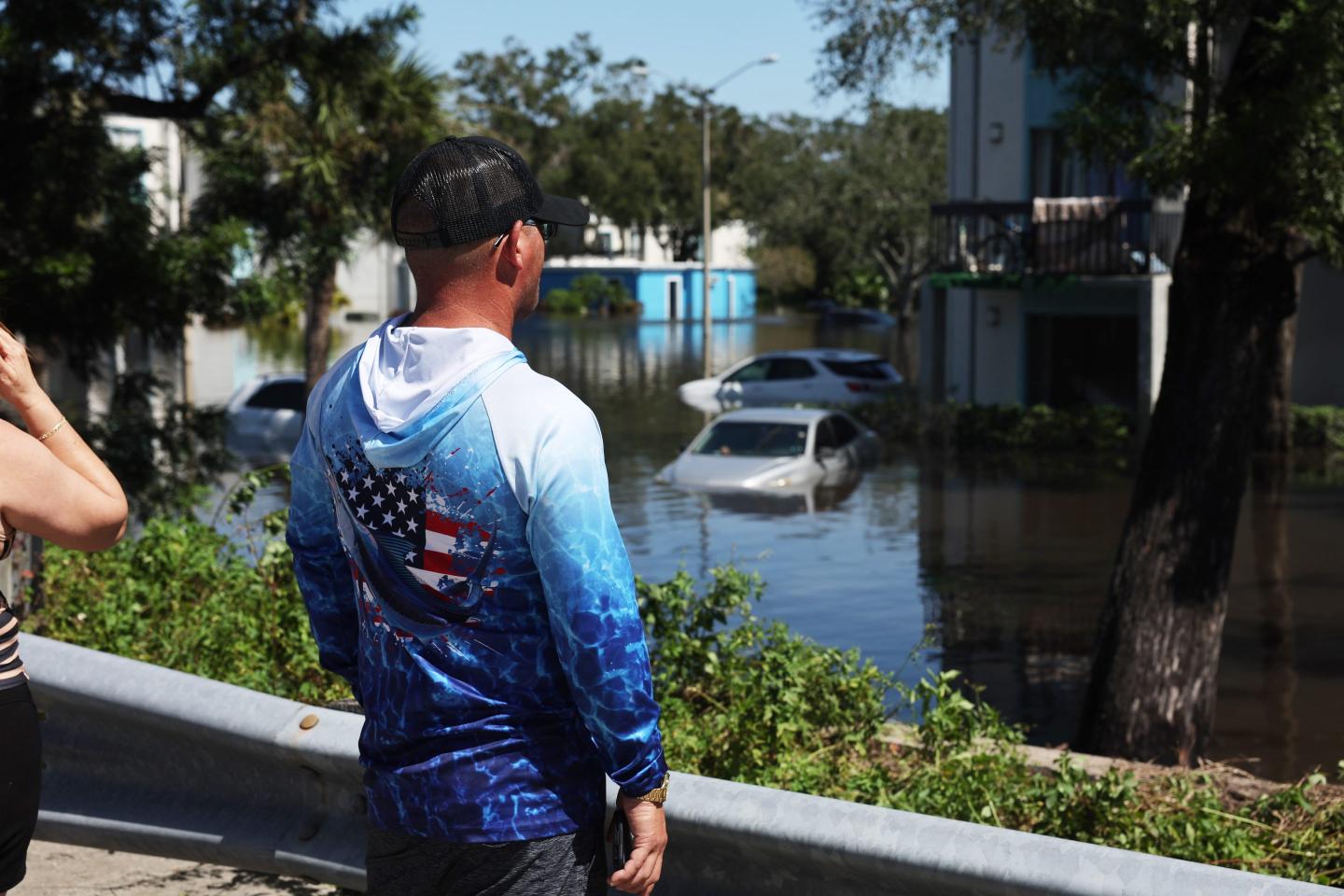
Cars are flooded in an apartment complex after the arrival of Hurricane Milton on October 10, 2024 in Clearwater, Florida. Spencer Platt/Getty Images
Add Fortune on Google for similar content.

While visiting family in St. Petersburg, Florida, in November 2024, I found myself walking down a quiet residential street in Shore Acres, a low-lying, bayfront neighborhood not far from where I grew up.

Recommended Video

Two months earlier, Hurricane Helene had sent several feet of water into homes here, even though the center of the storm had stayed far offshore. Just days after Helene, Milton made landfall nearby as a major hurricane, inflicting substantial wind damage.

What I saw on that autumn morning was a scene of starkly unequal neighborhood recovery: Dozens of older homes, most built during the area’s postwar building boom, were in a state of shocking disrepair. Shattered drywall, warped kitchen cabinets, broken glass – entire interiors poured out into the street in piles, at times as high as I am tall.

On the same street, I also saw pristine newer homes that looked untouched. Raised on posts far above their neighbors – in line with newer building codes – there was no sign that a major storm had recently clawed through the neighborhood.

As the sound of buzz saws and hammers rang in my ears, I noticed “for sale” signs in front of many storm-damaged homes. Building back after a storm is a trying business, and it appeared some had called it quits.

For over a decade I’ve been researching how property markets adapt to the changing financial realities of climate change in Florida, the Netherlands and beyond. On this street, I saw a community slowly unraveling as climate shocks – and the subsequent market responses to them – have reshaped the cost of living.

These costs are driven by more than major disasters. Soaring property insurance rates are repricing life in the Sunshine State, and this is likely to worsen as hurricanes intensify in the coming years. But the current way we manage these risks and costs isn’t the only option.

A tangible crisis

In Shore Acres and elsewhere, the climate crisis becomes tangible when you receive your annual homeowners insurance bill. Sustained, year-over-year price increases have been well documented in Florida and other states. It isn’t uncommon to hear local news stories about neighbors who are seriously struggling to keep up with insurance payments. Nor is it surprising to learn that a neighbor has been dropped by yet another insurer, or that they’re being asked to replace their roof if they want coverage from a new carrier.

These seemingly mundane experiences reflect the structural importance of insurance in our housing finance and climate risk management systems in the United States and beyond.

In Florida, where individual and collective fortune is built on property value and housing markets, insurance markets are particularly vital.

Without insurance, you and I wouldn’t be able to get – or keep – a mortgage. Without mortgages, buyers would lose access to a market, causing home prices to fall. The real estate market, and all the jobs wound up in it, would stutter. The property tax base would fall, and with it, local governments’ budgets would drop. A downward financial spiral ensues.

Even those who can afford to stay suffer losses in home equity and lifestyle as the community around them disintegrates or disappears. This played out during the 2008 subprime mortgage crisis and subsequent economic recession.

And this isn’t just a problem for homeowners – costly insurance also affects renters and affordable housing providers, as landlords pass on costs to tenants, defer maintenance, postpone new building or face financial distress.

Selective, not collective

Some individuals, neighborhoods and cities can afford to pay their way out of this spiral. They can build costly infrastructure to mitigate storm damage, absorb losses and rebuild after a disaster.

Case studies from Miami show how climate risk already is beginning to sort neighborhoods by wealth, resilience and insurability. High insurance costs could further push affordable homeownership out of reach in places like Miami Gardens and similar communities, where housing costs are on the rise. Meanwhile, investors are buying elevated land that is less likely to flood in communities like Little Haiti, displacing communities and limiting their access to affordable housing.

home and cars under water at a home in Tampa
For some, the emotional and financial burden of cleaning up and rebuilding after hurricane season is simply too much. Bryan R. Smith/AFP via Getty Images

Homeowners rely on insurance to pool risks so that no individual absorbs the full cost of a shock. But as for-profit insurers look to protect themselves from growing losses, they necessarily become much more selective about who gets protection and at what cost.

But this piecemeal, property market-driven form of adaptation defers a larger and more expensive collective reckoning: What happens if larger numbers of residents can no longer afford to stay, or otherwise decide the risks are too high, and move elsewhere? Where do they go, and what becomes of the places they leave behind?

In other words, risk sharing becomes risk sorting. And without strong mechanisms to counter this, a split occurs in places like Shore Acres. Florida’s coastal communities already are showing signs of this “splintering protectionism” – a patchwork of individuals and neighborhoods that are financially protected or excluded under growing climate risk.

These patterns often recall and reinforce historic forms of racial and economic injustice in Florida housing markets and more broadly in the U.S.

Looking to existing alternatives

One immediate response would be to create public policies that make adaptation and insurance work better together. In other words, homeowners need help both with storm-proofing their homes to reduce damage up front and with paying to repair and rebuild when necessary after a storm.

The state of Florida has gradually built a complex system of semipublic insurance institutions, but it hasn’t meaningfully tackled resilience at the home and neighborhood scale. Efforts to stimulate private financial market solutions for homeowners have proven challenging, in part because individuals and private markets cannot coordinate comprehensive community adaptation strategies.

Many U.S. and international reform proposals focus on linking insurance backstops, such as expanded public insurance options, to concrete measures that stimulate home- and community-level resilience, including stronger building codes, home retrofitting, new infrastructure and better spatial planning.

These proposals recognize that leaving decisions about adapting houses located in vulnerable areas up to individual homeowners is ineffective. Those who can afford it may make expensive updates to their homes if they think the risks are high enough, but those who can’t afford it are simply out of luck.

Public institutions like the housing resilience agencies proposed by the Climate and Community Institute could help connect insurance and adaptation in new ways. Extensive international case studies also provide a rich basis for reimagining our insurance and resilience institutions.

Local, state or even federal versions of these agencies could offer consumer insurance for individuals alongside adaptation investment programs as a one-stop shop. These agencies could pool risks through a single-payer insurance system and reduce those risks through investment in resilience measures. As government agencies, they would be focused on long-term safety and affordability rather than making a profit.

Such agencies could also incorporate transparent and democratic decision-making, giving more power to communities over decisions that are typically “black-boxed” by private market actors.

Moving forward

Regardless of how Florida chooses to move forward, insurance reform debates should not lose sight of these fundamental questions: What, and who, are we trying to protect, on what time horizon, and at what costs?

The current system is already answering these questions, deciding the fate of Shore Acres and any number of similar communities. The risk-sorting dynamic that’s driving adaptation is also opening new and deepening existing financial fault lines in neighborhoods like this. On one side are those who can afford high insurance rates and the costs of protective measures, such as storm shutters. On the other side are those who can’t afford insurance or to rebuild their ruined homes after a storm.

I believe Florida’s challenge is not simply to stabilize insurance markets, but to create new forms of collective protection that connect finance, risk reduction and decisions about how communities live with climate risk.

Zac Taylor, Assistant Professor of Urban Development Management, Delft University of Technology

This article is republished from The Conversation under a Creative Commons license. Read the original article.

The Conversation

Subscribe to Fortune Gulf Brief. Every Tuesday, this new newsletter delivers clear-eyed, authoritative intelligence on the deals, decisions, policies, and power shifts shaping one of the world’s most consequential regions, written for the people who need to act on it. Sign up here.
About the Author
By The Conversation
See full bioRight Arrow Button Icon
Add Fortune on Google for similar content.

Latest in Environment

Finance
Lorem ipsum dolor sit amet, consectetur adipiscing elit, sed do eiusmod tempor incididunt ut labore et dolore magna aliqua. Ut enim ad minim veniam
By Fortune Editors
October 20, 2025
Finance
Lorem ipsum dolor sit amet, consectetur adipiscing elit, sed do eiusmod tempor incididunt ut labore et dolore magna aliqua. Ut enim ad minim veniam
By Fortune Editors
October 20, 2025
Finance
Lorem ipsum dolor sit amet, consectetur adipiscing elit, sed do eiusmod tempor incididunt ut labore et dolore magna aliqua. Ut enim ad minim veniam
By Fortune Editors
October 20, 2025
Finance
Lorem ipsum dolor sit amet, consectetur adipiscing elit, sed do eiusmod tempor incididunt ut labore et dolore magna aliqua. Ut enim ad minim veniam
By Fortune Editors
October 20, 2025
Finance
Lorem ipsum dolor sit amet, consectetur adipiscing elit, sed do eiusmod tempor incididunt ut labore et dolore magna aliqua. Ut enim ad minim veniam
By Fortune Editors
October 20, 2025
Finance
Lorem ipsum dolor sit amet, consectetur adipiscing elit, sed do eiusmod tempor incididunt ut labore et dolore magna aliqua. Ut enim ad minim veniam
By Fortune Editors
October 20, 2025

Most Popular

Finance
Lorem ipsum dolor sit amet, consectetur adipiscing elit, sed do eiusmod tempor incididunt ut labore et dolore magna aliqua. Ut enim ad minim veniam
By Fortune Editors
October 20, 2025
Finance
Lorem ipsum dolor sit amet, consectetur adipiscing elit, sed do eiusmod tempor incididunt ut labore et dolore magna aliqua. Ut enim ad minim veniam
By Fortune Editors
October 20, 2025
Finance
Lorem ipsum dolor sit amet, consectetur adipiscing elit, sed do eiusmod tempor incididunt ut labore et dolore magna aliqua. Ut enim ad minim veniam
By Fortune Editors
October 20, 2025
Finance
Lorem ipsum dolor sit amet, consectetur adipiscing elit, sed do eiusmod tempor incididunt ut labore et dolore magna aliqua. Ut enim ad minim veniam
By Fortune Editors
October 20, 2025
Finance
Lorem ipsum dolor sit amet, consectetur adipiscing elit, sed do eiusmod tempor incididunt ut labore et dolore magna aliqua. Ut enim ad minim veniam
By Fortune Editors
October 20, 2025
Finance
Lorem ipsum dolor sit amet, consectetur adipiscing elit, sed do eiusmod tempor incididunt ut labore et dolore magna aliqua. Ut enim ad minim veniam
By Fortune Editors
October 20, 2025
Fortune Secondary Logo
Rankings
  • 100 Best Companies
  • Fortune 500
  • Global 500
  • Fortune 500 Europe
  • Most Powerful Women
  • World's Most Admired Companies
  • See All Rankings
  • Lists Calendar
Sections
  • Finance
  • Fortune Crypto
  • Features
  • Leadership
  • Health
  • Commentary
  • Success
  • Retail
  • Mpw
  • Tech
  • Lifestyle
  • CEO Initiative
  • Asia
  • Politics
  • Conferences
  • Europe
  • Newsletters
  • Personal Finance
  • Environment
  • Magazine
  • Education
Customer Support
  • Frequently Asked Questions
  • Customer Service Portal
  • Privacy Policy
  • Terms Of Use
  • Single Issues For Purchase
  • International Print
Commercial Services
  • Advertising
  • Fortune Brand Studio
  • Fortune Analytics
  • Fortune Conferences
  • Business Development
  • Group Subscriptions
About Us
  • About Us
  • Press Center
  • Work At Fortune
  • Terms And Conditions
  • Site Map
  • About Us
  • Press Center
  • Work At Fortune
  • Terms And Conditions
  • Site Map
  • Facebook icon
  • Twitter icon
  • LinkedIn icon
  • Instagram icon
  • TikTok icon
  • YouTube icon

Latest in Environment

mn
Cybersecuritycyber
Iran-style hackers shut down a Minnesota town’s water plant. Only the water tower saved it
By Jamie Stengle, Eric Tucker and The Associated PressJuly 31, 2026
3 hours ago
danube
Environmentclimate change
The Dry Danube: Europe’s legendary river got so low that a cruise ship ran out of food and water
By Justin Spike and The Associated PressJuly 31, 2026
3 hours ago
Dario Amodei speaking into a microphone.
EnvironmentAnthropic
Anthropic says its Claude models escaped a testing environment and hacked three real companies
By Beatrice NolanJuly 31, 2026
3 hours ago
s
Environmentwildfires
Climate change made Spain’s wildfires 20 times more likely, study finds
By Seth Borenstein and The Associated PressJuly 31, 2026
4 hours ago
Photo of two polar bears
Environmentclimate change
Polar bears roll in beds of ice cubes at Prague Zoo as Europe battles record heat
By The Associated PressJuly 30, 2026
1 day ago
Scientist on wildfires: ‘we have our foot on the gas pedal’ but ‘we’ve lost the brakes’
EnvironmentEnvironment
Scientist on wildfires: ‘we have our foot on the gas pedal’ but ‘we’ve lost the brakes’
By Seth Borenstein and The Associated PressJuly 29, 2026
2 days ago

Most Popular

He worked 100-hour weeks to save a nearly bankrupt boat company. At 83, he’s just turned down $400 million for it—and gave it all to charity instead
Success
He worked 100-hour weeks to save a nearly bankrupt boat company. At 83, he’s just turned down $400 million for it—and gave it all to charity instead
By Preston ForeJuly 29, 2026
2 days ago
The rise of 'conspicuous waiting': The 19th-century economic theory that explains why Gen Z posts their place in line
Retail
The rise of 'conspicuous waiting': The 19th-century economic theory that explains why Gen Z posts their place in line
By Tatiana SatauaJuly 31, 2026
9 hours ago
Costco's $14 million email settlement: Who qualifies for an up-to $500 payment and how to claim before the Aug. 24 deadline
Retail
Costco's $14 million email settlement: Who qualifies for an up-to $500 payment and how to claim before the Aug. 24 deadline
By Sydney LakeJuly 29, 2026
2 days ago
Tim Cook signed off on his final Apple earnings call with a warning about a ‘hundred year flood’ in memory chip pricing
Big Tech
Tim Cook signed off on his final Apple earnings call with a warning about a ‘hundred year flood’ in memory chip pricing
By Alexei OreskovicJuly 30, 2026
16 hours ago
'Am I paying for the vibes?' Gen Z says it hates capitalism, but their spending patterns show they just don't like being ripped off
Retail
'Am I paying for the vibes?' Gen Z says it hates capitalism, but their spending patterns show they just don't like being ripped off
By Nick LichtenbergJuly 30, 2026
1 day ago
Current price of oil as of July 30, 2026
Personal Finance
Current price of oil as of July 30, 2026
By Joseph HostetlerJuly 30, 2026
1 day ago

© 2026 Fortune Media IP Limited. All Rights Reserved. Use of this site constitutes acceptance of our Terms of Use and Privacy Policy | CA Notice at Collection and Privacy Notice | Do Not Sell/Share My Personal Information
FORTUNE is a trademark of Fortune Media IP Limited, registered in the U.S. and other countries. FORTUNE may receive compensation for some links to products and services on this website. Offers may be subject to change without notice.