Good morning. It’s here! Fortune Brainstorm Tech begins in Aspen this morning.
On the agenda for Day 1 of our 25th anniversary bash: Boris Cherny of Anthropic, JB Straubel of Redwood Materials, Dan Clancy of Twitch, Grant LaFontaine of Whatnot, Ned Koh of Aaru, Daniela Braga of Defined.ai, Timothée Lacroix of Mistral, Anjali Sud of Tubi, Meg Whitman, Brian Schimpf of Anduril, Robert Kyncl of Warner Music, the artist Grimes, and so many more.
Peep the full program here; watch the livestream here.
Tomorrow, I’ll switch up the format of this newsletter to share what’s going on at Brainstorm. For now, though, today’s tech news is below. —Andrew Nusca
Want to send thoughts or suggestions to Fortune Tech? Drop a line here.
Former AI czar calls proposal for gov’t equity a ‘stupidity tax’
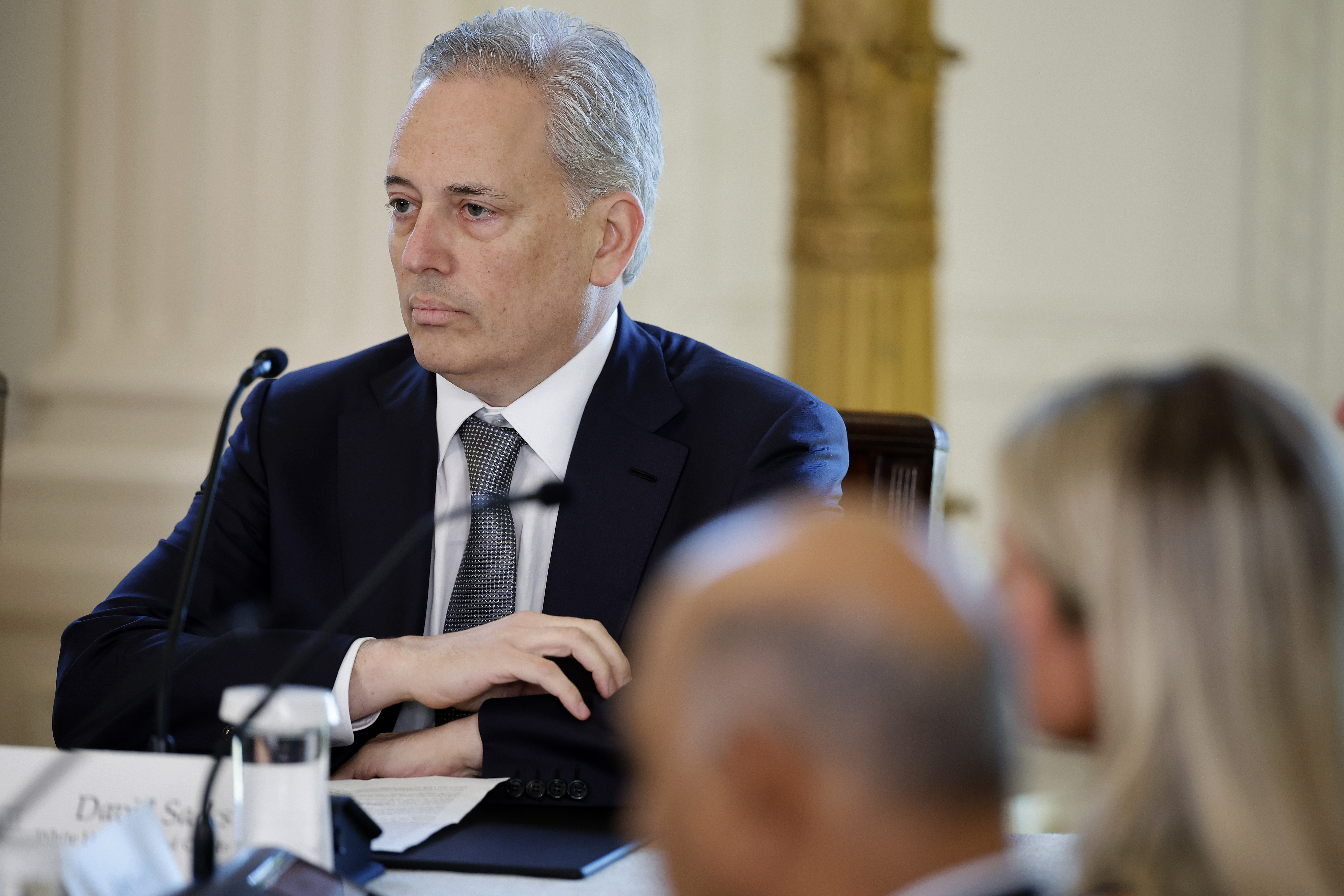
The Trump administration’s former AI czar sounded the alarm on giving the federal government equity stakes in top AI companies, while his former boss hinted favorably at the idea.
In a social media post on Friday, David Sacks said he’s not a fan of Sen. Bernie Sanders’ bill that would establish 50% government ownership in AI companies.
But he acknowledged that the proposal resonates with people, even conservatives, and blamed AI CEOs who have hyped up the technology’s enormous risks without explaining its potential benefits.
“Dario and Sam have begun to walk back their claims of massive job loss, but the damage to public trust is done, and now the chickens are coming home to roost,” Sacks wrote of the Anthropic and OpenAI CEOs. “I could almost support the Sanders proposal as a stupidity tax.”
But he stopped short of backing it and warned that nationalization of AI will accelerate the “corporate-government fusion” that’s already in progress.
Sacks added that conservatives are right to fear a central bank digital currency but should be even more concerned about a central government AI, calling it “a system with even more totalistic power over information, decision-making, and human behavior.”
But later on Friday, President Donald Trump said he expects to meet with AI companies in the coming week to discuss a federal “partnership” that would benefit the American people.
Such a partnership could entail distributing company dividends to Americans—similar to the way stockholders receive payouts—to help overcome public fears about AI-related economic disruption.
“There’s a concept out there … where the American public essentially becomes a partner with the companies,” Trump told reporters, adding: “The American people can benefit from the success of AI. And by doing that, they’re going to like it better.” —Jason Ma
SpaceX IPO could trigger mass selling event as investors dump shares to buy SPCX
The largest initial public offering ever is just days away, and demand for SpaceX stock is expected to be extremely high, with Wall Street clamoring to buy Elon Musk’s rocket and satellite company.
The flip side of all that buying is plenty of selling as investors need to raise cash for stock purchases by liquidating other shares in their portfolios.
To be sure, IPOs are often accompanied by volatility. But Greg Boutle, head of U.S. equity derivative strategy at BNP Paribas, pointed out in a note Friday that what’s different this time is SpaceX-related volatility will be coupled with the largest market cap ever seen in a U.S. IPO.
SpaceX plans to raise at least $75 billion in its IPO by selling over 555 million shares at $135 a piece, valuing the company at more than $1.75 trillion. If underwriters exercise options for additional allotments to meet high demand, proceeds could grow to $85.7 billion.
The IPO is expected to price Thursday evening, with shares trading Friday on the Nasdaq under the ticker SPCX.
“We think many of the standalone SpaceX flows might be digestible. The problem is that many of these flows are potentially same-way and additive,” Boutle explained, adding: “If all are chasing to buy (or sell) at the same time, the risk of price dislocation becomes much greater.”
Boutle estimated that retail and passive investors might sell a combined $50 billion of other stocks to raise funds for buying SpaceX. And if the IPO performs well, that figure could rise.
As much as the SpaceX IPO could be a bumpy ride for Wall Street, it’s just the beginning. OpenAI and Anthropic also plan to go public this year, and demand for the top AI companies will likely be high, too. —Jason Ma
More tech
—Apple’s AI “come to Jesus” moment came in a 2025 meeting of senior execs.
—Just 1 in 4 companies have a comprehensive view of their AI costs, per KPMG.
—Banks are laying the groundwork for AI-driven workforce cuts: “Middle office is vulnerable.”
—Spotify may license music festival livestreams in a bid to be a one-stop shop.
—OpenAI is prepping a “superapp” pivot ahead of its expected IPO.
—Nvidia’s new Vera CPU will use memory chips from SK Hynix.
—LinkedIn: The “post cringe” social network?
—China’s humanoid robots: More performative than functional (for now).
—Uber reportedly sunk half a billion dollars into Nuro, a self-driving startup.
—White House AI advisor Sriram Krishnan exits the admin to start his own policy shop.