- In today’s CEO Daily: Diane Brady reports on the biggest takeaways from this year’s list.
- The big leadership story: Executives are debating whether to treat agents as colleagues.
- The markets: Mixed globally after the S&P 500 closed at another record.
- Plus: All the news and watercooler chat from Fortune.
Good morning. The 2026 Fortune 500 is out, and the numbers tell a story of an American corporate landscape that is bigger, more profitable, and more concentrated at the top than at any point in the list’s 72-year history. In aggregate, Fortune 500 companies generated a record $21 trillion in revenues—up 5%—and $2.1 trillion in profits, up 12%. Their combined market value hit $55 trillion, a 19% jump. Together, they represent two-thirds of U.S. GDP and employ 30.5 million people worldwide. The era of scale has never looked more like a competitive moat.
The biggest headline: Amazon dethrones Walmart at No. 1, ending a 13-year reign. Amazon debuted on the list at No. 492 in 2002. That ascent—from near the bottom to the very top in just over two decades—is one of the great corporate stories of our time. Walmart is No. 2, a position it hasn’t held since 2012.
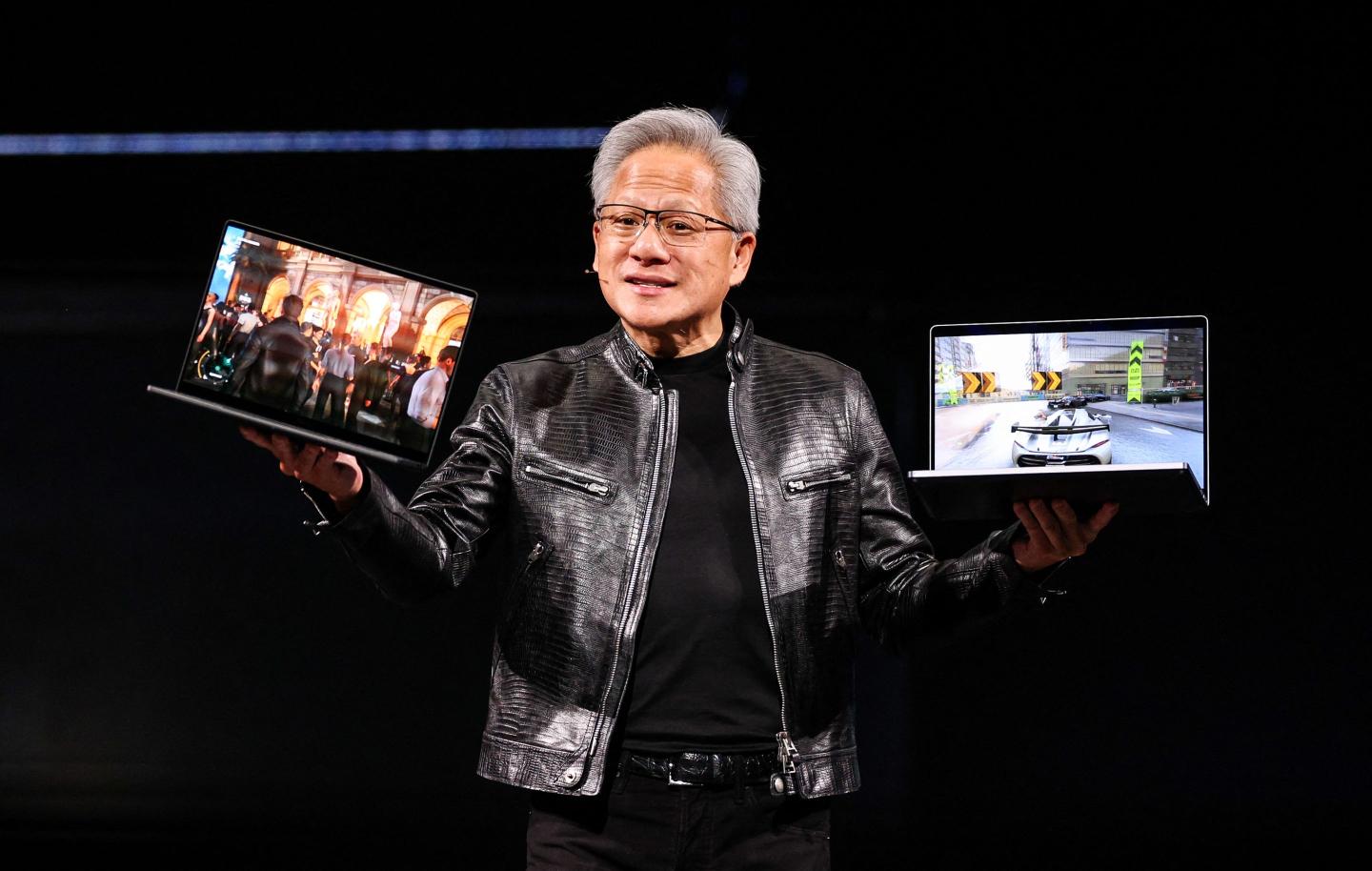
But the most striking data point may belong to Nvidia. Now ranked No. 16, the chipmaker is worth $4.2 trillion in market value—the first Fortune 500 company to cross the $4 trillion threshold—and has surpassed Apple to claim the title of most valuable company on the list. Nvidia debuted at No. 387 in 2017. It has delivered a 72% annualized 10-year return to shareholders. That is not a typo.
The concentration of power is notable: the four most profitable companies—Alphabet, Nvidia, Apple, and Meta—each cleared $100 billion in profits, combining for $466 billion, or 22% of the entire Fortune 500’s earnings. The list also reflects a changing leadership landscape: a record 55 female CEOs now run Fortune 500 companies, representing 11% of the total, the fourth consecutive year at or above that threshold.
The Fortune 500 has always been a mirror of the economy. Right now, the reflection shows a world being remade by AI, health care, and a handful of extraordinarily powerful technology companies.
Contact CEO Daily via Diane Brady at diane.brady@fortune.com
Top leadership news
Whether to treat AI agents as colleagues
Fortune 500 executives at the Fortune COO Summit had different ideas about treating AI agents as colleagues. Okta COO Eric Kelleher told Fortune that his agents show up in business reviews alongside his staff, while Cisco EVP and Chief People, Policy & Purpose Officer Francine Katsoudas said agents are just “part of the workflow.”
Macy's AI initiative that works
In the 2010s, Macy's chased tech trends to prove it could keep pace with Amazon—often with little to show for it. Now, the company is using AI in ways that actually improve the business: shoppers who engage with its new AI shopping assistant feature spend nearly five times more per session than those who don’t.
Victoria's Secret's turnaround takes hold
Victoria’s Secret stock boomed on Tuesday after announcing a 15% jump in net sales and raising its full-year outlook by $120 million during the company’s earnings call. A year ago, the company was struggling and the stock had cratered. CEO Hillary Super has revived the company by stopping “performative” acts and endless sales cycles.
The markets
S&P 500 futures are down 0.09% this morning. The last session closed up 0.13%. The STOXX Europe 600 was down 0.36% in early trading. The U.K.’s FTSE 100 was down 0.27% in early trading. Japan’s Nikkei 225 was up 2.50%. South Korea’s markets are closed today. China’s CSI 300 was up 0.49%. Hong Kong’s Hang Seng was down 1.56%. India’s NIFTY 50 was down 0.35%. Bitcoin was down at $67K.
Around the watercooler
Microsoft seeks to be AI’s center of gravity again. CEO Satya Nadella is in San Francisco to make the case by Sebastian Herrera
Southwest ditched free bags and MGM added all-inclusive perks: how the travel industry is reinventing itself to survive by Preston Fore
Mounting evidence suggests remote work is behind the Gen Z hiring nightmare. Even the New York Fed thinks so by Tristan Bove
Teens are up against the worst summer job market in nearly 80 years—they’re fighting against hundreds to work at ice cream shops and swimming pools by Emma Burleigh
CEO Daily is curated and edited by Joseph Abrams, Jason Ma, Claire Zillman, and Lee Clifford.