• Home
  • Latest
  • Fortune 500
  • Finance
  • Tech
  • Leadership
  • Lifestyle
  • Rankings
  • Multimedia

Trendingnow

1

Iran strikes 85 U.S. military sites in the Gulf, sparking a global selloff in stocks and a spike in the price of oil

2

Ex-PepsiCo CEO Indra Nooyi worked from midnight until 5 a.m. as a receptionist to pay for her Yale degree—and she says ‘respect went up’ because of it

3

Shark Tank's Kevin O'Leary says if he were 25 today, he'd chase these two booming opportunities in the world of AI

1

Iran strikes 85 U.S. military sites in the Gulf, sparking a global selloff in stocks and a spike in the price of oil

2

Ex-PepsiCo CEO Indra Nooyi worked from midnight until 5 a.m. as a receptionist to pay for her Yale degree—and she says ‘respect went up’ because of it

3

Shark Tank's Kevin O'Leary says if he were 25 today, he'd chase these two booming opportunities in the world of AI
Commentaryspace

SpaceX will be worth trillions, but the space station that made it possible is worth even more — if we don’t squander it

By
Tejpaul Bhatia
Tejpaul Bhatia
Down Arrow Button Icon
By
Tejpaul Bhatia
Tejpaul Bhatia
Down Arrow Button Icon
May 20, 2026, 5:10 PM ET
Tejpaul Bhatia is the founder and CEO of Nebex, the company building the commercial rails for the global space economy. He is a space investor, executive, and entrepreneur. His career spans transformative product, platform, and business model innovation across startups and enterprises including Axiom Space, Google, Citi, and ESPN.
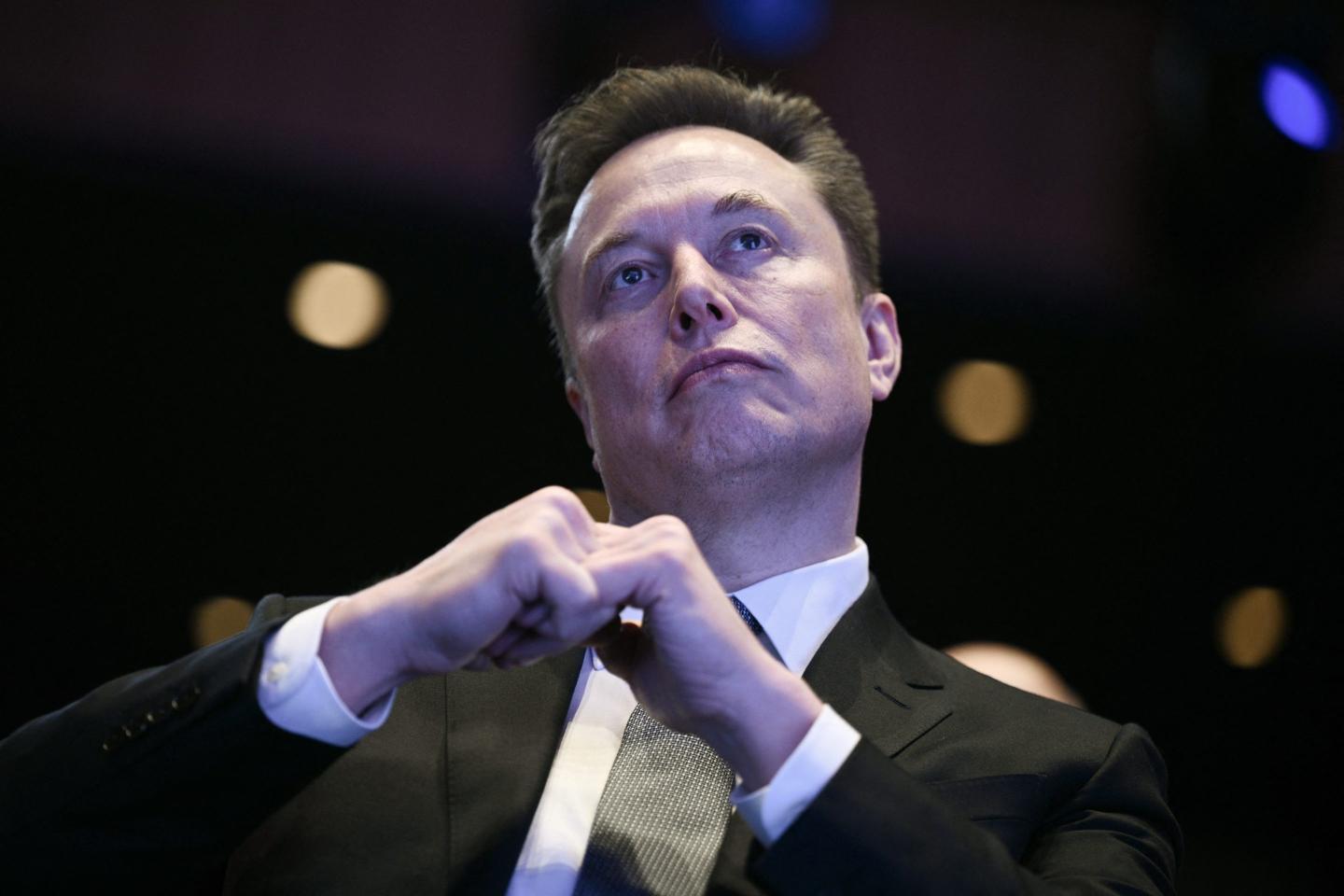
Elon Musk sits with his fists together, looking up.
Elon Musk filed a whopper of an IPO with SpaceX.BRENDAN SMIALOWSKI/AFP—Getty Images
Add Fortune on Google for similar content.

SpaceX is expected to debut on the public markets at a $2 trillion valuation. That number is extraordinary for any company, but for me, a space enthusiast, space investor, and space entrepreneur, it also carries an uncanny connection to how SpaceX got its start — its “wedge” into the market.

Recommended Video

That wedge is the International Space Station (ISS). The ISS — the most expensive and ambitious engineering project in human history — is where SpaceX began sending cargo in 2012 and humans in 2020. For over a quarter century, first before SpaceX and now because of it, the ISS has been a triumph of science, diplomacy, and persistence. But as the ISS nears deorbit, there is a very real risk of losing trillions of dollars in latent value currently trapped in the ISS and the space industry’s antiquated economic model.

With roughly $250 billion of taxpayer investment — $150 billion to build and $4 billion annually to maintain — the ISS has created immense scientific and technological value. However, if that same capital had been invested in the S&P 500 over the same period, it would be worth over $2 trillion today — ironically, the exact projected market cap of SpaceX.

This comparison is not intended to diminish the intangible value of scientific exploration but to illustrate the significant economic opportunity that remains untapped. By reframing the question, we see that the ISS is an incredible financial asset in need of a value transference mechanism — an economic bridge to liquidate the returns on our investment.

It is important to understand that the current ISS operational approach is rooted in a Cold War-era framework that has served as a beacon for international cooperation and diplomacy, and one that allowed SpaceX to learn, build, iterate, and extract significant value from it.

Governed by intergovernmental agreements, the ISS functions on in-kind contributions from NASA’s partner agencies (in Europe, Japan, Canada, and Russia), in exchange for utilizing the station’s resources. This is often referred to as a “barter system” in which goods and services are exchanged without direct monetary transfer, sidestepping the political complexities of commercial transactions.

Despite the perception of “barter,” the ISS operates as a monetary system. Every kilogram of mass to orbit, every kilowatt-hour of power, every hour of crew time is meticulously valued and accounted for. These are the fundamental commodities of a space economy.

The exchange of an astronaut’s research time for a laboratory’s power supply is, in effect, a transaction. The current system is a ledger-based economy where the transactions are recorded, but the units of value lack transferability and liquidity outside of the ISS framework.

In building a machine of extraordinary productive capacity, the scientific and engineering communities inadvertently created a closed monetary system. By not categorizing the ISS as a monetizable enterprise, an immense amount of enterprise value remains latent and inaccessible to the broader market.

The value of the ISS isn’t just the construction costs — its value is the intellectual property and data generated, the technological advancements and infrastructure, the human capital and expertise, and the developing market for future low-Earth orbit (LEO) activities. Yet under the current barter model, none of this can be priced, traded, or reinvested. It sits locked inside a closed system that was never designed to produce economic returns.

The next great leap in space will be made through business model innovation. The next great challenge is to build the financial bridge that connects the nascent, commodities-based economic model of the ISS with the modern, trust-based global financial system. This bridge will be a transparent, market-based mechanism to convert the inherent value of orbital commodities–— power, crew time, volume, and mass— into fungible, tradable assets.

The beauty of this approach is that it avoids politically complex bilateral funding discussions and instead lets the market determine the most efficient use of resources. Surpluses of resources can be monetized instantly, and new startups with innovative payloads can operate without years of government red tape. Essentially, money needs to flow through the space economy the same way it flows through every other functioning market on Earth.

As SpaceX prepares its IPO and builds the physical rails to explore our next frontiers, and as NASA prepares to deorbit the ISS, we have a rare chance to design the market infrastructure for humanity’s next expansion. Without that market infrastructure, the space economy starts over from zero. The end of the ISS must not be a burial of assets — it needs to be a successful capital raise for the future of humanity off planet — a feat that no single country, company, or individual can achieve alone.

The opinions expressed in Fortune.com commentary pieces are solely the views of their authors and do not necessarily reflect the opinions and beliefs of Fortune.

About the Author
By Tejpaul Bhatia
See full bioRight Arrow Button Icon
Add Fortune on Google for similar content.

Latest in Commentary

Finance
Lorem ipsum dolor sit amet, consectetur adipiscing elit, sed do eiusmod tempor incididunt ut labore et dolore magna aliqua. Ut enim ad minim veniam
By Fortune Editors
October 20, 2025
Finance
Lorem ipsum dolor sit amet, consectetur adipiscing elit, sed do eiusmod tempor incididunt ut labore et dolore magna aliqua. Ut enim ad minim veniam
By Fortune Editors
October 20, 2025
Finance
Lorem ipsum dolor sit amet, consectetur adipiscing elit, sed do eiusmod tempor incididunt ut labore et dolore magna aliqua. Ut enim ad minim veniam
By Fortune Editors
October 20, 2025
Finance
Lorem ipsum dolor sit amet, consectetur adipiscing elit, sed do eiusmod tempor incididunt ut labore et dolore magna aliqua. Ut enim ad minim veniam
By Fortune Editors
October 20, 2025
Finance
Lorem ipsum dolor sit amet, consectetur adipiscing elit, sed do eiusmod tempor incididunt ut labore et dolore magna aliqua. Ut enim ad minim veniam
By Fortune Editors
October 20, 2025
Finance
Lorem ipsum dolor sit amet, consectetur adipiscing elit, sed do eiusmod tempor incididunt ut labore et dolore magna aliqua. Ut enim ad minim veniam
By Fortune Editors
October 20, 2025

Most Popular

Finance
Lorem ipsum dolor sit amet, consectetur adipiscing elit, sed do eiusmod tempor incididunt ut labore et dolore magna aliqua. Ut enim ad minim veniam
By Fortune Editors
October 20, 2025
Finance
Lorem ipsum dolor sit amet, consectetur adipiscing elit, sed do eiusmod tempor incididunt ut labore et dolore magna aliqua. Ut enim ad minim veniam
By Fortune Editors
October 20, 2025
Finance
Lorem ipsum dolor sit amet, consectetur adipiscing elit, sed do eiusmod tempor incididunt ut labore et dolore magna aliqua. Ut enim ad minim veniam
By Fortune Editors
October 20, 2025
Finance
Lorem ipsum dolor sit amet, consectetur adipiscing elit, sed do eiusmod tempor incididunt ut labore et dolore magna aliqua. Ut enim ad minim veniam
By Fortune Editors
October 20, 2025
Finance
Lorem ipsum dolor sit amet, consectetur adipiscing elit, sed do eiusmod tempor incididunt ut labore et dolore magna aliqua. Ut enim ad minim veniam
By Fortune Editors
October 20, 2025
Finance
Lorem ipsum dolor sit amet, consectetur adipiscing elit, sed do eiusmod tempor incididunt ut labore et dolore magna aliqua. Ut enim ad minim veniam
By Fortune Editors
October 20, 2025
Fortune Secondary Logo
Rankings
  • 100 Best Companies
  • Fortune 500
  • Global 500
  • Fortune 500 Europe
  • Most Powerful Women
  • World's Most Admired Companies
  • See All Rankings
  • Lists Calendar
Sections
  • Finance
  • Fortune Crypto
  • Features
  • Leadership
  • Health
  • Commentary
  • Success
  • Retail
  • Mpw
  • Tech
  • Lifestyle
  • CEO Initiative
  • Asia
  • Politics
  • Conferences
  • Europe
  • Newsletters
  • Personal Finance
  • Environment
  • Magazine
  • Education
Customer Support
  • Frequently Asked Questions
  • Customer Service Portal
  • Privacy Policy
  • Terms Of Use
  • Single Issues For Purchase
  • International Print
Commercial Services
  • Advertising
  • Fortune Brand Studio
  • Fortune Analytics
  • Fortune Conferences
  • Business Development
  • Group Subscriptions
About Us
  • About Us
  • Press Center
  • Work At Fortune
  • Terms And Conditions
  • Site Map
  • About Us
  • Press Center
  • Work At Fortune
  • Terms And Conditions
  • Site Map
  • Facebook icon
  • Twitter icon
  • LinkedIn icon
  • Instagram icon
  • Pinterest icon

Latest in Commentary

t
CommentaryEducation
AI is about to disrupt millions of jobs. A century ago, America’s answer was to build a new high school
By Tim KnowlesJuly 8, 2026
23 hours ago
amit
CommentaryVenture Capital
Physical AI’s $50 trillion opportunity requires long-term conviction, but the payoff is huge 
By Amit ChaturvedyJuly 8, 2026
1 day ago
heat
Commentaryclimate change
McKinsey Global Institute: Climate planning has prioritized floods. Heat demands equal attention
By Sylvain Johansson, Mekala Krishnan, Kanmani Chockalingam and Annabel FarrJuly 7, 2026
2 days ago
j
CommentaryEducation
AI didn’t break higher education—It exposed the credential trap
By Jason BenedictJuly 7, 2026
2 days ago
e
CommentaryEntrepreneurship
I skipped college and founded a company at 18. Several exits later, this is what I learned
By Eric FranciaJuly 7, 2026
2 days ago
mw
Commentaryregulation
Virtual Assets Regulatory Authority CEO: Finance’s AI future moves at the speed of its slowest regulator
By Matthew WhiteJuly 7, 2026
2 days ago

Most Popular

Iran strikes 85 U.S. military sites in the Gulf, sparking a global selloff in stocks and a spike in the price of oil
Newsletters
Iran strikes 85 U.S. military sites in the Gulf, sparking a global selloff in stocks and a spike in the price of oil
By Jim EdwardsJuly 8, 2026
22 hours ago
Ex-PepsiCo CEO Indra Nooyi worked from midnight until 5 a.m. as a receptionist to pay for her Yale degree—and she says ‘respect went up’ because of it
Success
Ex-PepsiCo CEO Indra Nooyi worked from midnight until 5 a.m. as a receptionist to pay for her Yale degree—and she says ‘respect went up’ because of it
By Preston ForeJuly 6, 2026
3 days ago
Shark Tank's Kevin O'Leary says if he were 25 today, he'd chase these two booming opportunities in the world of AI
AI
Shark Tank's Kevin O'Leary says if he were 25 today, he'd chase these two booming opportunities in the world of AI
By Marco Quiroz-GutierrezJuly 5, 2026
4 days ago
Current price of oil as of July 8, 2026
Personal Finance
Current price of oil as of July 8, 2026
By Joseph HostetlerJuly 8, 2026
20 hours ago
Billionaires John and Laura Arnold have already donated nearly half their wealth. Now they're funding a hunt for the health risks of sports betting
Success
Billionaires John and Laura Arnold have already donated nearly half their wealth. Now they're funding a hunt for the health risks of sports betting
By Sydney LakeJuly 8, 2026
1 day ago
Investment firm's cofounder sues after being fired for neglecting the in-person work mandate he signed, saying it applies to employees not owners
Law
Investment firm's cofounder sues after being fired for neglecting the in-person work mandate he signed, saying it applies to employees not owners
By Jason MaJuly 5, 2026
4 days ago

© 2026 Fortune Media IP Limited. All Rights Reserved. Use of this site constitutes acceptance of our Terms of Use and Privacy Policy | CA Notice at Collection and Privacy Notice | Do Not Sell/Share My Personal Information
FORTUNE is a trademark of Fortune Media IP Limited, registered in the U.S. and other countries. FORTUNE may receive compensation for some links to products and services on this website. Offers may be subject to change without notice.