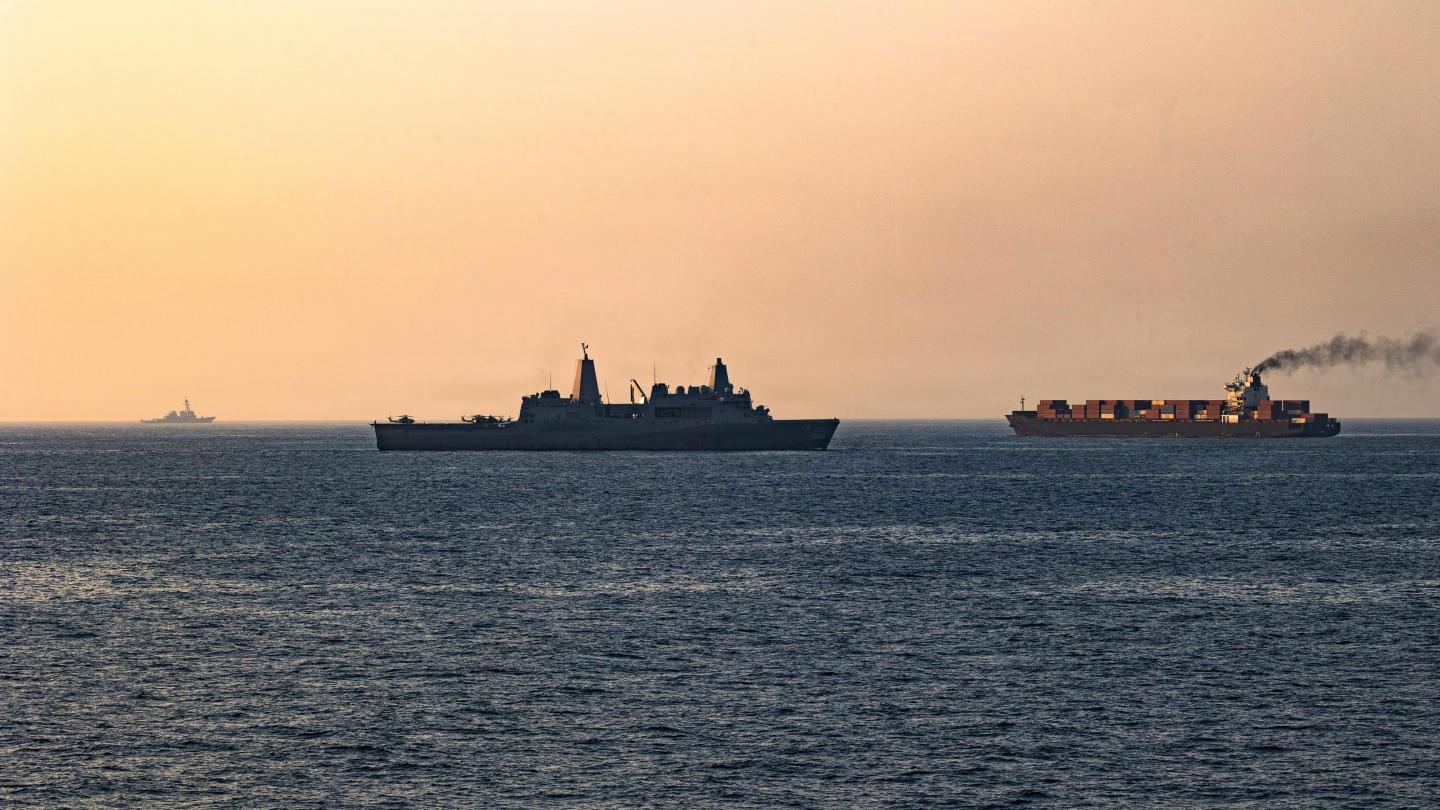
As the US naval blockade in the Strait of Hormuz tightens around Iran’s oil trade, exports have plunged in recent weeks and storage is rapidly filling. Already, the country has begun curbing production, according to a senior Iranian official.
But there’s a crucial caveat Washington may be underestimating: Tehran has decades of experience preparing for versions of this exact scenario.
The war in the Middle East is entering a stalemate, with both sides waiting for the other to relent. By targeting the Islamic Republic’s most vital source of revenue, President Donald Trump is seeking to force an end to a conflict that has reshaped geopolitics and global energy markets.
Yet Iran has shown some resilience in weathering the blockade so far, drawing on a time-tested playbook to prolong the standoff and raise costs for Washington by pushing up oil prices, which reached a four-year high this week.
Tehran is proactively reducing crude output in a move to stay ahead of capacity limits rather than waiting for tanks to fill completely, according to the senior official, who asked not to be identified because the information is sensitive. And engineers have learned how to idle wells without lasting damage and restart them quickly, officials say, after years of sanctions and shutdowns pushed the country’s oil industry through cycles of disruption.
“We have enough expertise and experience,” said Hamid Hosseini, a spokesman for the Iranian Oil, Gas and Petrochemical Products Exporters’ Association. “We’re not worried.”
Those techniques, learned over multiple wars and sanctions regimes, were honed during the first Trump administration, when the US withdrew from the Iran nuclear deal in 2018 and imposed sanctions that forced Tehran to slash production. Over the longer term, the curbs proved far from a death knell, with the country’s production rising in subsequent years.
There are, of course, key differences between then and now. Amid Western sanctions, Tehran has in the past sold oil stealthily to China using its own large fleet of tankers and a network of other ships owned by little-known companies and operating outside of international oversight, referred to as a shadow fleet.
That’s no longer possible as the US is physically seeking to block the waters around the Strait of Hormuz, stranding tens of millions of barrels at sea.
Iranian officials acknowledge their ongoing efforts to keep pumping oil can only work for a period. For them, it’s a question of whether they can outlast the economic pain felt by the US, including from high oil prices.
Keeping Relevant
Even so, Iran has in the past proved adept at keeping itself relevant in the market, working to preserve ties with buyers — at times maintaining one-way contact, such as sending holiday greetings that sanctions prevented customers from answering.
“Washington is operating on a status-quo assumption that Iran will sit idly by and absorb this pressure and move toward collapse on a predictable timeline,” said Brett Erickson, managing principal at Obsidian Risk Advisors. “That fundamentally misunderstands how regimes behave under sustained economic warfare. They do not fold, they adapt.”
Cutting production carries risks. Oil reservoirs depend on stable pressure, and poorly managed shut-ins can cause lasting damage — an outcome the White House is betting on. Iran’s economy is already in disarray. Its currency hit a record low against the dollar this week, and wartime damage to industries such as steel and plastics is pushing up consumer prices, forcing the government to curb some non-oil exports that typically provide an important source of revenue.
But Iranian officials insist they can manage the turbulence, at least for a time. The nation’s leaders have long prioritized a so-called resistance economy that’s based on withstanding and mitigating US pressure rather than pursuing conventional growth.
The senior official said the country has already begun dialing back crude output but did not specify how much had been curbed so far. The move could affect as much as 30% of its oil reservoirs, the person said, but the risks are manageable using engineering and operational lessons learned from past sanctions.
“We know which wells to do it in so that it won’t cause damage and we can quickly resume,” said Hosseini. Speaking earlier this week, he disputed that production had been reduced.
The state-owned National Iranian Oil Company didn’t respond to multiple requests for comment.
There is no precise consensus on how long this strategy can hold before Iran hits “tank tops” — the point at which storage is exhausted and wells must be shut in.
Trump predicted last Sunday that the country’s oil infrastructure would “explode” within three days, a deadline that has come and gone. Officials familiar with Iran’s energy policy say the country now has a narrowing window of roughly a month, at current production levels, before it runs out of storage capacity. JPMorgan Chase and Kpler have reached similar conclusions.
Under the sanctions pressure of the first Trump administration — with help from a wider pool of would-be buyers, seaborne tankers and foreign ports to offload excess supply — Iran managed to keep its wells humming just enough to avoid hitting tank tops, said Miad Maleki, who was then an official at the Treasury’s Office of Foreign Assets Control and now works as a senior fellow at the Foundation for Defense of Democracies, a think tank that has advocated for hard-line policies on Iran.
This time around, he argued, that will be much tougher. “It never had to test what a genuine forced well shut-in looks like,” he said.
Since the blockade took effect on April 13, Iran has turned increasingly to floating storage. A growing number of tankers, some of them derelict and ageing, are clustered off Kharg Island, its main export hub. Bloomberg reported last month that empty tankers had continued to sail into the Persian Gulf in the days after the US announced its blockade.
There were 18 tankers with a history of loading Iranian oil in the Persian Gulf and Gulf of Oman this week with capacity to hold as many as 35 million barrels of crude, according to Kpler. Vessels continued to load on Saturday, according to satellite data reviewed by Bloomberg, though fewer have done so in recent days.
Stress in the System
The buildup reflects a sharp drop in flows out of the Persian Gulf. Observable loadings have declined since the blockade, although the data can be difficult to interpret and often shows up on a delay.
US Treasury Secretary Scott Bessent wrote on X this week that Kharg Island is “soon nearing capacity.” It’s a reality he said would cost Iran $170 million per day in lost revenue and force it to the negotiating table.
“It looks like there’s been a significant slowdown in production,” Antoine Halff, co-founder and chief analyst at data and research firm Kayrros, said on a conference call this week. “There is stress in the system.”
If storage fills completely, Iran would have little choice but to cut production by the volume it can no longer export. Based on prewar domestic use of about 2 million barrels a day, that would leave fields operating at roughly half their potential. Another alternative is overland transportation to countries like Turkey, Pakistan, Afghanistan and Uzbekistan, Hosseini said, adding that capacity would be 250,000 to 300,000 barrels per day.
But tapping more inventive options may become increasingly difficult, including potentially moving some oil products by rail to China, the top buyer of Iranian crude. The link from Tehran to cities such as Yiwu and Xi’an is faster than sea transport though less economical, a challenge for China’s so-called teapot refineries, which rely on discounted crude and operate on tiny margins.
The US Treasury Department sanctioned dozens of individuals this week accused of overseeing Iran’s “shadow banking” network. Among the targets, Bessent wrote on X, were teapot refineries.
Manage Constraints
For now, reducing output may give Iran more room to manage constraints and preserve its ability to ramp production back up if conditions ease, Halff said.
Until the blockade, Iran’s oil sector had remained resilient. It produced about 3.2 million barrels a day in March, and exports were holding near prewar levels, according to data compiled by Bloomberg using ship-tracking information and estimates from consultants.
The country also retains significant tanker capacity — equivalent to roughly 37 very large crude carriers — both inside and outside the blockade. In total, Iran has access to 65 million to 75 million barrels of floating storage capacity, according to Vortexa, much of it tied up in “dark” tankers operating within the Gulf.
That capacity could buy time, though how much will depend on how strictly the US enforces the blockade.
Ultimately, Iran has built its oil-export infrastructure around flexibility, said Claire Jungman, director of maritime risk and intelligence at Vortexa. By drawing on floating storage, ship-to-ship transfers and older tankers, the country has multiple levers to keep oil moving.
“This allows flows to continue in the near term, even under tighter enforcement,” she said, adding that the ability of vessels to cycle back into the Gulf to reload will be critical. “We would frame this as a constrained but functioning system, rather than a full disruption.”