For decades, young people were told to go to college, with white-collar jobs like coding cast as the future. But as AI disrupts that career path, skilled trades are emerging as a more resilient route to stable, well-paying work—and Lowe’s is betting heavily in that future.
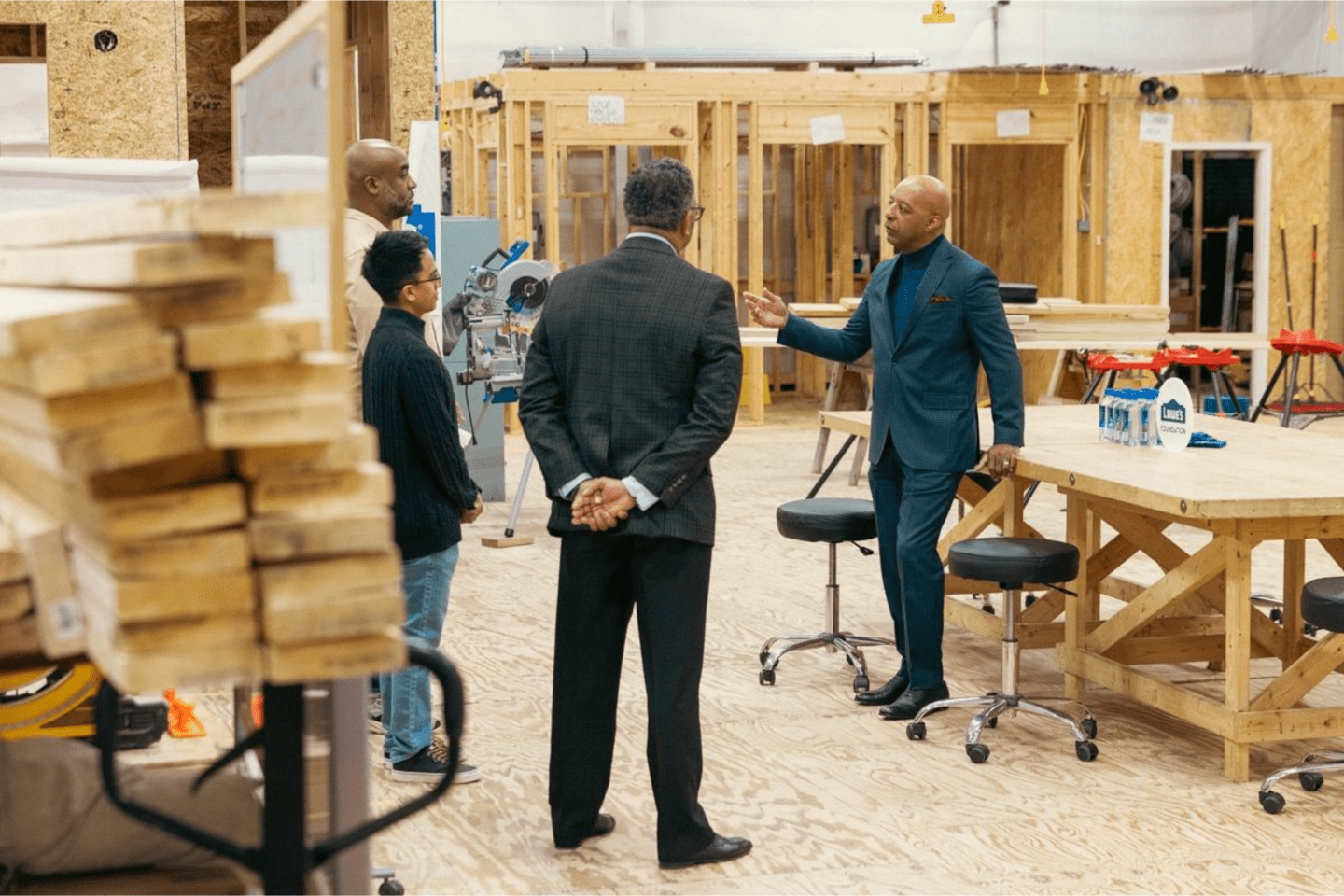
The home improvement giant exclusively told Fortune that its foundation is investing $250 million over the next decade to help train 250,000 skilled trades workers in fields like plumbing, carpentry, and electrical work. The company had previously committed over $50 million to nonprofits and community college partners, but according to Lowe’s CEO Marvin Ellison, the shifting dynamics of the workforce have made skilled-trade funding essential to the country’s future.
“We’re a company that believes strongly in the future of AI, but in a world where administrative and analytical occupations are going to be increasingly dominated with the acceleration of AI, we think the skilled trades initiative is going to be even more important here in the near future,” Ellison told Fortune.
AI, he noted, has clear limits. It can write code, draft emails, and analyze spreadsheets—but it can’t show up to fix what’s broken or build the physical infrastructure, such as data centers, that powers the future digital economy.
“As powerful as AI will become, AI can’t climb a ladder to change the batteries in your smoke detector,” Ellison added. “It can’t change your furnace filter; it can’t clean your dryer vent; it can’t repair a hole on your roof.”
That urgency is underscored by a growing labor gap. The Associated Builders and Contractors estimates the U.S. will need roughly 350,000 additional workers in 2026 to meet demand for construction services alone—a figure that rises to 456,000 in 2027. Electricians, plumbers, and carpenters are facing similarly steep shortages. While demand is strong and wages are rising, the training pipeline hasn’t kept pace.
The college-skilled trades divide was a personal one for Lowe’s CEO
For Ellison, the shifting dynamics of the workforce is deeply personal.
He grew up in Brownsville, Tennessee—a small town northeast of Memphis—where he said the message was clear: go to college to achieve the American dream. Yet many of the most respected professionals in his community were tradespeople—plumbers, electricians, and mechanics who owned their own businesses.
“I was taught growing up that it was important for me to go to college because that was the way I could achieve the American dream,” he said.
Ellison went on to earn a business degree from the University of Memphis and an MBA from Emory University. His brother took a different route, attending vocational school and building a career as a welder. But for too long, Ellison added, careers like his brother’s have been treated as second-tier options.
“There’s not that one option is better or worse; it’s all about that there are different paths to trying to obtain prosperity, and we all, me included, need to do a better job of presenting skilled trades as rewarding, viable careers, not just backup plans,” he said. “These trades are really a way to create meaningful wealth for yourself, and it’s a way to earn a very dignified living, and you can do it with a lot less debt.”
That shift is already happening inside Lowe’s. Ellison noted that even some of the company’s top executives are steering their children toward trade careers instead of four-year degrees, drawn by the strong earning potential and the rising cost of college.
Ellison’s advice to young people is simple: don’t be afraid to use your hands—but follow a path that fits your skills and interests.
“Don’t succumb to peer pressure that one career is better, more impressive, or more valuable than another,” he said.
“Choose your career path, not from pressure around what you think is the most valuable career or most prestigious, but choose it based on your natural interest in your skill set.”
From diesel mechanic to carpentry entrepreneur
The skilled trades have offered Cleveland Roberts more than stability—they’ve brought him independence.
Roberts graduated from the carpentry and cabinetry program at Columbus Technical College—which received a grant from the Lowe’s Foundation—while working full time as a diesel mechanic. In 2024, he won a gold medal in cabinetmaking at the state level in the SkillsUSA competition. Today, he runs his own business, CR Woodworx, in Columbus, Georgia.
“I realized I wanted a career where I could build something tangible, work with my hands, and have more control over my future,” he told Fortune. “Carpentry stood out because it offered both creative satisfaction and a clear pathway to entrepreneurship.”
The path isn’t without its challenges, Roberts added. Running a business takes discipline, careful time management, and the ability to balance the craft itself with the demands of operating a company—from client relationships to finances and scheduling. The work can also be physically taxing, and staying ahead requires constantly honing your skills. Collectively, though, it opens doors to what he calls a more “fulfilling long-term path.”
But for every success story like Roberts’, Ellison said scaling that kind of opportunity will take a broader push. He pointed to BlackRock’s $100 million investment announced earlier this year as a step in the right direction. Google has also invested $15 million and partnered with the Electrical Training Alliance to expand the pipeline of electricians.
Still, more needs to be done. Without it, the shortage of skilled trades workers risks becoming not just an economic challenge, but a broader national one.
“We know we can’t do it alone,” he said.
“This is going to be so critical to the future, not only of our company, but to our country.”